




The upstairs bedroom that never catches up in Waco heat
You already noticed the pattern. Upstairs hotter than downstairs, or one bedroom that never catches up while the hallway thermostat says the house is at temperature. Closing the vent in that room barely helps, and running the fan longer only makes the rest of the house cold while the one room stays warm. That mismatch between what the thermostat reads and what the room feels signals a distribution problem in your ductwork rather than a failure in the compressor or blower itself.
Uneven temperatures in house layouts like this usually come from the return side rather than the supply side. A central return pulls air from one hallway, so a bedroom at the far end of a branch run gets whatever pressure is left after closer rooms take their share. Uneven airflow between rooms shows up worst in houses where the duct branch feeding the problem room is longer, has more turns, or was tied into the trunk after the original design was set. The compressor and the ECM blower can both be working exactly as built and the room still runs hot, because the air simply is not getting there in the volume that room needs.
Waco's cooling season runs long, often from April into October, and that extended runtime turns a small imbalance into a daily complaint instead of an occasional one. The system that copes in May is the same system that cannot keep up once outdoor highs sit in the mid to upper nineties for weeks at a stretch, and the starved room is the one that shows it first.
Uneven cooling by itself is a comfort issue you can live with for a while, but it can point at a filter and airflow chain that represents real risk. A loaded filter restricts air across the coil, the coil runs colder than it was designed to run, ice builds on the coil face, and the compressor pulls liquid refrigerant back into itself instead of vapor. That outcome requires compressor replacement rather than a simple filter change, which is why a system that is both uneven and running long hours should get a filter and airflow check before the next full run of hot weather rather than after. Early detection of airflow restriction prevents the cascade that ends in refrigerant damage.
More detail on no cooling emergency service is on its own page.
Permit and inspection questions? Commercial Construction Permits is the office we coordinate with on every permitted Waco job.
Find the sign you have, then read across to see whether it can wait.
| Symptom or first sign | What is already happening | What it becomes if ignored | When to call |
|---|---|---|---|
| A loaded filter | Airflow drops and the coil runs colder than it was designed | The coil ices over and the compressor takes liquid refrigerant back and fails | This week, while it is still one part |
| A plugged condensate drain | The pan overflows into the platform or the ceiling | The ceiling below stains and the rusted secondary pan lets the rest through | Soon, before it spreads past the repair |
| A weak run capacitor | The compressor pulls high amps every time it tries to start | The windings overheat and what was a part becomes a whole condenser | Now, the same day |
How we find why one room won't cool
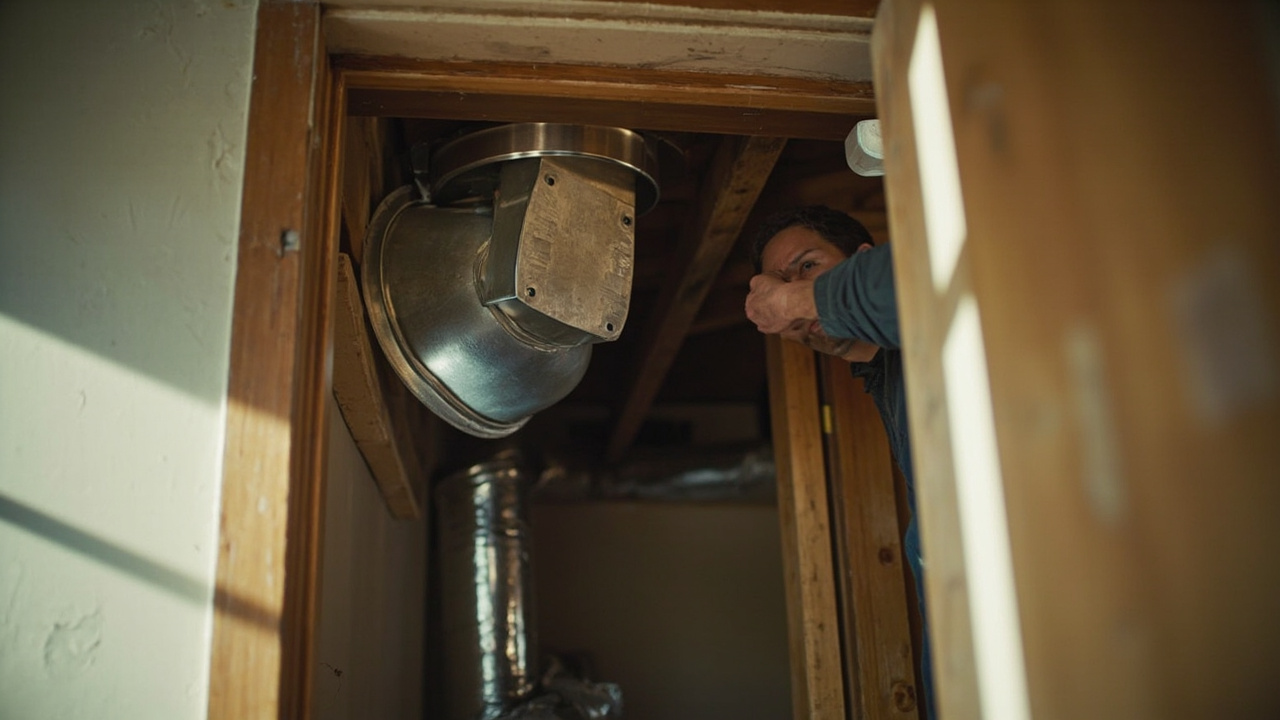
The check starts at the filter, the coil face and the return grille, because a restriction there changes every reading taken after it. Static pressure across the air handler is measured next against the number printed on the blower data plate, which tells us whether the duct system as a whole can move the air this equipment is built to push before we look at any single room.
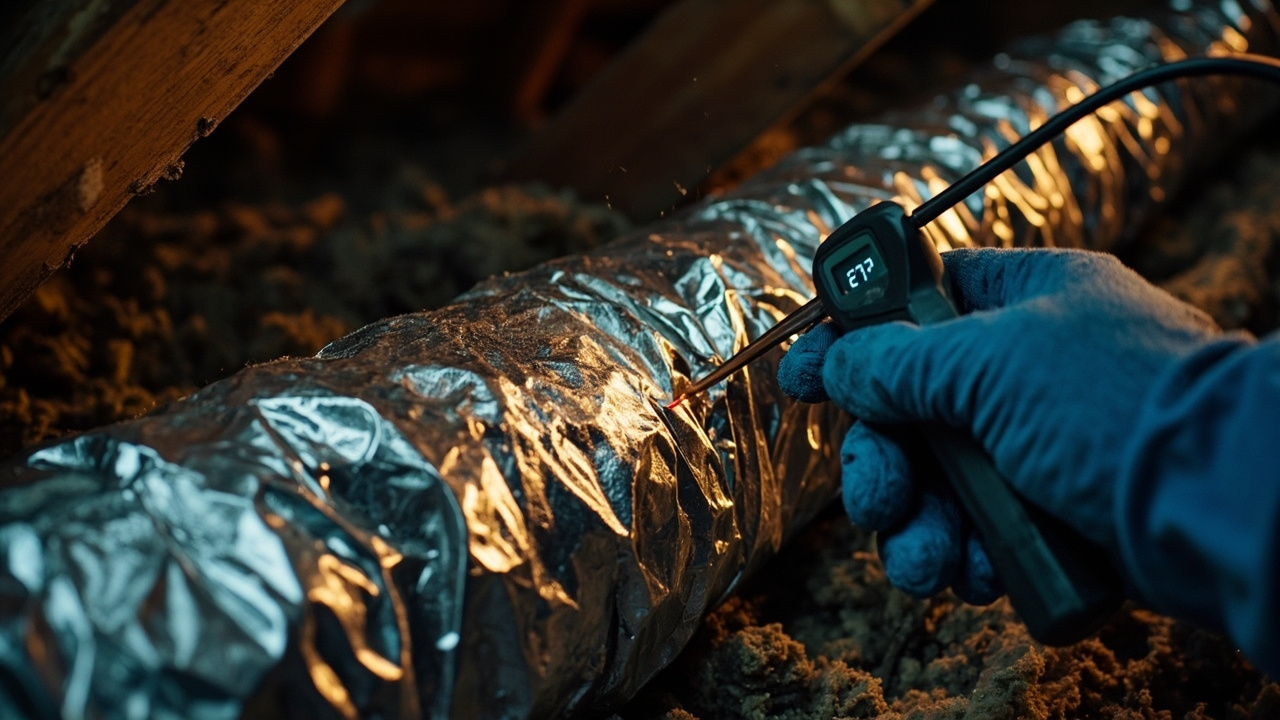
From there we put two probes on the duct itself, one at the return and one at the supply, close to the coil rather than out at a register where duct gain skews the number. A drop of roughly 15 to 20 degrees between those two points on a system running normally is the target for this area. A shallow drop at the branch feeding the hot room, next to a normal drop elsewhere in the same house, points at a restriction or an undersized run serving that room alone. A shallow drop everywhere points at charge or coil airflow instead, and that changes the whole scope of the visit.
That reading is also what decides between rebalancing existing duct and adding equipment. Sealing and resizing a duct branch, or adding a damper to redirect air toward the room that is short, fixes the imbalance without touching the outdoor unit when the trunk can carry the added air. A ductless mini split head serves that one room directly when the return path cannot be corrected without opening finished ceiling, or when the duct simply was never run to where the load is now. Neither is picked before the static pressure and delta T numbers are in hand.
The instrument table below shows how these readings connect to the most common findings on an uneven system and what each one tells us about where the problem lives. Understanding what the numbers mean keeps the scope of work focused on the actual cause rather than a symptom alone.
Our page on server room & data center cooling covers that side of the work in more depth.
Ask which of these readings was taken before any part is replaced.
| Instrument | Good reading | Bad reading | What it changes |
|---|---|---|---|
| Two probes for delta T between return and supply air | A 16 to 22 degree drop across the coil in cooling at normal indoor humidity | A small drop means airflow or charge is wrong | An unusually large drop means the coil is being starved of air |
| Flame sensor signal check in microamps | A steady signal well above the control board dropout point | A weak or drifting signal | The sensor is coated and the burner will drop out |
| Manifold gauges with superheat and subcooling readings | Superheat and subcooling both landing in the range the equipment maker specifies for that metering device | High superheat with low subcooling | An undercharge or a restriction rather than a weak compressor |
How a hot room call runs
First call and walkthrough
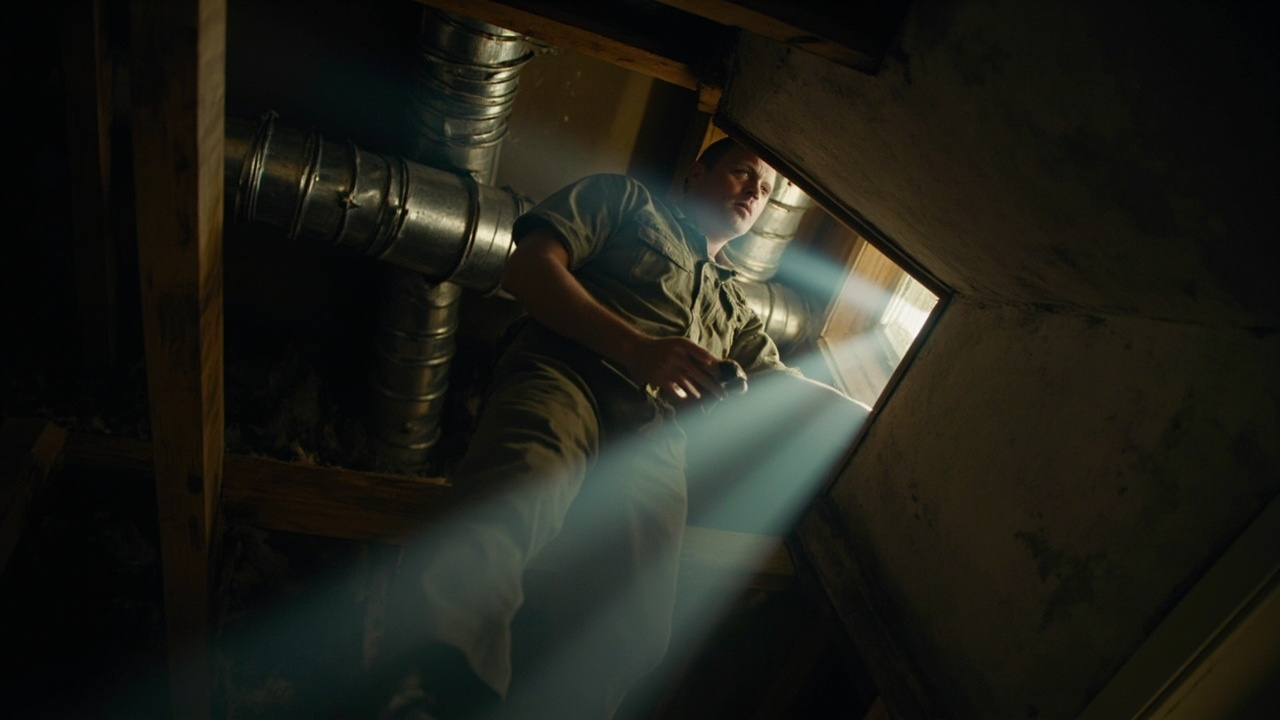
On the phone we ask which room runs warm, whether the pattern holds during the hottest part of the day, and when it started. Those answers tell us whether to send someone today or during a calmer window. On site, the technician inspects the filter, coil face and return grille first, since blockage in any location skews every measurement downstream. The blower data plate supplies the specification for static pressure across the air handler, which the technician verifies before taking readings on the branch duct serving the room you called about.
Sealing or rebalancing the branch
Once you approve the scope, work starts at the branch feeding the room that runs warm. If a seam has opened where flex duct ties into the trunk, that connection gets resealed with mastic and mechanically fastened rather than covered with tape. Where the run itself is undersized for the load, resizing the branch or adding a damper redirects air toward the room that has been short. If correcting the return path requires opening finished ceiling, we stop and walk you through a ductless mini split head as the alternative before any duct gets cut.
Reading before we leave
Before we leave, the same two probes go back on the branch that ran short, and the delta T there should land in the same 15 to 20 degree range the rest of the house shows instead of trailing behind it. Static pressure gets checked once more against the blower data plate to confirm the fix did not choke a different part of the system. We walk you through both readings at the register, and you keep the numbers from this visit to compare against next summer's performance.
Why a hot room here gets misread by a crew from elsewhere
A crew that does not work in Waco often treats a hot room as a charge problem because that is the fastest diagnosis to sell, and they miss what the attic duct system is telling them. Houses across this metro that got central air added years after the original build have branch runs stitched into the trunk after the fact, and those additions carry more elbows and longer runs than the sections planned when the house was designed. A technician who has not opened enough of these attics assumes the duct layout matches the floor plan, and starts pulling gauges before checking whether the branch feeding the problem room can carry the air the system pushes into it.
The clay soil under this part of Texas shifts with the wet and dry cycle, and that movement reaches equipment pads and rigid duct boots as much as it reaches foundations. A pad that has tipped a few degrees changes the angle a line set sits at, and a boot connection that was square when it was installed can pull loose after a few seasons of that ground movement. Someone unfamiliar with how often this happens looks at a disconnected boot and assumes installation error, when the real cause is the soil under the slab doing what it does every summer and winter here.
Long, humid cooling seasons also age the tape and mastic at duct seams faster than a mild climate does, and a joint that held for a decade elsewhere can loosen in half that time in an attic that runs hot for months at a stretch. A crew used to shorter cooling seasons checks the obvious spots and misses a seam failure feeding conditioned air into insulation instead of the register, because that failure mode shows up less often and later in a system's life where they normally work. Knowing which branch runs are likely original and which were added later changes where the static pressure check starts, and starting in the wrong spot on a hot afternoon costs a homeowner an extra visit rather than one.
If this sounds close but not quite your situation, warehouse heating & cooling may be the better starting point.
What the visit looks like once you call
Scheduling built around the pattern
We ask which rooms run hot, when the pattern started, and whether it tracks with upstairs and downstairs or with one side of the house. Those answers tell us whether this is a same day visit or one that can be scheduled during a calmer window. You get a confirmed arrival time before the technician leaves the prior job, and if that job runs long we call ahead rather than let you wait without word.
Attic work without mess
Attic access means insulation, dust and sometimes a tight crawl over joists, so drop cloths go down at the access point before anyone climbs up. Tools and any duct sections being replaced get staged so nothing sits loose on ceiling drywall below. Once the branch is sealed or the damper is in, the access panel goes back and the area is checked for insulation that shifted during the work.
What decides the scope and cost
The static pressure reading against the blower data plate is the number that decides most of this job, because it tells us whether the existing duct can move the air a fix requires or whether the branch itself has to be resized. Attic access and how far the restriction sits from the panel add time. Whatever the reading shows, we write the scope down and walk through it with you before any duct is opened or sealed.
How a technician earns solo work
A new technician runs a set number of visits alongside someone experienced in duct diagnostics before taking a hot room call alone, and has to demonstrate reading static pressure against a data plate correctly before signing off on that step. On a call where the branch run is unusually long or hard to access, a second technician reviews the readings before a scope gets written.
You Have Questions,
We Have Answers
The same local crew Granite HVAC Waco trains and sends on every Waco job, not a subcontractor lottery. Your technician arrives background-checked, in a marked vehicle, with the parts this job usually needs, and we pull the required permits so the work meets current local code.
We accept all major credit cards, checks, and cash, and financing options are available for larger projects. Ask about current financing terms when you call (254) 221-8461.
As a rule of thumb, if a repair costs more than half the price of a replacement, or the equipment is past roughly two-thirds of its expected lifespan, replacement usually wins on total cost. We walk you through both numbers so you can decide with real figures in front of you.
You see it before we leave. The technician walks you through what was done, shows the readings or photos that prove it checks out, and leaves documentation for your records. Granite HVAC Waco treats every uneven cooling between rooms job in Waco as a reflection of our name, and that is why so much of our work comes from repeat customers and referrals.
Quotes vary because scope, access, materials and what gets included vary. A low bid that skips permits, disposal or proper cleanup is not the same job as a complete one. Granite HVAC Waco itemizes every line so you can compare quotes on equal terms. Call (254) 221-8461 and put ours side by side with any other.
Pricing for uneven cooling between rooms in Waco depends on the scope of the job, access, and the materials involved. Most projects fall within a predictable range, and Granite HVAC Waco provides an upfront, itemized quote before any work begins, no surprises when the job is done. Call (254) 221-8461 for a fast estimate.
In most of our Waco service area we can dispatch a technician the same day, and often within a few hours. Emergency calls are prioritized 24/7, call (254) 221-8461 and we'll give you an accurate arrival window on the phone.
Give us a call at (254) 221-8461 to explore the best options for your situation. One of our friendly technicians will evaluate what is going on, walk you through your choices in plain language, and make sure you know exactly where things stand before any work begins.
Local crews who know Waco homes, upfront itemized pricing, and a real person on the phone 24/7. We show up when we say we will and document the work before we leave, that's why so many of your neighbors call us first.
Unusual noises, rising utility bills, recurring problems that come back after quick fixes, and visible water, rust, or damage are the classic red flags. Catching these early almost always means a smaller, cheaper repair. If you're seeing any of them in Waco, it's worth a call to (254) 221-8461.
Why Waco attic duct systems create hot and cold spots
Mountainview is a good example of the pattern this page is about. Houses there date mostly from the 1950s and 1960s, and many still run the attic duct system that was added to or resized as cooling loads grew over the decades, rather than a system designed once for the house as it exists today. A branch added later to reach a converted room or an addition often ties into the trunk at a poor angle, with more turns and more distance than the original runs. That branch is almost always the one that comes up short on airflow first, because the resistance to airflow compounds with each turn and each foot of added length, and the pressure drop across all that additional ductwork leaves less force to push conditioned air through to the end of the run.
Waco's cooling season runs long and humid, and an attic duct system spends months sitting in heat that ages flex duct, duct board and the tape at branch seams faster than a shaded chase would. A seam that has loosened over years of that heat cycling lets conditioned air spill into the attic before it ever reaches the register, which lowers the static pressure available to the farthest rooms without anyone noticing until the hot spot becomes constant. Measuring static pressure and delta T at multiple points through the duct run reveals where that pressure loss occurs. That is why these readings matter more here than a generic checklist would suggest, and why a duct correction in an attic like this often does more for comfort than any change made at the outdoor unit.
HVAC Services in The Waco Area
Explore our service area and locate Granite HVAC Waco with ease. We're proudly local and serve the surrounding neighborhoods with fast response and honest pricing. Use the map to check our coverage area, or call us and we'll confirm in seconds.
Address:
Granite HVAC Waco, Waco, TX, 76701
Checking and swapping a filter, and opening a vent that got closed, are homeowner jobs and you do not need us for either one. Where it stops is at the duct itself, since sealing a branch or reading static pressure correctly needs a manometer and access most people do not have. If the first visit turns up a return path that needs remodeling to fix, we say so on the spot rather than after the fact.
Before you call, know which room or floor runs warm and whether the problem affects upper and lower levels. Note when it started and whether anything changed just before, like a vent being closed. If you know the age of the system and can find the attic access panel, mention both. Those answers usually tell us whether a technician needs to come out this week or can be scheduled for a calmer day.
Last reviewed September 2026 by Dale Whitfield, Service manager.