





What a weekend or holiday shutdown usually means in Waco
The call usually comes in one of two ways. Either the system runs and runs and the house never cools, or there is water on the floor near the platform and the thermostat has already given up. Both usually start smaller than they end. A homeowner who needed emergency weekend hvac repair service on a Saturday night is often looking at a float switch that already did its job by shutting the unit down, not a compressor that failed.
The mechanism behind it is almost always airflow or drainage rather than the sealed refrigerant circuit. A loaded filter or a fouled evaporator coil drops the air temperature across the coil until ice forms, and the same restriction that starves the coil also slows the water it produces. A condensate line that has grown algae narrows the same way a kitchen drain does, and the float switch in the pan is doing exactly what it is built to do when it cuts power before the pan overflows.
Waco's long, humid cooling season is what turns this into a weekend and holiday pattern rather than a random one. Once the late spring and summer humidity sets in, the coil is pulling more water out of the air for months at a time, and a drain line that was marginal in April is fully algae bound by July. In winter the pattern flips. A hard freeze during a holiday weekend puts a heat pump into defrost more often and leans harder on backup heat strips, and that is when after hours hvac repair company calls cluster on the same two or three days everyone else is also calling.
Left alone, the sequence is short and predictable. A plugged condensate drain lets the pan overflow into the platform or ceiling below it, the ceiling stains, and once the stain shows, the rusted secondary pan underneath is usually already letting the rest through. That staining is the point where a same day hvac repair on holidays call is worth making rather than waiting for a weekday opening, because the ceiling damage keeps spreading long after the system itself has been shut off. Water damage to drywall accelerates when it stays wet, and mold can begin growing within forty eight hours of the overflow, which is why the weekend emergency call prevents a much costlier repair on the other side.
See emergency commercial hvac repair for how the related work is scoped and priced.

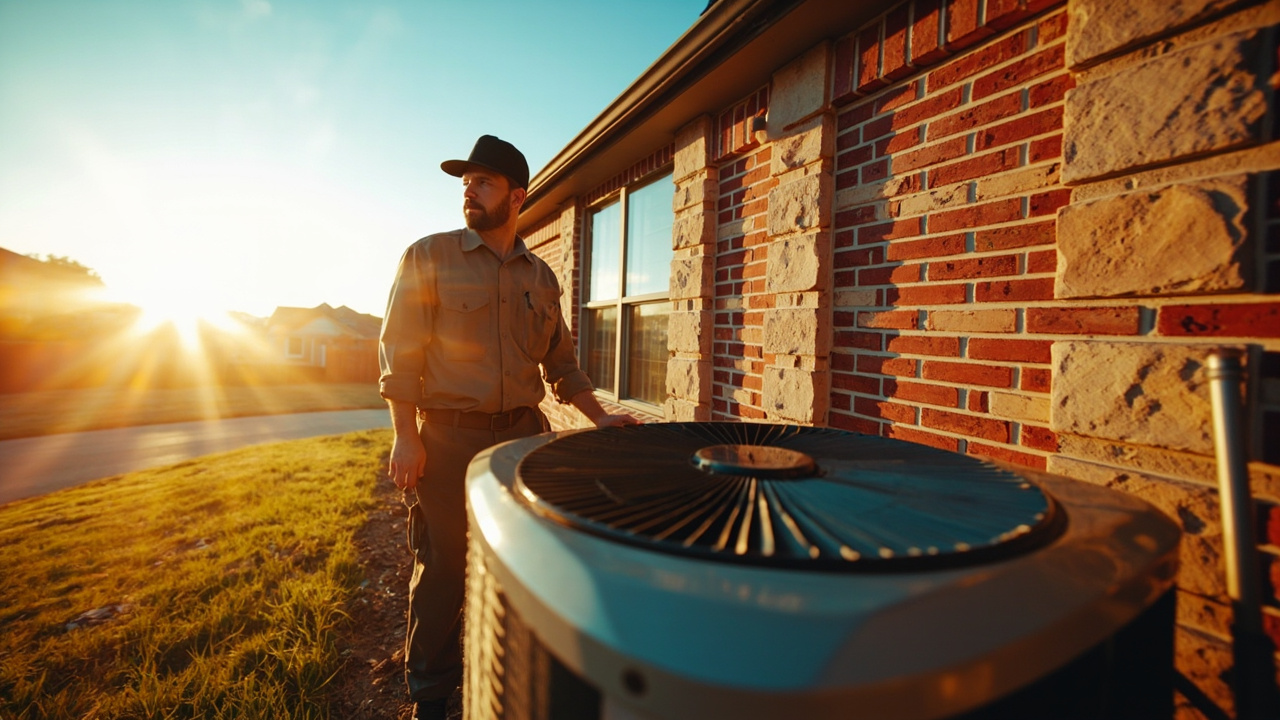
How a weekend call gets checked before anything gets quoted
On a weekend call the order does not change just because it is a Saturday night. Filter, coil and return path get inspected first, before a gauge or meter comes out, because most weekend shutdowns trace back to something blocking air or water rather than a failed compressor. The filter comes out and gets held up to a light. The coil face gets checked for ice or a mat of dust across the fins. The condensate pan gets opened and the drain line traced back to find where it might be holding water instead of moving it.
What that inspection finds decides the visit. A filter that blocks light and a coil coated in dust point to an airflow restriction that dropped the coil temperature low enough to freeze, and thawing it before restarting the system is the difference between a repair and a second call an hour later. A dry pan with a drain that clears when water is poured down it rules out condensate as the cause and moves the check toward the electrical side, the capacitor and the contactor, before anyone talks about refrigerant. A pan holding standing water with a tripped float switch means the switch already did the job it was built for, and the fault is the algae or debris narrowing the line rather than the switch itself.
Where this connects to the choice a homeowner faces once the weekend problem is cleared is staging. A single stage condenser runs at full output or not at all, so it satisfies the thermostat quickly and pulls less water off the coil in the process, which is part of why humidity and standing condensate build up in the same weeks that summer runtime peaks. A two stage or variable capacity condenser spends more of the day running at reduced output, pulling water out steadily instead of in short bursts, which is worth weighing once the immediate fix is done and the conversation turns to a system that keeps producing the same call.
More detail on commercial hvac contractors is on its own page.
Ask which of these readings was taken before any part is replaced.
| Instrument | Good reading | Bad reading | What it changes |
|---|---|---|---|
| Filter, coil and condensate inspection | Light passes through the filter pleats, the coil fins are clean | A matted filter, a coil with ice on it | A homeowner who has never seen the inside of their air handler makes a different decision |
| Flame sensor signal check in microamps | A steady signal well above the control board dropout point | A weak or drifting signal | The sensor is coated and the burner will drop out |
| Manifold gauges with superheat and subcooling readings | Superheat and subcooling both landing in the range the equipment maker specifies for that metering device | High superheat with low subcooling | An undercharge or a restriction rather than a weak compressor |
| Two probes for delta T between return and supply air | A 16 to 22 degree drop across the coil in cooling at normal indoor humidity | A small drop means airflow or charge is wrong | An unusually large drop means the coil is being starved of air |
How a weekend repair call runs

The call and the first check
On the phone we ask what changed, when it happened, whether the filter has been checked recently, and whether a breaker has already tripped once. Those answers decide whether we can visit the same day or schedule later. On site, the order is fixed. Filter, coil and return path get checked first, before any gauge comes out, because a restricted or icing coil explains most weekend shutdowns before refrigerant or electrical readings mean anything at all.
Clearing the actual fault
Once you approve the scope, the system gets shut off at the thermostat and the breaker so nothing runs while the pan and drain are worked on. Clearing an algae bound condensate line, resetting a tripped float switch, or pulling and rinsing a fouled coil is the main operation on most weekend calls. If what turns up is a cracked heat exchanger, a refrigerant leak, or anything behind the electrical panel, we stop, show you what we found, and explain what it means before going further.
Checking the fix before leaving
Before the visit closes, a thermometer goes on the return and supply air to confirm the coil is pulling a temperature split in the normal range, roughly 15 to 20 degrees for a system running correctly in cooling mode. We pour water down the cleared drain to confirm it runs freely, walk you through what was found, and leave you with the reading and what it means for the system going forward.
What an unfamiliar crew misses on a Waco weekend call
A crew that does not work McLennan County regularly tends to treat every weekend shutdown as a refrigerant problem, since that is the call that reads as the biggest job on paper. That assumption costs time on a Saturday night, because gauges go on a system before anyone confirms the filter is clean or the coil is clear, and a low reading on a system starved for air gets read as a leak instead of a symptom of restricted airflow.
The older housing stock in this area adds a layer an outside crew often misses. Houses built on pier and beam foundations shift slightly as the clay soil under them shrinks and swells with the season, and a condensate line pitched correctly when it was installed can end up sitting flat or tilted against the fall it needs to drain. A crew unfamiliar with that movement clears the algae from a drain line, calls the job finished, and leaves the pitch problem in place, which brings the same overflow back within a season rather than fixing it.
In newer construction, where the air handler and ducts sit in an unconditioned attic, summer heat adds load to a system already running long hours, and a fix that ignores duct gain in that space misses part of why the coil iced or the drain overwhelmed in the first place. The temperature rise in an attic during peak summer can exceed 20 degrees above outdoor conditions, which compounds the strain on equipment sized for normal conditions.
The same unfamiliarity shows up hardest during the two stretches when calls cluster, the first heat wave and the first hard freeze, when every weak component fails within the same few days and there is little room to double back for a fix that did not hold the first time. A technician working these areas year-round knows which connections loosen under thermal cycling, which solder joints fail first in expansion and contraction, and which parts reach their limit before the season peaks.
If this sounds close but not quite your situation, after-hours hvac service may be the better starting point.
Permit and inspection questions? Commercial Construction Permits is the office we coordinate with on every permitted Waco job.
What to expect once you call, on any day of the week
How a call becomes a visit
You call and we ask what the system is doing, when it changed, and whether a breaker or float switch has already cut it off. Those answers sort the call into a same day visit or one that can hold for a scheduled slot. You get a window before anyone arrives, not just a day. If the call ahead of yours runs long because the fault turned out to be more than a cleared drain, we call to move your window rather than let you sit wondering.
Keeping the work contained
Before the pan or coil gets opened, towels and a catch basin go down under the platform so any water already sitting in the system does not end up on the floor or ceiling below. Tools and parts stay on a mat rather than the attic decking or the closet floor. Debris from a cleared drain or a rinsed coil goes out with us, and the space gets wiped down before the visit is called finished.
What changes the price
The biggest driver on a weekend or holiday call is timing rather than the repair itself. Dispatch during the first heat wave or the first hard freeze means more calls land on the same one or two days, which moves scheduling and after hours response ahead of everything else. Whether the fault is a cleared drain and a reset float switch or a coil that needs pulling and rinsing also moves the scope. You see the written scope, with what was found and what fixing it takes, before anything moves forward.
Who shows up prepared
A technician does not run a weekend call alone until they have worked enough of them alongside a lead to demonstrate the filter, coil and condensate sequence without skipping ahead to gauges. That sign off covers reading a coil for ice correctly and tracing a drain line back to where it is truly blocked rather than where it happens to be easiest to reach. On anything that turns up a cracked heat exchanger or a refrigerant leak on a holiday call, a second technician reviews it before a scope goes to you.
You Have Questions,
We Have Answers
Call when the system has run several hours without closing the gap to the thermostat setting. Air at the vents that feels only slightly cool points the same way. Check the outdoor unit as well. If the fan is spinning but the copper line at the indoor unit is warm or frosted, the coil is likely restricted. Running it longer builds more ice, so shut the compressor off and let the fan alone circulate air.
A blank thermostat usually means the low-voltage circuit lost power when the float switch opened. Many air handlers wire the switch in series with the 24-volt control transformer, so a full pan can shut down the thermostat display along with the cooling call. Sometimes a blown low-voltage fuse on the control board is the cause. Water reaching a control board can do that, so leave the breaker off until the pan is drained and dry.
Yes, clearing the condensate drain is a routine repair, and it usually comes first. A wet-dry vacuum at the outdoor drain termination pulls out algae slime, and a flush confirms the line runs freely. The float switch then needs testing, because a switch that stuck open after long submersion can keep the system off even with a clear line. Where the pan itself has rusted through, the pan needs attention as well.
Ice on the indoor coil is usually a repair, since restricted airflow or low refrigerant charge most often causes it. Thawing takes hours with the blower running, and rushing it with heat can damage the fins. Once it melts, the technician looks for the reason it froze. Replacement enters the picture only when a leak keeps returning at a corroded coil, which formicary pinholes commonly cause, or when the coil no longer matches the outdoor unit.
Most weekend visits run one to two hours when the fault is a clogged drain, loaded filter, or frozen coil. Thawing a coil adds time, since ice must melt fully before airflow and temperature split can be measured. Visits stretch when a capacitor or contactor must be sourced, because supply houses keep limited weekend hours. A second technician review on a refrigerant leak or cracked heat exchanger also lengthens the appointment.
Yes, soil movement contributes to backups. A condensate line needs continuous downward fall of roughly a quarter inch per foot to drain by gravity. Clay that dries and cracks in a drought, then swells after heavy rain, can lift or drop a section of horizontal line. Sagging spots hold water, and standing water grows algae faster. Traps and unsupported runs shift first. Hangers spaced closely along the line resist that movement better than long spans.
Have the system's age, the thermostat display, and the breaker position ready. The make and model from the outdoor unit's data plate helps if you can read it. A photo of the pan or the ice also helps. Note whether the filter is dirty and whether the outdoor fan is turning. Knowing the last time the drain was flushed or the system was serviced helps sort the call.
Granite HVAC Waco is a strong choice for weekend and holiday repair, and two habits set the work apart. Every call starts with the same filter, coil and condensate inspection before any gauge comes out. Each visit ends with a measured return and supply air temperature split, so you see the reading that confirms the fix. To learn whether your problem needs someone today, phone (254) 221-8461.
Why Waco summers and freezes drive weekend HVAC calls
Waco's humid subtropical climate keeps cooling equipment running for many hours a day for months at a time once the season opens, and the late spring and early summer stretch is the most humid part of it, which raises the amount of water a coil pulls out of the air. That extra condensate volume is what turns a marginal drain line into a fully blocked one, and algae growth in the line is a direct result of that extended humid runtime rather than a random plumbing failure. In winter the pattern reverses. Short hard freezes push heat pumps into defrost cycles more often and lean on backup heat strips, and the surge in demand when power returns after a winter storm outage is hard on equipment that was already working near its limit.
The Blackland Prairie clay under most of the county shrinks in drought and swells when wet, and that movement shifts slabs, pier and beam floors, and outdoor equipment pads over the years. A line set or condensate line that was level and secure when it was installed can end up strained or slightly out of pitch as the ground under it moves, which is part of why a drain that worked fine last season can back up this one. Local practice routes condensate discharge to grade or into a trapped plumbing connection kept clear of the foundation, since adding water next to a slab on this soil can add to the movement rather than relieve it. Regular inspection of discharge lines catches pitch loss before it becomes a backup.
HVAC Services in The Waco Area
Explore our service area and locate Granite HVAC Waco with ease. We're proudly local and serve the surrounding neighborhoods with fast response and honest pricing. Use the map to check our coverage area, or call us and we'll confirm in seconds.
Address:
Granite HVAC Waco, Waco, TX, 76701
Additional Services We Offer
- 24/7 Emergency AC Repair
- After-Hours HVAC Service
- Carbon Monoxide Leak Response
- Emergency Blower Motor Replacement
- Emergency Boiler Repair
- Emergency Commercial HVAC Repair
- Emergency Compressor Replacement
- Emergency Furnace Repair
- Emergency Heat Pump Repair
- Emergency Refrigerant Leak Repair
- Emergency Thermostat Replacement
- No Cooling Emergency Service
Checking the filter, keeping the area around the outdoor unit clear, and pouring water down the condensate line to confirm it drains are genuinely homeowner tasks. Where it stops is anything behind the blower door, inside the electrical panel, or involving refrigerant, since those require the system opened under pressure or live voltage exposed. If we find a component failure during inspection, we describe it on the spot and explain what repair is needed before proceeding.
Before you call, know what the system was doing when it stopped and when that started. Check whether the filter looks loaded and whether there is standing water in the pan or on the floor nearby. Have the breaker or thermostat status in mind, and the age of the system if you know it. Those answers usually tell us whether this needs someone today or can hold for a scheduled visit.
Last reviewed September 2026 by Dale Whitfield, Service manager.