




What a struggling commercial chiller is telling you
A chiller that runs the whole shift and still leaves the building warm is not a mystery machine, it is a refrigeration circuit under a load it cannot move fast enough. The complaint usually comes in one of two shapes. Either the compressor short cycles and trips a breaker, or it runs continuously and the space temperature keeps drifting up anyway. Both point at the same place first, which is the compressor's start components and the refrigerant circuit behind them, not a control setting.
Waco's cooling season runs long, from roughly April through October with the heaviest load in July and August, and during that stretch a commercial chiller rarely gets a real rest between cycles. That near continuous duty is what ages a run capacitor and a contactor faster here than it would in a climate with a short cooling season. A capacitor that is weakening does not always announce itself with a dead unit. It shows up first as the compressor taking longer to start, or as the outdoor disconnect getting warm to the touch.
The escalation from there is short and it is worth knowing in order. A weak run capacitor makes the compressor pull high amps every time it tries to start. Repeated high amp starts heat the motor windings past what they were built to shed. Once the windings overheat past that point, a part failure becomes a compressor failure, and what would have been a capacitor swap becomes a full condenser rebuild. The point to call rather than wait is when a technician or an operator notices the compressor hesitating on start, hearing a hum without a start, or a breaker tripping more than once. Resetting that breaker a second time is the step that turns a repairable start fault into a burned motor.
A capacitor swap catches the failure before the winding damage spreads. The cost difference between replacing the capacitor and replacing the compressor is substantial, and the time down is measured in hours rather than days. Waiting through multiple breaker resets is the false economy. Once a motor winds past its heat threshold, the insulation breaks down and the windings short to ground. At that point the compressor cannot be rewound in place.
None of this is a comfort complaint that a filter change fixes. A humid stretch that leaves the space satisfied on the gauge but sticky at head height is a different problem, tied to how much moisture the coil is pulling out rather than to the compressor at all, and it gets diagnosed differently.
More detail on commercial hvac preventive maintenance contracts is on its own page.
Permit and inspection questions? Commercial Construction Permits is the office we coordinate with on every permitted Waco job.
How the circuit gets read before a part gets named
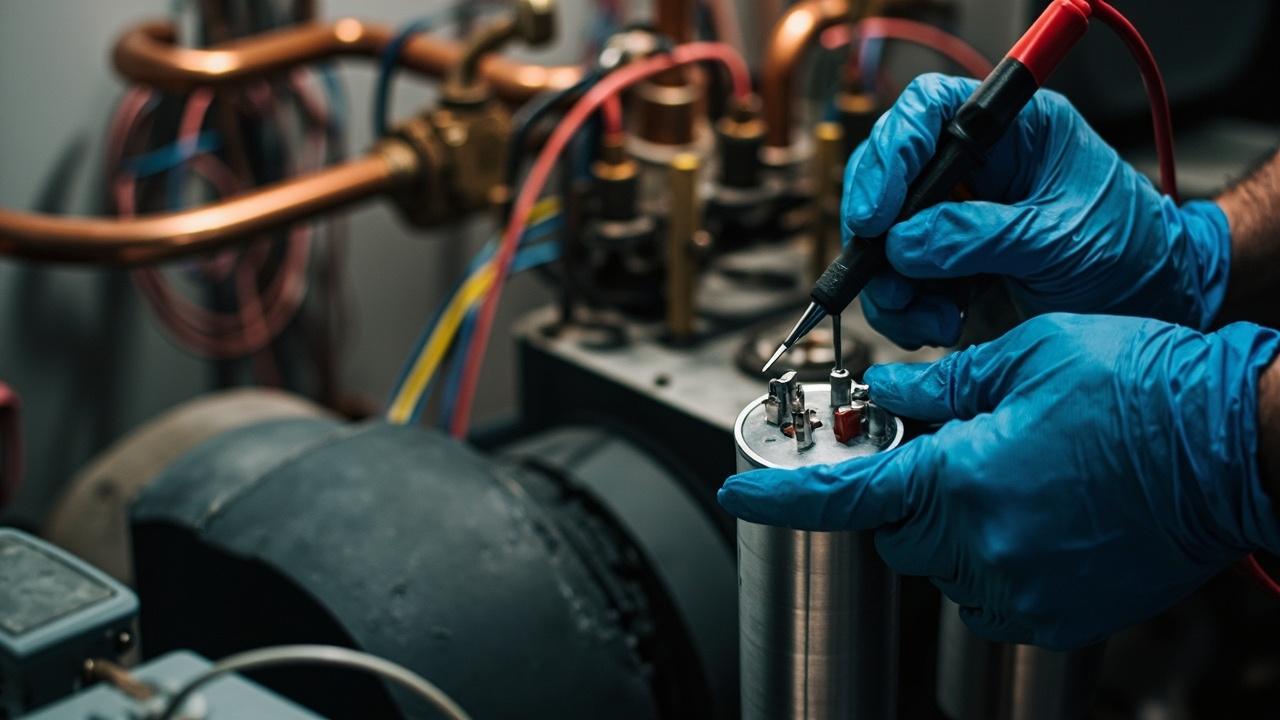
The sequence on a commercial chiller call starts outside the sealed circuit. Condenser airflow gets checked first, whether that means an air cooled unit's outdoor coil fins or a water cooled unit's tower and condenser water flow, because a coil coated in Waco dust and pollen chokes heat rejection the same way a low charge does, and the two look identical from the space temperature alone. Only once that side reads clean does a clamp ammeter go on the compressor, comparing running amps against the rated load amps stamped on the data plate. A reading that sits at or under rated load with a clean condenser clears both of those branches and points the rest of the visit at the refrigerant circuit itself.
If the circuit has to be opened, whether for a suspected leak or a component swap that breaches the seal, the filter drier gets changed and the system is pulled down under vacuum before any refrigerant goes back in. This is where the micron gauge decides the next step rather than a guess. A reading that drops below 500 microns and holds there once the pump is valved off means the circuit is sealed and dry enough to trust a charge. A reading that climbs back up after the pump is isolated means moisture is still boiling off inside the lines or a joint is not sealed, and charging into that condition traps water in the system that will freeze at the metering device the first cold night it runs. That single number is what separates a repair that holds from one that fails again within weeks.
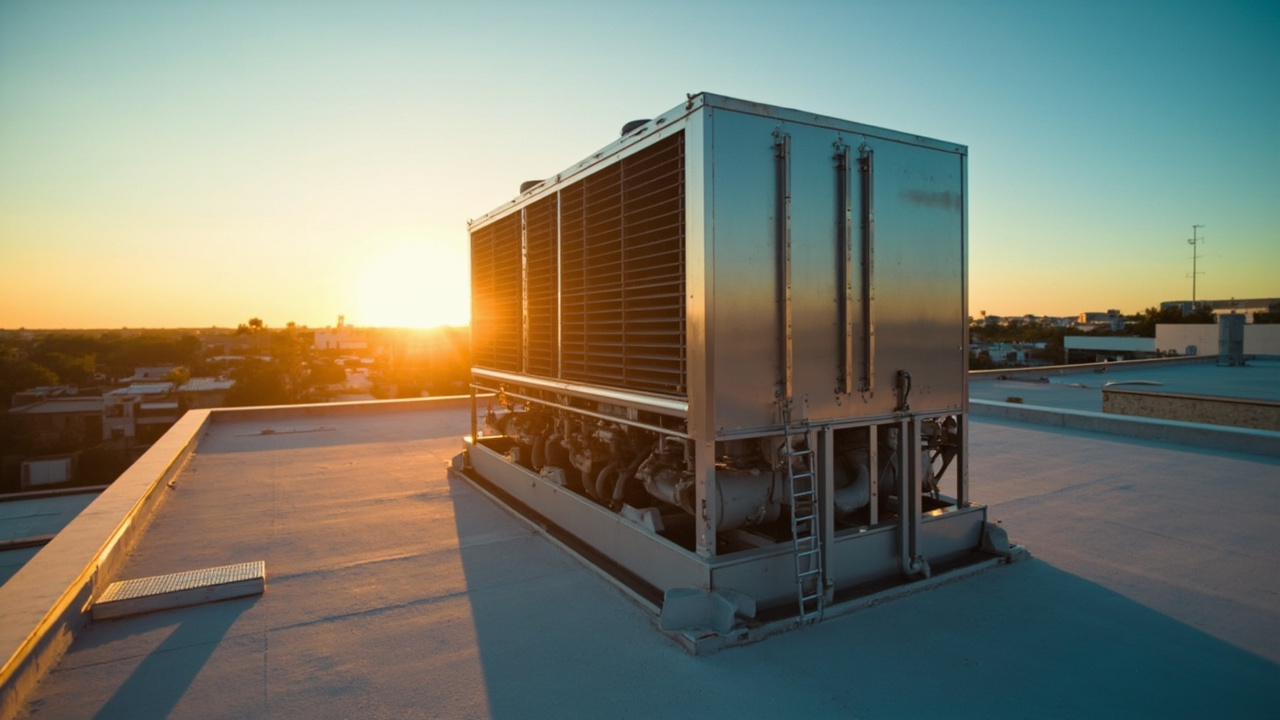
For a building weighing packaged rooftop equipment against a light commercial split system, the deciding factors are tonnage per cabinet, whether an economizer can bring in outside air on the mild shoulder days rather than running mechanical cooling, and service access. A packaged unit puts the whole circuit in one cabinet on the roof, which simplifies rigging for the original install but means every service call happens up there in full sun during the months this metro runs hottest. A split system keeps the compressor outdoors and the air handler indoors, which is easier to service in winter and often easier to isolate section by section when a leak search is underway.
Our page on hvac tune-up & maintenance covers that side of the work in more depth.
Before any install, check the ENERGY STAR rebate finder, utility incentives regularly knock hundreds off a qualifying system.
How a chiller service call runs

The intake call
The call captures its approximate age, what it is doing right now, and whether the space is occupied while it struggles. On site, the sequence starts outside the sealed circuit, checking the condenser side for restricted airflow or a fouled coil, then moving to a clamp ammeter reading on the compressor against its rated load amps. That order matters because a charge reading taken before the condenser and the compressor are cleared produces unreliable data instead of actionable diagnosis.
Approval and the repair
Once the written scope is approved, the chiller gets isolated and the affected section of the circuit is accessed, whether that means a capacitor and contactor at the compressor or a section of line set with a suspected leak. Superheat and subcooling get checked against the metering device on that unit. If the circuit has to be opened, the filter drier is changed and the system is evacuated before any charge goes back in. If something unexpected turns up behind a panel, like a second failing component, you are shown it before work continues.
Verification before we leave
Before the crew leaves, the micron gauge reading from evacuation is confirmed holding below 500 microns rather than climbing, which is what proves the circuit is sealed and dry before the charge is trusted. Amp draw is rechecked at start and at steady run. You get a walkthrough of what was found and what was done, and the readings taken that day stay on file as part of the equipment's service record for the next visit or for a building review.
Why a chiller call here reads differently than it looks
A chiller crew that has not worked this ground gets the outdoor equipment wrong before it ever opens the electrical panel. McLennan County sits on Blackland Prairie clay, which shrinks hard in a dry stretch and swells back when rain returns. A condensing unit or a rooftop pad set on that clay does not stay level year round, and a crew unfamiliar with the pattern reads a tilted cabinet, a strained line set connection or a condensate line pulling loose at the joint as a workmanship problem rather than ground movement acting on the equipment slowly and continuously. Chasing that as a leak repair without checking the pad and the line set support wastes a visit and leaves the real cause in place to fail again the next season.
Hail is the other condition an outside crew tends to miss on a first look. A storm that bends condenser coil fins does not always leave an obvious dent in the cabinet, and a coil with flattened fins still spins the fan and still draws current, so it can pass a glance and fail a real airflow check. A technician working here regularly checks fin condition as a matter of routine rather than as an afterthought, because the alternative is condemning a compressor for a heat rejection problem that started at the coil face.
Response across the metro also runs on the same clock this climate sets. A stretch of hard summer heat with heavy compressor duty pulls calls from air cooled units all over the service area at once, and a crew that does not already understand which weeks bunch up that way ends up promising arrival windows they cannot hold. Knowing that the cooling load peaks together across the metro, rather than treating each call as an isolated event, is what keeps a same day dispatch honest instead of optimistic.
None of this replaces a proper reading on the equipment itself. It changes what a technician checks first and how quickly a fault gets traced to its root cause instead of the nearest visible part. A crew that treats the clay, the hail exposure and the shared seasonal load as background noise ends up repairing symptoms, and a building depending on continuous cooling pays for that mistake again within a season.
If this sounds close but not quite your situation, seasonal hvac maintenance checklist may be the better starting point.
Use this to ask what is driving the quote rather than asking for a rough number.
| Driver | Why it moves the estimate | What you control |
|---|---|---|
| Access and rigging | An attic, a crawlspace, a tight closet or a rooftop with no easy path | Clearing the work area and the path before the crew arrives |
| The capacity and efficiency tier of the equipment chosen | Whether the indoor coil is matched to the new outdoor unit | The grade you choose, the rest of the work is set by the house |
| Whether the existing duct system can move the air the new equipment | The static pressure reading answers | Fixing the cause now rather than paying for the same visit twice |
| Electrical work | The disconnect, the breaker and the wire size feeding the unit | Fixing the cause now rather than paying for the same visit twice |
What working this job with us looks like
Scheduling around your occupancy
The intake call asks whether the space is occupied while the chiller struggles, whether the unit is air cooled or water cooled, and what it is doing right now, since a breaker tripping twice reads differently than a unit that just runs long. Those answers sort the call into a same day visit or a scheduled one. You get a confirmed arrival window rather than a vague day, and if the job ahead of yours runs long because of an unexpected leak search, you hear about the shift before your window passes rather than after.
Keeping the mechanical space clean
Before a panel comes off or a gauge set goes on, the work area around the unit gets cleared of tools and staged so nothing sits in a walkway during business hours. Any refrigerant recovered during a circuit repair is contained rather than vented, and a fouled coil rinse is directed away from foot traffic and drains. Whatever comes out during a repair, a spent capacitor, a cut section of line set, leaves with the crew, and the mechanical room or rooftop area is left in the condition it was found.
What changes the estimate
The largest swing on a commercial chiller estimate is access and rigging, meaning whether the unit sits on a rooftop with a clear path up, in a tight mechanical closet, or somewhere a lift or extra hands are needed just to reach the panel. A capacitor and contactor swap on an easy access unit moves the estimate less than the same repair on a rooftop with no straightforward path. Whether the circuit has to be opened for a leak, and how deep the leak search runs, also moves the number. The written scope is shown before any repair begins, and nothing proceeds without your approval on it.
How technicians earn the call
A technician logs supervised visits on commercial refrigerant circuits before working alone, with a lead signing off on specific tasks like reading superheat and subcooling correctly against the metering device on that unit, and holding a micron gauge reading through an evacuation without rushing it. On a water cooled system, or any job where the first reading does not match what the symptom suggested, a second technician reviews the numbers before a scope gets written, rather than one person's read deciding the repair alone.
You Have Questions,
We Have Answers
A compressor that hesitates or hums before starting, a breaker that trips more than once, and a space that stays warm despite the chiller running constantly are the signs that matter most. Each one points at the start components or the refrigerant circuit rather than a control setting, and resetting a tripped breaker a second time risks turning a capacitor fault into a burned compressor.
Granite HVAC Waco reads the circuit before naming a part, checking amp draw against the compressor's rated load and holding a micron gauge below 500 microns during evacuation before any charge goes back in. New technicians work supervised visits before working alone, and unusual jobs get a second set of eyes on the readings. Call (254) 221-8461 to describe the equipment.
Cost depends on where the fault sits and how hard the unit is to reach. A capacitor or contactor swap moves the estimate less than a rooftop unit with no easy rigging path, and whether the circuit has to be opened and evacuated changes the labor involved. You see the full scope in writing before work begins.
A technician who has logged supervised visits on commercial refrigerant circuits, with a lead signing off on tasks like reading superheat and subcooling correctly for the metering device on that unit. On a water cooled system or an unusual fault, a second technician reviews the readings before the scope gets written.
Building staff can keep condenser coils clear of debris and watch for a tripped breaker or a gauge trend that looks off, and that is a reasonable amount of involvement. Anything past that, including the electrical panel, the refrigerant circuit, or an evacuation and recharge, needs the instruments a technician carries, not a homeowner style fix.
Waco's cooling season runs long, roughly April through October, and demand for chiller service peaks with everyone calling during the hottest stretch of July and August. Access and rigging on a rooftop unit or a tight mechanical room also add time to a repair that a straightforward residential job would not carry.
Timing depends on the intake questions about the compressor's behavior and building occupancy, which determine whether the visit happens the same day or later. The heaviest demand lands during the peak of the cooling season, so calling at the first sign of a weak start rather than after a repeated breaker trip helps you avoid scheduling delays during that crunch.
Coverage decisions belong to the building owner's policy and carrier. What we provide is a written record of the readings taken, including amp draw and the micron gauge result during evacuation, which a building owner can hand to their insurer as documentation of the fault and the work performed.
The circuit gets rechecked before the crew leaves, with amp draw confirmed at start and at steady run and, if the circuit was opened, micron gauge readings verified to stay under 500 microns. You receive a walkthrough of those measurements and documentation is retained in the equipment's record.
Why Waco's run season shapes chiller work
Waco's cooling season stretches from roughly April through October, with demand peaking in the midsummer months. The extended runtime through these months is what ages a run capacitor, a contactor and a condenser fan motor faster than in regions with shorter seasons. Compressor start components draw their power off Oncor delivered electricity, and near continuous cycling accelerates wear on electrical contacts. An air cooled condenser coil fouls with dust and debris faster over a full summer because the unit cycles constantly rather than staying idle for months. A water cooled unit's loop side accumulates more operating hours, which allows scale and biological growth to build in the tower water at a faster rate than seasonal equipment would experience. The persistent heat load means components rarely reach the cool down periods that allow natural oxidation recovery.
Every reading taken during a service visit, the amp draw at start and at steady state, the superheat and subcooling numbers, and the micron gauge result if the circuit was opened, gets written down and kept as part of the equipment's own record rather than left as a verbal note. A building depending on continuous cooling, whether it is a hospital wing, a data room, or a large occupied commercial floor, benefits from that record existing before the next hot stretch, since it shortens the next visit and gives whoever reviews the building's maintenance history something concrete to look at.
HVAC Services in The Waco Area
Explore our service area and locate Granite HVAC Waco with ease. We're proudly local and serve the surrounding neighborhoods with fast response and honest pricing. Use the map to check our coverage area, or call us and we'll confirm in seconds.
Address:
Granite HVAC Waco, Waco, TX, 76701
Additional Services We Offer
- Building Automation & Controls
- Commercial AC Repair
- Commercial Boiler Services
- Commercial Ductwork Fabrication & Installation
- Commercial HVAC Contractors
- Commercial HVAC Preventive Maintenance Contracts
- Commercial Refrigeration Services
- Make-Up Air Unit Service
- Restaurant Kitchen Ventilation & Exhaust
- Retail & Office HVAC Systems
- Rooftop Unit Installation & Service
- Server Room & Data Center Cooling
Keeping condenser coils clear of debris, watching gauge or building management trends for early drift, and checking a tripped breaker before calling are reasonable for building staff to handle. Work stops there. Anything behind an electrical panel, any refrigerant circuit, and any evacuation or recharge is not a task to take on without the right instruments, and if a first visit turns up work outside chiller service, such as a structural or electrical fault, that gets said plainly before anything proceeds.
Before you call, note whether cooling is handled by air or by water circulation if you can tell, when the symptom started and what changed just before it, whether a breaker has tripped and how many times, and roughly how old the equipment is. Knowing where the mechanical room or rooftop access point is also speeds up the first visit.
Last reviewed September 2026 by Dale Whitfield, Service manager.