



What a slow refrigerant leak does to a Waco air conditioner
The system runs longer than it used to and the house still is not cooling the way it did last month. Air at the vents feels less cold rather than warm, and some homeowners notice frost building on the line set outside or hear a faint hiss near a fitting. None of that is a filter problem, and none of it is a thermostat problem. Refrigerant is not something a system uses up during normal operation, so any drop in charge means it is escaping somewhere along the line set, at a valve connection, or at a joint that has worked loose.
Once charge drops below what the coil was designed to carry, the system loses its ability to move heat out of the house at the rate it was built for. The compressor has to run longer to reach the same setpoint, and it runs hotter doing it, because the refrigerant returning to it is carrying less oil than it should. Oil circulates with refrigerant to lubricate the compressor internally, and a system running low on charge is also running low on the oil that keeps that compressor from wearing on itself with every cycle.
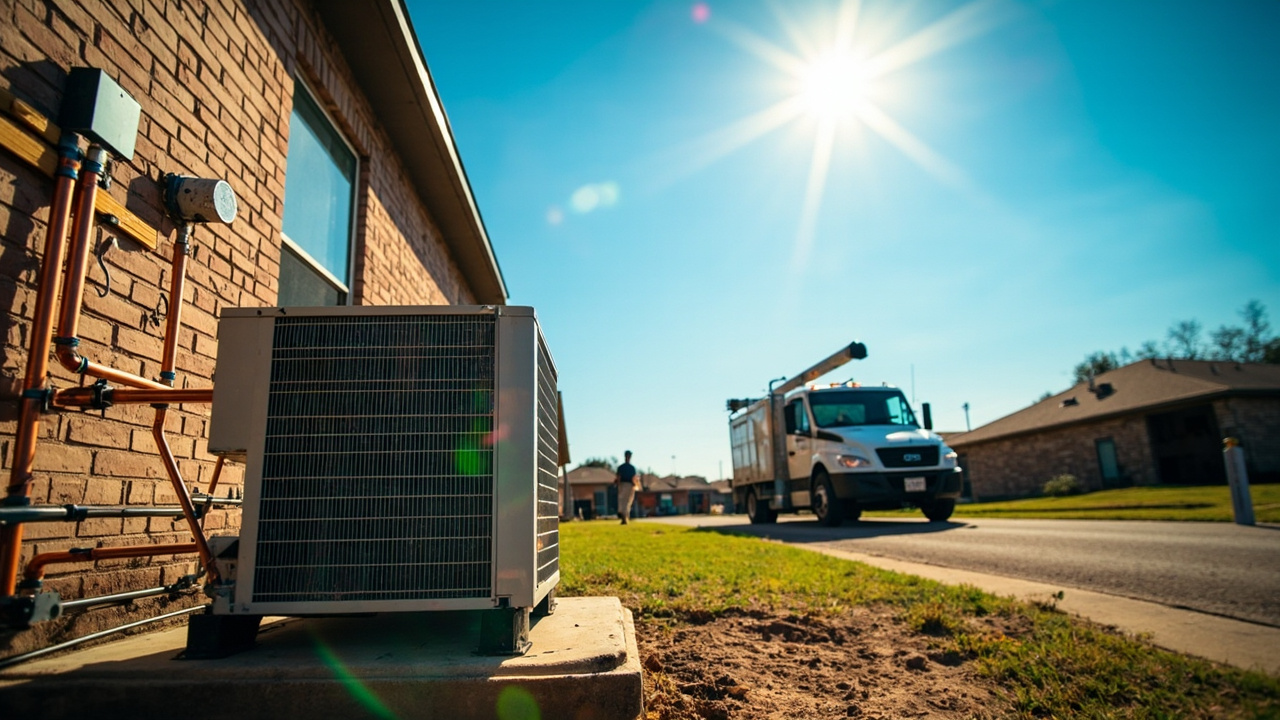
This is where the ground under the equipment matters. Outdoor condensing units around Waco sit on pads over expansive Blackland clay, and that clay shrinks in dry weeks and swells again when it rains. A pad that tilts even a little puts steady strain on the line set flare joint at the unit, and a joint under that kind of stress is exactly where a slow leak starts. It is a mechanical cause, not a manufacturing defect, and it is one an unfamiliar technician can miss if they only check pressure and never look at how the unit is sitting.
Left alone, a slow leak follows a set path. The system runs longer for less cooling and the oil stops circulating the way it needs to, and once that continues the compressor loses lubrication internally and seizes. A seized compressor is a system replacement decision rather than a repair. Calling early instead of running the system through another hot week determines whether the visit replaces one component or dismantles the whole unit, which changes what the repair costs and what gets installed in its place.
See emergency blower motor replacement for how the related work is scoped and priced.
How the leak gets found before anything gets recharged
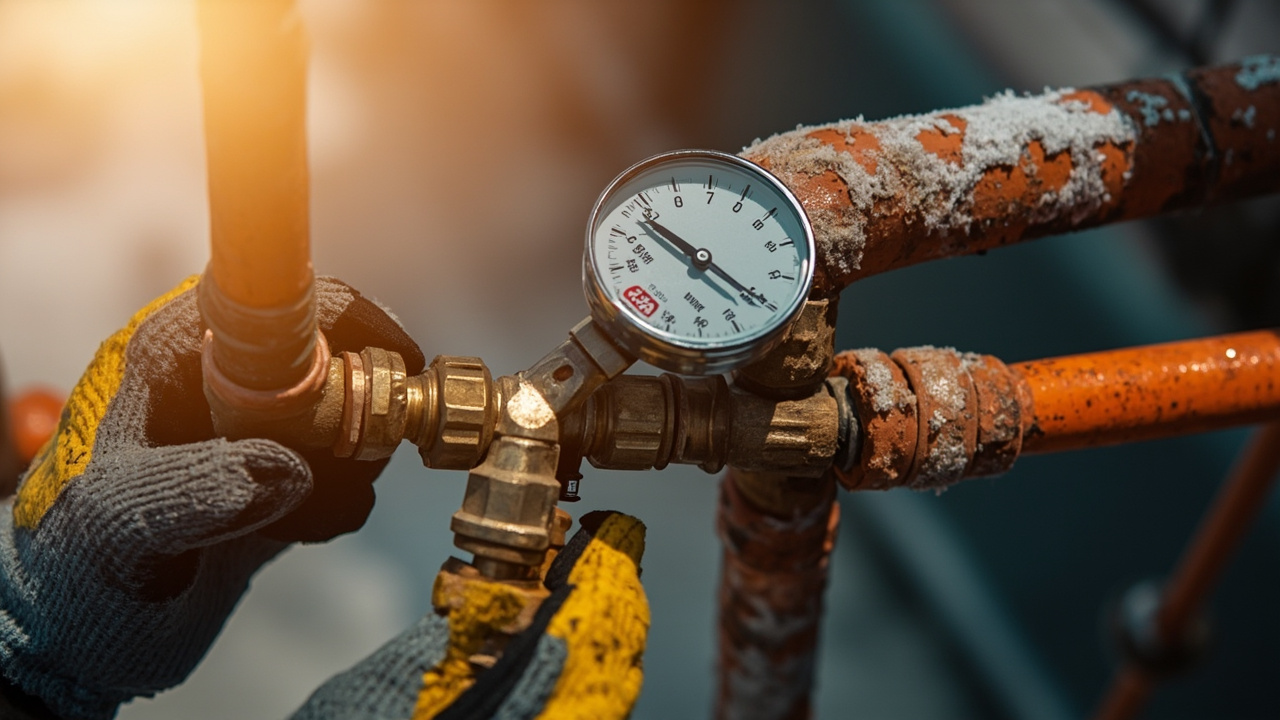
The visit starts with airflow, checking the filter, the coil and the return path, because restricted airflow can mimic a low charge complaint and there is no point reading gauges until that branch is ruled out. Once airflow is cleared, manifold gauges go on and superheat and subcooling readings tell the next part of the story. High superheat paired with low subcooling points at an undercharge or a restriction rather than a weak compressor, and on a system with a thermostatic expansion valve the subcooling number carries most of the weight, while a fixed orifice system gets read mostly on superheat.
Those readings decide the location of a leak if one exists. Refrigerant is not consumed in normal operation, so a low reading always means it is escaping somewhere. The question is whether that escape sits at an outdoor connection, a fitting inside the line set run, or somewhere behind the coil. Finding it properly means sealing the joint or replacing the section, changing the filter drier, pulling a vacuum and holding it before any charge goes back in, rather than adding a pound and hoping the number holds through the next hot week.
Weighed against that process, a top off without a located leak is the comparison that matters here. A recharge with no leak found buys a few weeks at most, because the same joint under the same strain keeps working loose, and the same low charge complaint comes back with the compressor a little more worn each time. The gauge readings taken during diagnosis get taken again after the repair, under running load, to confirm the fix holds rather than just confirming the pressure looks right at that moment. This second set of readings verifies the system holds steady under load and the repair was complete, not that a temporary bump in pressure will fade within days. The difference between a lasting repair and a cycle of callbacks is the discipline of that verification step, measured twice rather than assumed once.
Our page on 24/7 emergency ac repair covers that side of the work in more depth.
Permit and inspection questions? Commercial Construction Permits is the office we coordinate with on every permitted Waco job.
Ask which of these readings was taken before any part is replaced.
| Instrument | Good reading | Bad reading | What it changes |
|---|---|---|---|
| Manifold gauges with superheat and subcooling readings | Superheat and subcooling both landing in the range the equipment maker specifies for that metering device | High superheat with low subcooling | An undercharge or a restriction rather than a weak compressor |
| Filter, coil and condensate inspection | Light passes through the filter pleats, the coil fins are clean | A matted filter, a coil with ice on it | A homeowner who has never seen the inside of their air handler makes a different decision |
| Manometer for total external static pressure across the air handler | Static pressure at or under the maximum printed on the blower data plate | Static above the rating | The filter, the coil or the duct is choking the system |
| Two probes for delta T between return and supply air | A 16 to 22 degree drop across the coil in cooling at normal indoor humidity | A small drop means airflow or charge is wrong | An unusually large drop means the coil is being starved of air |
| Clamp ammeter on the compressor and the blower | Running amps at or below the rated load amps stamped on the data plate | Amps steady above the rating, or a brief spike toward locked rotor on start | A failing capacitor, contactor or compressor |
How an emergency leak call runs
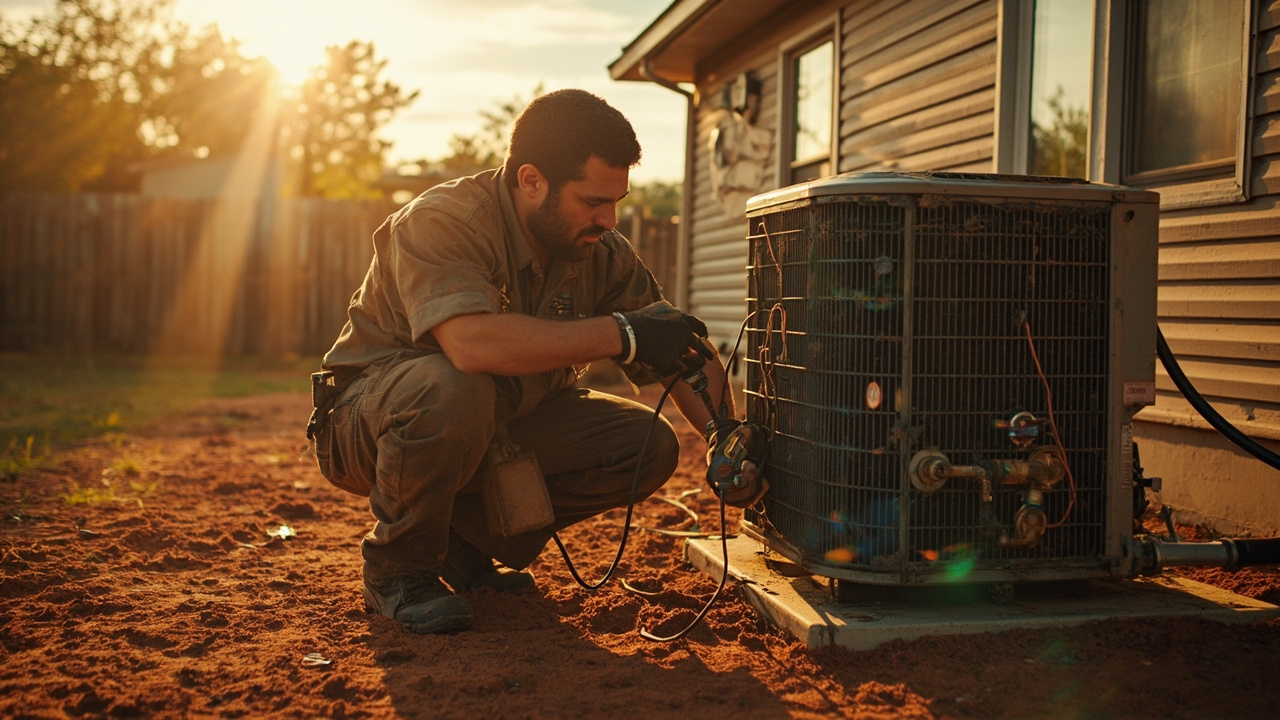
Call and initial read
On the phone we ask what the system is doing, when it started running longer than normal, and whether you have seen frost on the line set or heard noise at the outdoor unit. That information decides whether this goes on the board today or gets scheduled. On arrival, the first check is airflow across the coil, the filter and the return path, because a restricted airflow complaint can look like a low charge complaint until that is ruled out. Only after airflow is cleared do the gauges go on.
Locate and isolate the leak
With airflow cleared, superheat and subcooling readings point the search toward a leak rather than a restriction, and the flare joints and line set connections at the outdoor unit get checked first, since that is where pad movement puts the most strain. Once the leak is found, that section is isolated so no more charge is lost while the repair is made. If the run needs replacing rather than repairing in place, that gets shown to you before the work continues past that point.
Evacuate, recharge and verify
After the leak point is sealed or the line set section is replaced, the system is pulled down under vacuum to remove air and moisture before any refrigerant goes back in. Refrigerant is then added back to the manufacturer weight for that equipment, and gauges go back on to confirm superheat and subcooling are landing where that metering device expects, the same reading that pointed to the leak in the first place, now used to confirm the fix holds. You get a walkthrough of what was found and repaired.
Why unfamiliar crews miss the source here
A technician who does not work this ground regularly tends to treat every low charge complaint the same way, checking the coil, checking the compressor, and adding refrigerant when the numbers look low. What that approach misses is the mechanical cause behind so many leaks in this county, which is the outdoor pad shifting under the condensing unit as the clay beneath it dries out and swells again through the season. A unit sitting even slightly out of level puts ongoing strain on the flare connection at the line set, and that connection is where the metal fatigues and starts to weep refrigerant slowly rather than all at once.
An out of area crew that has not seen this pattern will often look at the coil and the compressor first, because those are the parts that fail everywhere. Here, the connection at the outdoor unit deserves priority attention early in the diagnostic process, because the ground itself is doing the damage rather than age or use alone. The pad shifts again as the season changes, the connection fatigues further, and a repair that sealed the leak elsewhere in the system eventually leaks out once more.
Working across McLennan County on nothing but this kind of call means recognizing that pattern on arrival rather than discovering it after a first repair fails. A level check on the concrete pad before the gauges go on is a five minute step that takes place before any refrigerant work begins. That measurement tells the story of whether the foundation itself is the problem. When the pad has shifted, releveling it or shimming it back to true stops the strain on the flare connection and addresses the actual source of the leak. A repair that holds through the next long stretch of heat depends on finding and fixing the mechanical cause, not just sealing whichever connection happens to be weeping.
If this sounds close but not quite your situation, carbon monoxide leak response may be the better starting point.
When we spec replacement equipment, ENERGY STAR's heating and cooling ratings are the baseline we work from.
What working with us looks like from your side
Same day dispatch and arrival
When you call about a suspected leak, we ask what the system is doing, how long it has been running longer than usual, and whether you have noticed frost on the line set or a hiss near the outdoor unit. Those answers tell us whether this is a same day dispatch or a scheduled visit. You get a window before the technician arrives, and if a call ahead of yours runs long because a leak location took longer to pin down, you are told and given an updated time rather than left waiting.
Equipment and home care
Gauges, recovery equipment and a nitrogen tank go down on a drop cloth by the outdoor unit before anything is opened, so nothing sits directly on the pad or the grass around it. Refrigerant is recovered rather than vented during the repair. Inside, access to the air handler is limited to what the diagnosis needs, and any panel that comes off goes back on before the technician leaves, with the area left the way it was found.
What decides job size
The biggest fork is whether the leaking section of line set can be repaired in place or needs to be replaced outright, which the leak location decides. A connection at the outdoor unit is usually a smaller job than a leak buried in a run through an attic or under a floor, and access to that run moves the job up or down from there. Once the leak is located, the scope is written out and you see it before any repair starts.
How a technician earns solo calls
A new technician runs a number of leak calls alongside a lead before taking one alone, and the lead signs off specifically on reading superheat and subcooling correctly against the metering device on that coil, not just on hooking up gauges. On a leak that will not show itself with a standard sniffer pass, a second technician looks at the pressure decay test with them before the repair gets written up.
You Have Questions,
We Have Answers
Cost depends on where the leak is and whether the line set section can be repaired or needs replacing. A leak at an outdoor connection is usually a smaller job than one buried in a wall or attic run, and access drives labor time. Whether the coil and line set match the existing charge type also factors in. We locate the leak first and show you the scope before any repair starts, so you know the location before committing to the work.
Yes, a refrigerant leak differs from a gas leak or carbon monoxide concern. The real risk is compressor damage, since a system running low on charge runs the compressor hotter and with less oil circulating until it seizes. Call promptly to stop that wear before it turns into a compressor replacement. The air in your house remains safe to breathe.
Why clay under Waco pads changes refrigerant leak repair
Waco sits in the Blackland Prairie, where the dark clay soil under most yards shrinks in dry stretches and swells again once it rains. An outdoor condensing unit sitting on a pad over that clay moves with it, tilting slightly as the ground underneath shifts through the season. That movement puts continuous mechanical stress on the refrigerant line set where it connects to the unit, at the flare joint, and a joint under that kind of load is where metal fatigues and starts to weep slowly rather than fail all at once. Add long cooling seasons that run the compressor for months without a real break, and a connection already stressed by ground movement gets no rest to recover between cycles. That combination is why a leak here so often starts at the outdoor connection rather than somewhere inside the coil.
Confirming a repair holds means more than watching the pressure gauge settle once refrigerant goes back in. After the leak is sealed and the system evacuated, the same superheat and subcooling readings taken during diagnosis get taken again with the system running under normal load, and they need to land where that metering device expects before the visit is called finished. On a unit where the pad has shifted, that reading gets taken again after the unit is releveled if the pad needed it, because a unit still sitting out of level will put the same strain back on the same joint within a season. Skipping that recheck is how a sealed leak becomes a repeat call once ground settlement moves the unit again and pressure concentrates at the original failure point.
HVAC Services in The Waco Area
Explore our service area and locate Granite HVAC Waco with ease. We're proudly local and serve the surrounding neighborhoods with fast response and honest pricing. Use the map to check our coverage area, or call us and we'll confirm in seconds.
Address:
Granite HVAC Waco, Waco, TX, 76701
Additional Services We Offer
- 24/7 Emergency AC Repair
- After-Hours HVAC Service
- Carbon Monoxide Leak Response
- Emergency Blower Motor Replacement
- Emergency Boiler Repair
- Emergency Commercial HVAC Repair
- Emergency Compressor Replacement
- Emergency Furnace Repair
- Emergency Heat Pump Repair
- Emergency Thermostat Replacement
- No Cooling Emergency Service
- No Heat Emergency Service
Checking the outdoor unit for a couple of feet of clearance, watching for frost on the line set, and confirming the condensate line drains are things you can do yourself before calling. Anything past that stops being a homeowner job, because recovering and adding refrigerant, opening the sealed circuit, and working behind the blower door all require handling refrigerant under pressure. If what we find points to a compressor already damaged by low oil, we tell you on the first visit rather than after a repair is underway.
Before you call, know when the system started running longer than normal and whether anything changed right before that, like a storm or a hot stretch. Check whether you can see frost on the line set outside or detect a hiss near the outdoor unit, and have the age of the system if you know it. Knowing where the outdoor disconnect is helps too, and those few details usually tell us whether today is the day.
Last reviewed September 2026 by Dale Whitfield, Service manager.