



What a furnace that lights then quits is telling you
Your furnace fires, the burner catches, and for a few seconds the closet sounds normal. Then the flame cuts out and the blower keeps pushing cold air through the vents while the igniter waits to try again. A minute later the same thing happens, sometimes twice, sometimes several times, and each attempt looks like a full start to anyone standing in the hallway listening. That pattern is what gets misread as a bad ignitor, when the ignitor itself is doing its job every single time and the failure sits one step further down the ignition sequence.
The control board never judges flame by sight. It reads a small electrical signal carried through the flame sensor rod sitting in the burner path, and that signal has to clear a set threshold before the board will keep the gas valve open. A layer of oxidation building on the rod cuts that signal without changing how the rod looks under a flashlight, which is why a furnace that ran fine on the first cold night of the season can start dropping flame on the second or third call for heat while the rod still appears clean. The board is not guessing wrong. It is reading exactly what the sensor is sending it, and what it is sending has gone weak.
Waco winters spend most of the season mild, then get interrupted by short hard freezes that push a furnace from occasional short cycles into hours of steady demand overnight. A sensor carrying just enough coating to cause an odd short cycle in November gets pushed past its margin the first night the temperature drops hard, which is part of why furnace repair calls cluster on the coldest nights of the season rather than spreading evenly across the winter. A furnace that seemed fine at low demand can fail outright at full demand with nothing else in the house having changed.
Left alone, the pattern worsens in a fixed order rather than at random. A coated sensor sends a weak signal, so the burner lights and drops on the first retry, then the second, then the third. Most control boards allow only a limited number of retries before they stop trying altogether, and once that count is used up the board locks out completely until someone resets it by hand. For most households that means a cold house discovered the next morning rather than a furnace that simply runs poorly, which is the line between a furnace repair service call that fits into a normal afternoon and an emergency furnace repair after the house has gone cold overnight.
More detail on furnace installation & replacement is on its own page.
Forums like r/hvacadvice show what homeowners nationwide pay and encounter, useful context for any quote you receive.
Find the sign you have, then read across to see whether it can wait.
| Symptom or first sign | What is already happening | What it becomes if ignored | When to call |
|---|---|---|---|
| A coated flame sensor | The burner lights and drops out again and again | The board locks out on repeated trials and the house goes cold overnight | At the next visit, while the fix is small |
| A slow refrigerant leak | The system runs longer for less cooling and oil stops circulating properly | The compressor loses lubrication and seizes | This week, while it is still one part |
| A loaded filter | Airflow drops and the coil runs colder than it was designed | The coil ices over and the compressor takes liquid refrigerant back and fails | This week, while it is still one part |
| A plugged condensate drain | The pan overflows into the platform or the ceiling | The ceiling below stains and the rusted secondary pan lets the rest through | Soon, before it spreads past the repair |
How we trace a lockout back to its cause
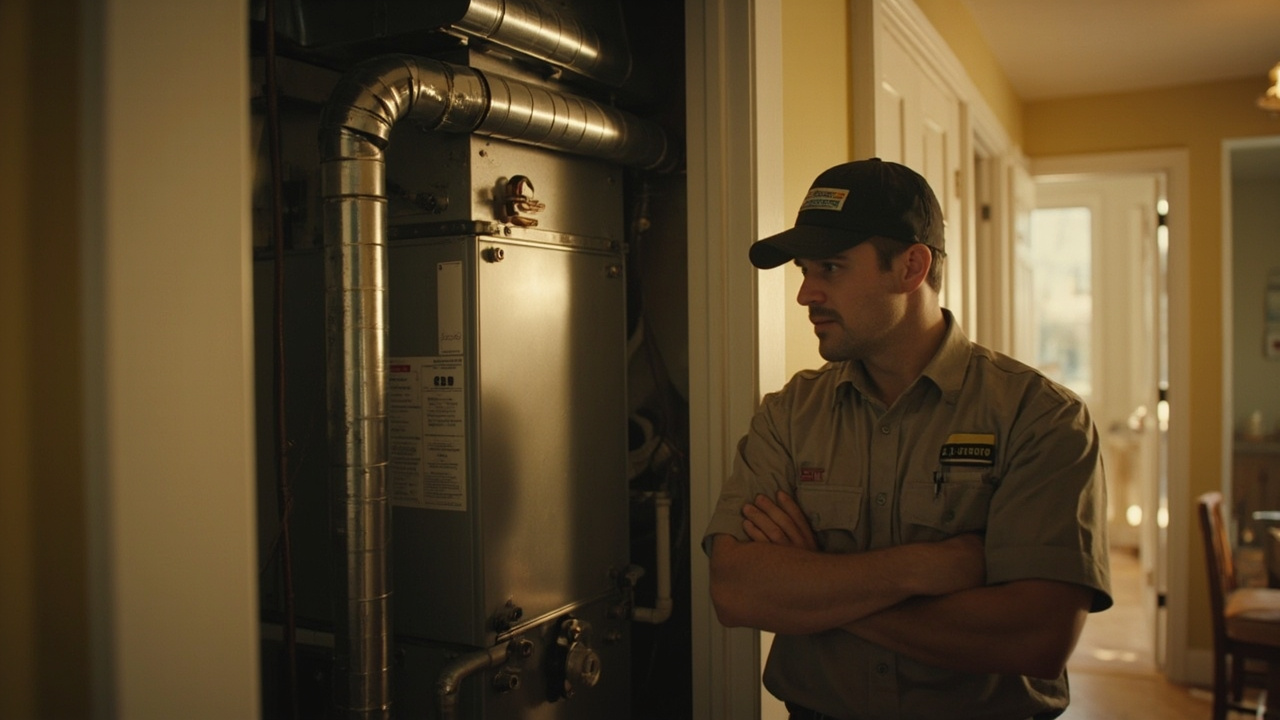
A lockout gets traced in a fixed order rather than solved by swapping the part that looks the most worn. Work starts at the thermostat, confirming the call for heat reaches the board and watching a full ignition cycle play out, inducer running, igniter glowing, gas valve opening on schedule. From there a microamp meter clips onto the flame sensor through several ignition cycles rather than a single glance at the rod, because a sensor that looks clean can still be passing a signal too weak for the board to accept as proof of flame. A steady reading well above the point where the board treats it as no flame moves the fault past the sensor entirely, toward the pressure switch, the draft path, or the board itself.
A weak or drifting reading changes what happens next. Cleaning the rod with a gentle abrasive pad and rechecking that same reading through another full cycle confirms whether the cleaning held, rather than assuming a clean looking rod solved anything. A signal that climbs back into range and stays there through repeated ignition attempts closes the visit as an affordable furnace repair rather than a parts replacement. A signal that stays weak after cleaning points toward a pitted or cracked sensor, or toward flame current leaking out through a poor ground connection at the burner mount, either of which calls for the part itself rather than another cleaning.
Where a furnace has reached the age where replacement enters the conversation, the choice between fuels comes down to how each one performs through a Waco winter and what heating output you need when outdoor temperatures drop. A gas furnace is rated on AFUE and delivers the same heat output no matter how far the outdoor temperature falls, which matters through the short hard freezes that interrupt an otherwise mild season here. A heat pump is rated on HSPF2, and its heating output declines as the outdoor temperature drops, so a dual fuel setup that lets the heat pump carry the mild stretch of winter and switches to the furnace at a set balance point uses both fuels for what each does well. The furnace handles peak heating demand during the coldest weather while the heat pump covers the longer periods of moderate cold, avoiding the inefficiency of running either system outside its optimal range for the entire season.
Our page on furnace afue ratings explained covers that side of the work in more depth.
We install and service major brands like Carrier and register every unit to manufacturer specifications.
Narrow this to two options before calling, then ask which one suits the house.
| Option | The numbers a buyer weighs | Best suited to |
|---|---|---|
| Heat pump against gas furnace | A heat pump is rated on HSPF2 and its output falls as the outdoor temperature drops | Climates where the winter low decides the choice |
| Ducted system against ductless mini split | Mini splits are rated per indoor head | Additions and rooms the ducts never reached |
| Filtration choice | Compared on MERV rating against pressure drop | Allergy households with duct that can take it |
| Packaged rooftop unit against a light commercial split system | Compared on tonnage per cabinet | Commercial buildings on a capital plan |
How a furnace repair call runs
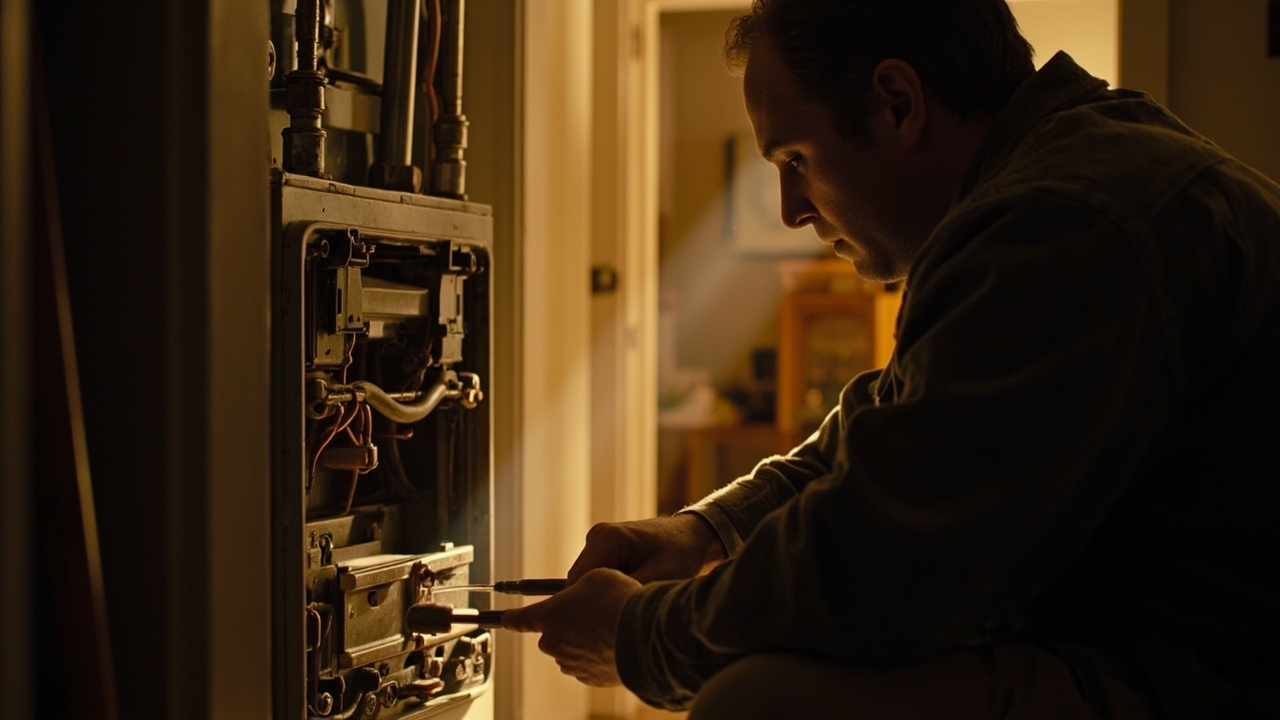
The call and first check
On the phone we ask how many times the burner tries to light before quitting and whether it has abandoned the cycle, since that tells us how far the control board has gone into its lockout sequence. On site the check begins at the thermostat, verifying the call for heat reaches the board, then watching a full ignition cycle before touching anything. Only then does the flame sensor get a microamp meter clipped to it through several cycles, because that reading tells us whether the sensor or something further down the ignition chain is the true cause.
After you approve the work
Once you approve the scope, the gas valve and power to the furnace get shut down before the burner compartment opens. Cleaning the flame sensor rod with a gentle abrasive pad comes first if the reading calls for it, followed by a recheck through another full ignition cycle rather than a single test. If the pressure switch or the draft path turns up restricted, or the heat exchanger shows a crack behind the burner, we stop and show you what turned up before deciding anything past that point.
What we confirm before leaving
Before we leave, the flame sensor signal has to hold steady well above the point where the board would read it as no flame, checked across several full ignition cycles rather than just one. A combustion analyzer goes into the flue once the burner has settled to confirm carbon monoxide stays low and steady rather than climbing. We walk you through the readings taken and the cycles run, and you keep a written note of what was checked and what it read.
Why hall closet furnaces take longer to get right
A crew that has not worked much furnace repair in Waco's older housing stock tends to underestimate the closet itself. Post war and mid century ranch houses here often set the gas furnace into a hall closet or a garage with barely enough clearance to pull the burner compartment door fully open, and the ductwork feeding that furnace usually runs through the attic rather than a basement, which means there is no second access point if the closet is tight. A technician working fast in that space can misjudge where the flame sensor sits relative to the burner and either miss the coating entirely or damage the rod trying to remove it in a hurry.
The consequence of rushing that access shows up later rather than during the visit. A sensor reinstalled slightly out of position reads inconsistently even after cleaning, and the homeowner ends up back at square one on the next cold night, believing the furnace itself failed when the mounting was the actual problem. Working the closet at the pace the space requires, rather than the pace an open mechanical room would allow, is what keeps a flame sensor repair from becoming a repeat visit.
Attic ductwork on these same houses adds a second layer to get right during any furnace work, since a technician pulling a blower assembly or checking static airflow in a hall closet furnace has to account for return air pulled down from an attic plenum rather than a nearby open return. Getting the sequence right in this housing type, checking the sensor and the burner before ever touching the duct side, keeps a furnace repair company from chasing airflow symptoms that were never the actual fault. Multi brand familiarity matters here too, since hall closet furnaces installed across different decades in this housing stock carry different board layouts and different sensor mounting styles, and knowing which is in front of you before the closet door opens saves real time.
Your local utility, Utility Bill City of Waco, publishes service and water-quality information every Waco homeowner should know.
What the visit looks like once you call
Getting someone to your door
When you call, we ask how many times the furnace tries to light and whether the board has stopped attempting altogether, since that tells us how urgent the visit is. A furnace still cycling gets worked into the same day where the schedule allows it, and a furnace that has locked out completely and left the house cold moves ahead of scheduled work. You get a window before the technician leaves the prior job, and if that job runs long on a hall closet with tight access, we call and reset the window rather than leaving you guessing.
Keeping the closet clean
Before the burner compartment opens, a drop cloth goes down in front of the closet or garage door, since that floor space is often carpet or finished flooring rather than a utility room slab. Tools stay staged on the cloth rather than the floor, and anything removed from the compartment, panels, screws, the old sensor if it is replaced, gets set aside on the same cloth instead of scattered through the house. The closet door gets wiped down and the space left as it was found once the ignition cycles check out.
What changes the price
Access moves the cost more than the part does. A furnace set into a roomy garage takes less time to reach than one wedged into a hall closet where the door opens only partway, and that tight space decides how carefully the sensor and burner compartment can be worked without forcing anything. The flame sensor reading and combustion check set the actual scope, and you see that scope and approve it before any part comes off or any cleaning starts.
How a technician earns the closet
A new technician works a set number of hall closet and garage furnace calls alongside a lead before going out alone, and the lead signs off on reading a flame sensor correctly across multiple startups instead of one observation. On any furnace where the heat exchanger looks questionable behind the burner, a second technician confirms the finding before it goes into the written scope. Multi brand board layouts get reviewed as a group rather than left for one person to figure out mid job.
You Have Questions,
We Have Answers
Cost on a furnace service call depends on access, the readings it takes to find the fault, and whether the repair is a sensor cleaning or a part replacement. A hall closet or garage furnace with tight clearance around the burner compartment takes longer to reach safely than an open mechanical room, and that access time is usually a bigger factor than the part itself. We write the scope from the flame sensor reading and combustion check before quoting anything, and you approve it before work starts.
The most common furnace problem is a coated flame sensor causing repeated ignition lockouts. The sensor passes a weak microamp signal instead of a steady one, the control board reads that as no flame, and the burner cycles off and tries again until the board locks out. In Waco's hall closet and garage furnaces, dust in that enclosed space coats the sensor faster than it would in an open mechanical room, which is why this pattern emerges when heating demand spikes sharply.
You can handle filter changes, checking the breaker and thermostat batteries, and making sure the closet or garage vents around the furnace are not blocked. Fixing it yourself stops at the burner compartment and the gas valve, since flame sensor work involves live combustion and control board voltage that is not a homeowner task. If those basic checks do not stop the lockout, the sensor signal itself needs a meter on it.
Why hall closet furnaces change this repair
Ranch houses built across Waco from the 1940s through the 1960s put the gas furnace inside a hall closet or a garage rather than a basement, since most of this stock sits on a slab or a shallow pier and beam foundation with no below grade mechanical room to use instead. That placement puts the flue and burner compartment closer to the living space than an open utility room would, so a combustion reading taken there carries more weight in the diagnosis than it would in a detached mechanical room. Many of these same furnaces have been swapped once or twice since the house was built, often into the same closet footprint, so board layouts and sensor mounting brackets from different manufacturing years end up crowded into a space sized for an older, smaller unit. Running the ignition check before opening anything else keeps that mismatch from turning into wasted time hunting for a part that fits a closet built for a different furnace entirely.
Because these furnaces sit inside living space rather than a detached mechanical room, the combustion reading taken at the flue carries the same weight here that an outside check would carry elsewhere. Carbon monoxide has to read low and steady once the burner has settled, not just at the moment ignition catches, since a furnace crowded into an undersized closet can draft differently once the blower door goes back on and the space closes up around it. Knowing that a hall closet install behaves differently once sealed back up is what keeps a technician from calling the repair finished on a reading taken with the door open. The same combustion check gets repeated with everything reassembled, because that is the condition the furnace runs in every night through the heating season, closet door shut and burner working inside a tight, enclosed space.
HVAC Services in The Waco Area
Explore our service area and locate Granite HVAC Waco with ease. We're proudly local and serve the surrounding neighborhoods with fast response and honest pricing. Use the map to check our coverage area, or call us and we'll confirm in seconds.
Address:
Granite HVAC Waco, Waco, TX, 76701
Additional Services We Offer
Checking a thermostat's batteries, confirming the breaker has not tripped, and swapping a dirty filter are homeowner jobs. The boundary sits at the burner compartment and gas valve, because flame sensor work and anything behind the blower door involves live gas combustion and line voltage. If we find a cracked heat exchanger rather than an ignition fault, we say so on the first visit.
Before you call, know whether the ignition cycles repeatedly or has stopped completely, and when the problem started relative to the first cold weather. If possible, find the furnace's age or its location, and check whether a tripped breaker or dead thermostat batteries are the obvious cause first. Those details tell us whether tonight needs a visit.
Last reviewed September 2026 by Dale Whitfield, Service manager.