


Why the bill climbed when nothing else changed
The thermostat is still set where it has always been set, but the electric bill jumped and the house does not feel any cooler for it. That is the pattern behind most of these calls in Waco during the long stretch of cooling season, and it is rarely the utility rate. An electric bill spike from AC almost always means the system is running longer to do the same job, and longer runtime on the same equipment is what an inefficient HVAC system looks like from the meter.
What drives the longer runtime is airflow more than anything mechanical inside the compressor. A dirty filter, a coil losing surface area to buildup, or a return path that was never sized for the load all make the blower push against more resistance than it was built for. The system keeps running because the thermostat has not been satisfied, and every extra minute of runtime shows up on the bill the following month. This mechanism is behind the question of why the cooling bill is high even when the setpoint has not moved, and why reducing HVAC energy costs starts with airflow rather than with a new outdoor unit.
Waco's cooling season runs long, often from spring into October, so a system that is quietly under-delivering does not get a break to recover. It runs closer to constant, and the waste compounds across months instead of days. When HVAC causes high energy bills, a fair description of what is happening in many of these houses emerges, and it usually shows up before any part fails outright. The blower motor draws more amperage as it fights the resistance, the compressor cycles more often, and both effects stack together to drive the monthly consumption higher than design specifications call for.
The one condition that turns this into an emergency rather than a bill problem is a refrigerant leak. A slow leak means the system runs longer for less cooling, and running longer without enough charge means oil stops circulating with the refrigerant the way it is supposed to. Once that happens the compressor loses lubrication and seizes, which is the point where a bill problem becomes a compressor replacement. The progression from leak to inefficiency to bearing failure is why calling before the next hot stretch rather than after it makes the difference between a service call and a major repair.
See ac leaking water for how the related work is scoped and priced.
Find the sign you have, then read across to see whether it can wait.
| Symptom or first sign | What is already happening | What it becomes if ignored | When to call |
|---|---|---|---|
| A slow refrigerant leak | The system runs longer for less cooling and oil stops circulating properly | The compressor loses lubrication and seizes | This week, while it is still one part |
| A cracked heat exchanger | Combustion gas mixes with the air being blown through the house | Carbon monoxide reaches the living space | Now, the same day |
| A loaded filter | Airflow drops and the coil runs colder than it was designed | The coil ices over and the compressor takes liquid refrigerant back and fails | This week, while it is still one part |
| A plugged condensate drain | The pan overflows into the platform or the ceiling | The ceiling below stains and the rusted secondary pan lets the rest through | Soon, before it spreads past the repair |
How we find where the energy is going
Airflow gets checked before refrigerant, because a correctly charged system behind a choked filter or an undersized return still runs long and still costs more than it should. The order on a bill spike call is the filter and coil first, then the duct itself, then whatever the charge turns out to be, and each step rules out a branch before the next one means anything.
The reading that decides the next hour of the visit is total external static pressure, taken with a manometer across the air handler and checked against the maximum printed on the blower data plate. A reading at or under that maximum means the duct can move the air the equipment needs, and any waste is coming from somewhere else in the system. A reading above it means the filter, the coil or the duct itself is choking the airflow, and no amount of refrigerant work fixes that. That single number is what separates a duct problem from a charge problem, and it is checked before either superheat or subcooling gets a gauge on it.
Where the fix is a new system rather than a repair, the equipment choice turns on staging more than on an efficiency label. A single stage condenser runs at one capacity and cycles off once the thermostat is satisfied. A two stage or variable capacity condenser can run longer at a lower output, which pulls more moisture out of the air and avoids the short, hard cycles that waste energy without fully cooling the house. The extra runtime at low capacity is usually what makes the house feel even and the bill behave, not the SEER2 number on the box. In a cooling season as long as this one, that distinction matters most when the system runs through the shoulder months, where a unit that can dial down its speed keeps temperatures stable without the wide swings that trigger occupant complaints or drive up consumption.
Our page on ac blowing warm air covers that side of the work in more depth.
Permit and inspection questions? Commercial Construction Permits is the office we coordinate with on every permitted Waco job.
Ask which of these readings was taken before any part is replaced.
| Instrument | Good reading | Bad reading | What it changes |
|---|---|---|---|
| Manometer for total external static pressure across the air handler | Static pressure at or under the maximum printed on the blower data plate | Static above the rating | The filter, the coil or the duct is choking the system |
| Filter, coil and condensate inspection | Light passes through the filter pleats, the coil fins are clean | A matted filter, a coil with ice on it | A homeowner who has never seen the inside of their air handler makes a different decision |
| Manifold gauges with superheat and subcooling readings | Superheat and subcooling both landing in the range the equipment maker specifies for that metering device | High superheat with low subcooling | An undercharge or a restriction rather than a weak compressor |
| Clamp ammeter on the compressor and the blower | Running amps at or below the rated load amps stamped on the data plate | Amps steady above the rating, or a brief spike toward locked rotor on start | A failing capacitor, contactor or compressor |
| Micron gauge during evacuation | Below 500 microns and holding there after the pump is valved off | A reading that climbs back up | Moisture is still boiling off inside or the system is not sealed |
| Two probes for delta T between return and supply air | A 16 to 22 degree drop across the coil in cooling at normal indoor humidity | A small drop means airflow or charge is wrong | An unusually large drop means the coil is being starved of air |
How a bill spike visit runs
Call and first read
On the phone we ask when the bill jumped, what changed about equipment operation, and whether the system sounds or runs differently than it used to. On site, the order is fixed. Filter and coil condition get checked first, then the return path, then the manometer goes on the air handler for total external static pressure against the blower data plate. Only once that reading is in hand does a temperature split across the coil or a charge check mean anything, because airflow decides whether either of those numbers can be trusted.
What gets opened
Once the static pressure reading points at the duct or the return, we trace the run to find where it narrows, leaks or loses insulation, and show you the specific section before anything gets cut into. If the reading instead points at the coil or the charge, we isolate the system at the disconnect before opening the refrigerant circuit. Where a leak turns up, we find it and repair it, replace the filter drier, and pull a vacuum rather than simply adding charge back into a system that will just lose it again.
What we check before leaving
Static pressure goes back on the manometer after any duct correction, and it has to read at or under the blower data plate maximum before the visit is called finished. Where refrigerant work was done, the micron gauge has to hold below 500 after evacuation before the system is charged. We walk you through what the readings showed and what changed, and you keep the written scope with those numbers on it.
What an unfamiliar crew misses on a bill call
A crew that does not work Waco housing stock regularly tends to treat every high bill call the same way, and that is where the mistake starts. They will pull a static pressure reading, see the number, and still recommend a new outdoor unit because that is the visit they are used to running. In a house with attic ductwork built after the fact rather than designed in from the start, the equipment is often fine and the loss is happening in forty feet of duct sitting in attic heat. Recommending a new condenser without tracing that duct run first replaces a working part and leaves the actual cost driver in place, so the bill barely moves and the homeowner has spent money on the wrong system.
The other mistake shows up with the soil rather than the attic. Expansive Blackland clay shifts outdoor pads and stresses line sets over time, and a crew unfamiliar with that movement pattern reads a refrigerant fault as a random defect instead of checking whether the pad has tilted or the line set has pulled at a joint. Missing that connection means the same leak comes back after a recharge, because the mechanical cause was never addressed.
Response across this part of the metro runs along Interstate 35 and the surrounding arterial roads, which puts most of the housing stock within a workable drive regardless of which side of the highway a call comes from. That matters on a bill spike call specifically, because the attic access and duct routing in a slab era ranch is different from the crawlspace routing in an older pier and beam house, and knowing which one to expect before opening the attic hatch is what keeps a diagnostic visit from turning into an exploratory one. A crew that has traced attic duct runs in this housing stock before knows where the restriction usually sits before the ladder goes up.
If this sounds close but not quite your situation, ac constantly running may be the better starting point.
The EPA's indoor air quality resources are the reference we point customers to on ventilation and filtration questions.
What the visit is like once you call
Booking and arrival window
On the call we ask when the bill jumped, whether the thermostat setting changed, and how the system sounds compared to before. Those answers tell us whether this is a same day visit or a scheduled one, and you get a window rather than an open ended promise. If the job ahead of yours runs long because a duct trace takes longer than expected, we call and give you the new time before your window passes rather than after it.
Attic and equipment protection
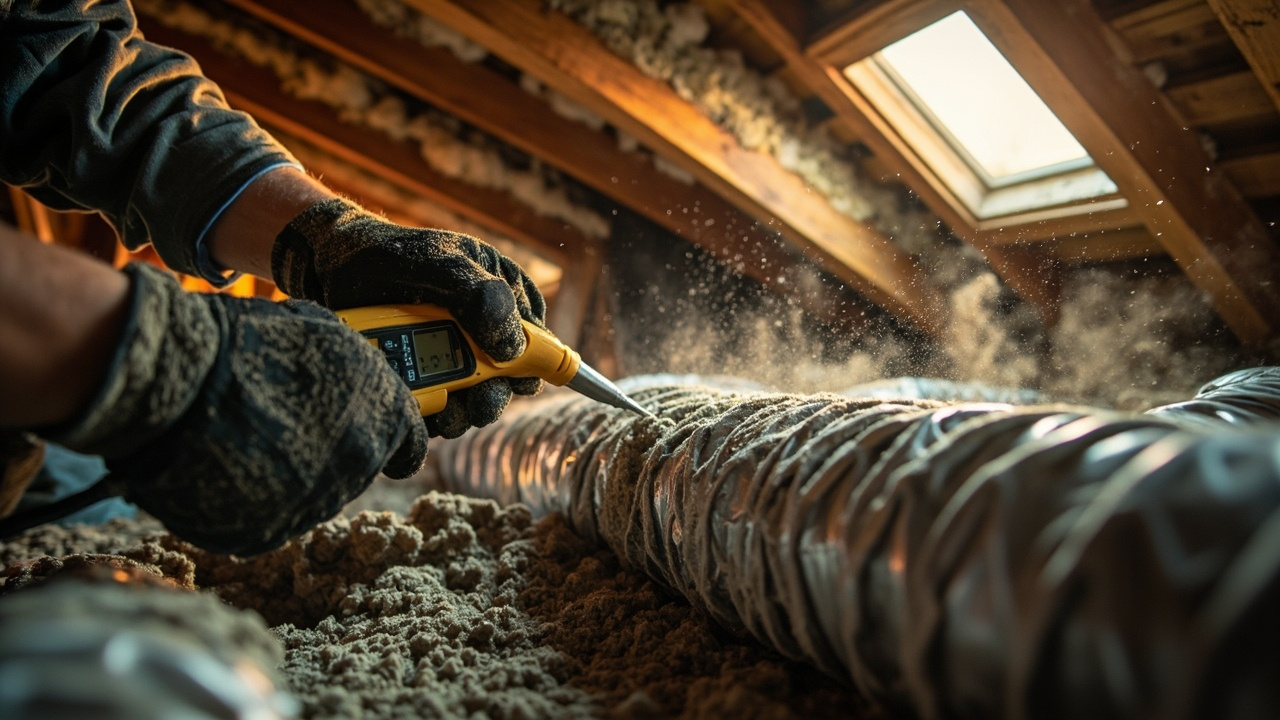
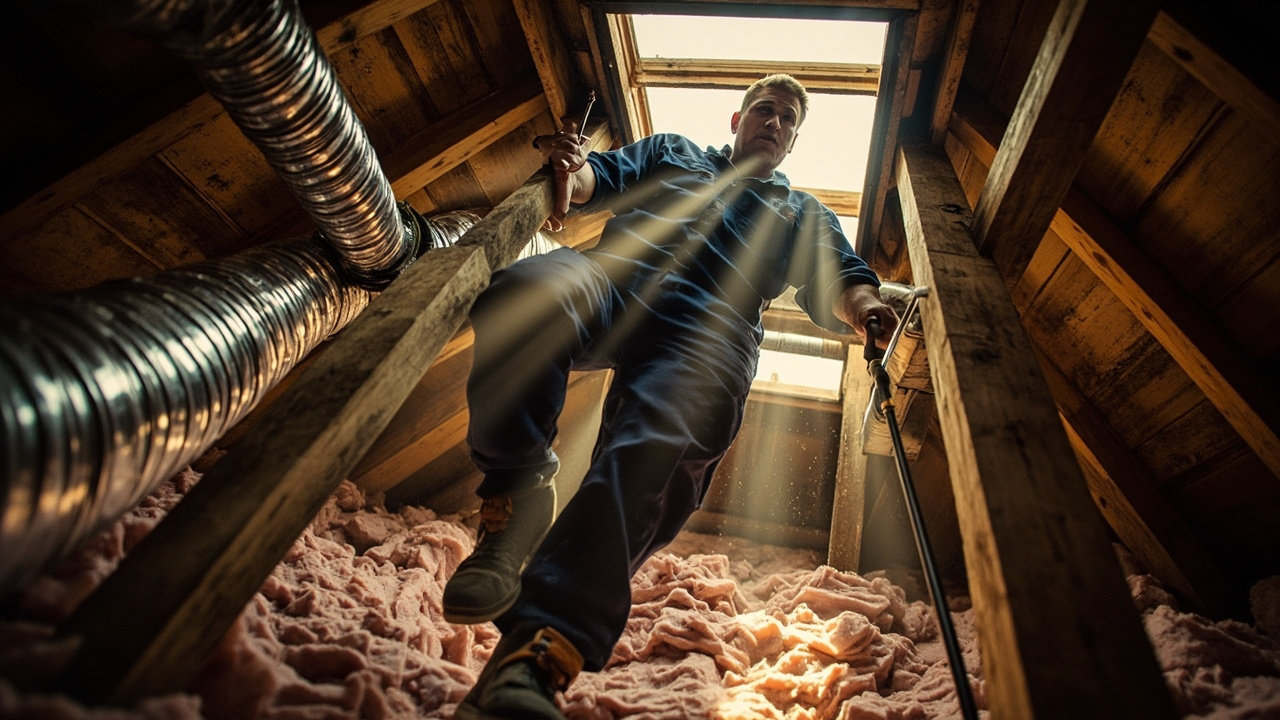
Before the attic hatch comes down, a drop cloth goes under it to catch insulation and dust. Where duct has to be traced or opened, we work section by section rather than exposing the whole run at once, which keeps loose fiberglass out of the conditioned space below. Tools and parts stay staged near the access point rather than spread through the house, and the hatch, the attic floor and the work area get checked before we leave.
What moves the scope
The static pressure reading against the blower data plate decides whether the duct itself needs work, and that reading moves the scope more than anything else on a bill call. Whether the coil and filter are restricting airflow, whether a leak turns up in the line set, and how much duct has to be traced or resealed all shift the job from there. The written scope goes over each of those before anything gets opened further, and you approve it before work starts.
How competence gets checked
A technician runs a set number of bill spike and airflow calls alongside a lead before taking one alone, and the lead signs off on reading static pressure correctly against the blower data plate before that happens. On any job where a duct trace crosses into a refrigerant leak, a second technician looks at the readings before the scope gets written, since a fault in one system can hide behind a real problem in the other.
You Have Questions,
We Have Answers
Bills climb fastest when the cooling system runs longer without cooling any better, which is an airflow or duct problem more often than a rate change. In Waco's long cooling season that extra runtime compounds month over month. A static pressure reading on the air handler separates a duct restriction from a charge issue before either gets blamed for the bill.
Rates are only part of the story, and the part inside the house is usually the cooling equipment working harder than it should. A system fighting restricted airflow or a slow refrigerant leak runs far longer per degree of cooling delivered. Measuring the pressure drop across the ductwork and filter against the manufacturer's blower specifications shows whether equipment strain is the reason the bill rose independent of any rate.
There is no reliable average because the number depends on how the house was sized and how the duct performs. A house that size cooled by equipment sized from an ACCA Manual J load calculation with duct that passes a static pressure check runs very differently than one where either was guessed at. Diagnostic readings matter more than square footage comparisons.
Why attic ductwork drives Waco's bill calls
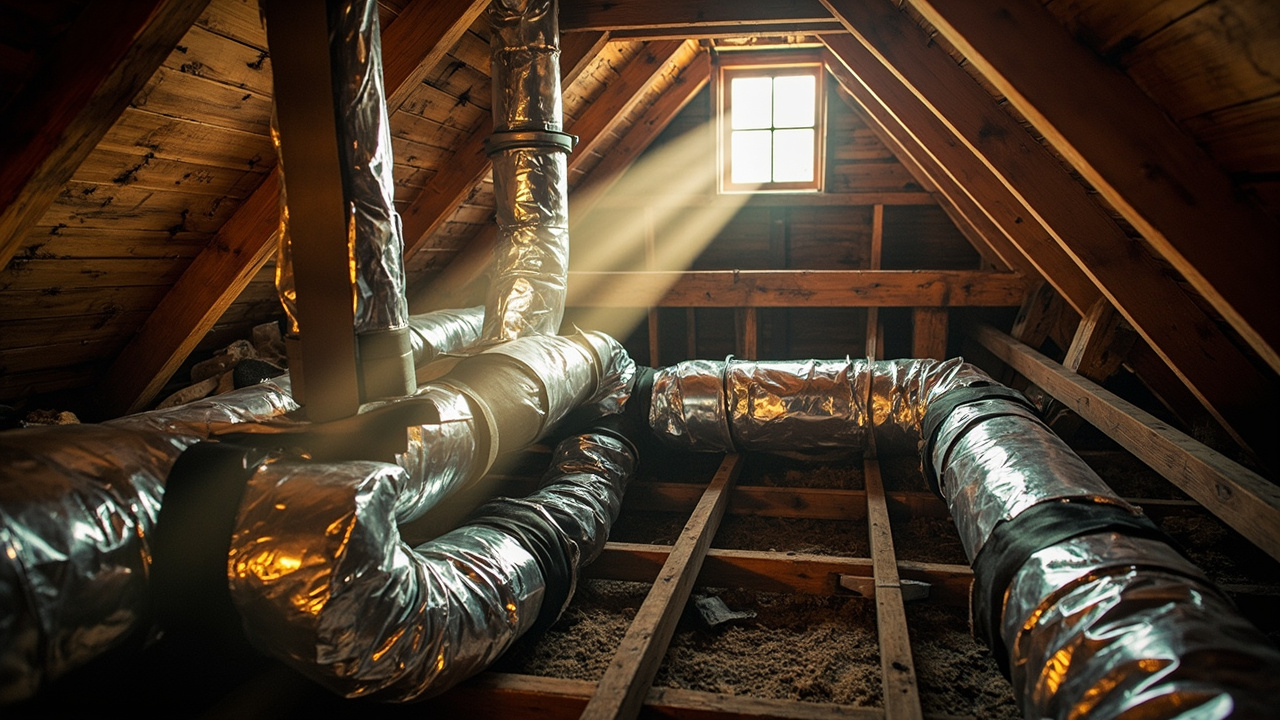
Heart of Texas (Lake Air) is one of the clearer examples of the pattern behind these calls. Post war ranch houses in that part of Waco were built on slabs with central cooling added after construction, so the ductwork and the air handler both sit in the attic rather than in a closet or a crawlspace. Summer attic temperatures run well above the conditioned space, and every foot of duct running through that heat loses some of its cooling before it reaches a register. A system working correctly at the coil can still deliver a warm house and a high bill once that duct loss is added on top of it, which is why the attic itself gets checked on these calls rather than just the equipment.
The duct capacity question from the cost drivers does not stay contained to the attic in this soil. Waco sits on expansive Blackland clay that shrinks and swells with the season, and that movement stresses the pad the outdoor unit sits on along with the refrigerant line set running between it and the coil. A line set stressed by ground movement is a more likely place for the slow leak in the escalation chain to start, which turns a duct and airflow bill problem into a refrigerant problem if it goes unchecked. Checking the line set connections along with the static pressure reading and measuring the voltage drop across the compressor terminals is part of why a full bill diagnosis takes longer than a quick look at the outdoor unit.
HVAC Services in The Waco Area
Explore our service area and locate Granite HVAC Waco with ease. We're proudly local and serve the surrounding neighborhoods with fast response and honest pricing. Use the map to check our coverage area, or call us and we'll confirm in seconds.
Address:
Granite HVAC Waco, Waco, TX, 76701
Changing filters on schedule, clearing a couple of feet around the outdoor unit and rinsing condenser fins with the power off are homeowner jobs and do not need a call. The boundary sits at anything behind the blower door or inside the refrigerant circuit, because that work involves pressures and voltages a homeowner should not be opening. If a bill diagnosis turns up a duct problem outside what a single visit can correct, we say so on the first visit and scope it before anything gets opened further.
Before you call, know roughly when the bill jumped and whether the thermostat setting or the system sounded any different around that time. If you can, note the age of the outdoor unit and find the attic access point, since most of these visits end up there. Those few details usually tell us whether the duct or the equipment is the likely cause before anyone climbs a ladder.
Last reviewed September 2026 by Dale Whitfield, Service manager.