



What server room cooling failure looks like before the network goes down
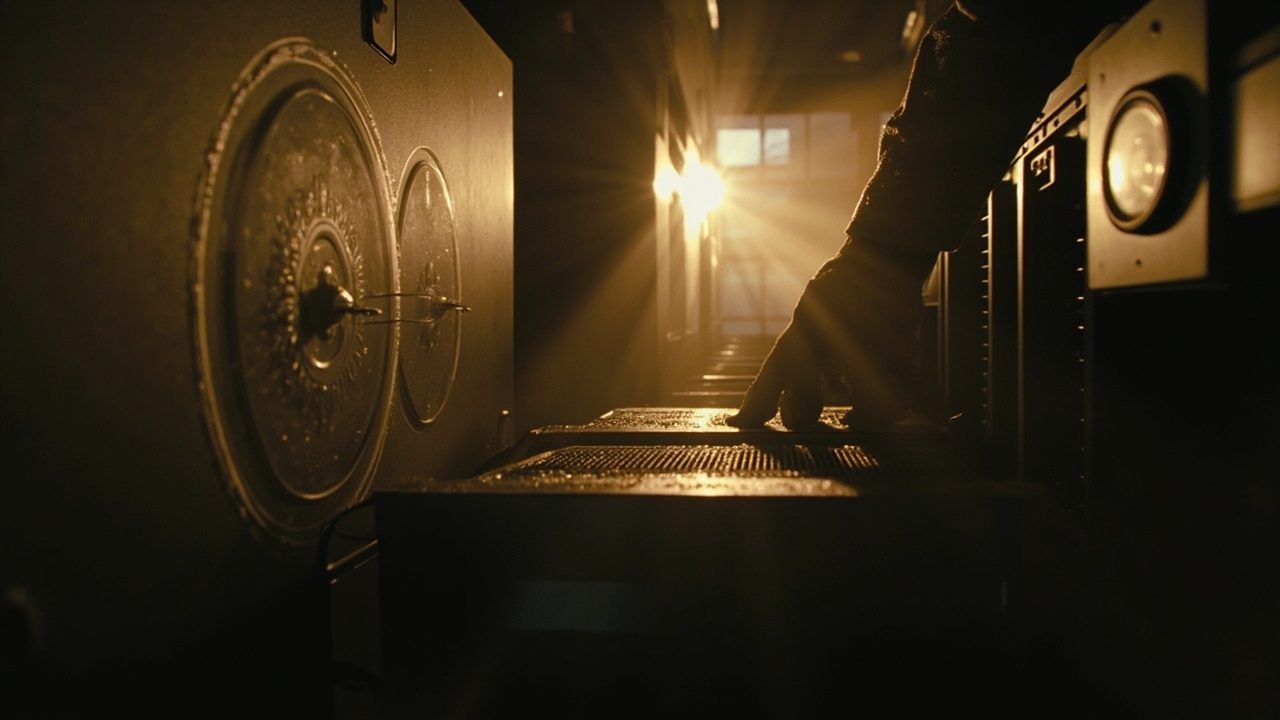
The complaint usually starts small. A rack alarm trips at two in the morning, or someone notices the IT closet feels warmer than it should on a Tuesday afternoon when nothing else in the building changed. Humidity readings drift instead of holding steady. None of this looks urgent from a hallway, which is exactly the problem, because server room ac installation and data center cooling solutions are built around a load that never stops, and a comfort system built for people is not.
Most commercial buildings condition a server room off the same rooftop unit or split system that handles the offices around it, on a thermostat schedule that backs off at night and on weekends. A rack of equipment does not back off. It generates heat continuously, so the room keeps calling for cooling at the exact hours the building system is programmed to coast. The result is a room that runs warm overnight, then starts the next business day already behind, which is the pattern behind most it room air conditioning complaints that never get traced back to scheduling.
Waco adds its own load to this. A cooling season that opens in spring and runs into October means the building system is already working long hours in July and August before the server room's own heat is added on top of it. The humid stretch in late spring and early summer raises the latent load further, so a system sized only for sensible heat leaves moisture in the room even when the thermostat reads satisfied. A precision cooling system service call in that stretch usually finds a room that is cold enough on the gauge and still damp enough to worry an IT manager.
The escalation path unfolds gradually through mechanical failure. A slow refrigerant leak means the system runs longer for each unit of cooling, and as the charge drops, oil stops circulating properly through the compressor. Once that happens the compressor loses lubrication and seizes, and a room that was merely running warm becomes a room with no cooling at all until the unit is replaced. Early detection of pressure drop and temperature rise across the condenser coil prevents this cascade. That is the point where waiting stops being a scheduling decision and becomes a hardware one. Monitoring superheat and subcooling figures catches the leak before the compressor damage starts.
Our page on uneven cooling between rooms covers that side of the work in more depth.
How we size and diagnose cooling for an IT room
The visit starts the same way every time, with two probes reading return and supply air temperature across the coil rather than a guess based on how the room feels. A drop of roughly 15 to 20 degrees between return and supply is the range a healthy system should hold in normal operation. A smaller drop points to low charge, a fouled coil, or a humidity load the system was never sized for. A larger drop points to restricted airflow, often a coil starting to ice, which is the opposite problem wearing the same symptom.
That single reading decides the next branch before anyone touches a gauge. If the split is too small, the fault sits in airflow, the filter, the return path, or a coil that needs cleaning, and none of that is solved by adding refrigerant. If the split is too large, the coil is being starved of air or is already icing, and the fix is airflow first. Only once airflow is confirmed does a charge reading on the sealed circuit mean anything, because refrigerant is not something a system consumes on its own. A low charge found on a system with a clean filter and correct airflow indicates a leak, which requires identification and repair of the breach point rather than a simple top off. This distinction between repair and maintenance determines whether the underlying problem gets resolved or returns within weeks.
Sizing the equipment itself comes down to a choice between a ducted system tied into the building's existing trunk and a dedicated ductless mini split serving the room on its own circuit. A ducted approach shares the building's air handling and filtration, but it also shares the building's schedule and its duct losses, which is the exact mismatch causing most server room complaints in the first place. A ductless head dedicated to the room runs on its own thermostat and its own compressor, unaffected by what the rest of the building is doing at eleven at night, and it isolates the IT load from comfort zoning entirely. The ductless configuration allows independent temperature control without interference from heating or cooling cycles serving other zones during off hours. For a room with continuous heat generation and a real uptime requirement, that isolation is usually the deciding factor over any efficiency number on a spec sheet.
See warehouse heating & cooling for how the related work is scoped and priced.
Your local utility, Utility Bill City of Waco, publishes service and water-quality information every Waco homeowner should know.
How a server room visit runs
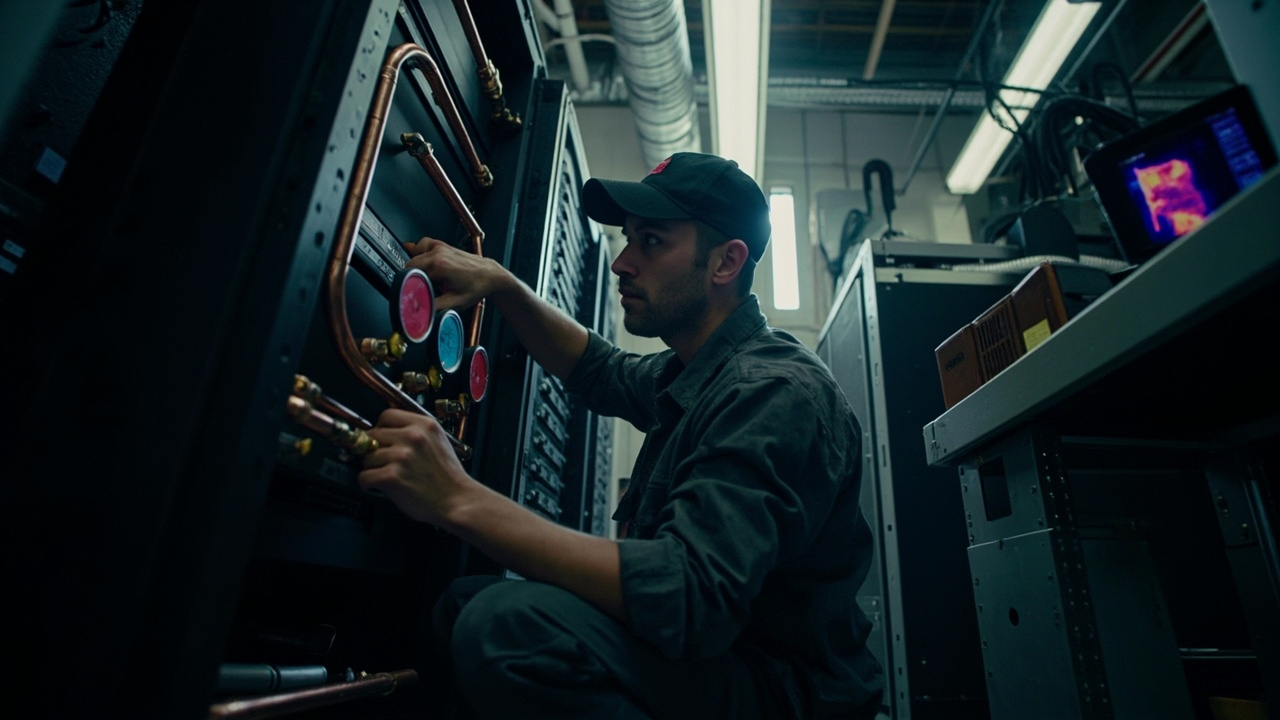
Assessment and load reading
On the phone we ask what the room is reading, when it started, and roughly how much equipment the room holds, because that shapes whether this is a same day call. Onsite, the first work is a thermal survey rather than an equipment inspection, filter and coil checked first, then the two probes placed close to the coil on the return and supply sides. That reading, not the room's general feel, decides whether the next step is an airflow correction or a charge check on the sealed circuit.
Approved work begins
Once the written scope is approved, the equipment or circuit being worked on is isolated at the disconnect first. If the job is a repair, refrigerant recovery and any coil or component replacement follow in that order. If it is a new dedicated ductless unit or a ducted correction, line set and electrical connections go in before the indoor head or coil is set. If a mismatch turns up behind a panel or coil, such as wiring sized for a smaller unit than what is being installed, we stop and show you before continuing.
Verification before we leave
Before the visit ends, the two probes go back across the coil and the delta T has to land in the range that reading is judged against, roughly 15 to 20 degrees, before the system is called done. We walk you through what that reading shows and where the return and supply points sit, so the next check is easier to compare against. You keep a record of the reading taken that day, which becomes the baseline for any service call after this one.
Why an unfamiliar crew gets server room cooling wrong
A crew that mostly works offices and homes treats a server room like any other closet on the building schedule, and that is where the mismatch starts. Comfort systems in commercial buildings are programmed to set back at night and on weekends because people leave. Server equipment does not leave, so a room tied to that schedule runs behind by morning even when nothing else about the building changed. An unfamiliar crew often diagnoses that pattern as a sizing problem and recommends a bigger unit on the same shared circuit, which repeats the same overnight gap at a larger scale instead of fixing it.
The bigger risk shows up in the electrical work. A dedicated cooling circuit for a server room draws continuously rather than cycling the way a comfort zone does, and a panel sized for intermittent load can be pushed past what it was built to carry when a new unit is added without checking that draw first. Waco's summer heat makes this worse, since the building's own rooftop equipment is already pulling hard through July and August before a dedicated server room circuit adds a steady load on top of it. A crew that has not sized continuous draw before assumes the existing panel has headroom, and that assumption is usually wrong on an older commercial building.
Response logistics matter too, because a server room problem rarely waits for a normal service window. A rack alarm at two in the morning or a room drifting warm on a holiday weekend needs a visit that treats production equipment differently from a comfort complaint in an empty office. A crew unfamiliar with how continuous IT load behaves tends to schedule the visit like any other cooling call, which puts it behind maintenance work that can wait. Knowing which calls involve production equipment and which involve backup systems changes how fast a technician gets dispatched and what gets checked first once they arrive, and that judgment only comes from having handled enough of these rooms to know what a false alarm looks like against one that is already losing charge.
More detail on no cooling emergency service is on its own page.
We install and service major brands like Carrier and register every unit to manufacturer specifications.
Use this to ask what is driving the quote rather than asking for a rough number.
| Driver | Why it moves the estimate | What you control |
|---|---|---|
| The capacity and efficiency tier of the equipment chosen | Whether the indoor coil is matched to the new outdoor unit | The grade you choose, the rest of the work is set by the house |
| Access and rigging | An attic, a crawlspace, a tight closet or a rooftop with no easy path | Clearing the work area and the path before the crew arrives |
| Whether the existing duct system can move the air the new equipment | The static pressure reading answers | Fixing the cause now rather than paying for the same visit twice |
| Electrical work | The disconnect, the breaker and the wire size feeding the unit | Fixing the cause now rather than paying for the same visit twice |
| Controls | The thermostat, zoning and any communicating equipment | How much control you want built into the system |
What working with us looks like on an IT room job
Scheduling around your uptime
You call and we ask what the room is reading, whether any alarm has tripped, and whether the equipment inside is production or backup. That tells us if this is a same day visit or one that can be scheduled around a maintenance window. You get a confirmed arrival time rather than a general day. If a job ahead of yours runs long because a compressor is being isolated for testing, we call and move your window rather than let you find out by waiting.
Working around live equipment
Before anything is touched, cables and racks near the work area get identified and kept clear of tools and debris. Any coil cleaning or refrigerant work happens with drop cloths down and the electrical panel clearly marked off before it is opened. Nothing gets set on top of active equipment. When the visit is finished, the room is left as clean as it was found, with any filters or old parts removed rather than left in the closet.
Scope and price factors
The single driver that moves this job furthest is the capacity and efficiency tier of the equipment chosen, and whether the indoor coil is matched to a new outdoor unit or half the old system stays in place on a mismatched charge. That decision gets made after the delta T reading and the load are known. Once the equipment and scope are set, you see the written scope and approve it before any equipment is ordered or any work begins.
Who shows up to this job
A technician working a server room independently has already run visits alongside a lead on commercial precision cooling, and the lead has signed off on reading a delta T split correctly and tracing it to airflow or charge before touching a gauge. On anything involving redundant cooling or monitoring integration into an existing building system, a second technician reviews the readings before a scope is written, since a wrong call here costs more than a missed comfort complaint.
You Have Questions,
We Have Answers
Data centers use precision cooling built for continuous heat load rather than building comfort systems. That usually means CRAC units, in-row cooling, or dedicated ductless systems sized to the room's own heat output. In a mid market server room in Waco, the same principle applies at a smaller scale, with a dedicated unit isolated from the building's day and night thermostat schedule.
The best system is the one sized to the room's own heat load rather than its square footage. For a smaller IT room, a dedicated ductless mini split isolated from the building schedule usually outperforms a shared ducted zone, since it runs continuously without depending on the rest of the building's setback times.
The best approach starts with a delta T reading across the coil, roughly 15 to 20 degrees in a healthy system, which tells us whether the room's problem is airflow or refrigerant before any equipment gets chosen. Granite HVAC Waco takes that reading on every server room visit, and pairs it with checking whether the electrical circuit feeding the unit can carry continuous draw. Call (254) 221-8461 to get that reading taken.
Why Waco heat and humidity change how a server room is cooled
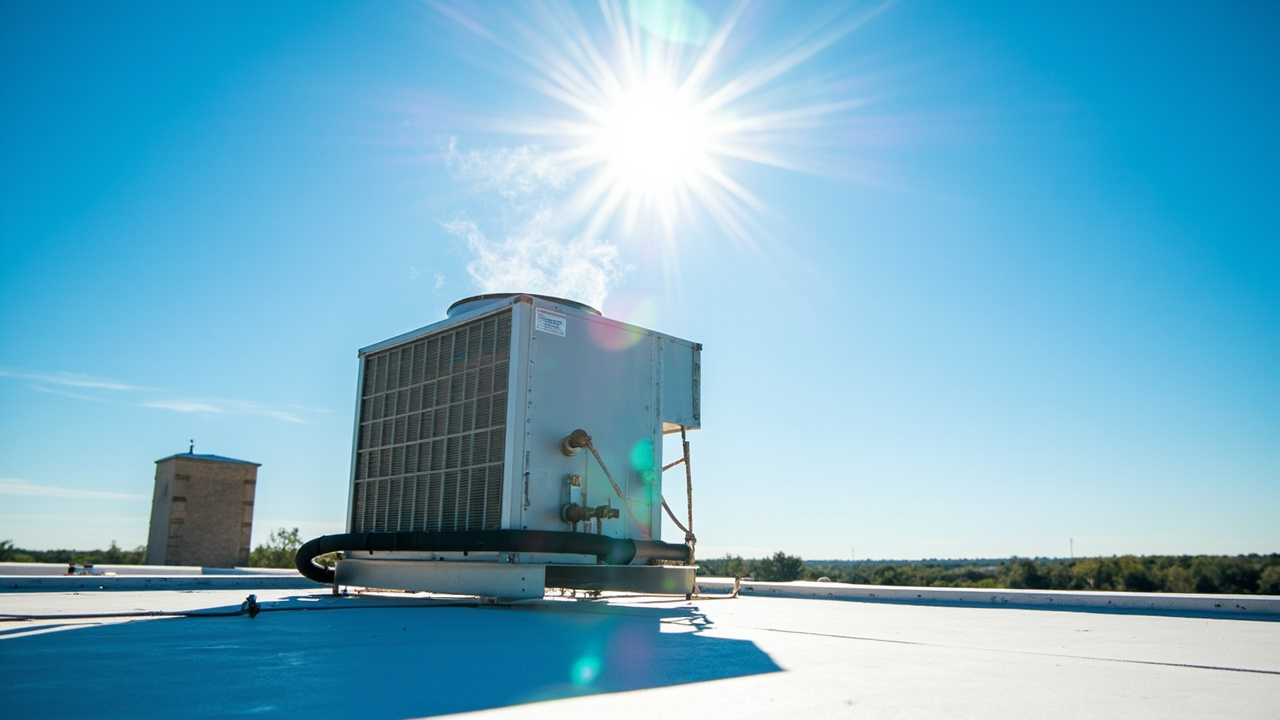
Waco's cooling season opens in spring and runs into October, with the hottest stretch in July and August pushing outdoor condensing units toward nearly continuous run time. A server room adds its own heat load on top of that, so equipment sized without accounting for both loads together runs behind all summer rather than catching up overnight. The moisture load climbs sharply between late spring and early summer, which is why a room can read cold and still feel damp if the system was chosen on temperature alone. Outdoor condenser units for dedicated server room cooling sit on the same expansive clay soils common across the area, which shift with rainfall and drought and can tip a pad or strain the line set running back into the building over time.
Winter brings short hard freezes rather than a long cold season, and any heat pump equipment serving a mixed use building can ice its outdoor coil during one of those snaps, pulling on backup heat strips at the same time the rest of the building is drawing more from Oncor. A hailstorm that flattens condenser coil fins on a rooftop unit does the same damage to a dedicated CRAC or mini split condenser sitting beside it, cutting airflow across the outdoor coil and lowering capacity right when the room needs it most. Sizing a server room's electrical draw against what the building's service can carry matters here too, since a dedicated cooling circuit runs continuously rather than cycling with the rest of the building's load and cannot shed demand when peak periods hit.
HVAC Services in The Waco Area
Explore our service area and locate Granite HVAC Waco with ease. We're proudly local and serve the surrounding neighborhoods with fast response and honest pricing. Use the map to check our coverage area, or call us and we'll confirm in seconds.
Address:
Granite HVAC Waco, Waco, TX, 76701
Additional Services We Offer
- Building Automation & Controls
- Chiller Repair & Maintenance
- Commercial AC Repair
- Commercial Boiler Services
- Commercial Ductwork Fabrication & Installation
- Commercial HVAC Contractors
- Commercial HVAC Preventive Maintenance Contracts
- Commercial Refrigeration Services
- Make-Up Air Unit Service
- Restaurant Kitchen Ventilation & Exhaust
- Retail & Office HVAC Systems
- Rooftop Unit Installation & Service
Network cabling, rack layout and backup power systems like generators or UPS units are outside this work. Refrigerant work, coil replacement and anything behind an electrical panel stay with us. If a visit turns up an electrical service limit or generator issue, we identify it on the first visit and point you to who handles it.
Before you call, know what the room's thermostat or monitoring system is reading and when the drift or alarm started. If you can, note roughly how much equipment the room holds and whether any of it is redundant. The age of the current cooling unit helps, along with whether anyone can get to the electrical panel serving the room. Those answers tell us whether this needs someone today.
Last reviewed September 2026 by Dale Whitfield, Service manager.