





What a commercial boiler does after months of standing idle
Waco heating season runs mild for most of its length, broken by short hard freezes, so a commercial boiler here often sits idle or barely cycling for months at a stretch. When the building finally calls for full output, whatever degraded quietly during that idle stretch shows up all at once. Steam traps that stopped working in October get discovered in December. A pilot or ignitor that was marginal all along fails the first time it has to prove itself for hours instead of minutes.
That idle pattern is the reason commercial boiler service in a climate like this is different from service somewhere with a long, steady heating season. A boiler that runs continuously wears predictably. A boiler that sits mostly off and then gets asked for peak output on the coldest nights fails at the worst possible moment, and the fault is often something that a walk-through inspection would have missed weeks earlier because the burner was not under load when someone looked at it.
The escalation that matters most is combustion, not comfort. A cracked heat exchanger lets combustion gas mix with the air or water being heated. Left alone, that gas reaches occupied space, and the equipment has to be shut down entirely rather than patched, because there is no repair that runs a boiler with a compromised heat exchanger while people are in the building. That is the point where waiting stops being reasonable: any carbon monoxide reading in occupied space, or any combustion analyzer result that will not settle to a steady low number, ends the visit with the unit off until it is corrected.
Facility managers who call us usually describe one of two things. Either the boiler will not hold pressure or temperature the way it used to, or it is making noise it did not make last season. Both point back to the same idle-season pattern, and both get answered the same way, with instruments in the flue and on the gauges before anyone talks about a part. The combustion analyzer tells us whether the fuel and air mix is burning clean or starting to drift toward incomplete combustion that produces carbon monoxide. The flue gas temperature shows us whether the heat exchanger is transferring energy the way it should or whether scale buildup or corrosion inside the tubes has started to rob efficiency. Pressure and temperature readings on the gauge block reveal whether internal seals are holding or whether the boiler is leaking down between firing cycles.
Our page on commercial ductwork fabrication & installation covers that side of the work in more depth.
When we spec replacement equipment, ENERGY STAR's heating and cooling ratings are the baseline we work from.
Why boiler diagnostics begin at the flue
The sequence starts before the analyzer ever goes into the flue. A technician checks the visual condition of the burner and heat exchanger, confirms static gas pressure at the train, and lets the burner run several minutes so startup readings settle, because a boiler that has been idle for weeks reads worse in the first sixty seconds than it will once it is under steady load. Only after that settling period does the combustion analyzer go into the flue to read carbon monoxide and oxygen, and those two numbers decide everything that follows.
A steady, low carbon monoxide reading that holds once the burner has settled clears the fuel and air side and means any complaint about pressure or noise is mechanical rather than combustion related. A reading that climbs through the run, or will not settle at all, points at a fuel or air mixture problem or worse, and any carbon monoxide detected outside the flue ends the visit with the unit shut down rather than adjusted on the spot. That fork is why the analyzer comes before pressure gauges or steam trap checks get any attention, since a mechanical fix on a boiler with a combustion fault leaves the more dangerous problem untouched.
Where the building's mechanical setup is a packaged rooftop unit rather than a boiler plant, the comparison changes. A packaged rooftop unit puts the burner, blower and coil in one cabinet outdoors, with an economizer available to bring in outside air when conditions allow it, and service access means working from the roof. A light commercial split system keeps the air handler indoors, which is easier to reach during winter months when a rooftop deck is icy, but it splits service access across two locations instead of one. Tonnage per cabinet and where a technician has to stand to do the work are what decide between them, not the combustion reading itself.
The combustion analyzer also reveals whether fouling has built up on heat transfer surfaces. Carbon buildup inside the exchanger reduces thermal efficiency and forces the burner to run longer to reach setpoint temperature. Scale or sediment in the water side acts the same way. Cleaning the heat exchanger and flushing the water side restores efficiency without replacing parts, and the analyzer reading before and after the flush shows the improvement in real numbers rather than guesswork.
If this sounds close but not quite your situation, commercial hvac contractors may be the better starting point.
Proper sizing follows the Manual J standard from the Air Conditioning Contractors of America, guesswork is how systems end up short-cycling.
How a boiler service call runs
Site assessment and combustion check
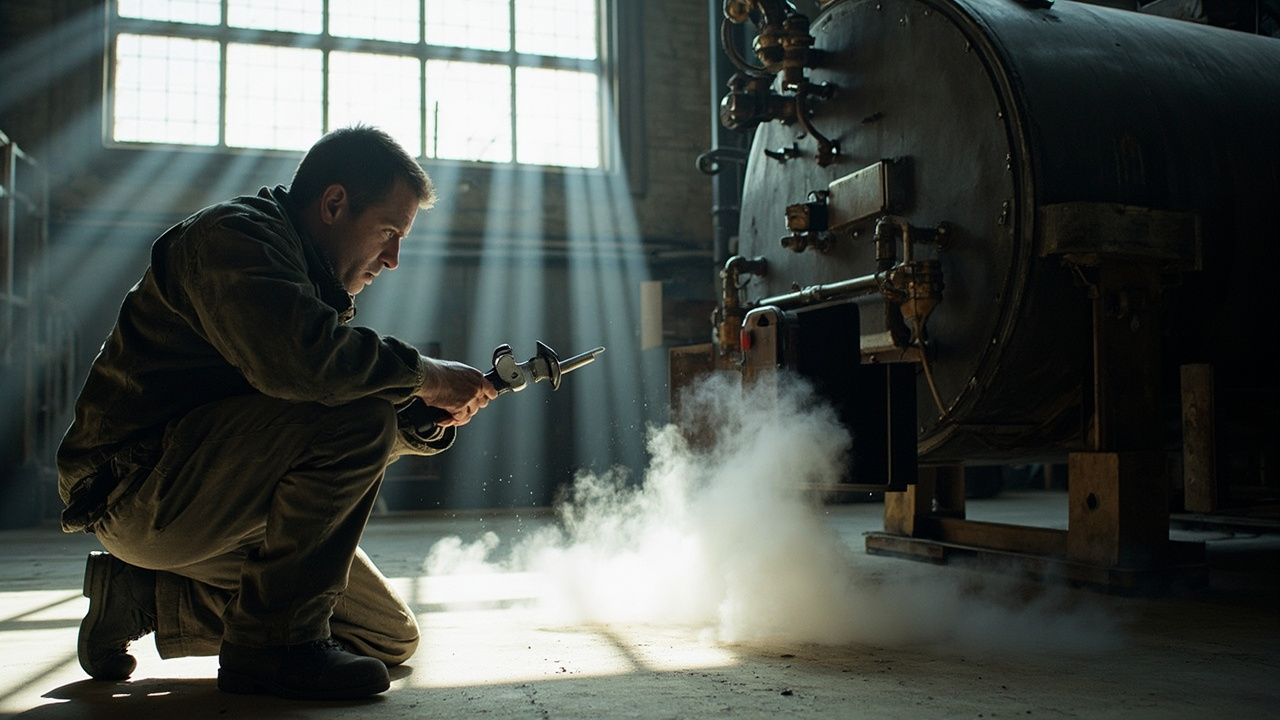
On arrival, the technician inspects the boiler visually, checks static pressure and temperature at the gauges, and places the combustion analyzer in the flue once the burner has run long enough to settle. We ask about the building's usage pattern and, if available, recent utility consumption, since a sudden change in fuel use often lines up with the same efficiency loss the analyzer is measuring. Nothing is assumed from how the unit sounds or looks before the readings come in.
Diagnostic findings and your approval
The combustion, pressure, and load findings go into a written report that separates a fuel or air-side problem from a mechanical one, and states plainly whether repair or replacement makes sense given the equipment's condition and the building's actual duty cycle. You see that report and approve the scope before any work begins. If a heat exchanger issue or a similar safety-relevant fault turns up, we stop and show you the reading rather than proceeding on our judgment alone.
Execution and handover
Approved repair or installation work is completed to the pressures and clearances the equipment and its controls require, and every reading taken during the visit, including the final combustion analyzer result, is documented for your records or for a building inspector if one asks. Before leaving, we walk through what was found, what was done, and what the readings mean, and you keep the written report.
Why an unfamiliar crew misreads a boiler that has been sitting idle
A crew that does not work commercial boilers regularly in this climate tends to make one predictable mistake: they treat a quiet fall startup check as a formality, because the unit looks like it is running fine at low load. It is running fine at low load. The problem that matters is what happens when the building calls for full output during a hard freeze, and a check that never pushes the burner to that point never finds the fault that a freeze will expose. A combustion analysis at that moment shows whether the fuel-air ratio, flame color and stack temperature are within the manufacturer's specifications for your equipment and your altitude, or whether hidden corrosion, a blocked flue or a failing electrode will cause a shutdown once demand spikes.
Documentation is the other place unfamiliarity costs a building owner. Commercial boiler work generally needs to be shown, on request, to whoever is responsible for inspecting the building's mechanical systems, and a combustion reading taken and recorded at commissioning or at a repair is the kind of record that answers that request without a second visit. A crew that does not routinely keep that record leaves the building owner with nothing to hand over when someone asks for it, and reconstructing it later from memory is not the same thing. The record becomes part of your maintenance history and protects you if a question arises about the condition of the equipment at a particular date.
Response logistics across McLennan County mean that when the first hard freeze of the season hits, every boiler that was marginal in October becomes an emergency call on the same handful of days. Buildings that had a combustion check done during the mild shoulder weeks, before the cold arrived, are the ones that get a scheduled repair instead of a shutdown during occupied hours. That timing difference is the practical argument for treating the idle season as the window to test rather than the season to ignore. The cost drivers on a fall checkup are the technician time and the combustion analyzer, both fixed. A winter emergency call adds travel time across the county and the risk that parts are backordered when you need them now.
More detail on commercial ac repair is on its own page.
Permit and inspection questions? Commercial Construction Permits is the office we coordinate with on every permitted Waco job.
Use this to ask what is driving the quote rather than asking for a rough number.
| Driver | Why it moves the estimate | What you control |
|---|---|---|
| Whether the existing duct system can move the air the new equipment | The static pressure reading answers | Fixing the cause now rather than paying for the same visit twice |
| Access and rigging | An attic, a crawlspace, a tight closet or a rooftop with no easy path | Clearing the work area and the path before the crew arrives |
| After hours dispatch during the first heat wave | Everyone calls at once | Calling in working hours when the problem can wait |
| The capacity and efficiency tier of the equipment chosen | Whether the indoor coil is matched to the new outdoor unit | The grade you choose, the rest of the work is set by the house |
What working with us on a commercial boiler looks like
Getting on the schedule
When you call, we ask what the boiler is doing, when it started, and whether the building has heat right now or is running on backup. That tells us whether this is a same-day visit or a scheduled combustion check. You get a window for arrival rather than a vague day, and if the job ahead of yours runs long because a heat exchanger issue turned up mid-visit, we call to move your window rather than let you wait without word.
Keeping the mechanical room clean
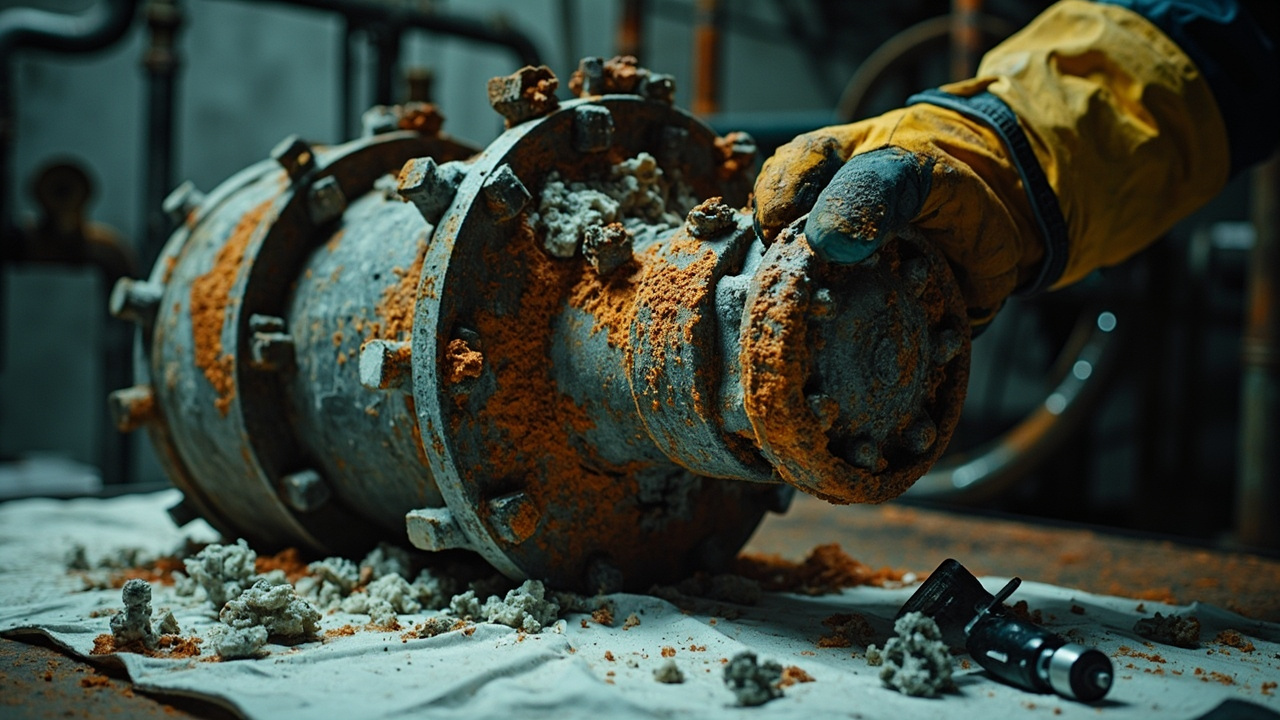
Boiler rooms collect soot, scale residue, and standing water around drains, so we lay down drop cloths and stage tools on a cart rather than the floor before anything is opened. Combustion byproducts and any drained water are contained and carried out rather than left near equipment or floor drains. Panels and covers go back on in the order they came off, and the last thing we do is wipe down surfaces we touched.
What moves the estimate
The driver that moves a commercial boiler estimate furthest is whether the work requires permit and inspection sign-off for the equipment itself and for any gas or electrical work tied into it, since that adds documentation steps a straightforward part swap does not. Combustion readings, pressure test results, and the sizing calculation all get written into a scope you review and approve before any repair or installation work starts, so nothing gets added once the panel is open.
How our technicians get checked out
A technician does not run a commercial boiler call alone until they have demonstrated reading a combustion analyzer correctly across a full burner cycle and interpreting a pressure test without guessing, both signed off by the lead who rides with them. On anything involving a heat exchanger crack or a reading that will not settle, a second technician looks at the numbers before a shutdown or repair decision goes to the building owner.
You Have Questions,
We Have Answers
Service life depends more on run pattern and maintenance than on age alone. A boiler that idles most of the year in a mild climate and gets a combustion check at each seasonal startup tends to outlast one run hard with no testing between cold snaps, since fuel or air-side faults get caught before they damage the heat exchanger or burner components.
Steam trap failure, condensate return trouble, and scale buildup on heat transfer surfaces are the recurring ones. A failed steam trap either blows live steam through or blocks condensate return, and both waste fuel and stress the boiler differently, which is why trap inspection is a separate check from the combustion analyzer reading and gets done on its own schedule.
Commercial buildings generally run either steam boilers, which distribute heat as pressurized steam and need trap and condensate maintenance, or hot water boilers, which circulate heated water and rely on expansion tank and relief valve checks instead. Which one a building has decides the maintenance checklist far more than the fuel source does, and both still need a combustion analyzer reading at startup regardless of type.
Why Waco's mild winters change how commercial boilers are serviced
McLennan County commercial buildings, whether manufacturing space, hospitality, healthcare, office, or multi-tenant, run their boilers hard for only part of the year. Waco's heating season is short and mostly mild, broken by brief hard freezes, which means a boiler here spends more of the year idle or at partial load than it spends at the full output a cold snap demands. That pattern rewards testing at the point of transition, when the building first calls for real heat, rather than waiting for a failure to force the issue. A unit checked only while idling at low load can look healthy right up until the freeze that finally asks it to work. Testing during this vulnerable window catches scaling, corrosion and combustion problems before they disable the system when occupants need it most.
Utility billing records kept over a heating season give a technician a baseline for how much fuel a boiler should be using at a given load, and a jump in consumption without a matching change in occupancy or weather is often the first sign of a combustion or scaling problem before it shows up as a comfort complaint. Commercial boiler work in this county is generally expected to be documented for whoever inspects the building's mechanical systems. Having combustion readings and pressure test results recorded at the time of service means that documentation exists before anyone asks for it, rather than being reconstructed afterward from memory or pieced together from scattered notes. A technician who records these measurements on the day of work creates a clear record of the boiler's condition and performance at that moment.
HVAC Services in The Waco Area
Explore our service area and locate Granite HVAC Waco with ease. We're proudly local and serve the surrounding neighborhoods with fast response and honest pricing. Use the map to check our coverage area, or call us and we'll confirm in seconds.
Address:
Granite HVAC Waco, Waco, TX, 76701
Additional Services We Offer
- Building Automation & Controls
- Chiller Repair & Maintenance
- Commercial AC Repair
- Commercial Ductwork Fabrication & Installation
- Commercial HVAC Contractors
- Commercial HVAC Preventive Maintenance Contracts
- Commercial Refrigeration Services
- Make-Up Air Unit Service
- Restaurant Kitchen Ventilation & Exhaust
- Retail & Office HVAC Systems
- Rooftop Unit Installation & Service
- Server Room & Data Center Cooling
Checking a boiler's water level, resetting a tripped low water cutoff once, and keeping the mechanical room clear of stored materials are things building staff can reasonably do themselves. Where it stops is the burner, the gas train, and anything inside the pressure vessel, because combustion adjustment and pressure testing require instruments and training staff should not be handling. If a visit turns up electrical work outside boiler controls, we say so on the spot and tell you who handles it.
Before you call, know what the boiler is doing right now, whether it has heat at all or is losing pressure, and when the problem started relative to the last time it ran hard. If you have a fuel or utility bill showing a recent jump in consumption, have that number ready, along with the boiler's age if you know it and whether anyone is on site to let a technician into the mechanical room.
Last reviewed September 2026 by Dale Whitfield, Service manager.