



What a stuck defrost cycle means for a heat pump in Waco
A heat pump that keeps icing over outside instead of clearing on schedule is not resting between heating cycles. It is stuck. You will see it as a coil buried in white frost that never melts back, steam rising off the cabinet during a defrost attempt that will not finish, or the indoor air going cold while the outdoor fan sits still under a shell of ice. Some homeowners describe it as the unit running constantly without ever catching up, which is the same fault wearing a different symptom.
A normal defrost cycle reverses the refrigerant flow for a short, timed run, melts the frost off the outdoor coil, then switches back to heating. A stuck cycle means the control board never gets a valid signal to switch back, whether that signal is supposed to come from a coil temperature sensor, a timer, or the reversing valve itself confirming it moved. During a hard freeze, ice can build on the outdoor coil faster than a healthy defrost clears it, and the backup strip heat carries more of the heating load than it is built to run continuously while the outdoor unit struggles. When power drops and comes back during the same storm, the surge on restart can damage a board or sensor that was already working past its normal duty cycle, which is why a stuck defrost sometimes shows up the same week as an outage.
There is a version of this that starts as a refrigerant leak rather than a board fault. A slow leak reads the outdoor coil as colder than it is, so the board calls for defrost more often and each cycle runs longer without fully finishing. The system keeps trying to move heat with less refrigerant to carry it, oil stops circulating with the charge the way it should, and the compressor eventually runs without proper lubrication and seizes. That is the point where a defrost complaint stops being an inconvenience and becomes a compressor replacement. A second version involves a failed reversing valve that gets stuck partway between heating and cooling modes, unable to complete the switch. The outdoor coil temperature stays too high for defrost to work correctly, frost accumulates faster than the incomplete cycle can shed it, and the system cycles repeatedly without reaching equilibrium. This repeated partial switching also wears the solenoid that controls the valve, shortening its remaining service life. Early diagnosis catches these problems before secondary damage spreads to the compressor or control board, which is why a call ahead of the next cold snap matters more than waiting until the house has gone cold overnight.
More detail on emergency heat pump repair is on its own page.
Your local utility, Utility Bill City of Waco, publishes service and water-quality information every Waco homeowner should know.

Find the sign you have, then read across to see whether it can wait.
| Symptom or first sign | What is already happening | What it becomes if ignored | When to call |
|---|---|---|---|
| A slow refrigerant leak | The system runs longer for less cooling and oil stops circulating properly | The compressor loses lubrication and seizes | This week, while it is still one part |
| A coated flame sensor | The burner lights and drops out again and again | The board locks out on repeated trials and the house goes cold overnight | At the next visit, while the fix is small |
| A plugged condensate drain | The pan overflows into the platform or the ceiling | The ceiling below stains and the rusted secondary pan lets the rest through | Soon, before it spreads past the repair |
How we test a stuck defrost cycle before replacing parts
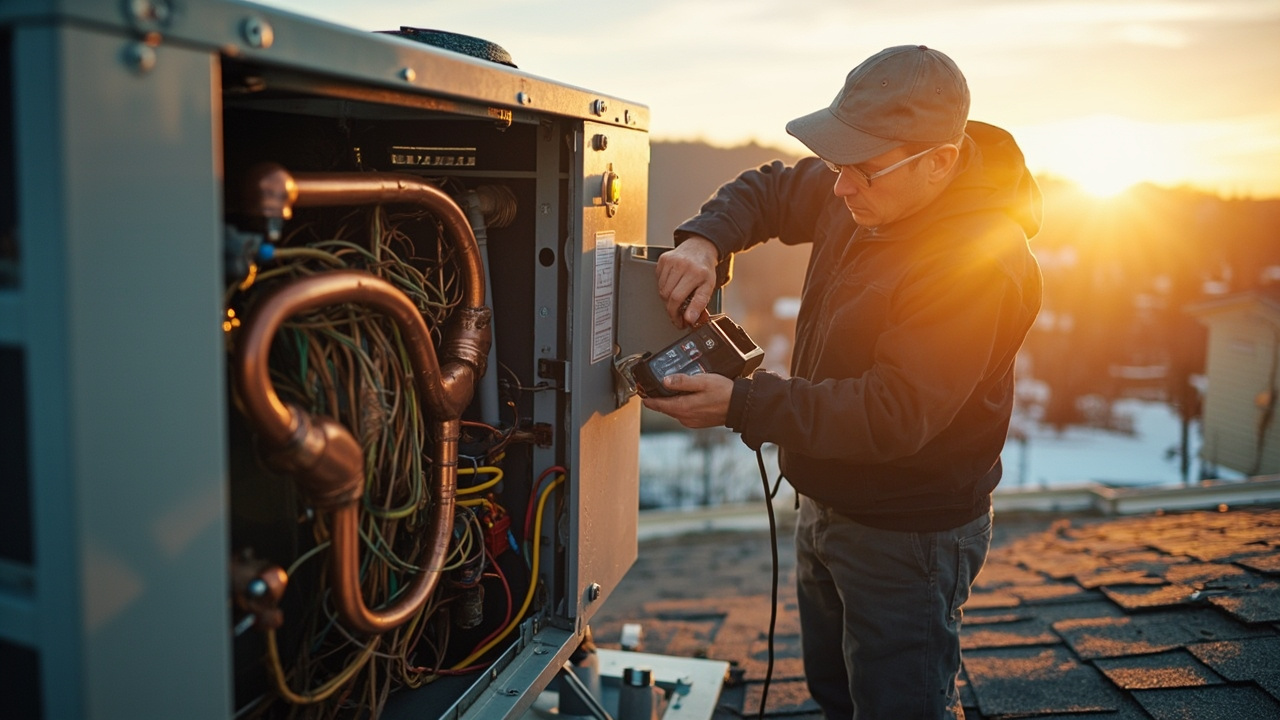
The order we work in matters more than any single reading. We start by reading the defrost board for a fault code and looking at the ice pattern on the coil itself, since heavy ice concentrated at the bottom points somewhere different than a coil frosted evenly across the whole face. Next we confirm the defrost sensor is sending a real signal rather than a flat one, and we command the reversing valve directly to see whether it shifts at all before assuming it is a refrigerant problem. Only once those steps are done do the gauges go on.
With manifold gauges on during a commanded defrost cycle, the numbers that matter are superheat and subcooling, read against the target for whatever is metering that coil. Most heat pumps in this county use a thermostatic expansion valve, so subcooling carries more of the judgment than superheat does. Low subcooling paired with high superheat points to an undercharge or a restriction, not a weak compressor, and it usually means a leak somewhere in the circuit rather than a part that simply wore out. If pressures land in range but the valve still will not shift on command, the fault sits in the valve coil or the board relay driving it. A clamp ammeter on that circuit and on the strip heat backup tells us whether either has been pulled into a failure by running overloaded.
Repeated stuck defrost events during hard freezes are also where the heat pump against gas furnace question comes up. A heat pump's output falls as the outdoor temperature drops, which is exactly when it needs defrost the most, while a gas furnace delivers the same heat output regardless of how cold it gets outside. A dual fuel setup switches from the heat pump to the furnace at a balance point the installer sets. When a board keeps getting asked to defrost through the coldest nights of the year, that balance point and the strip heat sizing behind it are worth reviewing along with the repair. The cycling pattern during those deep cold snaps tells us whether the thermostat is calling for backup heat at the right moment or whether the switchover threshold sits too low, forcing the heat pump to work harder than it should when outdoor temperatures have already dropped below its efficient range.
Our page on heat pump installation covers that side of the work in more depth.
Before any install, check the ENERGY STAR rebate finder, utility incentives regularly knock hundreds off a qualifying system.
How a stuck defrost call runs
First call and read
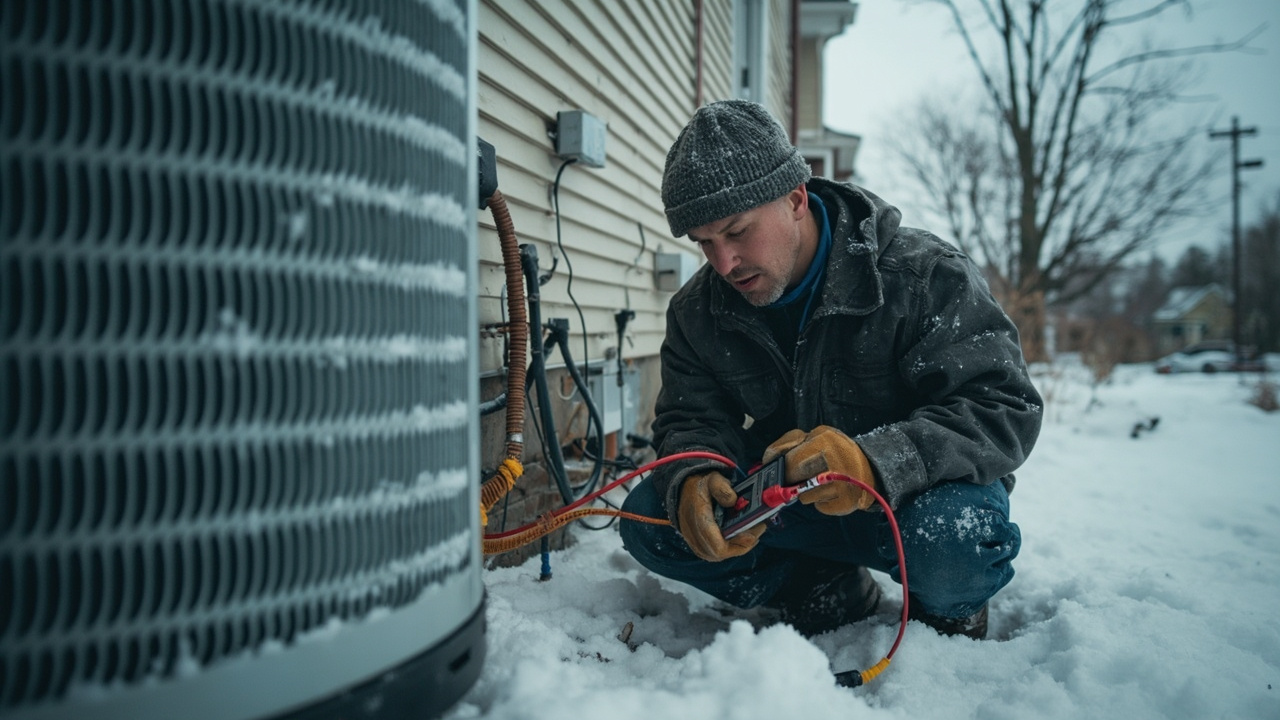
On the phone we ask what the outdoor unit is doing right now, whether the coil is iced or steaming, whether the breaker has tripped, and whether the house has gone cold or is just running long. That tells us how soon someone needs to be there. On site, the order stays the same every time. We read the defrost board for a fault code and look at the ice pattern on the coil, then confirm the defrost sensor is sending a real signal, then command the reversing valve directly to watch whether it shifts before touching a gauge. Manifold gauges go on last, during a commanded defrost cycle, once we know whether the fault sits in the controls or the refrigerant circuit.
Repair after approval
Once you approve the scope, we cut power at the outdoor disconnect before opening the control board cover or touching the reversing valve coil. The main operation depends on what the readings showed, whether that is replacing a defrost sensor, a valve coil, a control board, or recovering refrigerant to correct a leak and adding a filter drier before recharging. If we find a second fault behind the first, such as strip heat elements damaged by running overloaded during a stuck cycle, we stop and show you what we found before going further rather than assuming it can wait.
Verification before we leave
Before we call the job done, we command a full defrost cycle and watch it end on its own, with manifold gauges confirming superheat and subcooling land where they should for the metering device on that coil. We check amp draw on the compressor and the strip heat circuit one more time under load. You get a walkthrough of what the readings showed before and after, and you keep a written record of the pressures, amp readings and the part replaced, which matters if the same board or sensor acts up again during a later freeze.
Why a Waco cold snap exposes defrost faults an unfamiliar crew misses
A crew that does not work freezes here regularly tends to treat an iced outdoor coil as normal frost and tells the homeowner to let it ride out the storm. A normal defrost cycle finishes in a set run and switches back to heating on its own. A coil that stays iced past that point means the control board never got a valid signal to end the cycle, and waiting on it only pushes more of the heating load onto backup strip heat that was never built to carry the house on its own for hours.
That gap is also where the connection to power surges gets missed. When an outage during a winter storm cuts power to equipment that was already running past its normal duty cycle trying to cover a stuck defrost, the surge on restart can finish off a board or sensor that a crew unfamiliar with that pattern will diagnose as a separate, unrelated failure. Treating the two as one event instead of two random ones changes what gets tested first and what gets replaced.
Heat pumps in homes built from the mid century years through today are almost always paired with an outdoor unit on a ground pad and an indoor air handler or furnace closet, with the strip heat circuit tucked inside the air handler where it is easy to overlook while attention goes straight to the outdoor coil. Across the county, defrost calls surface within days of each other during the same freeze event. A technician who has worked several of these seasons checks the board, the sensor and the strip heat amp draw as one sequence rather than isolating the outdoor unit and calling it done. The strip heat amp draw tells whether the backup heating is pulling current at the level it should, which narrows down whether the problem sits in the control logic, the sensor feedback loop, or the heating element itself.
If this sounds close but not quite your situation, heat pump repair may be the better starting point.
The EPA's indoor air quality resources are the reference we point customers to on ventilation and filtration questions.
What working with us looks like on a stuck defrost call
Getting someone out fast
You call and describe what the outdoor unit is doing right now, whether it is iced, steaming, or the house has gone cold, and whether the breaker has tripped. That tells us if this is a same day visit or a scheduled one. During a hard freeze, calls stack up fast because every marginal defrost board in the area gets asked to prove itself at once, so we confirm a window before we hang up rather than after. If the visit ahead of yours runs long working through valve, sensor and amp readings, we call to move your window.
Careful work around the equipment
Before gauges or meters go on, we clear ice and snow away from the outdoor unit so it is safe to work around and the fan is not fighting debris while we test it. Panels come off and go back on the same way they came, and any refrigerant we recover during a repair is contained rather than vented. Inside, if we are checking the air handler or the strip heat circuit, we protect the floor, and the access panel gets closed and latched before we leave rather than left open to the attic.
What moves the price
Controls are usually the biggest swing on a stuck defrost repair. A single stage thermostat wired straight to the board costs less to test and replace than a communicating thermostat that also runs zoning, because a zoned system routes the defrost signal through more hardware and more of it can fail. Access matters too, since a rooftop or a tight attic unit takes longer to reach than one on a ground pad. We write the scope after the gauge, amp and sensor readings are in, and you see and approve it before any part is ordered.
How the technician got here
A technician working a defrost call alone has already run pressure, amperage and sensor checks on heating equipment under a lead's supervision and demonstrated reading a manifold gauge correctly during an active cycle rather than after the fact. On anything where the defrost board and the backup strip circuit are both suspect at once, which is common the week of a hard freeze here, a second technician looks at the amp readings before the scope gets written.
You Have Questions,
We Have Answers
It gets stuck when the control board never receives a valid signal telling it the coil has cleared. That signal can fail at the defrost sensor, at the reversing valve coil that is supposed to confirm it shifted, or on the board itself, and a slow refrigerant leak can also cause it by making the coil read colder than it is, which calls for defrost more often than the system needs. Testing checks the sensor signal, the valve command and gauge pressures in that order before any part gets replaced.
A working defrost cycle runs for a short, timed period and then resumes heating automatically. A unit still icing or steaming well past that point has stopped receiving the signal to end the cycle, and allowing continued operation only forces more demand onto the backup strip heat, which cannot sustain the whole house alone for extended periods.
Turning the system off at the thermostat stops the current call for heat, but it does not fix why the cycle would not end on its own. The sensor, valve or board fault behind it is still there the next time the unit tries to defrost, so cutting the cycle short is a pause rather than a repair, and the underlying signal problem needs testing with gauges and a meter to find.
Forcing a defrost cycle is a diagnostic step, not something to try from the thermostat. A technician commands it directly at the board so the reversing valve, sensor and refrigerant pressures can be watched while the cycle runs, which is the only way to tell whether the fault is in the controls or the sealed circuit. Opening the board cover or the refrigerant lines yourself is not something to attempt.
How a Waco winter changes a heat pump defrost repair
A hard freeze here can ice an outdoor heat pump coil faster than a healthy defrost cycle clears it, and once that gap opens, the backup strip heat inside the air handler carries more of the house load than it was built to run continuously. That strain shows up in homes across every era of construction, since heat pumps here are typically set on an outdoor pad with the air handler and strip heat circuit indoors, whether that is a closet unit in a mid century house or an attic system in newer construction. Equipment already pushed past its normal duty cycle becomes vulnerable to failure when power restores during a freeze event, as the restart surge lands on components already under thermal stress rather than operating at design capacity.
Heating calls spike during the short arctic cold snaps that move through late in the year and into winter, the same days a marginal defrost board finally gets asked to do real work. Outside those weeks, the equipment idles through mild days and a failing sensor or a weak connection at the board gives no warning. A defrost fault caught in the mild shoulder weeks, when it is easy to force a test cycle and watch it end properly, is a smaller repair than the same fault discovered mid freeze with the house already cold and other units asking for the same test at once.
HVAC Services in The Waco Area
Explore our service area and locate Granite HVAC Waco with ease. We're proudly local and serve the surrounding neighborhoods with fast response and honest pricing. Use the map to check our coverage area, or call us and we'll confirm in seconds.
Address:
Granite HVAC Waco, Waco, TX, 76701
Checking the breaker, brushing ice or debris off the outdoor unit, and confirming the filter is clean are homeowner jobs and you do not need us for any of them. Where it stops is the sealed refrigerant circuit and anything behind the control board cover, because pressurized refrigerant and line voltage at the board are not safe to open without gauges and a meter already in hand. If what we find is a failed compressor rather than a defrost part, we say so on the first visit.
Before you call, know when the icing or steaming started and whether it happens every cycle or only sometimes. Check whether the breaker for the outdoor unit has tripped, and know roughly how old the heat pump is if you have it. Those answers usually tell us whether this needs someone today or can wait for a scheduled visit.
Last reviewed September 2026 by Dale Whitfield, Service manager.