





What each vent smell in your Waco home is telling you
A musty smell from air vents, the kind that makes it feel like the AC smells like mildew every time it kicks on, usually means moisture is sitting somewhere it should have already drained. Waco's cooling season runs long and its late spring and summer stretch carries heavy humidity, so condensation on the evaporator coil and inside the return plenum gives mold and bacteria a damp surface to grow on for months at a time. Every time the blower starts it pushes that trapped air through the house before the coil has a real chance to dry between cycles.
A burning smell from furnace startup is common at the very start of heating season and usually clears within a few minutes, as dust that settled on the heat exchanger over the mild months burns off the first time the burner fires. A burning smell that does not fade, or one that smells electrical rather than dusty, points at a motor winding or a control component running hot, and that is a different problem that does not resolve on its own the way dust burn off does.
A rotten egg smell from vents is almost always bacterial growth sitting in a stagnant condensate line or a low spot in the drain, not the sewer gas it resembles. It is worth ruling out a real gas leak first, since the smell is close enough to cause confusion, and if you catch it near the furnace itself rather than at the vents, treat it as a gas smell and get everyone outside before calling anyone. Dirty sock syndrome hvac describes a separate smell, sharp and sour rather than sulfur, caused by biofilm building up on an evaporator coil that stays damp between cooling cycles instead of drying out.
The condensate side is where a smell complaint turns into a repair with a deadline. A plugged condensate drain lets the pan fill instead of empty, the pan overflows onto the platform or into the ceiling below it, and a stained ceiling means water has already found a path around the float switch that was supposed to catch it. Once a rusted secondary pan gives out, the next overflow goes straight into the ceiling material instead of a drain pan, and that is the point where a smell complaint becomes a water damage call.
More detail on weak airflow from vents is on its own page.
Your local utility, Utility Bill City of Waco, publishes service and water-quality information every Waco homeowner should know.
How we trace a vent smell to its source
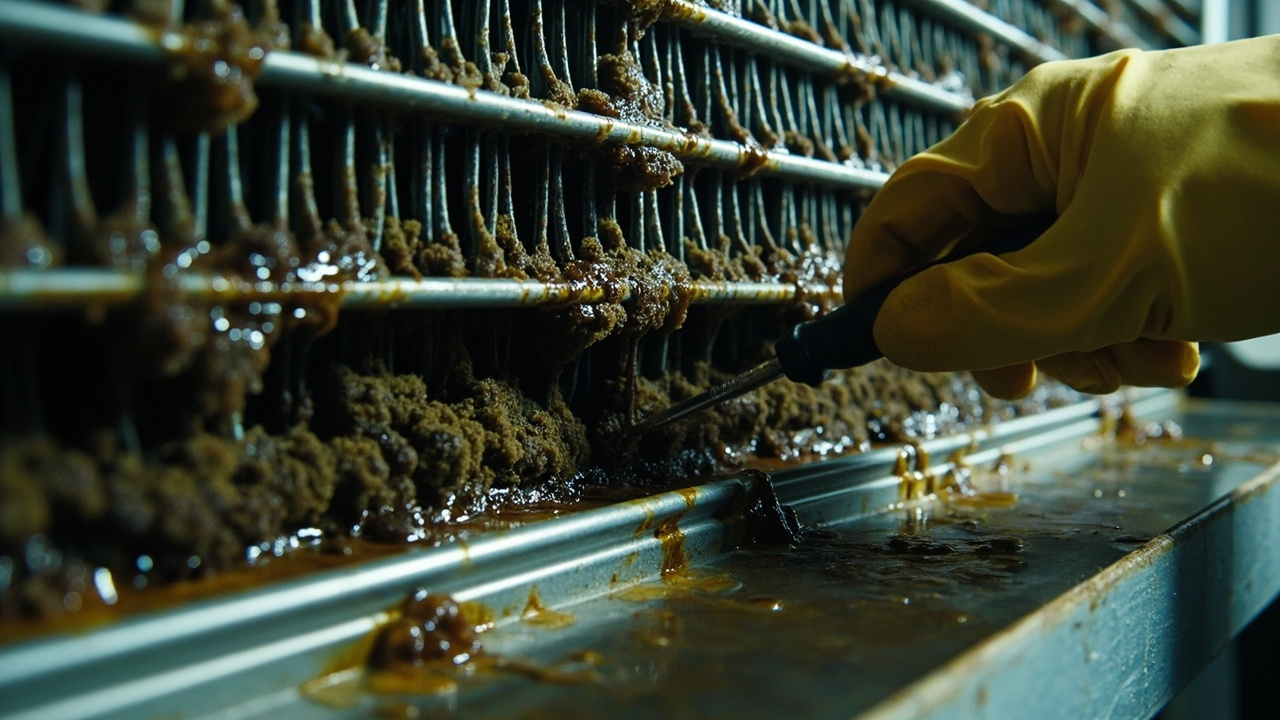
Before anything gets replaced we start with the check that finds the most smells the fastest, a direct look at the filter, the coil and the condensate pan. A clean filter lets light pass through the pleats, a healthy coil shows clean fins with nothing across them, and a good pan sits dry with a drain that runs clear when we pour water down it. A matted filter, a coil coated in a film, or standing water against a rusted float switch tells us the smell is coming from inside the cabinet rather than from the duct run, and that single check decides whether the next step is a coil cleaning or a longer look at the ducts themselves.
Where the smell shows up matters as much as what it smells like. A smell coming only from supply vents usually starts upstream, at the coil or inside the air handler cabinet, since that is the air the blower is actively pushing through the house. A smell noticed mainly at return vents points further back, toward the duct run itself or air being pulled in from outside the conditioned space. A smell that fills the whole house, or one that only shows up after the system sits idle and then restarts, points at moisture sitting in duct board or flex duct that has aged in attic heat and now holds odor between cycles rather than a single failed part. Where a whole house smell also comes with weak airflow at several registers, a static pressure reading on the air handler tells us whether the duct itself is restricted enough to be drawing extra moisture and odor through the system. That combination, where the smell is loudest and how it built up in the duct material, decides whether the fix is a coil cleaning, a condensate line clearing, a duct sealing job, or a duct replacement rather than a full system replacement.
Our page on ac blowing warm air covers that side of the work in more depth.
Ask which of these readings was taken before any part is replaced.
| Instrument | Good reading | Bad reading | What it changes |
|---|---|---|---|
| Filter, coil and condensate inspection | Light passes through the filter pleats, the coil fins are clean | A matted filter, a coil with ice on it | A homeowner who has never seen the inside of their air handler makes a different decision |
| Manometer for total external static pressure across the air handler | Static pressure at or under the maximum printed on the blower data plate | Static above the rating | The filter, the coil or the duct is choking the system |
| Flame sensor signal check in microamps | A steady signal well above the control board dropout point | A weak or drifting signal | The sensor is coated and the burner will drop out |
| Clamp ammeter on the compressor and the blower | Running amps at or below the rated load amps stamped on the data plate | Amps steady above the rating, or a brief spike toward locked rotor on start | A failing capacitor, contactor or compressor |
| Manifold gauges with superheat and subcooling readings | Superheat and subcooling both landing in the range the equipment maker specifies for that metering device | High superheat with low subcooling | An undercharge or a restriction rather than a weak compressor |
How a vent smell call runs
Naming the smell and its location
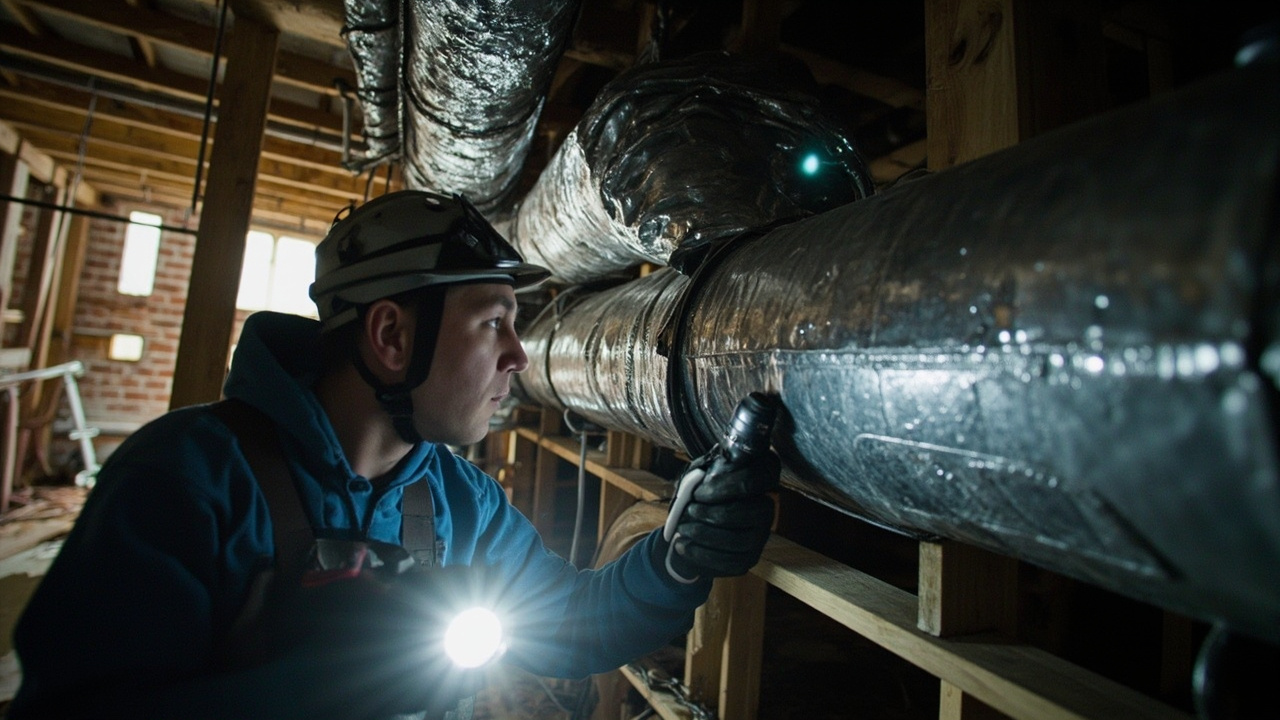
On the phone we ask what the smell reminds you of, whether it comes from certain vents or the whole house, and when it started. On site the order stays the same every time, starting with a visual check of the filter, then the coil, then the condensate pan and drain, because that check rules out the most common sources before anything gets opened further. You see each step as it happens rather than waiting on a result explained later.
Finding the source
Once the filter, coil and pan are checked, the next step follows what those readings pointed at. That might mean a static pressure reading across the air handler if a whole house smell comes with weak airflow, or tracing the condensate line if the pan showed standing water. If a duct seam or a section of aged duct board turns up behind the coil, we stop and show you before deciding whether it gets sealed or replaced.
Verifying the fix
Before we leave, the same filter, coil and condensate check runs again, and it has to come back clean, dry and clear before the visit is done. We walk you through what changed, whether that is a cleaned coil, a cleared drain or a sealed duct seam, and you keep a note of what was found and what was done for your own records.
What an unfamiliar crew misses in Waco attics
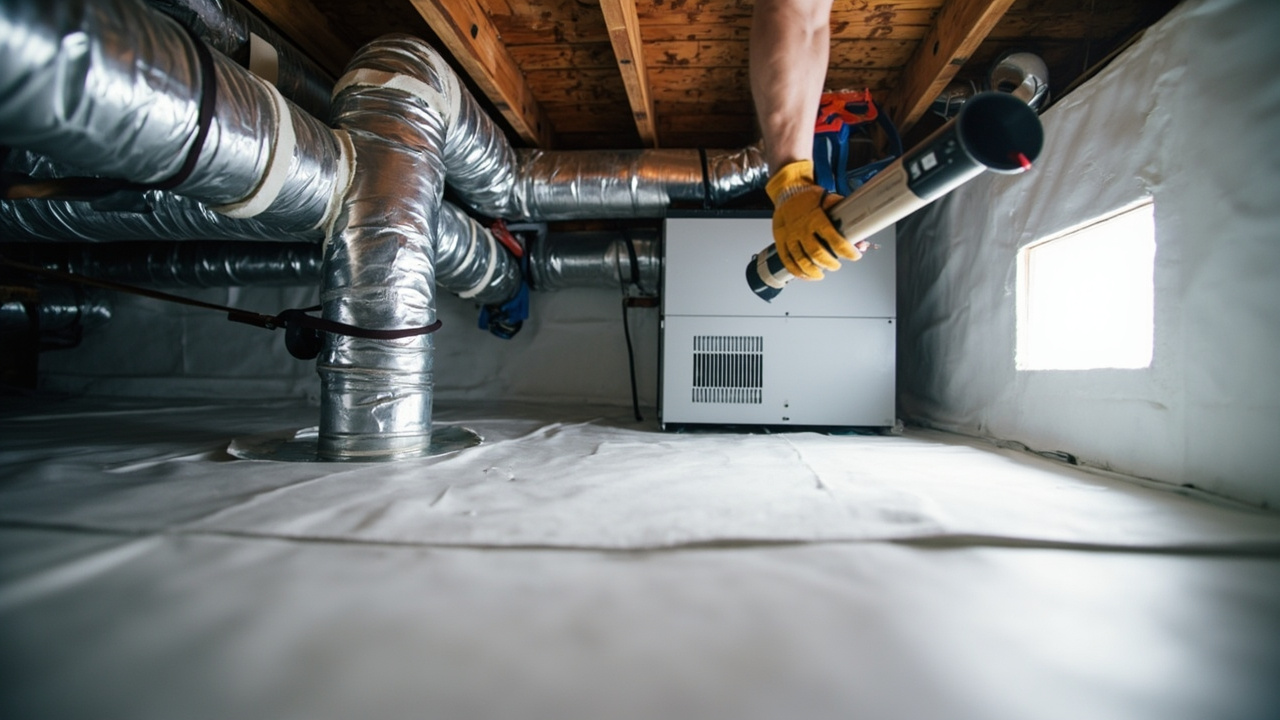
A crew that has not worked pier and beam houses on clay soil tends to treat every musty complaint the same way, as a coil problem, because that is the fastest fix to sell. On a house where the floor has shifted, that assumption sends someone home with a clean coil and a smell that comes back within days, since the air pulling past that coil is still coming from a separated duct joint underneath the house rather than from film on the fins. A crew that has seen the pattern checks the crawlspace connection first on any older foundation, because clay movement here is routine rather than rare.
The same gap shows up with condensate odor. A rotten egg smell reads as sewer gas to someone unfamiliar with how bacteria builds up in a stagnant drain line, and that leads to a plumbing call that finds nothing wrong, while the pan keeps filling. Knowing the difference, and knowing to treat a smell near the furnace cabinet itself as a possible gas leak rather than a drain issue, changes which direction a visit goes from the first minute.
Calls come in from across McLennan County, and a crew dispatched without knowing whether a given house sits on a slab or on pier and beam loses time deciding where to look first. A slab house points straight at the coil and the attic duct run. A raised foundation points at the crawlspace connections as well, and skipping that step on the wrong house type is how a smell complaint turns into a second visit instead of one.
The foundation type also determines what to check when moisture builds up in the conditioned space. On a pier and beam house, standing water in the crawlspace draws humid air through rim joists and band board gaps, and that moisture condenses on cold coils even when the system is running correctly. On a slab, the issue more often lies in ductwork that runs through unconditioned attic space without insulation, or in return air pathways that pull from outside the envelope. A tech who knows the difference runs diagnostics in the right place the first time instead of chasing symptoms in the wrong location.
If this sounds close but not quite your situation, ac constantly running may be the better starting point.
What the visit looks like from your side
Getting to the source fast
When you call about a smell, we ask what it smells like, where it shows up, and whether your house sits on a slab or has a crawlspace, since that tells us what to check first before we ever schedule the visit. That gets you a real window rather than a guess. If the job ahead of yours runs long because a duct issue turned up mid visit, we call and reset your time rather than leaving you waiting past it.
Keeping the work contained
Checking a coil, a filter and a condensate pan means opening a cabinet, so we lay down a drop cloth before anything comes apart and keep tools staged off your floor. If the check moves into a crawlspace or attic, we track what comes out of there and keep it away from living space rather than tracking it through the house. Once the inspection or repair is done, the cabinet gets closed back up and the area gets left the way we found it.
What decides the scope
A coil cleaning and a condensate line clearing cost less than opening a crawlspace duct run, and which one you need depends on what the filter, coil and pan check turns up, along with a static pressure reading if airflow feels weak at the registers. A separated duct joint under a pier and beam house moves the job toward resealing or resupporting duct rather than servicing the air handler. Whatever that reading points to, we write the scope down and you approve it before anything past the inspection starts.
How a technician earns the call
A technician runs the filter, coil and condensate sequence alongside a lead before doing it alone, and the lead signs off once they can read a coil correctly and trace a drain line without missing a low spot. Anyone working a crawlspace duct issue on an older foundation brings in a second technician to confirm the joint separation before it gets written into the scope, since that call affects whether the fix is a reseal or a larger duct repair.
You Have Questions,
We Have Answers
A rotten egg smell from vents is usually bacteria growing in a stagnant condensate line rather than a gas leak. It builds up in a low spot in the drain or a pan that is not emptying, and it gets pushed through the house every time the blower runs. If the smell is stronger near the furnace itself than elsewhere, it may indicate a gas issue. Leave the house and call Atmos Energy from outside before calling anyone else.
Vents stop smelling once the actual source gets cleared, not just the filter changed. You can change the filter yourself and flush the condensate line to verify drainage. Identifying whether the cause is coil biofilm, a stagnant drain, or a duct seam that opened up requires a professional coil, filter and condensate inspection to determine.
Why crawlspace ducts carry smells in older Waco homes
Waco sits on the Blackland Prairie, where dark clay soil shrinks in drought and swells when it rains, and that movement does not stop at the foundation. Older pier and beam houses in the area often have ducts running through crawlspaces, and as the floor shifts on that clay over the years, the duct joints under the house separate at the seams. Once that happens, the return side is no longer pulling only conditioned air. It is drawing air from underneath the house, and that air carries the same musty smell as the ground it sits over. The fix in a house like this is not always at the coil at all, it is a duct connection that needs resealing or resupporting where the floor has moved away from it.
Waco's humid stretch in late spring and through summer does more than raise the cooling load, it grows algae inside condensate drains at a rate that a dry climate would not see. That growth narrows the drain line gradually, so a system that drained fine in April can be slow to drain by July, and by the time it backs up fully the pan under an attic air handler is already holding standing water. Knowing that this buildup follows the seasonal humidity cycle here means a condensate line gets checked as routine maintenance during the humid months rather than only after a homeowner reports water or a smell. This proactive approach catches the narrowing before it causes indoor water damage and extends the interval between service calls.
HVAC Services in The Waco Area
Explore our service area and locate Granite HVAC Waco with ease. We're proudly local and serve the surrounding neighborhoods with fast response and honest pricing. Use the map to check our coverage area, or call us and we'll confirm in seconds.
Address:
Granite HVAC Waco, Waco, TX, 76701
Changing the filter on schedule and pouring water down the condensate line to prove it drains are genuinely homeowner jobs, and you do not need us for either one. The boundary sits at opening the cabinet, working behind the blower door, or touching anything electrical or gas related, since that is where a mistake gets dangerous rather than just messy. If what we find during the inspection points to work outside what we handle, we say so on the first visit.
Before you call, know which smell you are catching, musty, burning, rotten egg or something sour, and whether it is localized to one area or spread throughout. Know roughly when it started and whether it followed the system sitting off for a while. Any age you have for the system helps, and knowing where the breaker and thermostat are speeds up the visit.
Last reviewed September 2026 by Dale Whitfield, Service manager.