





What a heat pump struggling in a McLennan County cold snap usually means
A heat pump that struggles through a cold snap rarely announces itself as a broken machine. What most callers notice first is the unit running the entire night without the house ever feeling warm, or a soft click at the outdoor unit followed by nothing, or the breaker tripping an hour after it resets. None of that points at the compressor by itself, and treating it that way is where an inexperienced heat pump technician goes wrong before the panel cover is even off.
The mechanism behind most of these calls starts small. A dual run capacitor stores the charge that gets the compressor motor spinning on start, and a capacitor that has weakened from months of light cycling can no longer deliver that push cleanly. The compressor still tries to start, but it pulls current well past its rated load amps every single time, and that extra current shows up as heat inside the motor windings rather than as warm air at the register. This heat buildup stresses the insulation around the wire coils inside the motor, breaking down the material that keeps the windings from touching metal parts they should not touch.
Waco spends most of the winter mild enough that a heat pump barely works to hold temperature, then a single hard freeze night asks the same unit for a full, sustained compressor start with no warm up period. That jump from light duty to full load is exactly the stress that finds a capacitor already on its way out, which is why so many heat pump repair calls cluster on the first genuinely cold week rather than spreading evenly through the season. The outdoor unit has to pull refrigerant from the coil and compress it at full capacity while ice forms on the intake side, forcing the motor to work even harder than it would on a normal cold day.
Left alone, the sequence does not stay small. A weak run capacitor forces the compressor to pull high amps on every start attempt. Those repeated high current starts overheat the windings a little more each time, and a part that would have taken a short repair becomes a failed compressor, which turns the job into a full condenser replacement instead of a capacitor swap. If the unit is tripping its breaker more than once on the same cold night, that is the point where an emergency heat pump repair call is worth making rather than resetting the breaker again and hoping. The breaker itself is responding correctly to a motor drawing more current than it should, which means the underlying electrical stress is real and growing.
See heat pump installation for how the related work is scoped and priced.
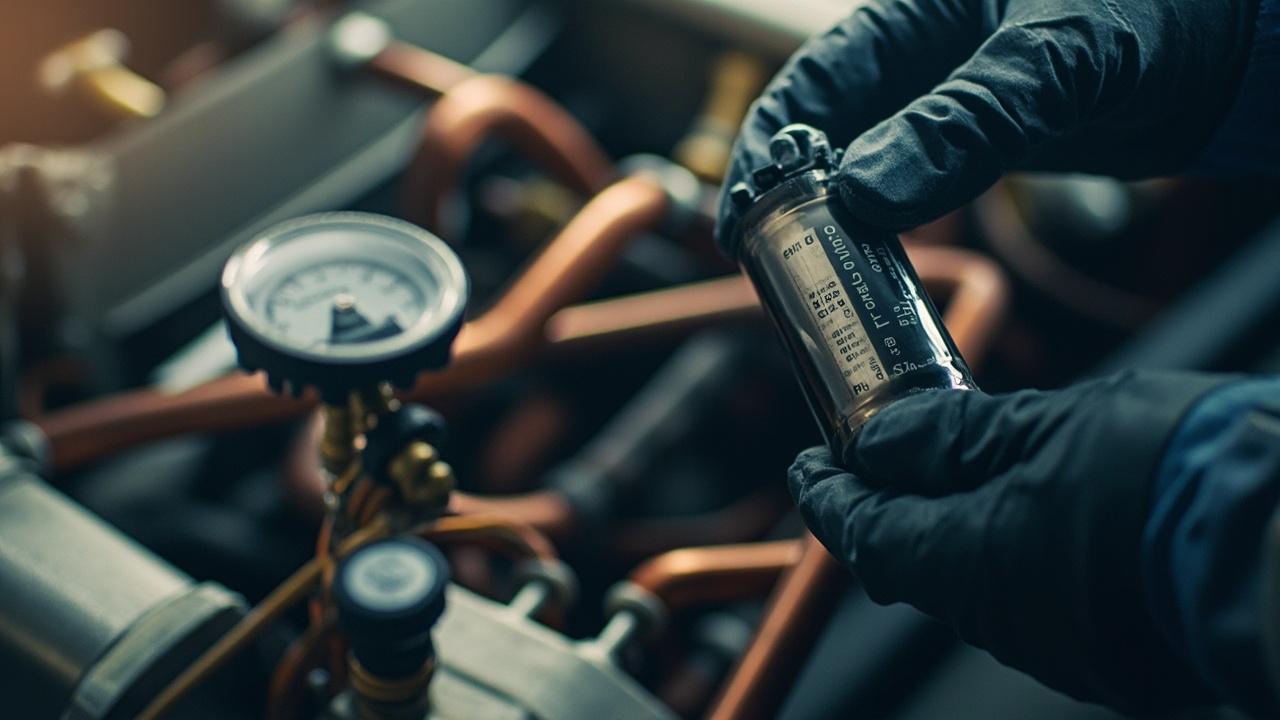
Find the sign you have, then read across to see whether it can wait.
| Symptom or first sign | What is already happening | What it becomes if ignored | When to call |
|---|---|---|---|
| A weak run capacitor | The compressor pulls high amps every time it tries to start | The windings overheat and what was a part becomes a whole condenser | Now, the same day |
| A coated flame sensor | The burner lights and drops out again and again | The board locks out on repeated trials and the house goes cold overnight | At the next visit, while the fix is small |
| A plugged condensate drain | The pan overflows into the platform or the ceiling | The ceiling below stains and the rusted secondary pan lets the rest through | Soon, before it spreads past the repair |
| A slow refrigerant leak | The system runs longer for less cooling and oil stops circulating properly | The compressor loses lubrication and seizes | This week, while it is still one part |
| A loaded filter | Airflow drops and the coil runs colder than it was designed | The coil ices over and the compressor takes liquid refrigerant back and fails | This week, while it is still one part |
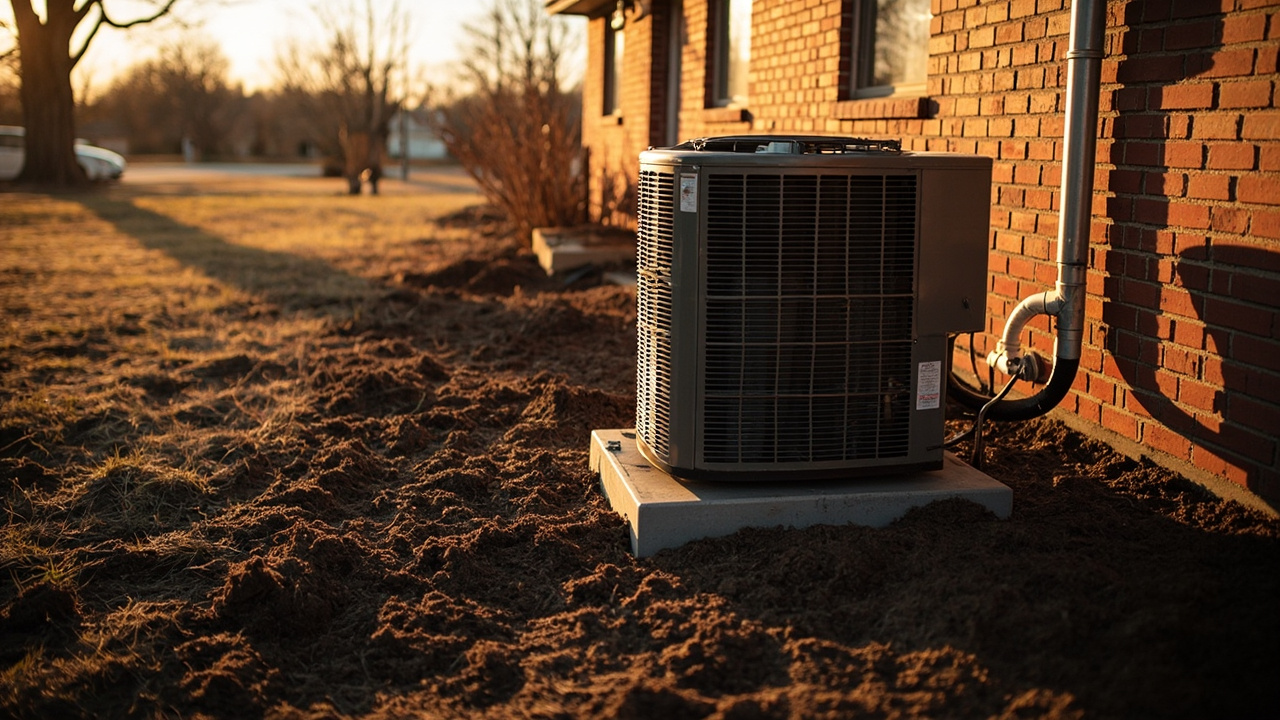
How we find the failing part before we touch anything
The check on a struggling heat pump starts away from the refrigerant circuit and focuses on the filter condition, the return air path and the indoor coil first, because a restricted airflow path can mimic a low charge reading closely enough to send a heat pump repair service down the wrong path. Only once air is moving freely does the work move outside to the disconnect, the contactor and the capacitor under load, and from there to the gauges.
Manifold gauges go on the service ports to read superheat and subcooling together, and which one gets weighted more depends on what is metering that particular coil, a thermostatic expansion valve or a fixed orifice. A reading with high superheat paired with low subcooling points toward an undercharge or a restriction somewhere in the line. That distinction alone changes whether the next step is a leak search or an electrical check. A clamp ammeter on the compressor and blower settles the electrical side, comparing running amps and any start spike against the rated load amps stamped on the data plate. Those measurements separate a capacitor problem from a motor that is genuinely failing.
Heat pumps and gas furnaces answer the cold differently, and that difference matters when a repair keeps coming back. A heat pump is rated on HSPF2 and its heat output falls as the outdoor temperature drops, so on the coldest nights it needs backup heat strips to hold the house at setpoint. A gas furnace, rated on AFUE, delivers the same heat output regardless of how cold it gets outside. Homes that lean on a furnace through hard freezes see fewer cold weather callbacks than a heat pump running alone at its balance point. Knowing which system is doing the work at 2am changes what gets checked first and how to sequence the diagnostics, since a heat pump losing capacity in subzero temperatures needs different troubleshooting than a furnace that maintains steady output. The indoor thermostat and the outdoor sensor both require checking in cold weather calls, because the heat pump relies on outdoor temperature to stage its backup strips correctly.
A heat pump running below its balance point cannot meet the heating demand by itself, so the backup strips cycle on and off to reach setpoint. When that cycling becomes excessive or the house temperature drifts, the problem may not be the heat pump at all. The outdoor sensor reading, the thermostat setpoint and the backup strip control sequence determine whether the strips are engaging at the right time and shutting off as they should.
More detail on heat pump stuck in defrost mode is on its own page.
Narrow this to two options before calling, then ask which one suits the house.
| Option | The numbers a buyer weighs | Best suited to |
|---|---|---|
| Heat pump against gas furnace | A heat pump is rated on HSPF2 and its output falls as the outdoor temperature drops | Climates where the winter low decides the choice |
| Packaged rooftop unit against a light commercial split system | Compared on tonnage per cabinet | Commercial buildings on a capital plan |
| Ducted system against ductless mini split | Mini splits are rated per indoor head | Additions and rooms the ducts never reached |
| Single stage against two stage against variable capacity cooling | Compared on the SEER2 efficiency rating | Two story homes that never feel even |
How a heat pump repair call runs
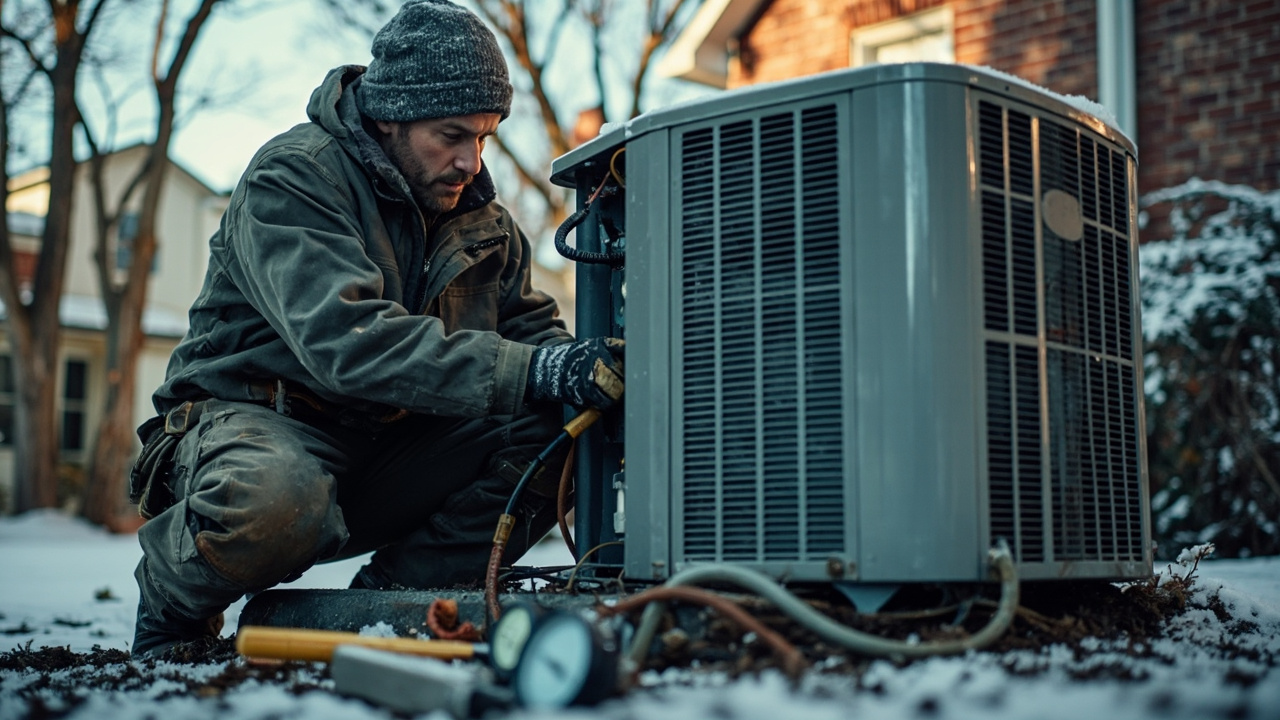
The call and first look
On the phone we ask what the heat pump is doing, when it started, whether the breaker has tripped, and whether the house currently has heat at all, which sorts the call into emergency or scheduled. On site, the check starts at the filter, the return path and the indoor coil, because restricted airflow can mimic a charge problem and has to be ruled out first. Only after airflow is clear does the technician move to the electrical panel at the disconnect and then to gauge readings on the outdoor unit.
Diagnosis and the approved scope
Manifold gauges go on to read superheat and subcooling together, matched against what is metering the coil, and a clamp ammeter reads the compressor and blower against their rated load amps. Those readings, along with a check of the capacitor and contactor under load, tell us whether the fault sits outside the sealed system, meaning a part, or inside it, meaning a system decision. We explain what the readings showed and what they point to, and write the scope from that before touching another component.
Verification and handover
Once the repair is made, the same gauge set goes back on to confirm subcooling or superheat has landed in the range the equipment maker specifies for that metering device, and the clamp ammeter confirms the compressor is running at or below its rated load amps rather than spiking on start. We walk through what the numbers show against what they read on arrival, and you keep a copy of the readings taken before and after, which is useful if the same unit is ever serviced again.
Why a heat pump built into an older Waco attic behaves differently
A crew from outside this metro often treats every heat pump repair like a straightforward part swap, and that assumption runs into trouble the first time the disconnect and breaker are opened on a house built before central heat pump systems became standard. Homes with furnace closets from the 1970s and earlier were wired for a gas furnace blower. Heat pump compressors and heat strips pull higher amp draw on a cold morning, which means a breaker or wire gauge that looked fine for decades can be undersized for what the new equipment demands. Someone unfamiliar with that pattern replaces the failed part and leaves the underlying electrical mismatch in place, and the same trip repeats on the next hard freeze.
The Blackland clay under this region adds a second local variable that surprises crews used to firmer ground. Outdoor pads shift with the wet and dry cycle of the soil, and a unit that has tilted even slightly puts uneven strain on the wire connections at the disconnect box, which can loosen a lug that was torqued correctly the day it was installed. A technician who has not seen that pattern before reads the resulting arcing or intermittent power as a control board fault rather than a connection problem sitting a few inches away, and chases the wrong repair.
Winter here is short and irregular rather than steady, so the readiness that matters is being able to reach a struggling system before a second freeze arrives on the heels of the first, since that second cold night is when a marginal capacitor or a loose electrical connection finally gives out. Crews who work this metro through repeated cold snaps recognize that pattern quickly, because they have already traced it back from a tripped breaker to a shifted pad or an undersized wire more than once in a season that other regions never see repeat that fast.
Your local utility, Utility Bill City of Waco, publishes service and water-quality information every Waco homeowner should know.
What working with us looks like day to day
Same day or scheduled, decided fast
On the phone we ask whether the breaker has tripped, how long the unit has been struggling, and whether anyone in the house needs steady heat right now, and those three answers sort the call into an emergency visit or a scheduled one. You get a window for arrival before the technician leaves for your address. If a cold snap call ahead of yours runs long because a capacitor turned out to be a wiring problem at the disconnect, we call and tell you the new window rather than letting you wonder.
Attic and panel left as found
Before the disconnect cover or the attic access comes open, the work area gets a drop cloth and the path to it gets cleared so nothing gets tracked through the house. Any insulation or duct panel that has to move to reach the coil goes back the way it came. Old capacitors, contactors and any wire that gets replaced leave with the technician rather than sitting in a driveway pile, and the last step before leaving is confirming the attic hatch or panel cover is closed and secured.
What moves the number
The biggest swing on a heat pump repair is whether the fault sits in a part, like a capacitor or contactor, or whether the disconnect, breaker and wire feeding the unit have to be upsized to carry the compressor's rated load amps, which is a longer job than the moment it looks like on arrival. Access matters too, since an attic mounted air handler takes longer to reach than one in a closet. We write the scope once the gauge and amp readings are in, and you see it and approve it before anything past the diagnostic step gets touched.
How a technician earns solo calls
A new technician rides alongside a lead through a set number of cold weather and warm weather calls before working solo, and the lead signs off once that technician can read a capacitor and amp draw correctly without prompting and explain what the reading rules out. On anything where the compressor is condemned outright, meaning the most expensive call on the board, a second technician checks the same gauge and amp readings before that scope goes to the homeowner.
You Have Questions,
We Have Answers
Service cost depends on what the visit finds. A filter and coil check with a gauge and amp reading is a short visit, while finding a coated flame sensor equivalent fault on the electrical side, or a duct problem behind low static pressure, adds time. We tell you what was found and what it changes before any repair scope is written.
How McLennan County winters and soil change a heat pump repair
A heat pump here spends most of the winter running at partial load through mild stretches, then gets asked for a full compressor start the first hard freeze night, which is exactly the stress that exposes a weakening capacitor rather than a failing compressor. The Blackland clay under most outdoor pads shrinks and swells with rainfall, which tilts a condensing unit out of level over time and adds strain to the refrigerant line set and the electrical connections feeding it, sometimes producing vibration and noise that gets mistaken for a refrigerant fault. Attic mounted air handlers, common in homes built from the 1970s forward here, sit in duct that ages in summer heat, so static pressure has to be checked against the blower data plate before any charge reading is trusted, because a choked duct system will make a correctly charged heat pump look weak.
Hard freezes in this area often come with power interruptions, and the surge when electric service returns puts a second load on a heat pump that may already have a marginal capacitor, which is one reason a unit that survived the first cold night can fail on the second. Verification after a repair matters more here because of that pattern. The readings taken before leaving, the amp draw and the gauge numbers, are checked again rather than assumed to hold. That repeat check is what confirms the fix survives a second freeze rather than just the first one. A capacitor failure shows as higher than normal amp draw on startup, and catching it on the first inspection visit prevents a callback when the next hard freeze arrives.
HVAC Services in The Waco Area
Explore our service area and locate Granite HVAC Waco with ease. We're proudly local and serve the surrounding neighborhoods with fast response and honest pricing. Use the map to check our coverage area, or call us and we'll confirm in seconds.
Address:
Granite HVAC Waco, Waco, TX, 76701
Additional Services We Offer
Changing filters, keeping clearance around the outdoor unit, and rinsing condenser fins with the power off at the disconnect are jobs you can do yourself. Repair stops at refrigerant, anything behind the blower door, and anything inside the electrical panel, because those carry pressure and voltage that are not safe to work on without training. If a visit uncovers duct or electrical work beyond the heat pump itself, we say so on the first visit and tell you who handles it.
Before you call, know when the heat pump started acting up and whether that lined up with a cold night or a power outage. Check if the breaker has tripped and note whether you have reset it more than once. Have the unit's age handy if you know it, and identify any occupants with medical conditions requiring continuous warmth. Those answers usually tell us if this is a same day call.
Last reviewed September 2026 by Dale Whitfield, Service manager.