





What a heat pump going quiet in a freeze usually means
The complaint is almost always the same. The thermostat is calling for heat, the outdoor unit is either silent, buzzing, or coated in ice, and the house is losing ground by the hour. Sometimes it is a breaker that tripped once already and got reset. None of that tells you which of four things failed, and a heat pump has four places to look: the compressor itself, a refrigerant leak, an airflow restriction on the indoor or outdoor coil, or a control fault in the defrost board or reversing valve.
Waco winters are mild most days, broken by short hard freezes that put real load on equipment that has been idling for weeks. A storm like the one in February 2021 does two things to a heat pump at once. The cold locks ice onto the outdoor coil faster than the defrost cycle can clear it, and the statewide grid strain that follows brings rolling outages. When power comes back, the compressor and the blower motor both try to start against whatever load was already sitting on the circuit, and a capacitor that was already weak takes the hit.
That is the chain worth knowing before you decide whether tonight is the night to call. A weak run capacitor makes the compressor pull high amps every time it tries to start. Left alone, that repeated hard start heats the windings past what they are built for, and a part that would have been a same day heat pump repair becomes a full compressor replacement. The point where waiting stops being reasonable is when the outdoor unit is humming, clicking, or tripping the breaker on restart rather than running clean. That is the moment to shut the system off at the thermostat, open the outdoor disconnect, and call an urgent heat pump repair company rather than reset the breaker again.
Emergency heat and backup heat strips can keep a house livable while this gets sorted, but they are not diagnosing anything on their own. They just tell you the compressor side has stopped carrying the load, which is exactly the piece an emergency heat pump technician needs to check first. The windings inside the compressor housing will show burn marks if repeated hard starts have damaged them, and a technician can measure the resistance across the motor terminals to confirm whether the motor itself is still sound or whether it has overheated to the point of failure. That measurement takes seconds and tells you whether you are looking at a capacitor swap or a full unit replacement.
Our page on no heat emergency service covers that side of the work in more depth.
When we spec replacement equipment, ENERGY STAR's heating and cooling ratings are the baseline we work from.
How we isolate the fault before ordering a part
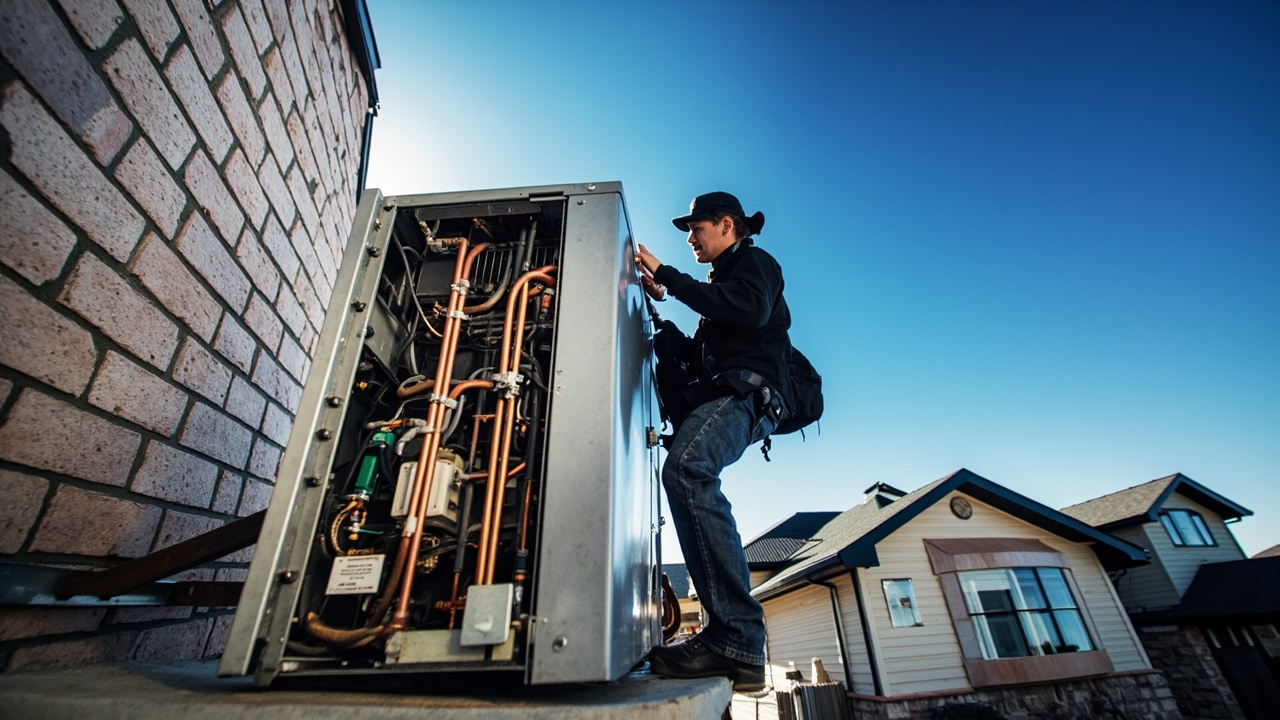
On a heat pump that has quit in cold weather, the visit starts at the thermostat rather than the outdoor unit. We confirm the call for heat is reaching the equipment, check whether the system is locked into emergency heat already, and look at the outdoor coil for ice pattern before touching anything electrical. That order matters because a coil sheeted in ice reads like a failed compressor to anyone who skips straight to the gauges, when the actual fault is a defrost board that stopped cycling.
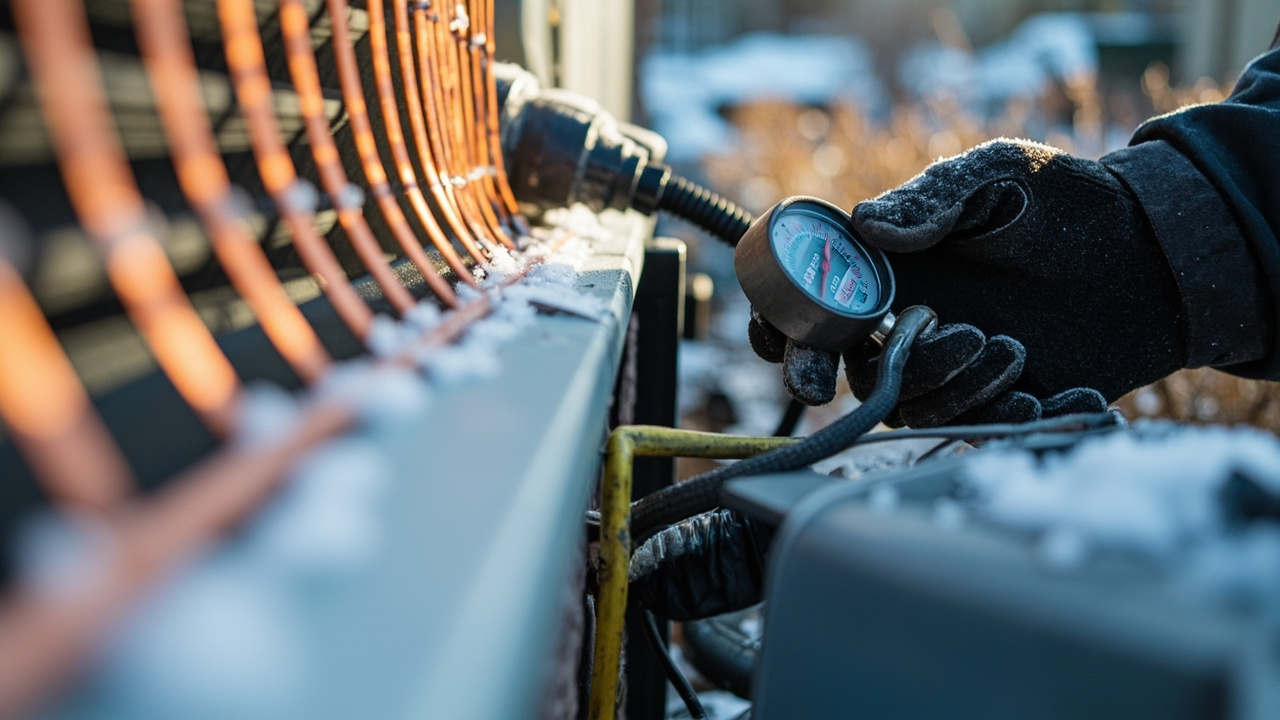
The reading this page turns on is a clamp ammeter on the compressor and the blower motor, checked against the rated load amps stamped on the equipment data plate. A compressor running at or under its rated amps with a clean start is not the problem, whatever else is wrong upstream. A compressor pulling amps above that rating, or spiking toward locked rotor on start, points to a failing run capacitor or contactor rather than a dead compressor, and that distinction decides whether the visit ends with a part swap or a system level conversation. A capacitor that tests weak under load after a power surge is a common finding after a hard freeze outage, and it is worth checking before anyone condemns the compressor. The instrument table alongside this section carries the rest of what gets checked and what each reading rules out.
Heat pump against gas furnace matters here because a heat pump's output falls as the outdoor temperature drops, while a furnace delivers the same heat regardless of how cold it gets outside. In a house running dual fuel, the balance point set at installation decides when the system should have already switched to the furnace, and if it never switched during the freeze, that is a controls fault worth checking alongside the amperage readings, not a reason to assume the heat pump itself is finished. Tracing the sequence of what happened during the outage, from the initial temperature drop through the defrost cycles and into the switch decision, often reveals whether the equipment failed or the control logic did.
If this sounds close but not quite your situation, heat pump installation may be the better starting point.
Ask which of these readings was taken before any part is replaced.
| Instrument | Good reading | Bad reading | What it changes |
|---|---|---|---|
| Clamp ammeter on the compressor and the blower | Running amps at or below the rated load amps stamped on the data plate | Amps steady above the rating, or a brief spike toward locked rotor on start | A failing capacitor, contactor or compressor |
| Micron gauge during evacuation | Below 500 microns and holding there after the pump is valved off | A reading that climbs back up | Moisture is still boiling off inside or the system is not sealed |
| Filter, coil and condensate inspection | Light passes through the filter pleats, the coil fins are clean | A matted filter, a coil with ice on it | A homeowner who has never seen the inside of their air handler makes a different decision |
| Manifold gauges with superheat and subcooling readings | Superheat and subcooling both landing in the range the equipment maker specifies for that metering device | High superheat with low subcooling | An undercharge or a restriction rather than a weak compressor |
How an emergency call runs
First contact and initial check
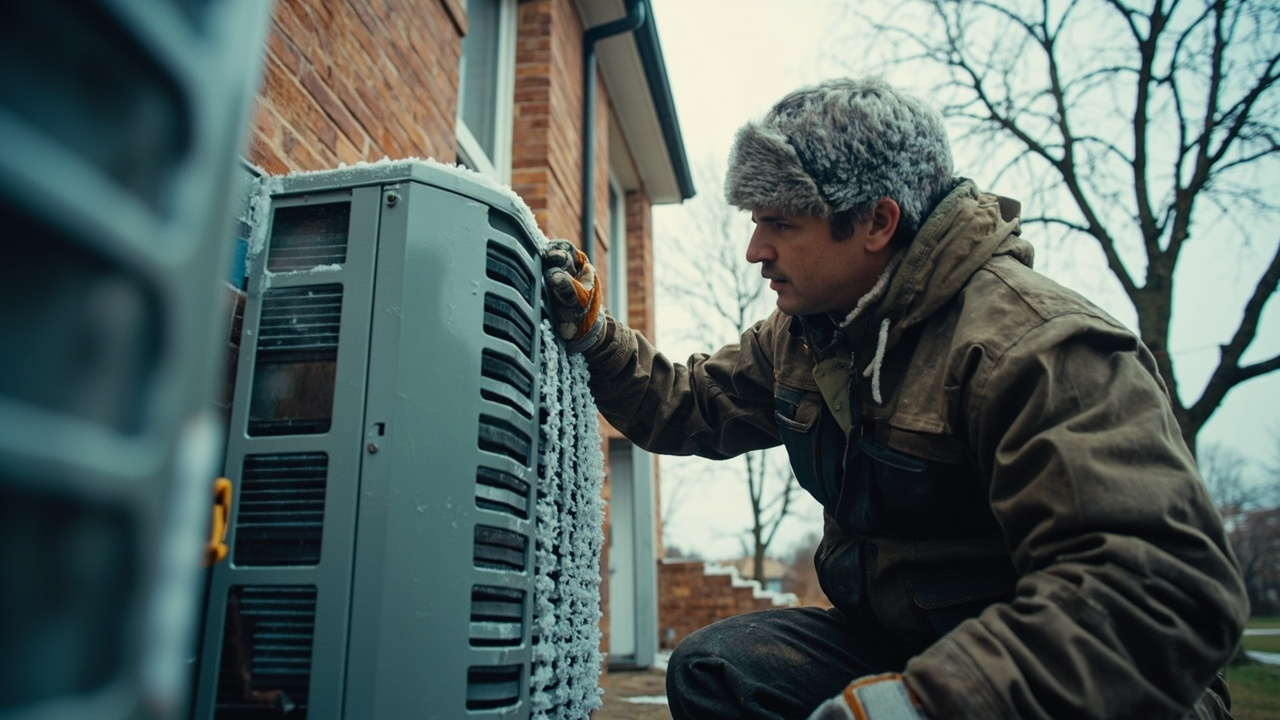
On the phone we ask whether the thermostat is calling for heat, whether emergency heat is on, and what the outdoor unit looked like the last time you checked it. On site we verify the signal path from the control board to the outdoor unit, confirming the heating demand reached all equipment. Next we examine the ice pattern on the outdoor coil, since a coil sheeted evenly points to a defrost cycle that stopped rather than a failed compressor. Only after that do we open the outdoor disconnect and measure motor amperage against the data plate specifications.
Repair with your approval
Once the ammeter reading points to a cause, we compare it to the manufacturer specs stamped on the equipment before anything is replaced. If the compressor is pulling high amps on start, the outdoor disconnect stays open while a capacitor or contactor swap goes in first, since that is the cheaper fault to rule out. If the reading points instead to a defrost board or reversing valve fault, we say so before ordering that part. Nothing gets replaced until you have seen the reading and approved the scope it points to.
Confirming the fix holds
Before we leave, the clamp ammeter goes back on the compressor and blower for a cold restart, and the reading has to sit at or under the rated load amps stamped on the data plate with a clean start rather than a stutter. We walk you through what the reading showed and what it ruled out, and you keep the amperage numbers from both readings so the next technician, ours or anyone else's, has a record of what this unit does under load.
Why an unfamiliar crew gets a freeze call wrong
A crew that has not worked a McLennan County freeze often reads a coil sheeted in ice as a dead compressor and orders an outdoor section outright. The physical picture is usually different. A defrost board that stopped cycling lets ice build past what a normal thaw cycle clears, and the compressor underneath can be sound. Skipping the ice pattern check and going straight to a replacement quote is the mistake a hard freeze exposes, because the fix for a stuck defrost cycle is a control board, not a new outdoor unit.
A hard freeze brings a second problem that has nothing to do with any single house. When a storm like the one in February 2021 knocks out power across the county and the grid comes back, every heat pump on the circuit restarts at once, and every marginal capacitor fails within the same few hours. A crew unfamiliar with that pattern treats each call as an isolated compressor failure rather than what it usually is, a capacitor that was already weak before the surge finished it. Dispatch across the metro gets stretched thin on that kind of night, and a technician who does not expect the volume tends to order parts for a compressor before checking whether a capacitor swap solves it first.
Emergency heat and backup strips complicate this further, because they heat the house whether or not the compressor is working at all. A crew that hears the house is warm again and calls the job done, without putting an ammeter back on the compressor for a clean restart, leaves the same fault sitting on the circuit for the next freeze. Confirming the compressor side carries the load again, rather than trusting that warm air from the strips means the heat pump itself recovered, is the difference between a repair that holds and one that fails again the next cold night.
Your local utility, Utility Bill City of Waco, publishes service and water-quality information every Waco homeowner should know.
What to expect once you call
Freeze night arrival windows
When you call during a freeze, we ask whether the breaker has tripped, whether emergency heat is running, and if the system is cycling. That tells us if this is a same day dispatch or a morning visit. You get a call back confirming the window once a technician is routed. If a call ahead of yours involves a frozen coil or a tripped compressor that needs more time on site, we call to move your window rather than leave you guessing when someone will show.
Careful work around iced equipment
Ice on the outdoor coil and slush around the pad both need clearing before any panel comes off, so loose ice gets knocked down first rather than forcing a cover open. Inside, the air handler closet or attic access stays covered where a technician works near the blower or the defrost board wiring. Tools and parts stay staged on a mat rather than the floor, and when the visit is done the covers come up, the panels go back on, and the thermostat is left set the way you want it.
What moves the repair cost
The biggest fork is whether the fault sits at a part, a capacitor or a contactor, or inside the sealed compressor itself, and the ammeter reading answers that before anything is quoted. After hours dispatch during the first hard freeze of the season moves the job too, since every heat pump in the area is failing on the same night and technicians are routed in the order calls come in. Once the fault is identified, you see the written scope and approve it before parts get ordered or work starts.
How we check field skill
A technician runs a set number of freeze season calls alongside a lead before working a heat pump failure alone, and the lead signs off on reading a clamp ammeter against the data plate correctly before that happens. On a call where the compressor amps sit borderline, or the defrost board history is unclear, a second technician looks at the readings before a scope gets written, since a wrong read here is the difference between a capacitor and a compressor.
You Have Questions,
We Have Answers
Emergency heat bypasses the compressor and heats the house on electric heat strips alone. It runs the blower and the strips whether or not the outdoor unit is working, which is exactly why it can mask a failing compressor for days. If the house is warm on emergency heat but the outdoor unit stays silent or iced, that confirms the fault is on the compressor side rather than in the strips or the blower, which is where an emergency heat pump technician starts the amperage check.
Why a hard freeze is different from a mild cold snap here
Waco heating season runs mild for most of its length, which means a heat pump here spends most winter days well within its comfortable output range. That changes fast during a hard freeze, when outdoor temperatures drop enough that the unit falls back on backup heat strips to make up the difference, and those strips draw far more current than the compressor alone. A system that has been coasting through mild weeks gets asked for everything it has at once, and any component that was already marginal, a weakening capacitor, a contactor with pitted contacts, shows itself on exactly the coldest night rather than during a routine check.
Statewide grid strain during a hard freeze, the kind seen in the February 2021 storm, adds a second stress on top of the cold itself. When power drops and comes back, the compressor and blower motor both attempt a cold start against whatever load is on the line, and a capacitor that read acceptable on a mild day can fail that exact restart. That is why the amperage reading taken on a post-storm call matters more than it would on an ordinary repair. A component sitting right at its rated limit before the outage is often the one that will not survive the surge when the grid recovers. This distinction between pre-outage and post-recovery electrical stress is critical to understanding failure patterns in extreme weather events.
HVAC Services in The Waco Area
Explore our service area and locate Granite HVAC Waco with ease. We're proudly local and serve the surrounding neighborhoods with fast response and honest pricing. Use the map to check our coverage area, or call us and we'll confirm in seconds.
Address:
Granite HVAC Waco, Waco, TX, 76701
Additional Services We Offer
- 24/7 Emergency AC Repair
- After-Hours HVAC Service
- Carbon Monoxide Leak Response
- Emergency Blower Motor Replacement
- Emergency Boiler Repair
- Emergency Commercial HVAC Repair
- Emergency Compressor Replacement
- Emergency Furnace Repair
- Emergency Refrigerant Leak Repair
- Emergency Thermostat Replacement
- No Cooling Emergency Service
- No Heat Emergency Service
Changing filters, keeping a couple of feet clear around the outdoor unit, and checking the breaker and thermostat batteries are genuinely homeowner tasks, and you do not need us for any of that. Where it stops is refrigerant, anything behind the blower door, and anything inside the electrical panel, because those carry pressure and voltage that are not safe to work on unprotected. If what we find points to a fault outside heat pump repair, we say so on the first visit.
Before you call, know whether the outdoor unit is silent, icing over, or making noise when it tries to start, and whether the breaker has already tripped once. Note when it stopped heating and what the weather was doing right before that. If you know the system's age or whether emergency heat is currently on at the thermostat, mention it, since that combination usually tells us whether this needs someone tonight.
Last reviewed September 2026 by Dale Whitfield, Service manager.