





What commercial HVAC failures cost a Waco facility
A commercial system fails in four ways a facility manager can name without opening a panel. Temperature control drifts, so one zone runs warm while the thermostat reads satisfied. Air quality degrades, showing up as a stale smell near supply registers or a spike in occupant complaints. Equipment starts making noise it did not make last season, a hum, a click, a rattle at startup. Energy cost climbs on the utility bill without a matching increase in occupied hours. Each of these is a symptom, not a diagnosis, and treating any of them with a guessed part swap is how a facility ends up paying for the same failure twice.
Commercial equipment runs harder than a house system because it carries more hours and more load per square foot, and in Waco that load is heaviest across a long, hot cooling season that keeps rooftop and split units cycling for months without a real rest period. A component that would idle through a mild week elsewhere here runs at or near full load for most of a shift, day after day, which is what turns a marginal part into a failed one mid-summer rather than in a slow week when replacement is convenient. Diagnosis on this kind of equipment has to start with a measurement, because a compressor pulling high amps and a capacitor that has weakened enough to strain the compressor look identical from the parking lot.
The clearest example of why guessing costs more than measuring is the failure chain that runs from a weak run capacitor to a lost condenser. A capacitor losing capacitance makes the compressor pull higher amps every time it tries to start, since the capacitor is no longer giving the motor the starting kick it needs. Each hard start heats the windings a little more than the last one. Left running that way through a Waco summer, the windings eventually overheat past the point of repair, and a part that would have cost a service call becomes a full condenser replacement. That chain is the reason a compressor should never be condemned before the capacitor and the amp draw have been checked, and it is the reason waiting through one more hot week after the unit starts humming or clicking is the wrong call.
If this sounds close but not quite your situation, commercial ac repair may be the better starting point.
We install and service major brands like Carrier and register every unit to manufacturer specifications.
How the diagnosis decides repair, replacement, or a system change
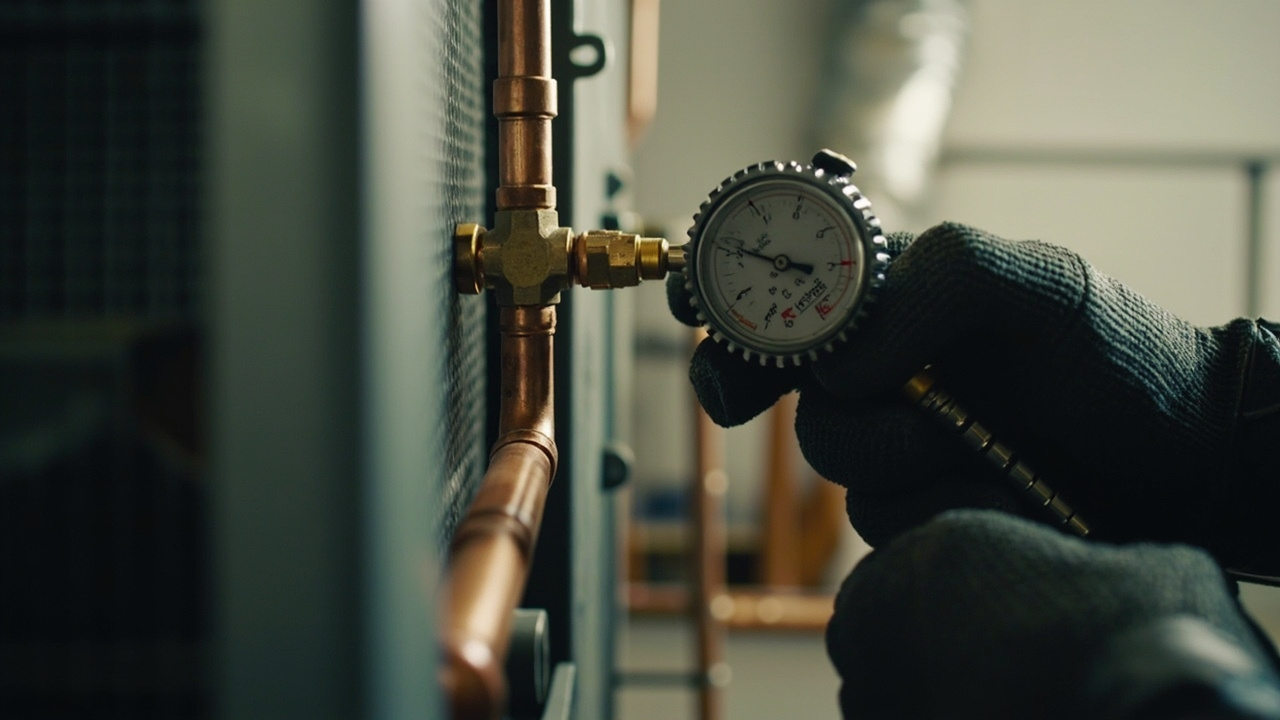
The sequence on a commercial call runs the same order every time, because skipping a step is how a technician replaces a part that was never the problem. Airflow and electrical condition get checked first, since a starved return or a failing contactor can mimic a refrigerant problem. Then the compressor and blower amp draw get measured against the rated load amps on the equipment data plate. Only after that reading is understood does a decision get made about whether the fault sits inside the sealed refrigerant circuit or outside it, in a part that can be swapped without touching charge.
A clamp ammeter on the compressor and the blower is the reading that separates those two outcomes. Amps sitting at or below the rated load figure on the data plate mean the electrical side is healthy and any comfort complaint is coming from somewhere else, usually airflow or duct condition. Amps running steady above the rating, or spiking toward locked rotor on start, point at a failing capacitor, a pitted contactor, or a compressor that is genuinely going bad, and a capacitor gets checked before a compressor gets condemned, because a weak capacitor makes a healthy compressor look like a dead one. That single reading decides whether the written scope is a part or a system.
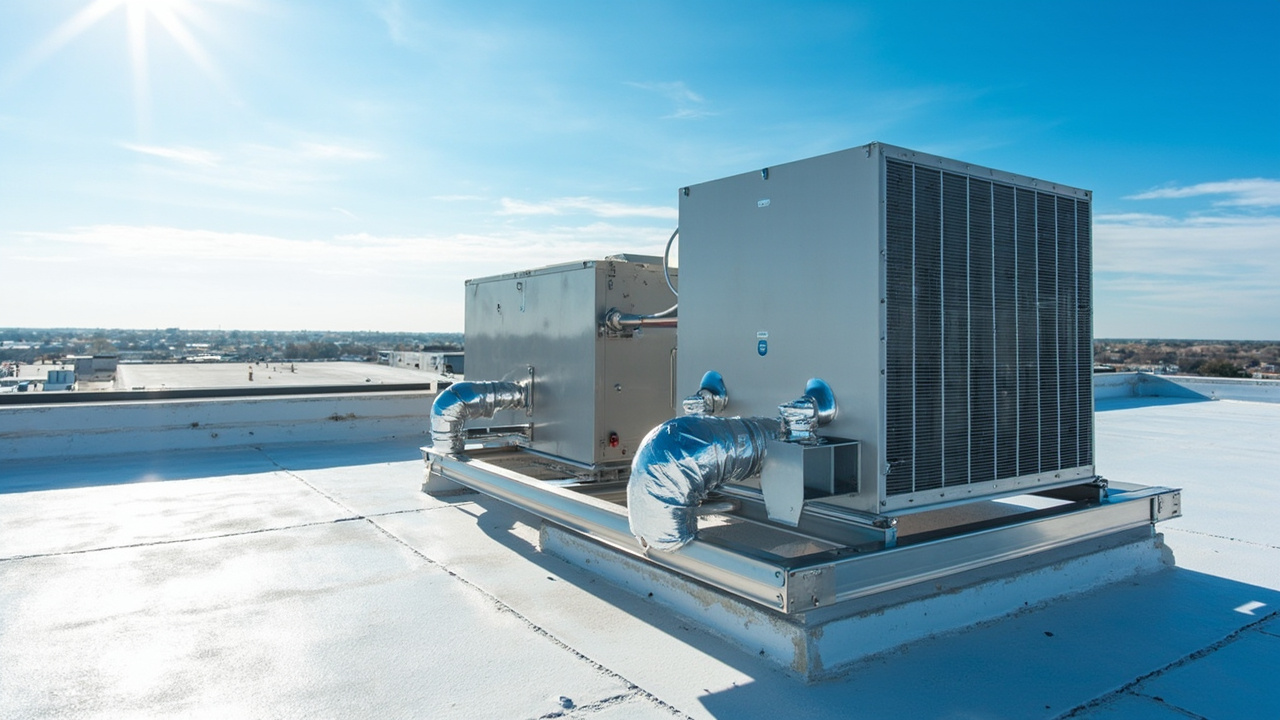
When the equipment itself is the question rather than the fault inside it, the choice for most businesses comes down to a packaged rooftop unit against a light commercial split system, and the table on this page lays out the tonnage, economizer and service access numbers that decision turns on. A long, hot cooling season with months of near continuous run time favors whichever option keeps service access simple, since a unit that runs nearly every day needs a filter change, a coil rinse and a capacitor check without a lift or a ladder involved every time. A building with usable roof access and a curb already in place leans toward staying with a packaged unit, while a building with no roof path or a tenant space added after original construction often makes more sense as a split system with the air handler indoors. The service history on each equipment type over a full cooling season tells the story of which choice carries lower total cost across parts, labor and downtime risk.
More detail on commercial hvac preventive maintenance contracts is on its own page.
Your local utility, Utility Bill City of Waco, publishes service and water-quality information every Waco homeowner should know.
Narrow this to two options before calling, then ask which one suits the house.
| Option | The numbers a buyer weighs | Best suited to |
|---|---|---|
| Packaged rooftop unit against a light commercial split system | Compared on tonnage per cabinet | Commercial buildings on a capital plan |
| Ducted system against ductless mini split | Mini splits are rated per indoor head | Additions and rooms the ducts never reached |
| Single stage against two stage against variable capacity cooling | Compared on the SEER2 efficiency rating | Two story homes that never feel even |
How a commercial HVAC call runs
Intake and first questions
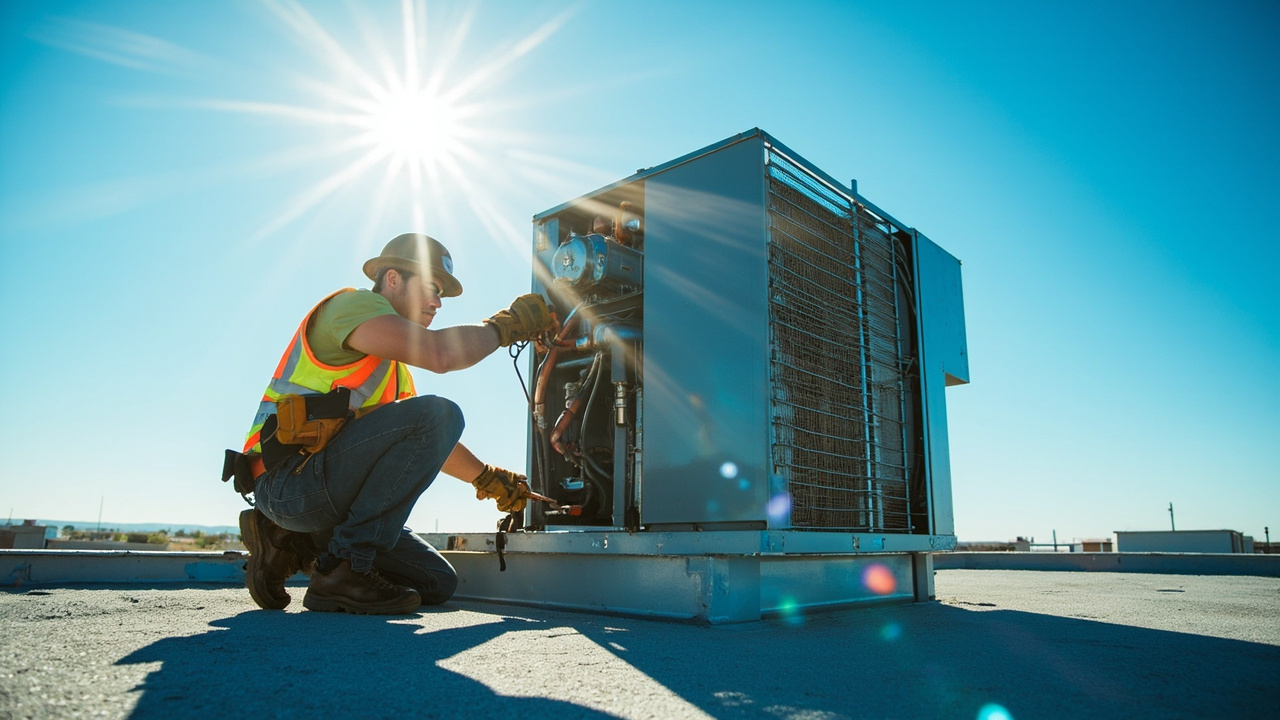
The call gathers what the equipment is doing, how long the symptom has been present, and what changed just before it started, along with the equipment's age and type if you know it. That information decides whether the visit is same day or scheduled, and it lets the technician bring the right gauges and meters instead of guessing at the truck. On site, the order is fixed: airflow and electrical condition first, then amp draw on the compressor and blower, then refrigerant readings only once airflow is confirmed clean.
Approval and the work itself
Once the written scope is approved, the unit gets isolated at the disconnect before any panel comes off. If the fault is a capacitor, contactor or motor, that component gets replaced and the amp draw is rechecked immediately. If the readings point past that into a compressor or coil failure, the isolation and evacuation sequence follows, filter drier changed, system pulled to a clean vacuum, before any new charge goes in. If something unexpected turns up behind a panel, like corrosion the amp reading did not explain, the technician stops and shows you before continuing.
Verification and handover
Before the technician leaves, the clamp ammeter goes back on the compressor and the blower and has to read at or below the rated load amps on the data plate. On a refrigerant repair, superheat or subcooling is confirmed against the specification for that metering device. You get a walkthrough of what was found, what was replaced, and the readings taken, and you keep a copy of that documentation for your maintenance file.
Why commercial diagnosis takes more than a residential toolkit
A technician working on commercial equipment has to be fluent across more than one system type, because a rooftop unit, a light commercial split system and a ductless setup fail in different ways and get measured differently. A packaged rooftop unit puts the compressor, coil and blower in one cabinet exposed to roof-level heat and weather, so its electrical components and its economizer damper both get checked on every visit. A split system puts the air handler indoors, which changes where condensate and duct problems show up and makes electrical access easier in cold weather but harder to reach during a summer emergency when the roof is baking.
Measurement carries the same weight on every one of those systems. Total external static pressure tells a technician whether the duct can move the air the equipment is rated to deliver, and a system that reads correctly on charge but chokes on static pressure will still leave a tenant space uncomfortable no matter what gets replaced outside. Superheat and subcooling get read against the specification for whatever is metering that particular coil, since a fixed orifice system and a thermostatic expansion valve system are judged differently and there is no single number that applies to both. A combustion analyzer settles any question involving a gas-fired unit, because carbon monoxide readings in the flue decide whether equipment stays running or gets shut off on the spot.
Preventive maintenance on commercial equipment is built around the same measurements rather than a fixed calendar. A rooftop unit carrying a heavier daily load gets its capacitor, contactor and amp draw checked more often than a lightly used split system in a small office, because duty cycle drives wear faster than age does. Filter condition, coil cleanliness and condensate flow get logged at each visit so a drifting reading gets caught before it becomes a failed component during the next stretch of hot weather. A facility that treats maintenance as a measurement schedule rather than a once-a-year visit sees fewer emergency calls during the months when equipment is already running at its limit.
Our page on emergency commercial hvac repair covers that side of the work in more depth.
Proper sizing follows the Manual J standard from the Air Conditioning Contractors of America, guesswork is how systems end up short-cycling.
Use this to ask what is driving the quote rather than asking for a rough number.
| Driver | Why it moves the estimate | What you control |
|---|---|---|
| The capacity and efficiency tier of the equipment chosen | Whether the indoor coil is matched to the new outdoor unit | The grade you choose, the rest of the work is set by the house |
| After hours dispatch during the first heat wave | Everyone calls at once | Calling in working hours when the problem can wait |
| Controls | The thermostat, zoning and any communicating equipment | How much control you want built into the system |
| Access and rigging | An attic, a crawlspace, a tight closet or a rooftop with no easy path | Clearing the work area and the path before the crew arrives |
| Electrical work | The disconnect, the breaker and the wire size feeding the unit | Fixing the cause now rather than paying for the same visit twice |
| Whether the existing duct system can move the air the new equipment | The static pressure reading answers | Fixing the cause now rather than paying for the same visit twice |
What working with a commercial HVAC company looks like
Scheduling around occupied hours
The call starts with what the equipment is doing and whether the space is occupied, since a tenant complaint during business hours moves differently than a rooftop unit that only runs the parking lot lights overnight. That tells us same day or scheduled, and you get a window confirmed before the technician leaves for the site. If a job ahead of yours runs long because an unexpected reading needs a second look, we call and reset the window rather than leaving you guessing at an empty roof access hatch.
Working without disrupting tenants
Before a panel comes off, the disconnect gets pulled so nothing is live while we work near occupied space below. Drop cloths go down in mechanical rooms and hallways where a filter or coil job tracks debris, and any roof access point gets marked off so foot traffic below stays clear. Parts and tools stage on a tarp rather than the roof surface itself, and everything removed leaves with us. The unit and the surrounding area get left the way we found them.
What moves the number
The equipment's capacity and efficiency tier is the first thing that moves cost, along with whether the existing indoor coil can stay matched to a new outdoor unit or has to be replaced with it. Electrical capacity at the disconnect, roof or mechanical room access, and controls integration each add their own line depending on what the first visit finds. Every driver gets written into a scope with the reading behind it, and you see that scope and approve it before any part is ordered or any panel comes off.
How a technician earns the roof
A technician does not work a rooftop unit alone until a lead has watched them run a full amp and static pressure check start to finish and sign off on reading it correctly against the data plate. Refrigerant work under a lead's direct observation comes next, evacuation, charge weighed in, before it happens unsupervised. On anything involving an economizer fault or a reading that does not match the symptom, a second technician looks at the numbers before a scope goes to the customer.
You Have Questions,
We Have Answers
Granite HVAC Waco is the name Waco neighbors keep recommending for commercial hvac contractors, and the reasons are practical. Local crews who know Waco buildings, written upfront pricing, and follow-through when something needs a second look. We answer 24/7 and show up when we say we will. Compare the quote line by line, then decide.
The specific answer depends on your building's setup and the condition of the system. That is why Granite HVAC Waco starts every Waco visit with a clear diagnosis and a written price before any work begins. A technician can give you an exact answer in minutes. Call (254) 221-8461 and we'll walk you through it.
Pricing for commercial hvac in Waco depends on the scope of the job, access, and the materials involved. Most projects fall within a predictable range, and Granite HVAC Waco provides an upfront, itemized quote before any work begins, no surprises when the job is done. Call (254) 221-8461 for a fast estimate.
We accept all major credit cards, checks, and cash, and financing options are available for larger projects. Ask about current financing terms when you call (254) 221-8461.
Unusual noises, rising utility bills, recurring problems that come back after quick fixes, and visible water, rust, or damage are the classic red flags. Catching these early almost always means a smaller, cheaper repair. If you're seeing any of them in Waco, it's worth a call to (254) 221-8461.
The same local crew Granite HVAC Waco trains and sends on every Waco job, not a subcontractor lottery. Your technician arrives background-checked, in a marked vehicle, with the parts this job usually needs, and we pull the required permits so the work meets current local code.
Give us a call at (254) 221-8461 to explore the best options for your situation. One of our friendly technicians will evaluate what is going on, walk you through your choices in plain language, and make sure you know exactly where things stand before any work begins.
Quotes vary because scope, access, materials and what gets included vary. A low bid that skips permits, disposal or proper cleanup is not the same job as a complete one. Granite HVAC Waco itemizes every line so you can compare quotes on equal terms. Call (254) 221-8461 and put ours side by side with any other.
You see it before we leave. The technician walks you through what was done, shows the readings or photos that prove it checks out, and leaves documentation for your records. Granite HVAC Waco treats every commercial hvac job in Waco as a reflection of our name, and that is why so much of our work comes from repeat customers and referrals.
National chains and big-box stores typically subcontract this work and add a markup, with limited follow-up if something goes wrong. Granite HVAC Waco handles commercial hvac contractors with our own local technicians and transparent pricing, and the person who answers our phone works in Waco, not a call center. Call (254) 221-8461 to compare quotes.
Why Waco's cooling season and building mix change commercial HVAC work
A commercial cooling season in Waco runs long, opening in spring and holding through the fall with peak demand across the hottest stretch of summer, which means rooftop and split equipment here logs more continuous run hours than the same equipment sees in a milder climate. That duty cycle is what turns a marginal capacitor or a slightly undersized duct run into a failure during the hottest weeks rather than a slow decline a facility manager might otherwise catch early. Humidity in late spring and early summer adds a second load on top of temperature, raising the moisture a system has to remove even after the thermostat reads satisfied, which matters for any tenant space sensitive to a musty smell or condensation at diffusers. Facility diversity across the area, from small offices to larger light industrial space, means the right equipment answer is rarely the same building twice.
Commercial buildings across Waco carry a wide spread of electrical service ages, from older storefronts wired for far less load than a modern rooftop package draws to newer construction built with three phase service already in place. That spread changes the order of the visit before a technician ever climbs to the roof, because a disconnect and breaker sized for a smaller unit than what is currently installed has to be caught before new equipment gets specified, not after it arrives on a truck. A facility with a mechanical room retrofitted years after the building went up often has wiring runs added piecemeal, which means tracing the circuit takes longer than the diagnosis itself. Knowing that going in is why a commercial quote here accounts for electrical verification as its own line rather than assuming the existing service matches what the new equipment needs.
HVAC Services in The Waco Area
Explore our service area and locate Granite HVAC Waco with ease. We're proudly local and serve the surrounding neighborhoods with fast response and honest pricing. Use the map to check our coverage area, or call us and we'll confirm in seconds.
Address:
Granite HVAC Waco, Waco, TX, 76701
Additional Services We Offer
- Building Automation & Controls
- Chiller Repair & Maintenance
- Commercial AC Repair
- Commercial Boiler Services
- Commercial Ductwork Fabrication & Installation
- Commercial HVAC Preventive Maintenance Contracts
- Commercial Refrigeration Services
- Make-Up Air Unit Service
- Restaurant Kitchen Ventilation & Exhaust
- Retail & Office HVAC Systems
- Rooftop Unit Installation & Service
- Server Room & Data Center Cooling
Routine filter changes and keeping clearance around outdoor equipment are genuinely tasks your own maintenance staff can handle without us. Where it stops is anything behind an electrical panel, any refrigerant work, or a gas-fired unit's burner and flue, because those carry live voltage, pressurized refrigerant, or combustion gas. If a first visit turns up structural duct work or an electrical service upgrade outside HVAC scope, we say so on that visit and tell you who handles it.
Before you call, know what the equipment is doing, when it started, and what changed right before it did, a power outage, a new tenant load, a maintenance visit. If you know the unit's age or whether it is a rooftop package or a split system, mention it. Knowing where the disconnect is speeds up the visit. Those answers usually tell us whether this needs someone today.
Last reviewed September 2026 by Dale Whitfield, Service manager.