





What goes wrong when a heat pump is sized by the old unit
A lot of heat pump installation calls in Waco start the same way. The homeowner got quotes, one contractor measured the attic ducts and asked about window area, another just matched the tonnage of the unit coming out. The second number always looks better until the first summer runs long. A heat pump sized off the old equipment instead of a load calculation either short cycles in the humid stretch of the cooling season and leaves the house feeling damp, or it runs close to constantly and still cannot pull the indoor temperature down on the hottest afternoons.
The mechanism sits at the refrigerant connections as much as at the thermostat. Heat pump replacement and installation on a home built from the 1990s forward usually means new line sets are cut in or an existing set is pressed back into service, and a connection that was brazed fast to save a step on the job is where a slow leak starts. A slow leak does not announce itself. The system keeps running, just longer for less cooling, and refrigerant oil stops circulating the way it should through the compressor.
That is the point where waiting turns expensive. A slow leak means the system runs longer for less cooling and oil stops moving with the refrigerant, then the compressor loses lubrication and seizes. There is no repair for a seized compressor on a heat pump barely into its first year of service, only a second installation. The reading that catches this before the system is ever charged is a micron gauge on the line set during evacuation, which is the instrument section two covers. Most installers evacuate the line set to atmospheric pressure and move on. The difference between that speed and a proper evacuation to below 500 microns is the difference between a system that runs five years and one that fails in months.
Anyone shopping heat pump installers right now should notice which company talks about the load calculation before they talk about a brand name. The load calculation measures the cooling and heating demand of the actual house through its walls, roof, windows and doors, not the tonnage of equipment that sat there before. Anyone comparing heat pump installation cost between two quotes is often comparing a properly sized system against one that was never measured at all, and the difference shows up on the utility bill and in the compressor's first year, not on the invoice.
Our page on emergency heat pump repair covers that side of the work in more depth.

Find the sign you have, then read across to see whether it can wait.
| Symptom or first sign | What is already happening | What it becomes if ignored | When to call |
|---|---|---|---|
| A slow refrigerant leak | The system runs longer for less cooling and oil stops circulating properly | The compressor loses lubrication and seizes | This week, while it is still one part |
| A plugged condensate drain | The pan overflows into the platform or the ceiling | The ceiling below stains and the rusted secondary pan lets the rest through | Soon, before it spreads past the repair |
| A cracked heat exchanger | Combustion gas mixes with the air being blown through the house | Carbon monoxide reaches the living space | Now, the same day |
| A coated flame sensor | The burner lights and drops out again and again | The board locks out on repeated trials and the house goes cold overnight | At the next visit, while the fix is small |
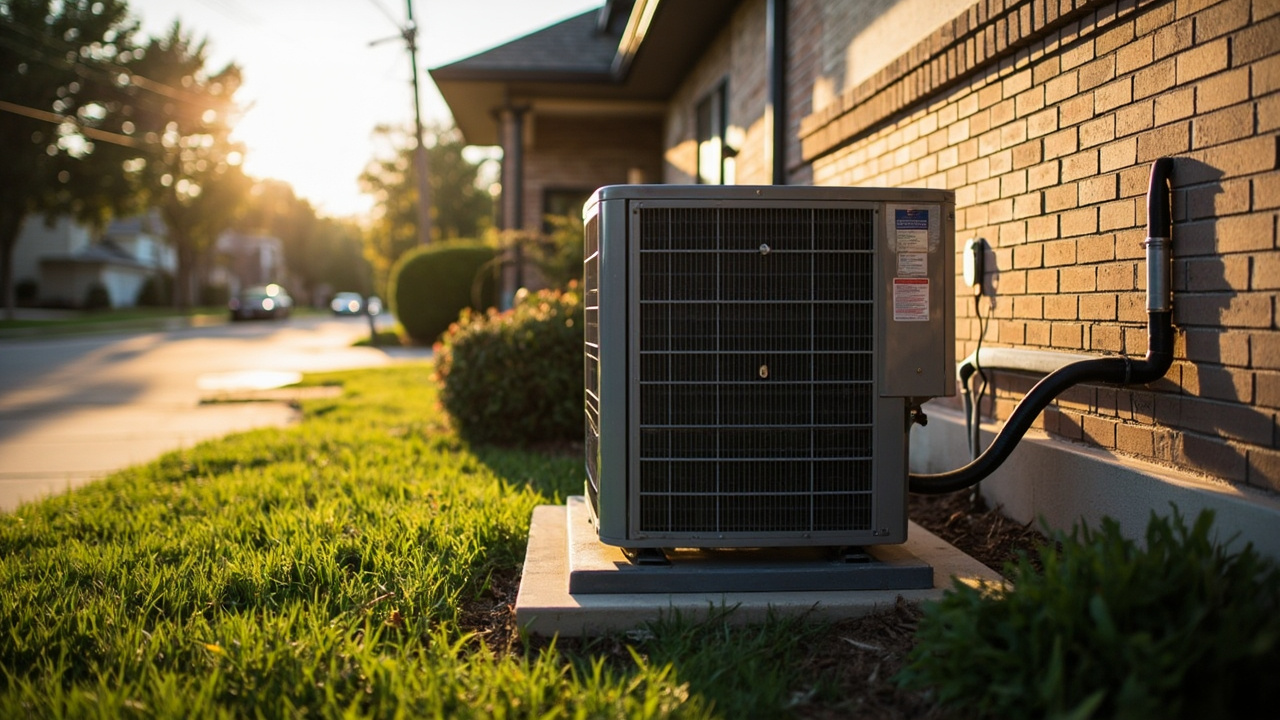
How we size and commission a heat pump before it ever runs
The order matters more than the brand. A heat pump job here starts with an on site load calculation, insulation, window area, air infiltration and occupancy measured against both a summer design condition and a winter one, because a heat pump has to be sized for heating capacity as well as cooling capacity. Equipment selection comes out of that calculation, with the tonnage chosen to match the measured load rather than pulled from a catalog page or based on what is being removed. Only after the equipment is chosen does the line set get evaluated, decided as new, reused or partially replaced depending on what the new refrigerant and the new metering device need from it.
Evacuation is where the installation is proven before a single pound of refrigerant goes in. A micron gauge placed at the far end of the line set from the pump has to read below 500 microns and hold there once the pump is valved off. A reading that climbs back up means moisture is still boiling off inside the line set or a connection is not sealed, and the system must be dried down further before charging proceeds. Once the vacuum holds steady, the system is weighed in and commissioning checks both cycles, the delta T across the coil in cooling and the temperature rise in heating, so the reading that decides scope is taken twice.
Choosing between a heat pump and a gas furnace here comes down to the winter design condition. Waco's winters are mostly mild, broken by short hard freezes, so a heat pump carries the heating load most days and needs backup heat only on the coldest nights, while a gas furnace delivers full heat regardless of outdoor temperature. A dual fuel setup with a set balance point splits the difference for a house where the electric rate and the gas line both make sense. The right answer depends on what is already run to the house and how the load calculation splits between the two seasons. Backup heat adds cost and complexity, so systems are sized to minimize how often it kicks in. The balance point temperature is the outdoor condition where the electric heating cost equals the gas heating cost, and that comparison is what the table below shows. Finding it requires the load calculation numbers, the local utility rates, and the equipment specifications from the manufacturer data sheets.
If this sounds close but not quite your situation, heat pump stuck in defrost mode may be the better starting point.
Narrow this to two options before calling, then ask which one suits the house.
| Option | The numbers a buyer weighs | Best suited to |
|---|---|---|
| Heat pump against gas furnace | A heat pump is rated on HSPF2 and its output falls as the outdoor temperature drops | Climates where the winter low decides the choice |
| Packaged rooftop unit against a light commercial split system | Compared on tonnage per cabinet | Commercial buildings on a capital plan |
| Ducted system against ductless mini split | Mini splits are rated per indoor head | Additions and rooms the ducts never reached |
How a heat pump installation runs
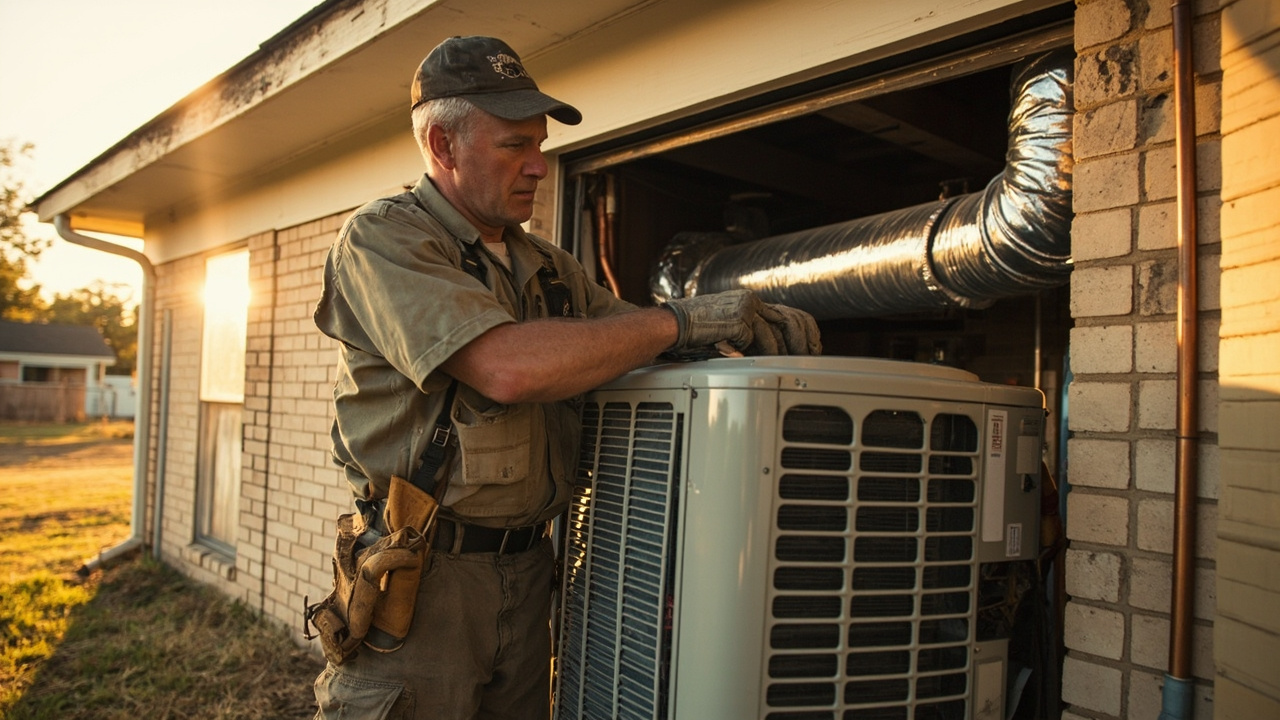
Load calculation on site
The visit opens with a load calculation done in the house using measurements rather than a spec sheet. Insulation, window area, air infiltration and occupancy get measured room by room, and the calculation is run for both a summer condition and a winter condition since a heat pump has to satisfy both. You see the numbers as they are taken, and the equipment recommendation comes directly out of that result rather than out of matching the unit being replaced. This is also when the existing line set and attic duct get a first look for condition and fit.
Equipment and line set decision
Once the scope is approved, the outdoor disconnect gets isolated first. Equipment selection follows the load calculation rather than a stock preference, and the line set decision, reused or replaced, gets made based on what the new refrigerant and metering device require. If attic duct in unconditioned space turns out to be undersized for the airflow the new equipment needs, we stop and show you before continuing, since that changes the scope.
Evacuation and dual cycle test
Before any refrigerant goes in, a micron gauge on the line set must reach below 500 microns and remain stable once the pump shuts down. After charging, the system runs through both cooling and heating modes, with performance verified against the load calculation. You receive a walkthrough of both readings and retain documentation of the commissioning baseline.
Why growth edge construction changes this job
An installer from outside McLennan County often treats a heat pump job the way they would treat one anywhere else, matching a stock condenser to a stock pad and moving on. That works less well here than it looks like it should. The county sits in the Blackland Prairie, where the clay under a slab and under an outdoor pad shrinks in drought and swells when it rains, and that movement is not cosmetic. A pad that was level at rough in can tip a few degrees within a year, and a line set brazed tight to a level unit starts carrying a stress it was never designed for.
The mistake that follows is predictable. A crew that does not expect the pad to move skips rechecking the line set connections on a callback, assumes the unit is fine because it is still running, and moves on. A stressed connection is exactly where a slow leak starts, and a slow leak on a heat pump means the compressor runs longer for less output. As refrigerant charge drops, the oil that suspends in the refrigerant during circulation begins to accumulate in the crankcase, starving the bearing surfaces of lubrication. The compressor wears faster than it should, and that wear shows up as a seized compressor well before the equipment should have needed one. Checking pad level and line set condition on every visit, not just the first one, is what keeps that failure from starting quietly in a slab foundation home.
A crew working in McLennan County understands that the clay soil here moves seasonally and that this movement transmits directly to the refrigeration system. That knowledge means every callback includes inspection of the pad and the connections, catching stress before it opens a leak. Dispatch across the county during a hard freeze or the first real heat wave means the schedule fills fast, and a crew that already knows how ground conditions here treat outdoor equipment does not spend part of that visit relearning the soil it is standing on.
More detail on heat pump repair is on its own page.
Permit and inspection questions? Commercial Construction Permits is the office we coordinate with on every permitted Waco job.
What working with us looks like on this job
Getting on the schedule
The call starts with a few questions about what the current system is doing, whether it is a heat pump, a furnace, or both, and how it is behaving right now. That tells us whether a load calculation visit gets scheduled for a set day or moved up sooner. You get a window and a confirmation before the visit, and if a job ahead of yours runs long because of an unexpected duct or line set issue, you hear about the delay rather than finding out by waiting.
Keeping the house clean
Attic access usually means a ladder set on a drop cloth and a path protected from the access point to the work area, since insulation and duct debris come down with anyone working overhead. Tools stage on a mat rather than the floor, old line set or duct material comes out through the same protected path, and the attic hatch and the room below get a final check before anyone leaves, so nothing is tracked through the rest of the house.
What moves the installation price
The line set decision moves the number first, since a refrigerant change on an existing set can mean cutting in new copper rather than reusing what is there. After that, the equipment tier the load calculation supports, whether the attic duct can carry the airflow the new unit needs, and any electrical work at the disconnect all shift scope up or down. Access into the attic and permit review add time on some jobs. Every driver gets written into the scope before equipment is ordered, and you see and approve that scope first.
How we check field skill
A technician runs a set number of installations alongside a lead before working a job alone, and the lead has to sign off on the load calculation, the line set decision and the evacuation reading before that happens. On anything involving a line set that was sized for an older refrigerant or a metering device that does not match the new equipment, a second technician looks at the readings before a scope goes to the homeowner.
You Have Questions,
We Have Answers
The cost depends on the line set, the equipment tier and the duct system. The line set decision moves it most, since a refrigerant change can require new copper rather than reused piping. From there, the load calculation that determines equipment capacity, the ability of existing ductwork to handle new airflow requirements, and electrical modifications at the disconnect each affect the total before a scope is approved.
It is priced from what the load calculation and the line set require. A house where the existing line set matches the new refrigerant and metering device costs less to bring online than one where the copper has to be replaced. Attic duct condition and any electrical work at the disconnect are weighed in the same visit, before equipment is ordered or a number is put in writing.
Heat pumps take more upfront sizing work than a furnace swap. A heat pump has to be sized against both a summer condition and a winter one, and getting the winter side wrong means backup heat strips carry load the compressor should be carrying. That extra step, plus deciding whether an existing line set suits the new refrigerant, makes a rushed heat pump job more likely to come back as a comfort complaint than a furnace job sized the same lazy way.
Why growth edge attic systems change the sizing
Houses built from the 1990s onward around Waco put the air handler and the ductwork in the attic, whether the system runs a gas furnace with split cooling or an electric heat pump handling both cycles. That attic sits through a long, hot cooling season with peak load in July and August, so the supply trunk picks up heat before conditioned air ever reaches a register, and duct gain has to be accounted for in the load calculation rather than assumed away. Winters here are mostly mild with short hard freezes, so a heat pump's heating capacity has to be verified against those cold snaps during the annual temperature dip. Checking only average winter conditions leaves the backup heat strips doing work the compressor should be handling when outdoor temperature drops below the balance point.
Commissioning is where the load calculation gets proven rather than assumed. After the micron gauge confirms the vacuum is holding, the system runs both cycles and the readings get checked against the numbers the load calculation produced for that specific building. A heat pump that hits its design numbers on both the cooling side and the heating side on the day it is commissioned is the one that still hits them in August and again during the next hard freeze. That verification step requires the technician to document each reading, compare it to the design specification, and confirm the equipment is performing within the tolerance band the manufacturer established. A rushed installation skips this critical measurement work entirely, leaving no record of whether performance will hold through seasonal extremes.
HVAC Services in The Waco Area
Explore our service area and locate Granite HVAC Waco with ease. We're proudly local and serve the surrounding neighborhoods with fast response and honest pricing. Use the map to check our coverage area, or call us and we'll confirm in seconds.
Address:
Granite HVAC Waco, Waco, TX, 76701
Additional Services We Offer
Changing filters, clearing space around the outdoor unit and rinsing condenser fins with the power off are genuinely homeowner tasks and do not need a call. The boundary sits at refrigerant, the line set and anything behind the blower door or inside the electrical panel, because that work involves pressure, live voltage and a sealed circuit that has to stay sealed. If what we find during the load calculation points to duct work beyond what the installation covers, we say so before equipment gets ordered.
Before you call, know what type of system you have now, and roughly how old the outdoor unit is. If you can, note which season gives you more trouble, summer cooling or winter heat, and whether any room never keeps up. Knowing if the attic duct or line set has been touched before helps too.
Last reviewed September 2026 by Dale Whitfield, Service manager.