



What a furnace that lights and drops out is telling you in Waco
A furnace that clicks and never catches, or that lights for a few seconds before the flame disappears, is describing two different points in the same sequence. Furnace clicking but not starting usually means the igniter never got hot enough or never sparked long enough to prove itself to the board. A furnace that fires and then drops is further along, past ignition and into the point where the flame has to prove itself to a sensor before the gas valve is allowed to stay open. Pilot light wont stay lit is the same complaint in older language, on equipment that traded a standing pilot for a hot surface or intermittent spark igniter.
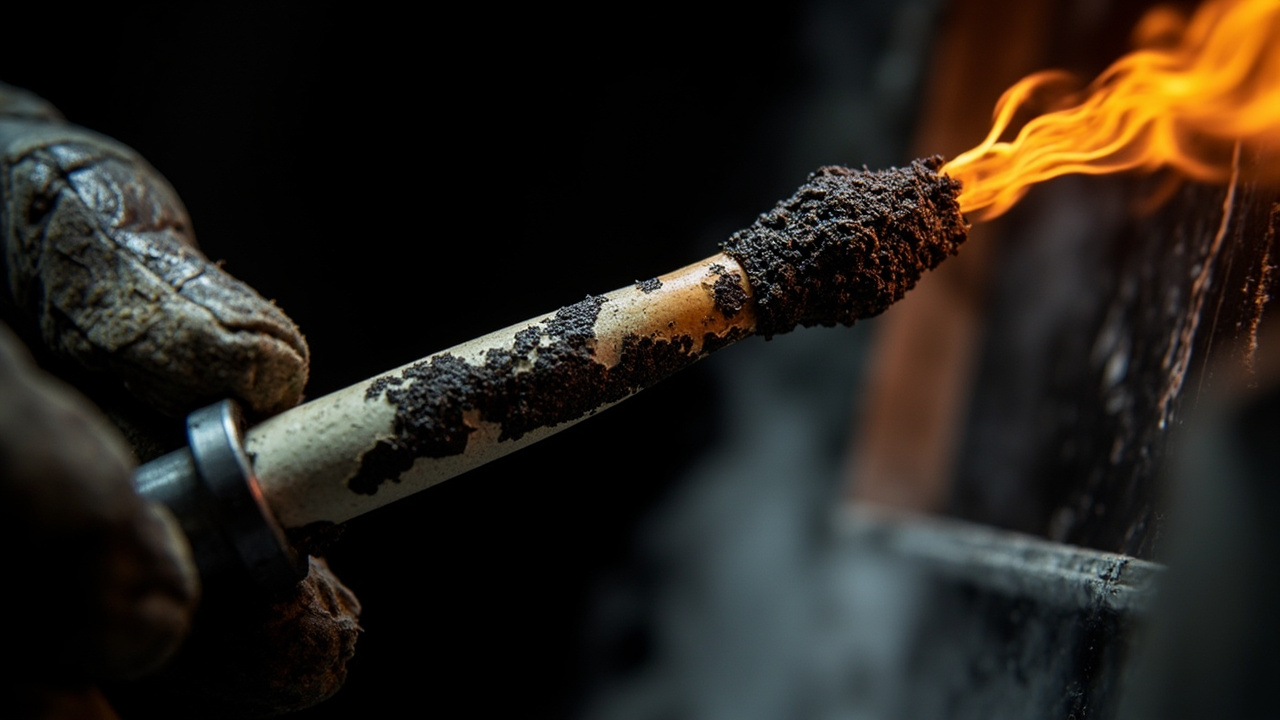
The flame sensor sits in the burner flame and passes a small current back to the control board, and that current is the only proof the board has that fuel is burning rather than merely flowing. Furnace ignitor problems get blamed first because the igniter is the visible glow, but a coated sensor reads the same low signal a dead igniter would, and the board reacts to both the same way. Furnace not firing up on one attempt and firing on the next is a sign the sensor signal is marginal rather than absent, coming and going as a thin layer builds and partly burns off.
Waco heating season runs mild for most of its length, so a furnace can sit lightly used for weeks before a hard freeze asks it to hold flame every cycle overnight. That jump from occasional use to constant cycling is what exposes a sensor that was already coated or an igniter that was already thinning, and it tends to happen on the exact night the house needs heat most rather than during a mild stretch when a marginal part could limp along unnoticed.
Left alone, a coated flame sensor does not clear itself. The burner lights and drops out again and again as the board keeps trying to prove a flame it cannot confirm, and each failed attempt spends one of the tries the board allows before it stops. Once the trial limit is reached, the board locks out on repeated trials and stays there until it is reset, which means the house goes cold overnight with nobody aware until the temperature has already dropped for hours. That lockout is the point where a call the same evening keeps the house from being cold since midnight.
More detail on thermostat not working is on its own page.
Find the sign you have, then read across to see whether it can wait.
| Symptom or first sign | What is already happening | What it becomes if ignored | When to call |
|---|---|---|---|
| A coated flame sensor | The burner lights and drops out again and again | The board locks out on repeated trials and the house goes cold overnight | At the next visit, while the fix is small |
| A weak run capacitor | The compressor pulls high amps every time it tries to start | The windings overheat and what was a part becomes a whole condenser | Now, the same day |
| A plugged condensate drain | The pan overflows into the platform or the ceiling | The ceiling below stains and the rusted secondary pan lets the rest through | Soon, before it spreads past the repair |
How we read the ignition sequence before we quote a part
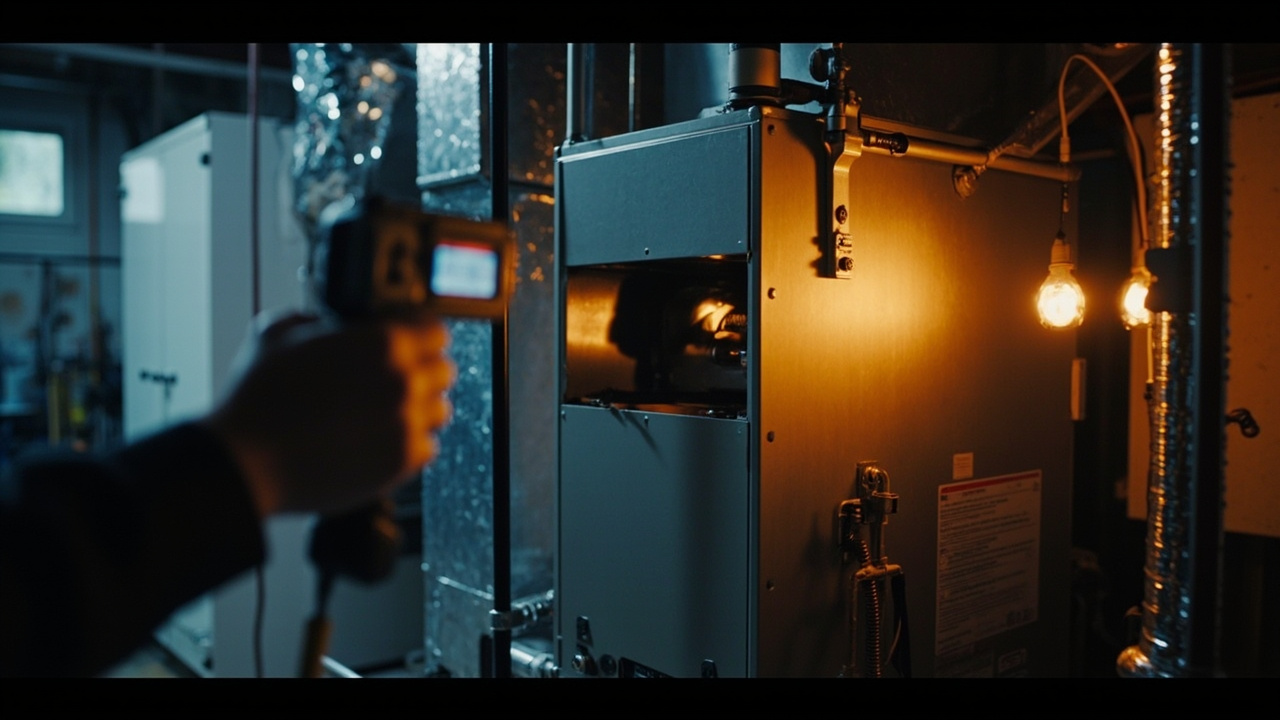
Diagnosing a furnace that will not hold flame follows a fixed order, and skipping ahead to a part is how a good igniter gets replaced for nothing. First the ignition sequence itself gets watched start to finish, the igniter glowing or sparking, the gas valve opening, and the flame either catching or failing to. That single watch tells whether the failure sits at ignition, meaning nothing lights, or at flame proving, meaning it lights and then drops. Furnace not firing up at all points toward the igniter or the gas valve. Lighting and then dropping points toward the flame sensor and the signal it sends back to the board, which is a different repair even though the symptom at the register sounds the same to whoever is standing in the hallway.
The flame sensor signal is read in microamps while the burner is running, and that number is checked against the point where the control board treats the flame as absent and closes the gas valve. A steady signal sitting well above that dropout point clears the sensor and points back at the igniter or the gas valve for further testing. A weak or drifting signal means the sensor is coated even if the flame is visibly burning, and cleaning it with a light abrasive pad and rechecking the same reading is the correct next step, not a replacement part. Reading the number before opening a parts box is what keeps a working igniter off the invoice, and it is the step a rushed lockout call skips most often.
A coated flame sensor, a worn igniter and a failing control board are all parts, and each gets replaced on its own once the reading points at it. A cracked heat exchanger is a different kind of decision, because it lets combustion gas mix with the air moving through the house, and finding one ends the visit with the furnace shut off rather than repaired that same day. The same logic applies when a furnace has needed the igniter or sensor serviced more than once in close succession, since repeated part failures on aging control components can be a sign the board itself is marginal rather than the sensor being unlucky twice in one winter.
If this sounds close but not quite your situation, ac not turning on may be the better starting point.
Your local utility, Utility Bill City of Waco, publishes service and water-quality information every Waco homeowner should know.
Ask which of these readings was taken before any part is replaced.
| Instrument | Good reading | Bad reading | What it changes |
|---|---|---|---|
| Flame sensor signal check in microamps | A steady signal well above the control board dropout point | A weak or drifting signal | The sensor is coated and the burner will drop out |
| Manifold gauges with superheat and subcooling readings | Superheat and subcooling both landing in the range the equipment maker specifies for that metering device | High superheat with low subcooling | An undercharge or a restriction rather than a weak compressor |
| Two probes for delta T between return and supply air | A 16 to 22 degree drop across the coil in cooling at normal indoor humidity | A small drop means airflow or charge is wrong | An unusually large drop means the coil is being starved of air |
| Manometer for total external static pressure across the air handler | Static pressure at or under the maximum printed on the blower data plate | Static above the rating | The filter, the coil or the duct is choking the system |
| Clamp ammeter on the compressor and the blower | Running amps at or below the rated load amps stamped on the data plate | Amps steady above the rating, or a brief spike toward locked rotor on start | A failing capacitor, contactor or compressor |
How an ignition call runs
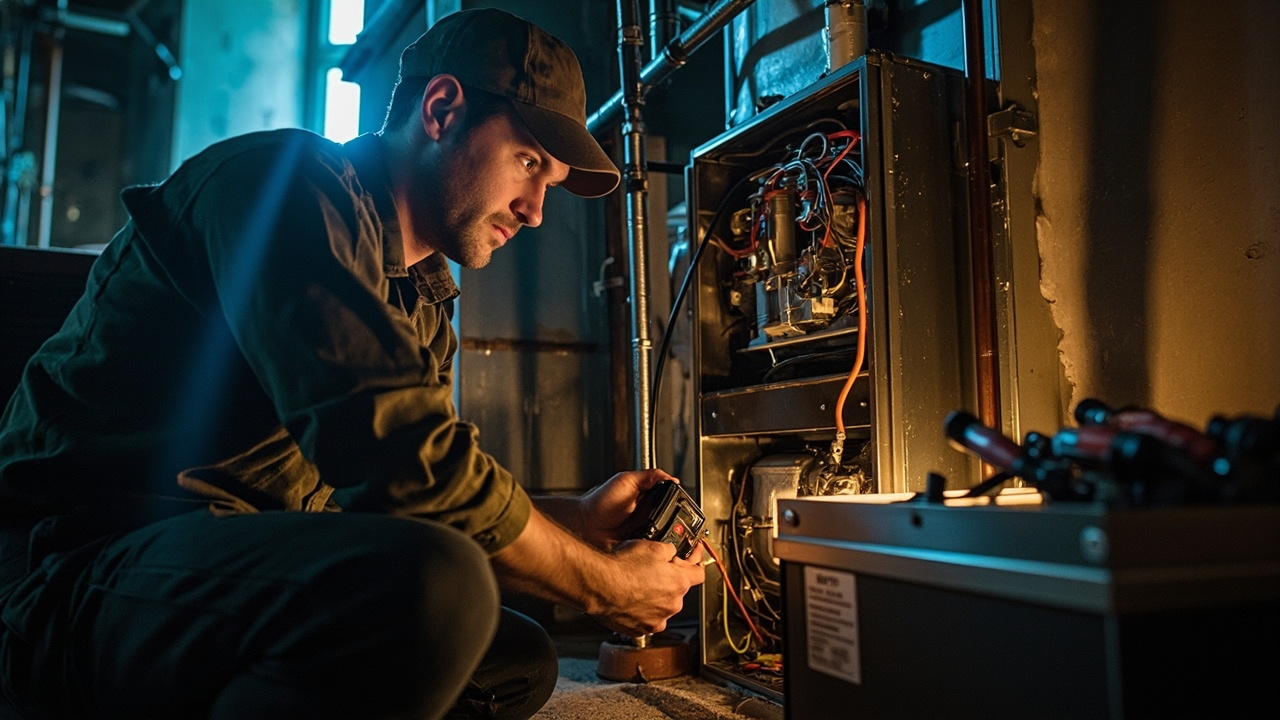
The call and the history
On the phone we determine what symptoms showed up: a click with no flame, a flame that lights and drops, or nothing at all, and whether the furnace tried and locked out or just went quiet. We ask if power was interrupted recently and roughly how old the furnace is. On site the order is fixed: confirm the thermostat is calling for heat, confirm gas and power are reaching the unit, then watch a full ignition cycle before touching anything, so no part gets pulled before the actual failure point is seen.
Testing and the decision point
Once the cycle is watched, the flame sensor signal gets checked in microamps against the point where the board drops out, and that reading decides whether we are cleaning a sensor or testing the igniter and gas valve next. Whatever it points to gets written up as a scope before anything is replaced, and you approve it before parts go on. If the burner compartment shows scorching or a heat exchanger seam that needs a closer look, we stop and show you rather than close the panel and quote around it.
Verification before we leave
Before the visit ends, the furnace is run through a full ignition cycle again and the flame sensor signal is rechecked to confirm it holds well above the dropout point rather than just for one attempt. We walk you through what the reading was before and after, and you keep that number along with whatever part was replaced. If the fault was a coated sensor rather than a failed igniter, you see why the cheaper fix was the correct one.
Why a Waco furnace call is not the same job every month of the year
Waco heating season runs mild for most of its length, broken by short hard freezes rather than a long steady cold stretch. That pattern is what wears out ignition components unevenly. A furnace that sat mostly idle through a mild December can be asked to hold flame every night once a freeze sets in, and a sensor or igniter that was already marginal fails on exactly the night it is needed most. A crew unfamiliar with that rhythm treats every ignition failure as random wear, when the real driver is long idle stretches followed by sudden hard use.
Furnace location matters just as much on these calls. In the ranch and post war stock common around here, the furnace usually sits in a hall closet or a garage with the ductwork running through the attic above it, which means the access to the burner compartment is tight and the attic space above it runs hot for most of the year. A technician working that closet has to get a meter and a flame sensor tool into a space built for a much smaller service footprint than modern equipment gets, and rushing that access is how a sensor gets bent or a wire gets pinched during a swap.
The mistake an unfamiliar crew makes on this exact job is treating a locked out board as proof the igniter failed, ordering the part, and finding on return that the burner still drops flame because the sensor was never checked. That second visit is the one the reading in section two is built to prevent. On the initial call, a technician checks the sensor with a meter before ordering any parts. The sensor sits in the flame path where combustion heat reaches it, and a reading below the manufacturer threshold tells you the sensor has drifted or begun to fail. A bent sensor or one fouled with carbon will read low. Checking it first means you leave the site with either a working system or a single return trip to swap the sensor, not a parts order followed by a call back because a new igniter did not solve anything.
See furnace blowing cold air for how the related work is scoped and priced.
Permit and inspection questions? Commercial Construction Permits is the office we coordinate with on every permitted Waco job.
What working with us looks like on a call like this
Getting someone to the closet
When you call about a furnace that wont ignite, we ask what you are hearing at the burner and whether the board has locked out, and that tells us if this is a same day visit or one we can schedule for tomorrow. You get a window set before the technician leaves the prior job, not a guess made that morning. If a lockout call ahead of yours runs long because of a tight closet or attic access, we call to move your window rather than leave you waiting past it.
Working inside a tight closet
Furnace closets and attic platforms are not built for a technician kneeling with a meter and a flame sensor tool, so we clear the space around the unit before opening the burner compartment and lay down protection on the closet floor and any nearby carpet. Panels and screws come off in the order they go back on, kept together rather than scattered, and the closet gets swept and closed the way it was found before we walk you through what the reading showed.
What moves the cost here
On an ignition call the biggest swing in cost is the time to reach the unit. A furnace in an open garage takes less time than one behind a low attic platform or a packed hall closet, and that rigging time is what the scope reflects. Whether the fix is a cleaned sensor, a replaced igniter, or a control board also gets weighed before anything is added to the invoice. You see the scope, built from the flame sensor reading, and approve it before any part is ordered.
Who is trusted with the burner
A technician runs a set number of ignition and lockout calls alongside a lead before working a burner compartment alone, and the lead signs off on reading a flame sensor signal correctly rather than guessing from a visible glow. On a furnace with a scorched compartment or a heat exchanger that needs a closer look, a second technician confirms the reading before the furnace is shut off or a scope is written.
You Have Questions,
We Have Answers
Check the thermostat, the filter and the gas valve position before calling. Confirm the thermostat is set to heat above room temperature, the filter is not visibly loaded, and the furnace has power at the switch. If the furnace has a lit display showing a lockout code, that code is worth reading off to whoever answers the phone, since it narrows whether the fault is at the igniter, the sensor or the gas valve before anyone drives out.
Cost depends on access and on whether the igniter is even the actual fault. A furnace in an open garage costs less to reach than one in a tight hall closet or an attic platform, and rigging around that access moves the cost. It also depends on the flame sensor reading, since a coated sensor cleaned instead of an igniter replaced is a smaller job. Granite HVAC Waco writes the scope after that reading, before any part is ordered, and you approve it first. Call (254) 221-8461 for a same day read on which one applies to your furnace.
Resetting the board is done at the thermostat or the furnace switch rather than at the igniter itself. Turning the thermostat down, cutting power at the switch for a short pause, and restoring it clears a soft lockout and lets the board try the ignition sequence again. If the furnace locks out again on the next attempt, the reset has done its job of showing that the fault is real rather than a one time misfire, and the flame sensor and igniter need to be checked rather than reset again.
There is no fixed number of years, because wear tracks ignition cycles rather than the calendar. A furnace that idles for months and then cycles hard through a short freeze puts different stress on an igniter than one that runs steadily all season. Instead of an age estimate, the igniter and the flame sensor both get judged on a signal reading taken at the burner. A steady signal and a normal glow or spark sequence means the component is still doing its job regardless of how old it is.
Why Waco's mild winters make ignition parts fail unevenly
Waco winters are mostly mild, broken by short hard freezes rather than sustained cold. A furnace idles through the mild stretch and then operates continuously once a freeze sets in, and that sudden shift in duty cycle exposes a flame sensor that was already coated or an igniter that was already thinning. In furnaces sitting in a hall closet or garage with attic ductwork above, the same freeze that demands more heat also means the attic space the ducts run through has spent months absorbing summer heat, which creates thermal stress on the ductwork itself. The temperature swing between attic and conditioned space can also cause condensation in supply lines during the warmup cycle, adding moisture that corrodes ignition components faster than in climates with steadier winter temperatures.
Waco's hard freezes bring another local pattern worth knowing before an ignition call gets treated as routine. When a winter storm knocks out power and it comes back on all at once across a block, the surge that follows can trip a control board or scramble the memory it uses to count ignition trials, so a furnace that locked out that same night is not automatic proof of a failing igniter or sensor. Checking whether a recent outage lines up with the lockout changes the order of the visit, because a board reset gets tried and the flame sensor signal gets read again before any part is condemned. Furnaces sitting in a hall closet or a garage feel that surge the same way equipment anywhere else does, so the timing of the call against the last outage matters more here than the furnace's age or how long it sat idle beforehand.
HVAC Services in The Waco Area
Explore our service area and locate Granite HVAC Waco with ease. We're proudly local and serve the surrounding neighborhoods with fast response and honest pricing. Use the map to check our coverage area, or call us and we'll confirm in seconds.
Address:
Granite HVAC Waco, Waco, TX, 76701
Checking that gas is turned on, the thermostat is set above room temperature, and the filter is not blocked is genuinely a homeowner job before calling. Where it stops is the burner compartment and anything involving the gas valve, the control board or the flame sensor, because that is powered equipment handling combustion gas. If what we find points at a cracked heat exchanger, we say so on the spot and tell you the furnace needs to stay off rather than restarted.
Before you call, know whether the furnace clicks with no flame, lights and drops, or stays silent, and when that pattern started. Note whether the power went out recently or the thermostat was changed just before it happened. If you can, find the furnace's age or the sticker inside the closet door. Those answers usually tell us whether this needs someone today.
Last reviewed September 2026 by Dale Whitfield, Service manager.