





What a struggling makeup air unit looks like in a Waco building
A facility manager notices it first as pressure, not temperature. Doors that used to swing shut now sit open on their own, or a corridor that never had a draft starts pulling one. On a direct fired make up air unit, that imbalance traces back to the burner cycling on and off instead of holding a steady flame, or dropping out entirely and leaving the exhaust fans pulling against nothing.
Waco's cooling season runs long, which means these units log months of near continuous operation, and the flame sensor that has been sitting in that airstream the whole time collects a coating from combustion byproducts. The signal weakens slowly, so the unit does not fail all at once. It fails on the mornings the burner has to prove ignition from cold, which in this climate means the short hard freezes that break up an otherwise mild winter.
The chain runs the same way every time. A coated flame sensor lets the burner light and then drop out. It relights, drops out again, and after enough failed attempts the control board locks out on repeated trials. Once that happens the building goes cold overnight, exhaust keeps running unbalanced, and staff arrive to a space that never recovered. Waiting past the second or third lockout in a short window is the point where a service call stops being optional.
Our page on ac blowing warm air covers that side of the work in more depth.
How we sequence a makeup air unit diagnosis
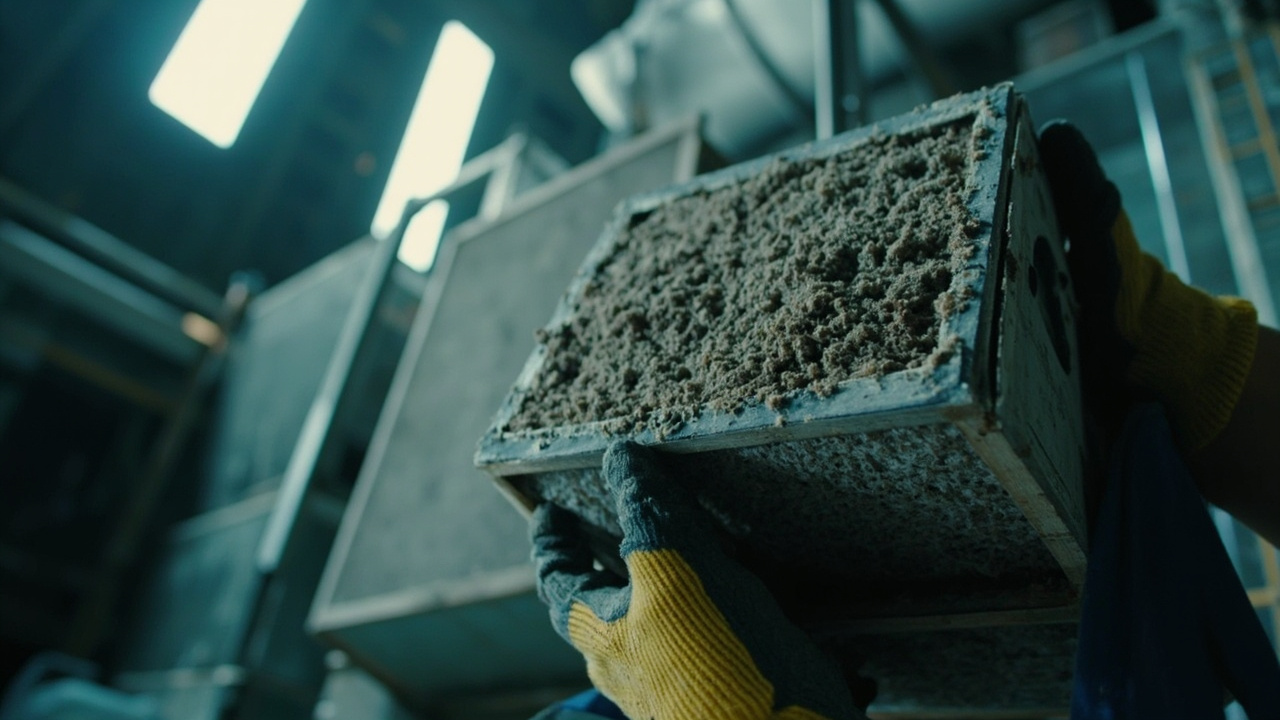
The sequence on a locked out make up air unit starts before the burner box ever comes open. A technician confirms the intake hood and filter section are clear, runs the damper through its full stroke, and only then moves to the ignition control, because starved airflow produces the same relight failures a coated sensor does and chasing the burner first wastes a visit. Gas and electrical disconnects get isolated at that point, ahead of any panel removal, so the burner cannot fire while hands are inside the box.
The flame sensor microamp reading is what decides the rest of the visit. A weak or drifting signal below the control board's dropout point means the sensor is coated from months of combustion byproducts passing over it, and cleaning with a gentle abrasive pad followed by a recheck usually restores a steady number well above that threshold. A signal that stays flat after cleaning points somewhere else, toward the flame rod's ground connection or the control board itself, and that fork is what keeps a working board from getting replaced for a sensor problem, or a bad sensor from getting blamed on a board that is fine.
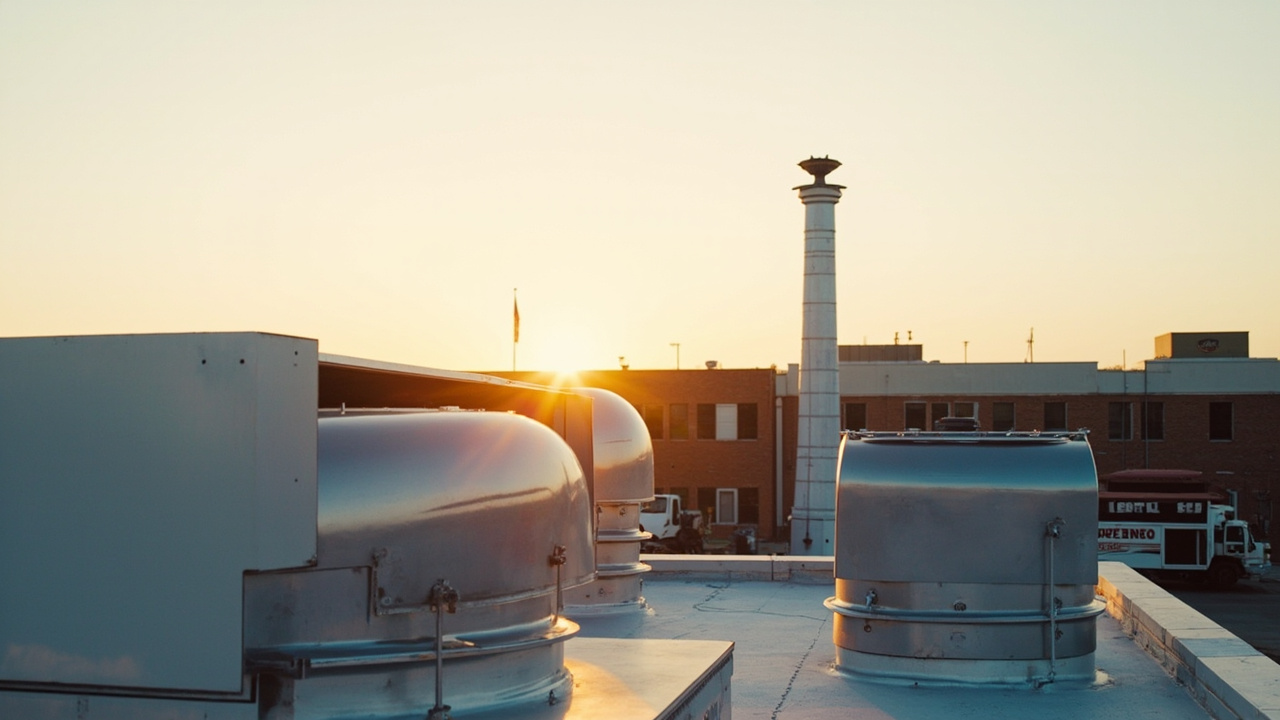
Where a rooftop makeup air unit competes for space and budget against a light commercial split system, the comparison comes down to service access and how the building handles exhaust balancing rather than tonnage alone. A packaged rooftop unit puts the burner, filter section and controls in one cabinet, which shortens diagnostic time but means every service call happens on the roof in whatever weather is running that day. A split system separates the air handler indoors, easier to reach in a hard freeze, but it does not replace what a direct fired makeup air unit is built to do, which is replacing air an exhaust system is actively removing rather than just conditioning what is already inside.
The control board interprets the flame signal in sequence with the ignition spark and the gas valve open command. If the board sees no microamp rise within the expected window after spark fires and gas flows, it shuts down immediately and locks out to prevent unburned gas from accumulating in the combustion chamber. A restart attempt after lockout requires the technician to power cycle the board and verify the damper moves freely again, confirming the airflow path is truly open before ignition is attempted once more. This ordered sequence prevents a cascade of failed ignition attempts that would overwhelm the sensor and mask the actual root cause.
If this sounds close but not quite your situation, air duct cleaning may be the better starting point.
How a makeup air unit call runs
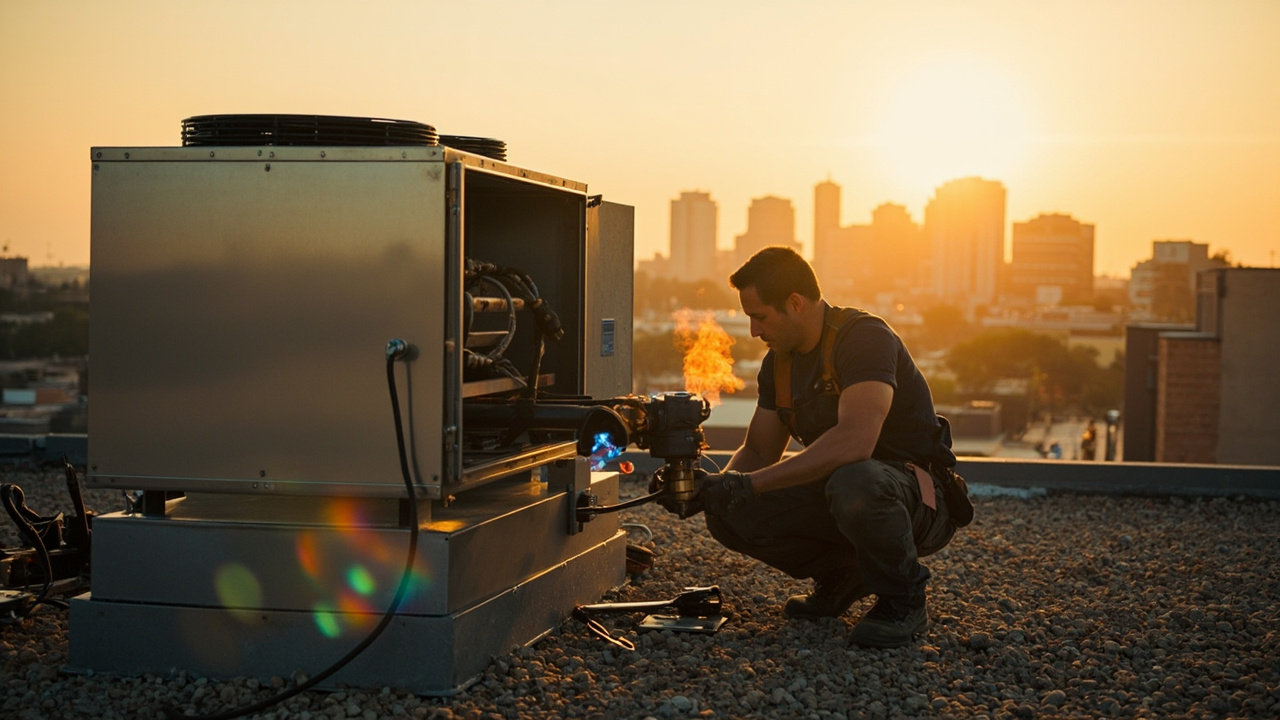
Assessment and intake check
The technician starts by examining the intake hood and filter bank for loading and blockage, then cycles the damper through its full stroke to confirm it moves cleanly rather than sticking. Only after airflow is confirmed does the work move to the burner and the ignition control, because a starved intake will produce ignition problems that have nothing to do with the sensor itself. The call gathers information about building symptoms, odors, a locked out board, and when it started, along with the last time the filter was changed.
Repair with your approval
Once the written scope is approved, the unit is isolated at its gas and electrical disconnects before any panel comes off. The main operation, cleaning or replacing the flame sensor, recalibrating the damper actuator, or clearing an intake obstruction, follows in that order. If the burner box shows corrosion or a control board shows damage beyond the original complaint, we stop, show you what we found, and get your decision before touching it.
Verification before we leave
Before the job is called finished, the flame sensor signal is rechecked in microamps and has to sit well above the control board's dropout threshold on a stable burn. Static pressure across the unit is confirmed against the equipment's rated maximum. We walk you through both readings and what they mean for the building, and you keep a record of the visit for your facility's maintenance log.
Why makeup air work in commercial buildings needs local judgment
A commercial make up air unit is not judged on the same terms as a residential furnace, and a crew used to houses can miss that. The unit exists to replace air an exhaust system is removing, so any work that changes intake location, filtration or capacity gets reviewed against the locally adopted commercial building code, with the inspector looking at how the intake ties into the exhaust it is balancing. A like for like repair, swapping a sensor or a damper motor, usually does not carry that same review, and a crew that does not know the difference either stalls a routine repair waiting on paperwork it never needed or skips a step an actual capacity change required.
The other mistake an unfamiliar operator makes is treating the unit in isolation from the season. Waco's long humid cooling stretch means the damper and filter section run under near continuous duty for months, which shortens the interval before recalibration is needed compared to equipment that only cycles intermittently. A crew unfamiliar with that duty cycle sets a maintenance interval that fits a milder climate and then gets called back mid summer when the filter section chokes early. The heat and moisture load during peak cooling season also accelerates rust formation on exposed fasteners and corrosion on the heat exchanger, changes that demand inspection points a seasonal operator knows to include.
Response across facilities in this metro also depends on recognizing that the coldest mornings of the year, the short hard freezes rather than sustained winter cold, are when burners that sat idle through the mild stretch have to prove ignition all at once. That is when flame sensor lockouts cluster, and a technician who has seen that pattern here reads a weak microamp signal on a cold start differently than the same reading taken after months of steady summer runtime, where the cause is accumulated coating rather than a one time cold start failure. A crew that understands both failure modes does not misdiagnose the sensor as faulty and replace a component that only needs cleaning.
More detail on rooftop unit installation & service is on its own page.
Your local utility, Utility Bill City of Waco, publishes service and water-quality information every Waco homeowner should know.
Use this to ask what is driving the quote rather than asking for a rough number.
| Driver | Why it moves the estimate | What you control |
|---|---|---|
| Electrical work | The disconnect, the breaker and the wire size feeding the unit | Fixing the cause now rather than paying for the same visit twice |
| The capacity and efficiency tier of the equipment chosen | Whether the indoor coil is matched to the new outdoor unit | The grade you choose, the rest of the work is set by the house |
| Controls | The thermostat, zoning and any communicating equipment | How much control you want built into the system |
| Whether the existing duct system can move the air the new equipment | The static pressure reading answers | Fixing the cause now rather than paying for the same visit twice |
What working with us on a makeup air unit looks like
Getting to your building fast
On the call we ask what the building is doing, drafts, a locked out board, an odor, and when it started. That tells us whether this is a same day visit or one that can be scheduled during a normal week. You get a window before the technician leaves for your site, and if the job ahead of yours runs long on troubleshooting, we call to reset the window rather than leaving you guessing.
Working around an occupied building
Before any panel comes off the unit, gas and electrical disconnects are isolated so the burner cannot fire unexpectedly. Drop cloths go down under the access point to catch any debris from the filter section or burner box. Anything removed, old filters, a failed sensor, gets bagged and carried out rather than left staged near the unit, and the access panel goes back on and is checked for a proper seal before we leave.
What moves the cost
Whether a job needs permit review or falls under routine repair moves the cost more than any part on the unit, since a capacity or intake change carries review a sensor swap does not. Access matters too, a rooftop unit with a clear path costs less time than one with a difficult hatch. Once the diagnosis is done, you see the written scope and approve it before any repair starts.
Who shows up on your roof
A technician moving into commercial rooftop work rides along on live calls before handling a make up air unit alone, demonstrating the intake to burner sequence and a clean flame sensor reading under a lead's review before signing off. On anything where the burner box shows corrosion or damage beyond the original complaint, a second technician looks at it before a scope gets written, rather than one person making that call alone.
You Have Questions,
We Have Answers
Yes, if your exhaust load justifies it and the building can support the added intake path. It depends on measuring how much air your exhaust fans remove and sizing the makeup unit against that figure with a proper load calculation, not a rule of thumb tied to square footage. Adding one also means routing the intake and controls to meet the locally adopted commercial building code, which is reviewed separately from routine repair work.
Why Waco's seasons drive makeup air unit service
Waco's cooling season runs long and humid, which means a makeup air unit's damper and filter section see months of near continuous cycling rather than intermittent duty, and that duty cycle is what shortens the interval before a filter needs changing or a damper needs recalibrating. Winter brings short hard freezes rather than sustained cold, so the same burner that sat mostly idle through the mild months has to prove ignition again on the coldest morning of the year, and the flame sensor reading taken that morning behaves differently than the same reading taken in July, when the sensor has had months of steady runtime to accumulate coating rather than a single cold start to fail on. Equipment cycling patterns in this climate demand attention to maintenance intervals year round.
Work on a makeup air unit that changes the intake path or adds capacity goes through the commercial building code review process, with the inspector examining intake location, filtration and how the unit ties into the exhaust system it is balancing. Replacing a sensor, a damper motor, or a filter section typically avoids that scrutiny entirely. The distinction matters because a repair can stall waiting for an inspection it never required, or proceed without one it should have had. Knowing which category your job falls into before you call keeps the work on schedule and ensures compliance with the specific intake, exhaust and ducting requirements the inspector verifies. Clarifying the scope upfront prevents delays that stem from misalignment between the work performed and the permit pathway it triggers.
HVAC Services in The Waco Area
Explore our service area and locate Granite HVAC Waco with ease. We're proudly local and serve the surrounding neighborhoods with fast response and honest pricing. Use the map to check our coverage area, or call us and we'll confirm in seconds.
Address:
Granite HVAC Waco, Waco, TX, 76701
Additional Services We Offer
- Building Automation & Controls
- Chiller Repair & Maintenance
- Commercial AC Repair
- Commercial Boiler Services
- Commercial Ductwork Fabrication & Installation
- Commercial HVAC Contractors
- Commercial HVAC Preventive Maintenance Contracts
- Commercial Refrigeration Services
- Restaurant Kitchen Ventilation & Exhaust
- Retail & Office HVAC Systems
- Rooftop Unit Installation & Service
- Server Room & Data Center Cooling
Filter changes on a schedule and keeping the intake hood clear of debris are genuinely a facility staff job, and you do not need us for either one. Where it stops is the burner, the flue and anything behind the control panel, because gas ignition and line voltage components are not safe to open without training. If what we find on the first visit points to duct or exhaust work outside the MAU itself, we say so on that visit.
Before you call, know what the building is doing, drafts, an odor, doors swinging open, and when it started. Check whether the burner is cycling and relighting or dead, and note the last time the filter section was changed. If you know the unit's age or when it last had service, have that ready too. Those answers usually tell us whether today needs a visit or a scheduled one works.
Last reviewed September 2026 by Dale Whitfield, Service manager.