

What a late night lockout or breaker trip means in Waco
If a carbon monoxide alarm is sounding, get everyone outside into fresh air and call from outside rather than opening windows to see if it clears. If you smell gas near the furnace, do not touch a switch or the thermostat, leave the house, and call the gas utility from outside before calling anyone else. If the air handler is leaking water, shut the system off at the thermostat and at the breaker so the coil stops icing, then get towels down. If the outdoor unit is humming, buzzing, or has tripped the breaker, shut it off at the thermostat and open the outdoor disconnect, and do not reset that breaker a second time.
Past those five steps, most after-hours calls in Waco fall into two shapes. In summer, a system that has run nearly nonstop for weeks finally shows a weak capacitor or a starved coil, and the failure lands at night because that is when the compressor has been running longest. In winter, a furnace that has not fired since the last cold snap tries to prove ignition on a hard freeze night and cannot hold it.
The furnace pattern is specific enough to name. A coated flame sensor lets the burner light, then drops the flame signal and shuts the gas valve, so the burner lights and quits over and over. Each attempt the control board counts as a failed trial. After enough failed trials in a row, the board locks itself out entirely, and the house goes cold overnight with no more attempts left to try. That lockout is the point where waiting stops being reasonable, because a system that has locked out will not restart itself when the sun comes up, it needs someone to reset the board and clean or replace the sensor before it will try again.
A system that is still running but not keeping the house comfortable is a different call than one that has stopped and locked out. Runs constantly and never gets cold is airflow or charge, and it can often wait for daylight if nobody in the house is medically vulnerable to the heat. A furnace that has already locked out, or an outdoor unit that has tripped its breaker twice, is the one worth calling on tonight.
See commercial hvac contractors for how the related work is scoped and priced.
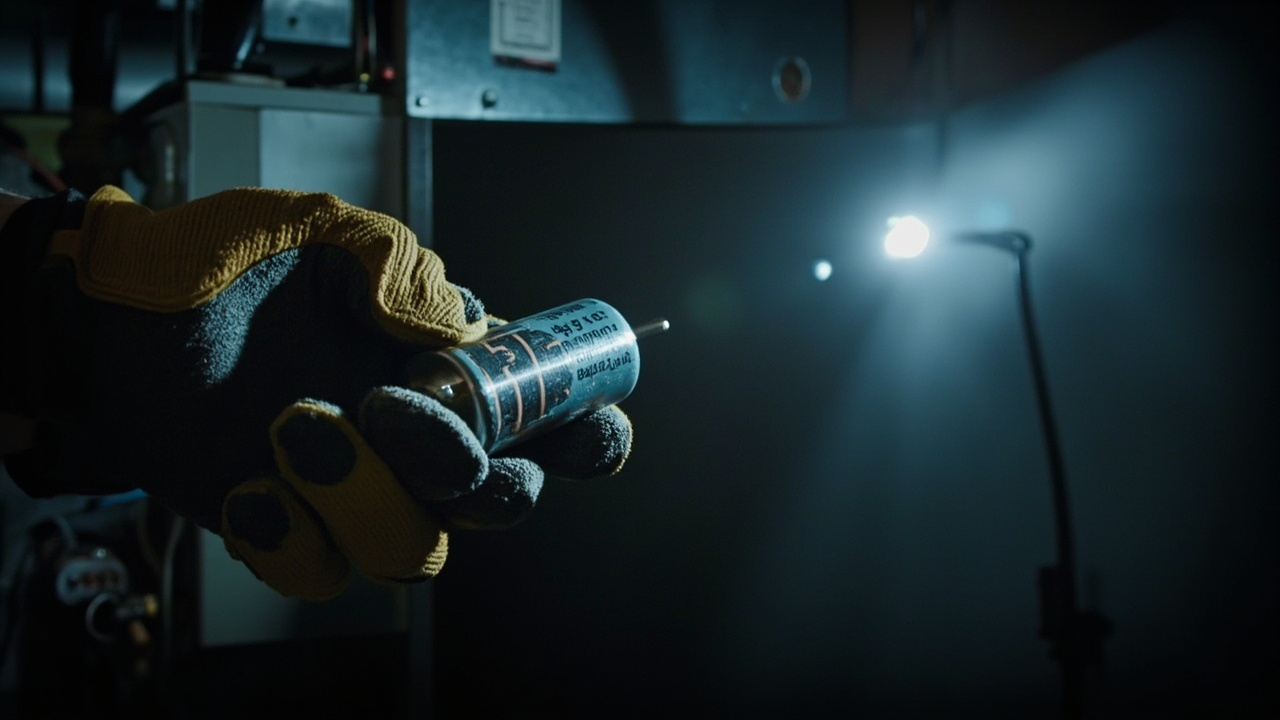
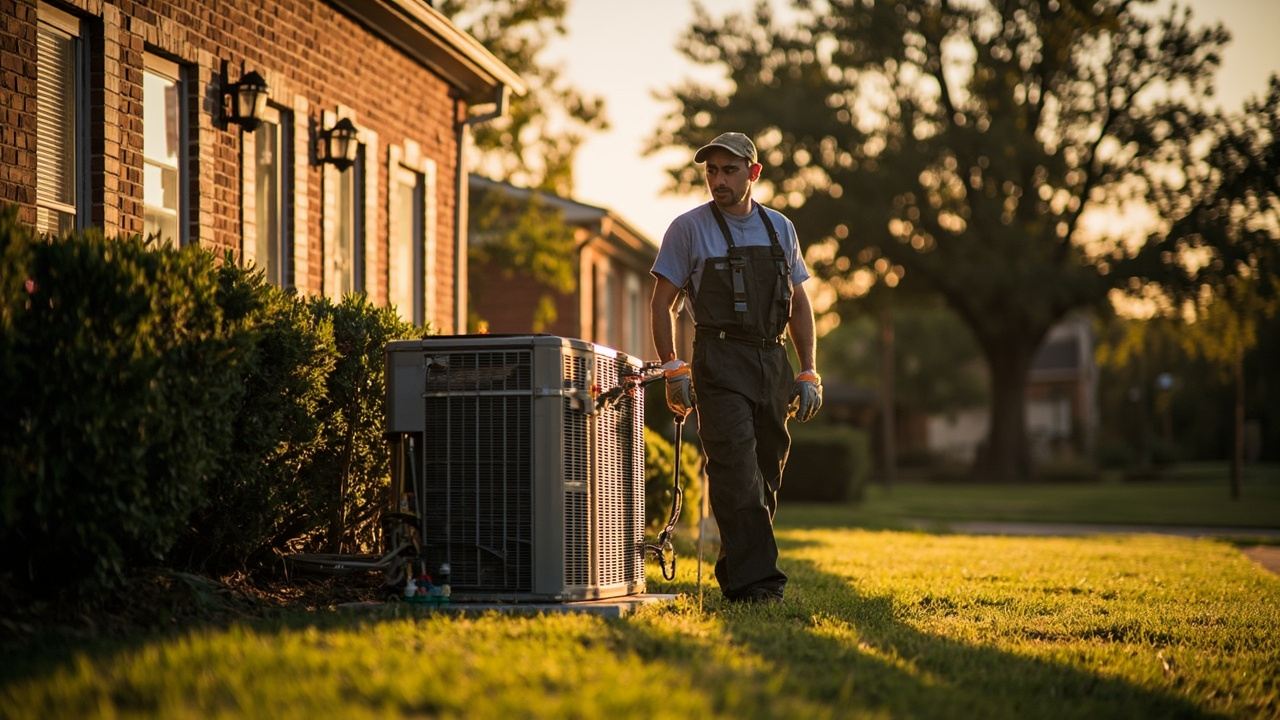
How a night call gets diagnosed instead of guessed at
On a night call, the order never changes. Power and gas supply get confirmed first, since a tripped breaker or a closed gas valve can look like a failed furnace from the thermostat. Next comes the control board's fault history, because a lit board tells you how many times the burner tried and quit before it locked out, which sets the direction the rest of the visit takes. From there the check splits by complaint. A furnace call moves to the flame sensor. A system that is running but not cooling moves to airflow at the filter, the coil and the return before anything else gets touched.
The flame sensor signal is read in microamps against the control board's dropout point. A steady signal well above that point clears the sensor and points the fault somewhere else in the ignition chain. A weak or drifting signal means the sensor is coated enough that it reads a flame that is present but reports it as gone, dropping the gas valve and forcing another failed trial. That single reading decides whether the fix is a cleaned sensor and a reset board or a longer look at the pressure switch and the inducer. On the cooling side, the fork works the same way: a shallow temperature drop across the coil, measured in the duct rather than at a register, points at restricted airflow or low charge, while an unusually deep drop points at a coil already starting to ice from a filter or return that is too tight.
Where the call turns into a replacement conversation rather than a repair, the comparison that matters most is staging. A single stage condenser runs at full output every cycle, a two stage unit spends more of the day at reduced capacity, and a variable capacity unit spends most of it there, which is what pulls humidity out of a house during a long run rather than a short blast. On the heating side, a gas furnace holds output steady no matter how cold it gets outside, while a heat pump's output falls as the temperature drops and needs backup heat once it passes its balance point, which is the calculation that decides whether dual fuel makes sense for a given house. Neither comparison gets decided by a floor plan guess. It gets decided by the readings taken first.
Our page on emergency commercial hvac repair covers that side of the work in more depth.
Permit and inspection questions? Commercial Construction Permits is the office we coordinate with on every permitted Waco job.
Ask which of these readings was taken before any part is replaced.
| Instrument | Good reading | Bad reading | What it changes |
|---|---|---|---|
| Flame sensor signal check in microamps | A steady signal well above the control board dropout point | A weak or drifting signal | The sensor is coated and the burner will drop out |
| Manifold gauges with superheat and subcooling readings | Superheat and subcooling both landing in the range the equipment maker specifies for that metering device | High superheat with low subcooling | An undercharge or a restriction rather than a weak compressor |
| Two probes for delta T between return and supply air | A 16 to 22 degree drop across the coil in cooling at normal indoor humidity | A small drop means airflow or charge is wrong | An unusually large drop means the coil is being starved of air |
| Manometer for total external static pressure across the air handler | Static pressure at or under the maximum printed on the blower data plate | Static above the rating | The filter, the coil or the duct is choking the system |
How an after-hours call runs
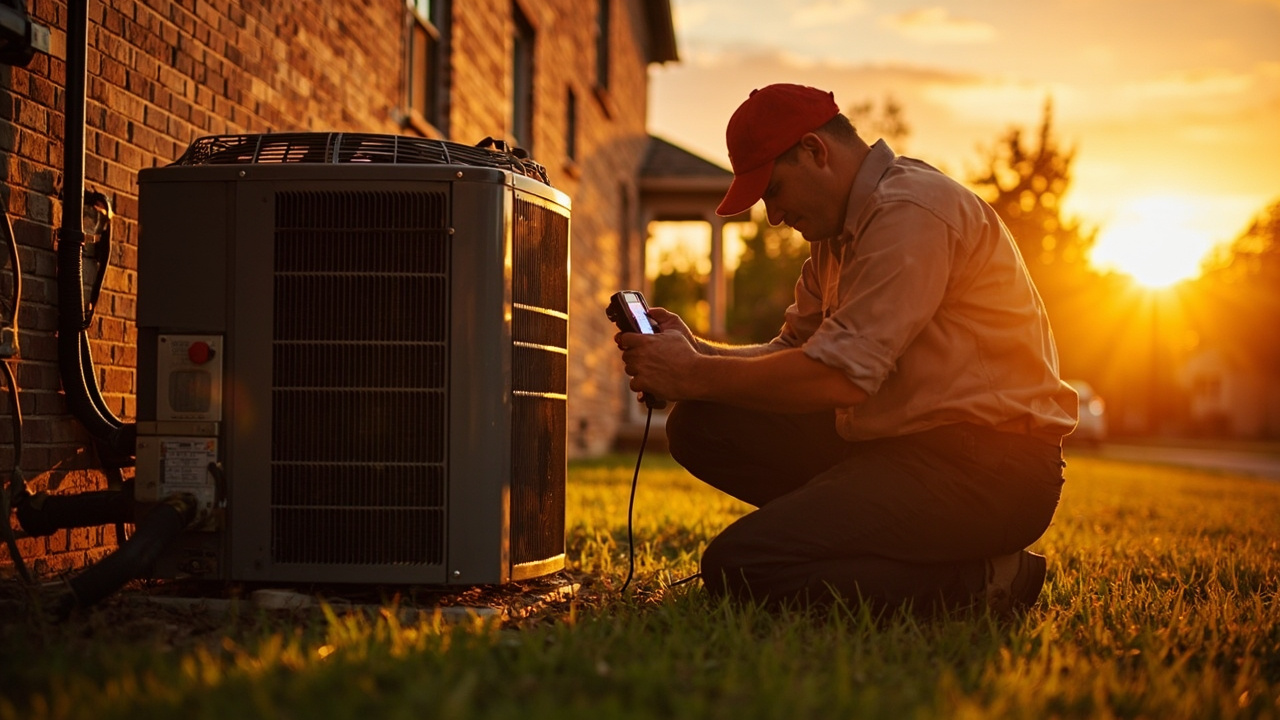
Call and triage
The dispatcher asks what the system is doing, whether it is a furnace that lit and quit repeatedly before it went cold overnight or a system that is running but not keeping up, when it started, and whether anyone in the house needs heat or cooling restored tonight. A lockout history like the one from a coated flame sensor moves a call up the queue, while a system that is still running gets weighed against how the queue looks that night. You are told whether this is a dispatch tonight or a scheduled morning visit before the call ends.
Diagnose and confirm scope
On site, the technician works the same order every time, power and gas supply, then the control board's fault history, then the flame sensor signal or the airflow and coil condition depending on the complaint. Once the failed reading is identified, you see the finding before anything gets replaced. If a fault behind the panel turns out to be something else, a cracked component or wiring damage beyond the original complaint, the technician stops and shows you before going further.
Verify and hand back
Before the technician leaves, the flame sensor signal or the coil temperature split gets rechecked to confirm it is holding in the range that clears the original fault, not just reading better once. You get a walkthrough of what failed and what was done, and the panels go back on and get closed up. You keep a note of what was checked and what the reading was when the truck left.
Why an after-hours call still gets full diagnostic work
A crew that does not work Waco regularly tends to walk into an attic expecting duct built for cooling from day one, and a lot of the housing stock here was not built that way. Ranch era attics carry duct that was added or resized after construction, pier and beam floors carry ducts that separate as the ground under them moves, and none of that shows up until a panel comes off. Treating every attic unit the same way costs time on a night call when time is the one thing a locked out furnace or an icing coil does not allow for.
Expansive clay soil is the other piece a crew from outside the area gets wrong. It shifts slabs and outdoor pads through wet and dry cycles, which tips condensing units out of level and puts strain on refrigerant line sets and condensate lines that were run straight and level when the house was built. A technician who has not seen that movement before will chase a refrigerant fault that stems from a line set stressed by a pad that has tilted, and that misdiagnosis burns time on a call where the house is already uncomfortable or cold.
Night dispatch across the county runs on the same two seasonal patterns every year, and knowing which one is producing a given call changes how it gets triaged before a technician is sent. A run of hard freezes drives furnace lockouts from coated flame sensors and frozen heat pump coils at the same time everyone else is calling in with the same complaint, and a stretch of summer heat drives capacitor and contactor failures night after night. Recognizing the pattern on the phone, rather than treating each call as an isolated failure, is what keeps a queue moving on the nights it matters most.
Local soil composition and seasonal weather patterns demand more than generic troubleshooting. A technician familiar with Waco conditions catches problems faster, avoids expensive false starts, and gets customers back to comfortable temperatures while crews unfamiliar with the area are still diagnosing. That difference compounds on high-demand nights when every minute spent on the wrong hypothesis is a customer left waiting.
If this sounds close but not quite your situation, weekend & holiday hvac repair may be the better starting point.
What an after-hours call looks like once you're on the phone
Night calls get scheduled fast
When you call after hours, the person answering asks what the system is doing, what changed right before it stopped, and whether anyone in the house needs the heat or the cooling restored tonight. Those answers sort the call into a same night dispatch or a first thing in the morning visit. You get a direct estimate of when someone will be at the door, and if the technician ahead of you runs long on a lockout diagnosis, you get a call telling you the window has moved.
House left as found
A night visit still involves opening a furnace cabinet or an air handler panel, so a drop cloth goes down before anything comes apart and a flashlight or headlamp does the work daylight would otherwise do. Removed panels and parts get staged on the cloth rather than the floor. Whatever comes out, a failed sensor, a burnt contactor, leaves with the technician, and the panels go back on before the truck leaves the driveway.
What moves scope and timing
Whether the fault is a part inside the sealed circuit or the compressor itself moves the scope the most. Whether the duct can move the air the equipment needs, checked by static pressure, moves it next. The one driver unique to after hours is timing, dispatch during the first heat wave or the first hard freeze runs against a queue everyone else is calling into at once, which can push a non lockout, non locked out house to a morning slot instead of a night one. Nothing gets worked on past diagnosis until you have seen the written scope and said yes.
Solo night work still gets checked
A technician working alone after dark makes parts and repair calls on the spot, so that judgment gets built before they ever take a night shift solo, through visits worked alongside a lead who signs off on reading a flame sensor signal correctly and reading a lockout history off the board. On anything that does not match a known pattern, the technician on site calls back to the board rather than guessing at a fix in the dark.
You Have Questions,
We Have Answers
Cost depends on what the diagnosis finds and how busy the after-hours queue is that night. A part inside the sealed circuit, like a coated flame sensor, moves the job differently than a compressor level fault. Peak demand periods compress technician availability and extend response times for systems that have not locked out. You see the written scope before anything is repaired.
Why Waco's two call seasons dispatch differently
Cooling repair calls in Waco peak in July and August, when long runs of mid to upper nineties heat push equipment that idled through spring to run nearly nonstop. A component that has been carrying that load for weeks, a run capacitor, a contactor, a condenser fan motor, tends to fail after dark because that is when it has logged the most hours. Heating and heat pump calls spike instead during short arctic cold snaps and winter storms from December through February, when a furnace that has sat unused for months is asked to prove ignition and hold a flame signal on the coldest night of the year. The mild shoulder weeks in spring and fall are when a system gets replaced on a plan rather than diagnosed on an emergency.
Those two call seasons change what an after-hours dispatcher expects to hear before a technician is even sent. A July night call describing a system that runs constantly and never gets cold gets triaged as airflow or charge, both of which can sometimes hold until morning if household occupants lack medical sensitivity to elevated temperatures. A December night call describing a furnace that lit, dropped out, and lit again several times before going quiet gets triaged as a likely lockout, which does not clear on its own and moves up the queue. Knowing which season is producing the call changes the questions asked on the phone before a truck ever gets a destination.
HVAC Services in The Waco Area
Explore our service area and locate Granite HVAC Waco with ease. We're proudly local and serve the surrounding neighborhoods with fast response and honest pricing. Use the map to check our coverage area, or call us and we'll confirm in seconds.
Address:
Granite HVAC Waco, Waco, TX, 76701
Additional Services We Offer
- 24/7 Emergency AC Repair
- Carbon Monoxide Leak Response
- Emergency Blower Motor Replacement
- Emergency Boiler Repair
- Emergency Commercial HVAC Repair
- Emergency Compressor Replacement
- Emergency Furnace Repair
- Emergency Heat Pump Repair
- Emergency Refrigerant Leak Repair
- Emergency Thermostat Replacement
- No Cooling Emergency Service
- No Heat Emergency Service
Checking your thermostat batteries, swapping a filter, and confirming the breaker has not tripped are things you can rule out yourself before calling. Diagnosis stops at anything behind the blower door, inside the electrical panel, or involving refrigerant or a gas burner, because those require the meter readings and gas safety steps that a homeowner cannot safely take. If a night visit turns up damage beyond the original complaint, we say so on site rather than after the invoice.
Before you call, know what the system was doing right before it stopped and whether it is a furnace that quit trying to light or one that is running but not keeping up. If you can, note the age of the equipment and where the breaker panel or gas shutoff is. Let us know if the situation is urgent so we can prioritize your call accordingly.
Last reviewed September 2026 by Dale Whitfield, Service manager.