




What it means when the outdoor unit stays silent
The thermostat is set to cool and the indoor blower may even be moving air, but the outdoor unit does nothing. No hum, no click, no fan spin. That is a different problem than an outdoor unit that hums for a second and quits, and both are different from a compressor that runs but never cools the house. Sorting which one you have decides where the fault sits, either outside at the compressor and contactor or inside at the thermostat signal and blower circuit.
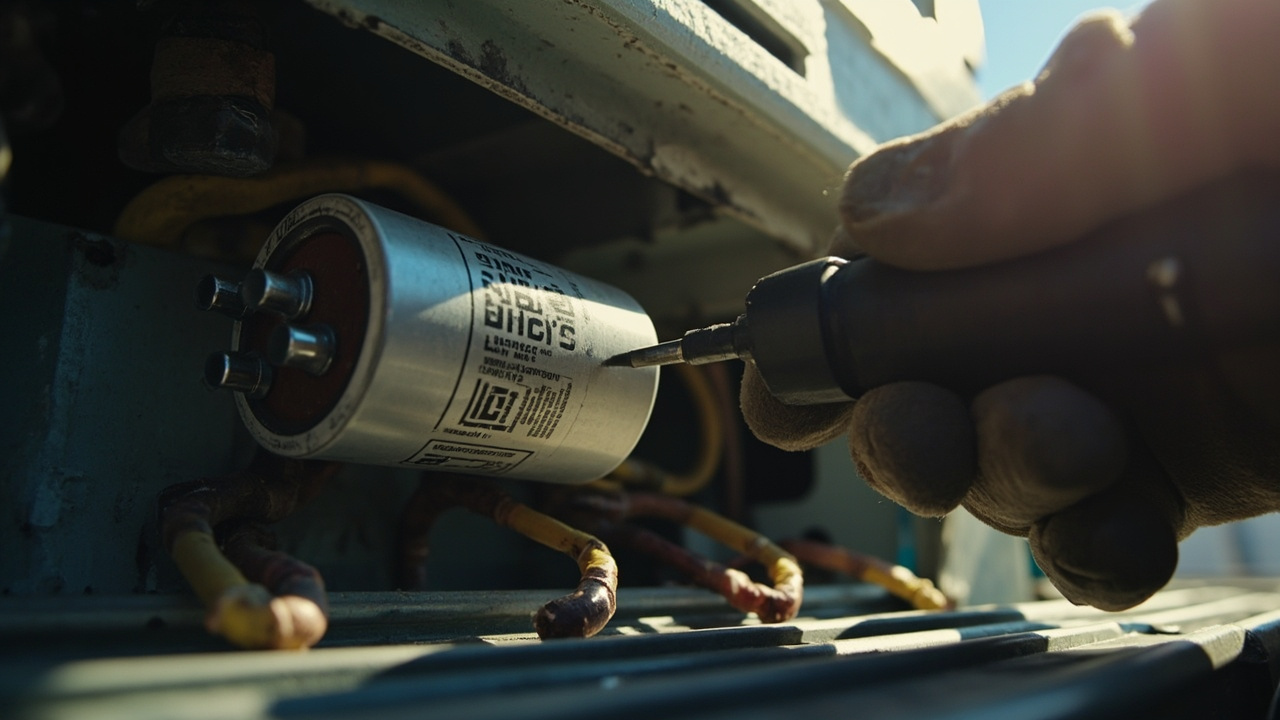
In Waco, the outdoor unit runs for hours at a stretch through a long, hot cooling season that stretches from spring into fall. That near constant duty cycle is hard on two small parts that do a lot of work every time the compressor tries to start. The run capacitor gives the compressor and the fan motor the jolt they need to get moving, and the contactor is the switch that closes the high voltage circuit when the thermostat calls. Months of near continuous cycling wear the capacitor's plates and pit the contactor points, and either one failing quietly looks the same from the thermostat, which is why the unit can look dead when the actual fault is a part you can hold in your hand.
Left alone, the failure gets worse in a predictable order. A weakening run capacitor no longer gives the compressor enough of a push to start cleanly, so the compressor pulls high amps on every single start attempt instead of a clean startup surge. Those repeated high amp draws heat the motor windings a little more each time, and eventually the windings overheat and fail for good, turning a capacitor that would have been a small part into a full compressor replacement. That is the point where waiting costs the most, so a unit that has started struggling, humming longer before it catches, or tripping the breaker on start, is worth calling about before it stops trying altogether.
The contactor can also fail in other ways that confuse diagnosis. A contactor that closes but then sticks sometimes energizes the compressor even after the thermostat stops calling for cooling, which keeps the unit running past the set temperature and cools the house below what you asked for. A contactor that closes partway leaves the circuit carrying current through a smaller contact area, which generates heat and eventually burns the whole assembly out. Either symptom points to the same part, and recognizing the pattern early prevents the damage that cascades when a small fault is ignored.
If this sounds close but not quite your situation, ac blowing warm air may be the better starting point.
We install and service major brands like Carrier and register every unit to manufacturer specifications.
Find the sign you have, then read across to see whether it can wait.
| Symptom or first sign | What is already happening | What it becomes if ignored | When to call |
|---|---|---|---|
| A weak run capacitor | The compressor pulls high amps every time it tries to start | The windings overheat and what was a part becomes a whole condenser | Now, the same day |
| A loaded filter | Airflow drops and the coil runs colder than it was designed | The coil ices over and the compressor takes liquid refrigerant back and fails | This week, while it is still one part |
| A coated flame sensor | The burner lights and drops out again and again | The board locks out on repeated trials and the house goes cold overnight | At the next visit, while the fix is small |
How we trace the fault before we touch a part
Before a clamp meter comes out, the sequence starts at the electrical path rather than at the unit itself. First the disconnect box next to the outdoor unit gets opened and checked for power reaching it, since a pulled disconnect or a tripped breaker at the panel makes the whole condenser look dead for reasons that have nothing to do with the compressor. Next the thermostat call gets traced to the contactor coil, confirming the low voltage signal from the thermostat is closing the contactor points at all. Only once power and signal are confirmed does the compressor and fan motor get judged on their own. That order matters because a homeowner who hears silence assumes the compressor is gone, when in a large share of no start calls the fault sits upstream of the compressor entirely, at a switch that was supposed to close and did not.
With power and signal confirmed, a clamp ammeter goes on the compressor and blower leads and the reading gets checked against the rated load amps stamped on the equipment data plate. A reading at or below that rated figure on a clean start points at a healthy compressor and rules it out as the cause. A reading that spikes toward locked rotor amps on every attempt, or that sits steady above the rated load, points the other way, toward a run capacitor too weak to give the compressor its starting jolt or a contactor with pitted points holding resistance in the circuit. The capacitor gets checked before the compressor is ever blamed, because a compressor pulling high amps on a weak capacitor looks identical to a failing compressor from the thermostat, and only the meter tells them apart.
That reading is what decides whether this stays a part level repair or becomes a system decision. A capacitor or a contactor sits outside the sealed refrigerant circuit and gets swapped in a single visit. A compressor that has taken repeated high amp starts long enough to overheat its windings is a different repair entirely, since the sealed circuit itself has to be opened and evacuated rather than one component replaced at the disconnect. Treating every silent outdoor unit as a compressor call skips that distinction, and it can lead to a compressor being condemned when a capacitor rated a fraction of its cost was the point of failure, which is why the amp reading comes before any part gets ordered rather than after.
More detail on furnace not igniting is on its own page.
Your local utility, Utility Bill City of Waco, publishes service and water-quality information every Waco homeowner should know.
Ask which of these readings was taken before any part is replaced.
| Instrument | Good reading | Bad reading | What it changes |
|---|---|---|---|
| Clamp ammeter on the compressor and the blower | Running amps at or below the rated load amps stamped on the data plate | Amps steady above the rating, or a brief spike toward locked rotor on start | A failing capacitor, contactor or compressor |
| Flame sensor signal check in microamps | A steady signal well above the control board dropout point | A weak or drifting signal | The sensor is coated and the burner will drop out |
| Manifold gauges with superheat and subcooling readings | Superheat and subcooling both landing in the range the equipment maker specifies for that metering device | High superheat with low subcooling | An undercharge or a restriction rather than a weak compressor |
| Two probes for delta T between return and supply air | A 16 to 22 degree drop across the coil in cooling at normal indoor humidity | A small drop means airflow or charge is wrong | An unusually large drop means the coil is being starved of air |
AC not turning on call
Diagnosing the no start call
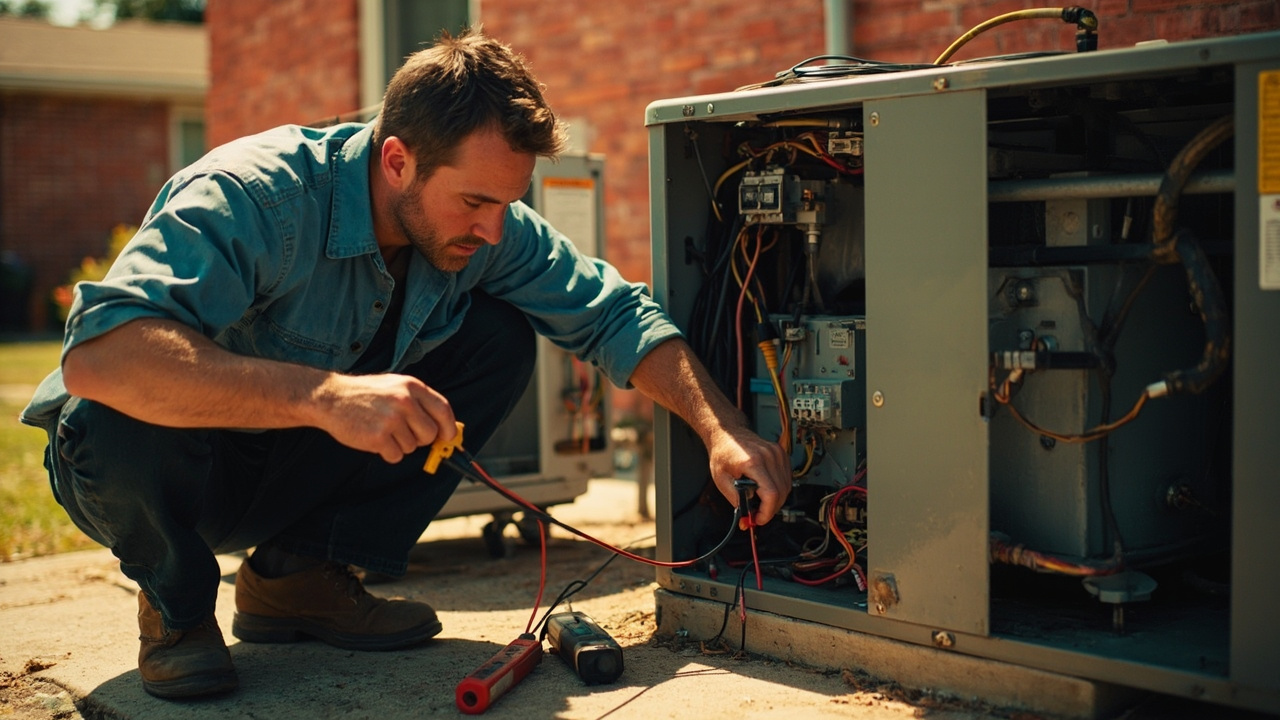
When you call, we ask whether the outdoor unit hums, clicks or stays completely silent, whether the breaker has tripped, and what it was doing right before it stopped responding. Those answers tell us whether to treat this as a same day visit. On site, the sequence starts at the disconnect box and the breaker panel to confirm power is reaching the unit, then traces the thermostat call to the contactor coil to confirm the signal is closing it. Only after power and signal are confirmed does a clamp ammeter go on the compressor and blower leads, with the reading checked against the rated load amps on the data plate.
Repairing the part at fault
Once the amp reading points at a capacitor or a contactor, the disconnect stays open and the breaker stays locked out before anything gets touched. The failed run capacitor or the pitted contactor gets swapped for a matched replacement rated for the same compressor and fan motor load. If the reading instead shows amps consistent with a wiring or breaker problem upstream of the unit, we stop there and show you the reading before any part gets ordered. Every scope gets written down and approved before work starts, so a capacitor swap or an electrical correction never happens without you seeing the number that led to it first.
Confirming the fix holds
Before the visit ends, the clamp ammeter measures current on the compressor and blower circuits with the new part installed, and the reading must stay at or below the nameplate specification through a full clean start. We close the disconnect and reset the breaker, then run the system through a complete cooling cycle to confirm the unit starts every time rather than once. You get the before and after amp readings in writing, along with which part was replaced, so the number that decided the repair is the one you keep on file.
Why an unfamiliar crew misreads this fault here
A crew that does not work a long cooling season often treats a silent outdoor unit as a compressor call before checking anything smaller. In a climate where the compressor cycles for months rather than weeks, a run capacitor or a contactor wears down well before the compressor itself, and skipping the amp reading in favor of a straight compressor quote means a homeowner pays for a sealed system repair that a small part swap would have solved. The habit comes from working shorter seasons where a compressor is genuinely the more common failure, and that assumption does not carry over here.
The same unfamiliarity shows up in how a borderline amp reading gets treated. A reading that sits just inside the rated load amps in early summer still has months of near continuous cycling ahead of it, and a technician used to a short season may sign off on that number and move on, while a capacitor under that load keeps degrading through the hottest stretch of the year. Rechecking a borderline reading later in the season, rather than treating one good number as settled, is a habit that only makes sense where the duty cycle runs this long. A reading taken in June can look acceptable when the outdoor temperature sits in the mid-80s, but the same compressor drawing that amp load through August and into September operates under sustained stress that accelerates wear.
Electrical work at the disconnect box, the breaker and the wire feeding the unit gets overlooked for the same reason. Older installations were wired for smaller loads than current equipment draws, and a crew unfamiliar with that pattern can replace a capacitor or contactor without checking whether the wire size and breaker rating still match the amp draw of the unit now sitting on the pad, leaving a repair that trips again under the next heat load. A technician trained in regions with milder summers may complete the part replacement and consider the job finished, missing the step that prevents a callback when the system runs at peak capacity during peak temperature conditions.
Our page on thermostat not working covers that side of the work in more depth.
The EPA's indoor air quality resources are the reference we point customers to on ventilation and filtration questions.
What the job looks like from your side
How the call gets scheduled
You call and describe what the outdoor unit is doing, whether it hums, clicks, or stays completely silent, and whether the breaker has tripped. Those answers tell us if this is a same day visit or one that can be scheduled during a normal window. You get a confirmed arrival window before the technician heads out. If the job ahead of yours runs long because a compressor or a capacitor swap took more time than planned, we call to update the window rather than leaving you guessing.
What happens at your house
Before any panel comes off, the technician confirms the disconnect is open and the breaker is locked out so nothing energizes while hands are on the unit. Tools and parts stay staged near the outdoor unit rather than spread across the yard or the utility closet. Any panel or cover that gets removed goes back on exactly the way it came off. When the visit is finished, the area around the outdoor unit and the electrical panel is left the way it was found, with nothing left disconnected or open.
What moves the cost
The biggest factor is what the amp reading finds. A capacitor or contactor swap is a small part with a fast turnaround. Electrical work at the disconnect, the breaker, or the wire feeding the unit costs more if any of those need correcting rather than just the run capacitor itself. Access matters too, since a unit with a tipped pad or a tight side yard takes longer to reach safely. Once the reading is in and the cause is named, you see the scope in writing and approve it before any part is ordered or replaced.
How technicians prove their work
A technician working alone on an electrical fault like this has already run enough visits alongside a lead to read a clamp ammeter correctly and tell a bad capacitor from a bad contactor without guessing. The lead signs off on that specific skill before someone works solo. On a job where the amp reading is ambiguous, or the compressor itself is in question, a second technician looks at the reading before a scope gets written, so a compressor is never condemned on one person's read of the meter.
You Have Questions,
We Have Answers
Usually power, signal or a worn part is not reaching the compressor. In Waco, a run capacitor or contactor worn down by months of near continuous summer cycling is the most common cause of a sudden no start, and a clamp ammeter reading on the compressor is what separates that from a breaker or disconnect issue.
It means waiting a few minutes before restarting the compressor after any power interruption. Refrigerant pressure needs time to equalize between the high and low sides after a shutoff, and restarting immediately forces the compressor to start against pressure it was not built to overcome, which is exactly the kind of high amp start that wears a capacitor faster.
Do not force it by repeatedly resetting the breaker. Repeated resets push the compressor through repeated high amp start attempts, the same pattern that overheats motor windings and turns a capacitor problem into a compressor problem. Check the breaker and disconnect once, confirm the thermostat is calling for cooling, then call if it still will not respond.
Why Waco summers wear this part out first
Waco's cooling season runs long and hot, which means the outdoor unit's compressor and run capacitor cycle on and off for hours a day across months rather than weeks. That duty cycle is what shortens a capacitor's life here faster than it would in a milder climate, and it is the reason a capacitor failure shows up as a sudden silent unit rather than a slow decline. McLennan County's electric delivery runs through Oncor, so a grid interruption or a tripped breaker at the panel is always the first thing ruled out before any component inside the unit is blamed. Underneath the pad itself, the Blackland Prairie's expansive clay shifts with rain and drought, which can tilt an outdoor unit's pad over time and stress the electrical whip running to the disconnect box.
The clamp ammeter reading taken on a first visit means more here than it would somewhere with a short cooling season, because a unit that has already logged months of near continuous runtime is closer to the end of a capacitor's working life than the calendar alone would suggest. A reading that stays within the rated load amps during peak demand is worth rechecking as the season progresses into fall, since the same capacitor under the same load keeps degrading through the months ahead. That is why a technician working in this climate treats a borderline amp reading in June differently than the same reading would be treated in a region with a short and mild season. The extended heat here compresses what would normally be years of capacitor life into a single extended cooling cycle.
HVAC Services in The Waco Area
Explore our service area and locate Granite HVAC Waco with ease. We're proudly local and serve the surrounding neighborhoods with fast response and honest pricing. Use the map to check our coverage area, or call us and we'll confirm in seconds.
Address:
Granite HVAC Waco, Waco, TX, 76701
Checking your breaker panel, resetting a tripped breaker once, and confirming the thermostat has working batteries are things you can do yourself before calling. What is not a homeowner job is anything past the disconnect cover or inside the electrical panel, since that is live line voltage and the compressor circuit itself. If the amp reading points at a wiring problem upstream of the unit, we tell you on the first visit and say who handles that part.
Before you call, note what sounds the outdoor unit makes when cooling starts, whether that began suddenly or gradually worsened, if the breaker tripped, and what the thermostat display shows. Have the age of the outdoor unit available if you know it. These details usually tell us whether you need a same day visit.
Last reviewed September 2026 by Dale Whitfield, Service manager.