

Why the furnace runs and the vents still feel cold
You turn the thermostat up and the furnace comes on. Air moves out of every register, but it never warms up, or it runs warm for a minute and then goes cold while the blower keeps blowing. Some households only see it happen once every few starts, which makes it feel random rather than broken. It is not random. A furnace that runs and pushes only cold air is almost never a furnace that failed to start. It started, tried to prove a flame, and lost that flame partway through the cycle, or the blower is running on a fan setting that has nothing to do with the burner at all.
The blower and the burner are controlled separately. When the thermostat calls for heat, the inducer motor spins, the igniter lights the burner, and only after the heat exchanger warms does the blower push that heated air into the house. If the burner drops out mid cycle, the blower often keeps running on its post purge timer, pulling room temperature air across a heat exchanger that has already gone cold. A thermostat fan switch left on ON instead of AUTO produces the same complaint with no ignition fault at all, since the blower then runs continuously whether or not the burner is firing.
Waco's heating season is short, running roughly from late November through February, with mild days broken by short hard freezes. That means a gas furnace here sits idle for most of the year and is asked to prove ignition, draft and flame signal all at once on the first genuinely cold night. A flame sensor that picked up a light coating of oxidation over months of idle time reads weak the moment it is finally asked to hold a flame through a full cycle, and that is exactly when the burner starts dropping out and the vents start running cold.
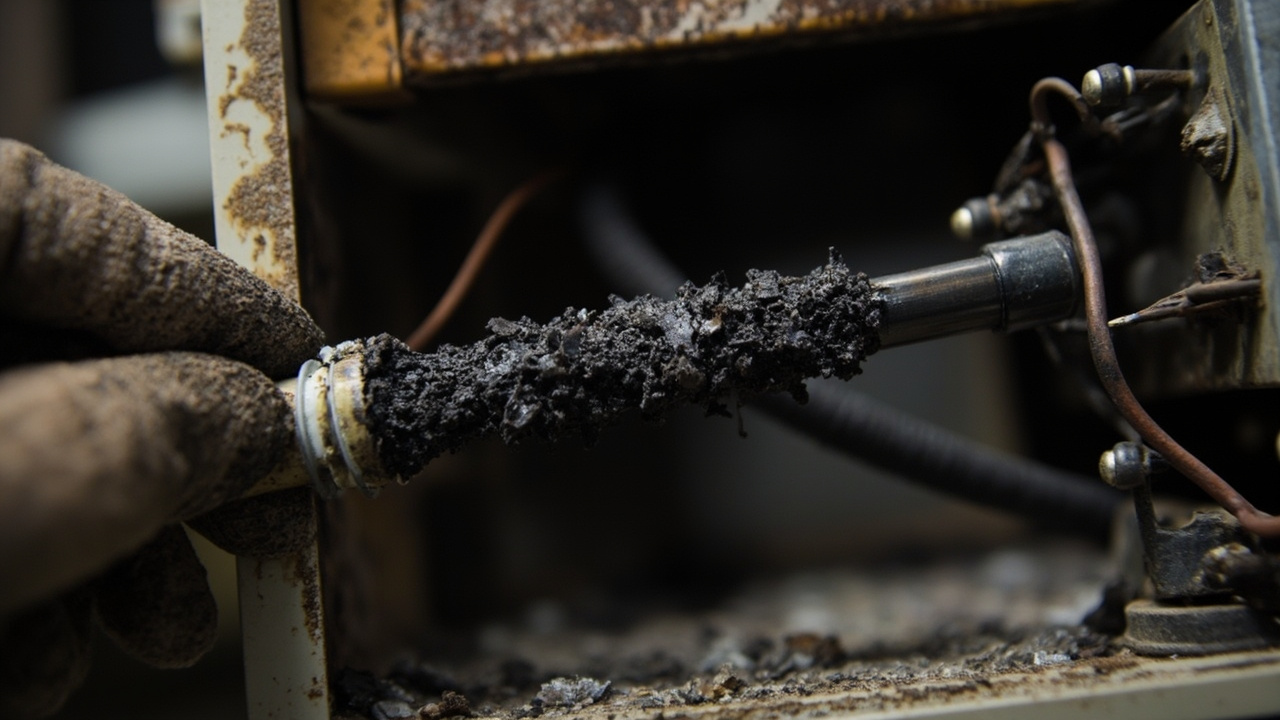
Left alone, a coated flame sensor does not clear itself. The burner lights, senses a weak signal, and shuts back down, then tries again a few minutes later and repeats the same short cycle. After enough failed trials the control board locks out entirely, and the house goes cold overnight with the thermostat still calling for heat. Anyone who has watched the burner light and quit more than a couple of times in one evening is looking at a lockout in progress, not a system that will sort itself out by morning.
See air duct cleaning for how the related work is scoped and priced.
Find the sign you have, then read across to see whether it can wait.
| Symptom or first sign | What is already happening | What it becomes if ignored | When to call |
|---|---|---|---|
| A coated flame sensor | The burner lights and drops out again and again | The board locks out on repeated trials and the house goes cold overnight | At the next visit, while the fix is small |
| A cracked heat exchanger | Combustion gas mixes with the air being blown through the house | Carbon monoxide reaches the living space | Now, the same day |
| A plugged condensate drain | The pan overflows into the platform or the ceiling | The ceiling below stains and the rusted secondary pan lets the rest through | Soon, before it spreads past the repair |
How we trace cold air back to the burner
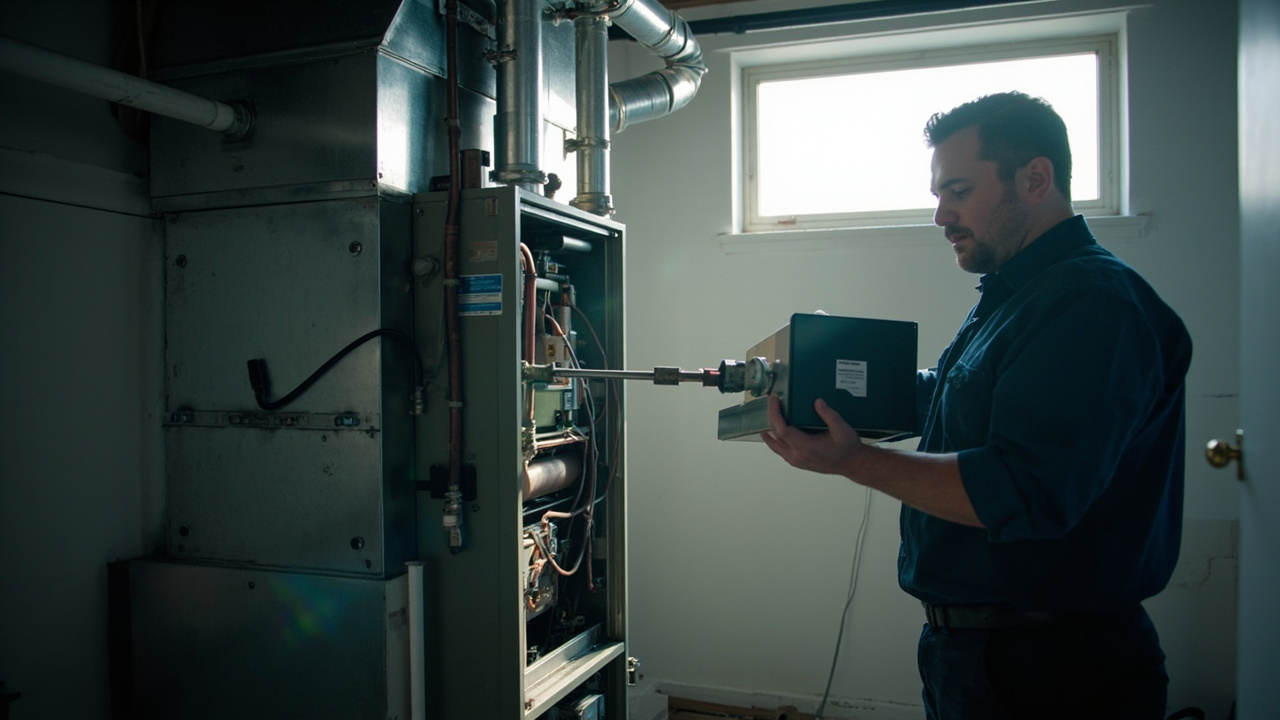
On a cold air call we start at the thermostat, not the furnace. Fan set to AUTO rules out the simplest explanation before a panel ever comes off. With that cleared, we watch a full cycle from call for heat to flame proof, timing the igniter, the inducer motor and the burner rather than assuming the story a homeowner tells over the phone. If the burner lights and holds, the fault is somewhere past ignition. If it lights and drops, or never proves flame at all, the flame sensor is the next stop before anything else on the board gets replaced.
The flame sensor is read with a meter in microamps rather than judged by eye, since a rod can look clean and still carry a signal too weak to hold the board open. A steady signal well above the control board's dropout point means the sensor is doing its job and the fault sits somewhere else in the ignition chain. A signal that starts strong and drifts down through the cycle, or never climbs far past dropout, means the rod is coated and the burner will keep shutting itself off no matter how many times it relights. Cleaning it with a gentle abrasive pad and rereading the signal is the check, not an assumption that a wipe fixed it.
Not every cold air complaint is a gas furnace fault. On a heat pump, output falls as the outdoor temperature drops, so air blowing from the register can feel cool against skin even while the system is heating correctly. A heat pump is rated on HSPF2 and a gas furnace on AFUE, meaning the furnace delivers the same output regardless of how cold it is outside. A heat pump's seasonal efficiency accounts for the full heating season including the coldest weeks, when auxiliary electric heat engages to maintain temperature as refrigerant-side output declines. Telling the two apart before opening anything up saves a homeowner from paying for ignition diagnostics on equipment that was never dropping flame in the first place. The distinction matters because addressing a heat pump's reduced winter output calls for different troubleshooting than chasing a furnace ignition fault.
Our page on ac blowing warm air covers that side of the work in more depth.
Your local utility, Utility Bill City of Waco, publishes service and water-quality information every Waco homeowner should know.
Ask which of these readings was taken before any part is replaced.
| Instrument | Good reading | Bad reading | What it changes |
|---|---|---|---|
| Flame sensor signal check in microamps | A steady signal well above the control board dropout point | A weak or drifting signal | The sensor is coated and the burner will drop out |
| Two probes for delta T between return and supply air | A 16 to 22 degree drop across the coil in cooling at normal indoor humidity | A small drop means airflow or charge is wrong | An unusually large drop means the coil is being starved of air |
| Clamp ammeter on the compressor and the blower | Running amps at or below the rated load amps stamped on the data plate | Amps steady above the rating, or a brief spike toward locked rotor on start | A failing capacitor, contactor or compressor |
| Micron gauge during evacuation | Below 500 microns and holding there after the pump is valved off | A reading that climbs back up | Moisture is still boiling off inside or the system is not sealed |
| Manifold gauges with superheat and subcooling readings | Superheat and subcooling both landing in the range the equipment maker specifies for that metering device | High superheat with low subcooling | An undercharge or a restriction rather than a weak compressor |
How a cold air call runs
The call and the first look
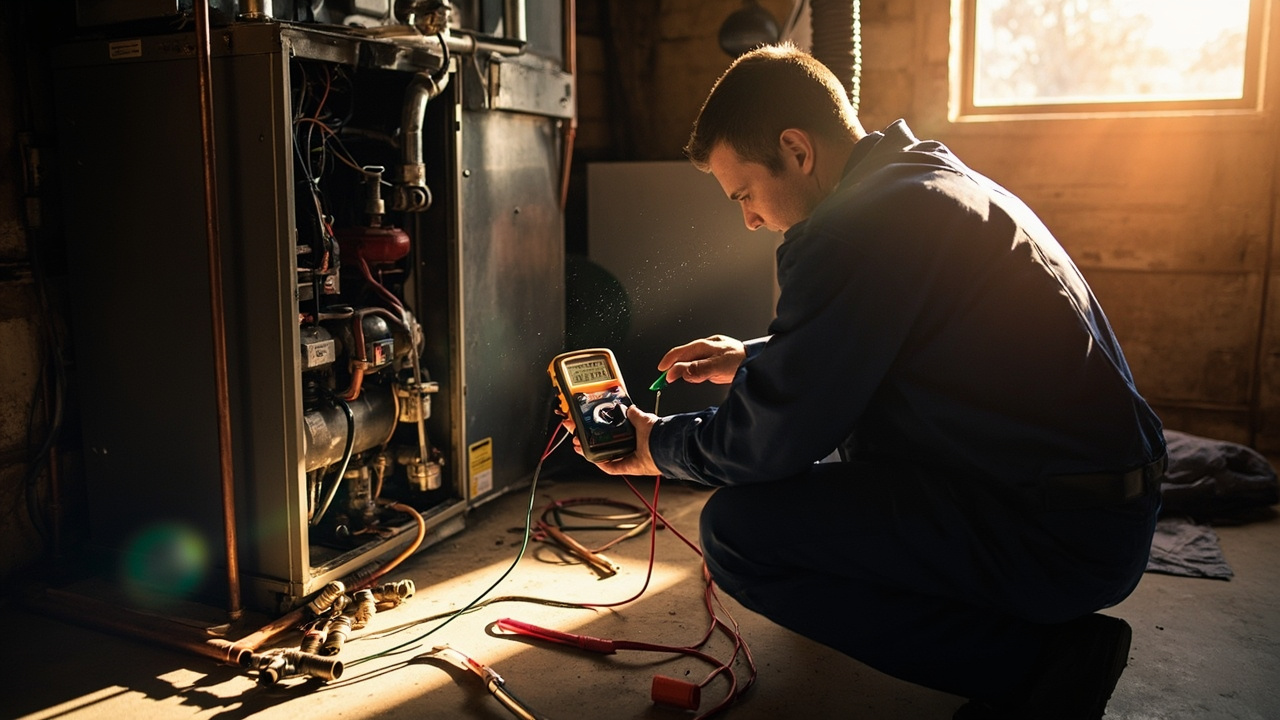
On the phone we confirm when cold air began, whether the burner lights and shuts down or fails to ignite, and how the thermostat fan is positioned. That tells us whether tonight needs immediate attention or whether it can hold until a scheduled slot. On site we start at the thermostat, confirming the fan setting before anything else, then watch a full heating cycle from call for heat through flame proof, timing the igniter and the inducer rather than taking last night's account as the full picture.
Isolating the fault
Once we have seen where the cycle breaks, power to the furnace is cut before the burner compartment opens. The flame sensor comes out for a microamp reading rather than a visual check, since surface buildup can block the signal even on an apparently clean rod. If the reading is low, the sensor is cleaned and reread rather than assumed fixed. If the sensor reads strong, we move up the ignition chain to the pressure switch and draft before touching the control board.
Confirming heat before we leave
Before the panel goes back on, we run a full cycle and confirm the flame sensor holds a steady signal well clear of the control board's dropout point through the whole burn. Supply air temperature is checked against the furnace's data plate to confirm the rise is where it should be, not just that air feels warm at the register. We walk you through what the reading showed and leave the panel closed and the area wiped down.
Why furnace faults here show up on the first cold night
Most homes across Waco and McLennan County run their gas furnace for only a few months a year, and a lot of that housing stock is mid century construction with the furnace set in a hall closet or garage and ductwork running through an attic. That layout means the ignition components spend the humid part of the year sitting unused in a hot attic before being asked to fire reliably the moment temperatures drop. A crew unfamiliar with how long these furnaces sit idle here tends to treat a dropout as a control board failure and replace the board outright, which leaves the coated sensor in place and the same lockout returns on the next cold night.
Calls cluster hard in the days around the first genuinely cold snap, since every furnace in the county that has been idle since spring gets asked to prove ignition on the same handful of nights. A hard freeze also brings winter storm strain on the wider grid, which is when backup heat and repair calls both spike together across the area. Coordinating a schedule around that surge, rather than treating each call as a one off, is what keeps a homeowner from waiting through a second freezing night for what usually turns out to be a short sensor check. Knowing which weeks of the year drive that surge is part of working this county rather than passing through it.
If this sounds close but not quite your situation, furnace not igniting may be the better starting point.
Proper sizing follows the Manual J standard from the Air Conditioning Contractors of America, guesswork is how systems end up short-cycling.
What working with us looks like on this call
How the call becomes a visit
You call and we ask when the cold air started, whether it happens every cycle, and how the thermostat fan is set. Those three answers usually tell us whether this is a same day visit or one we can schedule for the next opening. You get a window rather than an all day wait, and if the job ahead of yours runs long we call to move your time rather than leave you guessing.
What we protect around it
Before the furnace closet or panel comes open, we lay down a drop cloth and keep tools staged rather than spread across the floor. Any parts pulled from the burner compartment go straight into a tray instead of onto the carpet, and the filter and any debris come out with us. The last thing we do before leaving is put the panel back on and wipe down anywhere we worked.
What moves the repair scope
The biggest swing on a furnace blowing cold call is usually a controls failure rather than a burner fault. A single stage thermostat wired straight to the furnace is a quick check. A zoned system with dampers, or a communicating thermostat that talks to the control board directly, takes longer to read because the fault can sit in the wiring between them rather than in the furnace itself. We write the scope after the reading is complete, and you see it before anything further gets opened up.
How a technician earns solo work
A new technician works alongside a lead through a run of furnace ignition calls before taking one alone, and the lead checks that they can read a flame sensor signal correctly rather than just replace the part. On anything where the lockout keeps returning after a clean sensor, a second technician looks at the wiring and the board before we write a new scope.
You Have Questions,
We Have Answers
Occasional cold air usually means the flame sensor signal is borderline, holding through some cycles and dropping through others rather than failing outright. A meter reading taken across several full cycles shows that drift even when the burner looks steady on any single start, which is why the fault feels random instead of constant. Left alone, the drift tends to worsen as the sensor picks up more coating through the season, so the cycles that hold become fewer.
Turning it off is reasonable if the burner is cycling on and off repeatedly rather than just running with the fan left on a cold setting. Repeated short cycling drives toward a control board lockout, and leaving it to keep trying overnight does not clear a coated flame sensor on its own. If the fan is simply set to ON instead of AUTO, switching that alone often clears the cold air without shutting the whole system down.
Why Waco's short heating season sets up cold air calls
Waco's heating season runs from late November into February, with most days mild and interrupted by short, hard freezes that can drop temperatures fast. A gas furnace here does the bulk of its work in a narrow window, then sits unused through a long cooling season that stretches from spring into October. Housing built from the 1940s through the 1960s across the area commonly puts that furnace in a hall closet or garage with ductwork run through the attic, where summer heat bakes the same ignition components that will be asked to fire reliably months later. That idle stretch, followed by a sudden demand for full output on the first cold night, is why ignition faults concentrate so heavily around the same handful of weeks rather than spreading evenly across the year. A furnace that ran fine every night last winter can still show up coated and weak this time around.
Because these faults cluster around the same cold snaps, the check that matters is the same one every time, a microamp reading on the flame sensor taken after a full cycle rather than a glance at a clean looking rod. We record that reading rather than judging the flame by eye, since a rod can look fine and still carry a signal too close to the control board's dropout point to hold through a whole heating cycle. That reading is what tells us whether the fault is the sensor itself or something further up the ignition chain, and it gets checked again after cleaning rather than assumed fixed once the burner relights. Keeping that step in the same order on every visit is what keeps a coated sensor from getting missed in the middle of a cold snap when the schedule is moving fast.
HVAC Services in The Waco Area
Explore our service area and locate Granite HVAC Waco with ease. We're proudly local and serve the surrounding neighborhoods with fast response and honest pricing. Use the map to check our coverage area, or call us and we'll confirm in seconds.
Address:
Granite HVAC Waco, Waco, TX, 76701
Checking the thermostat fan setting and swapping a dirty filter are jobs you can do yourself before calling. Diagnosis stops at the burner and flame sensor circuit, since that sits behind the blower door on line voltage near an open flame, not a safe place for a homeowner to work. If a cracked heat exchanger turns up, we say so on the first visit rather than after.
Before you call, know when the cold air started and whether it happens every cycle or only sometimes. Check that the thermostat fan is set to AUTO rather than ON. Have the furnace's age handy if you know it, and know where the breaker or disconnect for the unit is. Those answers usually tell us if tonight needs someone or if it can wait.
Last reviewed September 2026 by Dale Whitfield, Service manager.