


What Woodway's two housing eras do to a system
Woodway's housing stock splits into two very different builds, and that split decides where a technician looks first on any call. Homes built through the 1980s and 1990s put one system on two floors, feeding both levels through long flexible runs sized for the era rather than for the load each floor carries. Newer construction from the 2000s forward reversed that approach, wrapping tighter envelopes with radiant barrier decking around zoned equipment and shorter trunk runs, with communicating controls that talk directly to the thermostat instead of cycling on a single set point. A fault on the older stock usually traces back to the duct itself, while a fault on the newer stock traces back to a zoning damper or a control board that has lost communication with the outdoor unit.
In Hidden Valley, ranch homes built through the 1970s and 1980s carry their equipment in the attic and route it through flexible duct long enough to lose several degrees before the air reaches the far bedrooms. That run length is why a static pressure reading matters more here than the tonnage stamped on the outdoor unit, since a duct losing pressure over that distance can leave a correctly sized system feeling undersized on the hottest afternoons.
The cooling season here stretches from late April into October, and the two housing types wear differently under that length of run time. The single system two story houses cycle their compressor fully on and off trying to satisfy one thermostat for two different loads, while the zoned newer builds run shorter, more frequent cycles as each damper opens and closes on its own schedule. Both patterns load the same outdoor contactor over a full summer. Atmos Energy serves gas furnaces through much of the older stock, while newer construction leans more on electric heat pump equipment tied to Oncor Electric Delivery service, which changes what a cold snap call looks like depending on which build a house came from.
From routine maintenance to after-hours hvac service, the same local crew handles every call.
How we work an HVAC call in Woodway
Scope on a Woodway call gets set by an instrument reading rather than by what the technician expects walking in, because a zoned system reporting a fault can point at a damper, a control board, or a duct restriction behind it, and guessing which one wastes a return trip. Every finished job gets a repeat reading before the technician leaves, generally the same measurement that opened the visit, so a static pressure or amp draw number gets confirmed to have held rather than assumed to have stuck.
A technician does not work a communicating or zoned platform alone until they have taken readings on that control system alongside someone who already has, since a board wired correctly can still be commissioned wrong, and a visual check will not catch that. An unusual finding, a duct run that will not hold static pressure no matter what changes on it, or a zone that will not respond to its damper, gets a second set of eyes before a part gets ordered against it.
When a visit turns up something outside what the call was booked for, a cracked heat exchanger behind a routine filter change, or a contactor pitted badly enough to threaten the compressor, work stops there. The finding gets explained and shown before anything opens further, since committing to a repair before the homeowner has seen the reading is not how scope gets approved on this crew.
Need something specific? Our emergency commercial hvac repair page breaks down exactly how we handle it in Woodway.
Airflow checked before parts
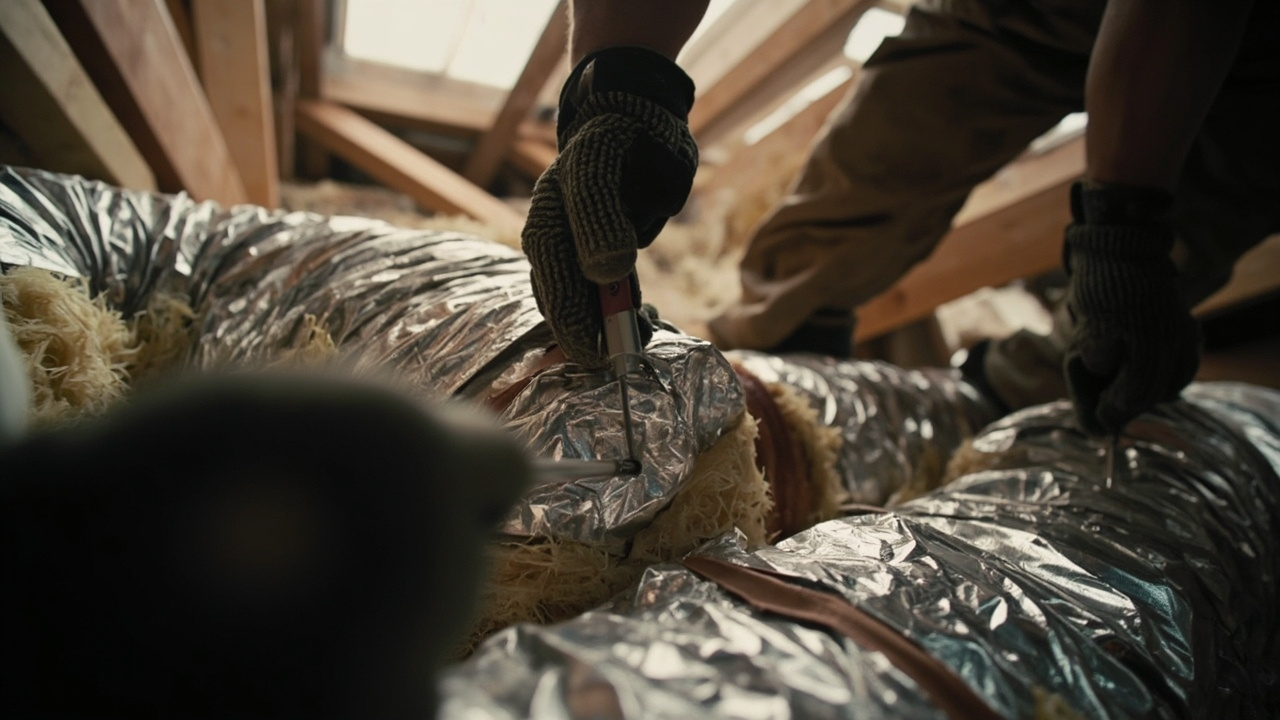
Nobody quotes a repair here until the return, the filter and the duct path have been checked, because a system starved for air will fail every charge test that follows it. On flexible duct runs that dominate Woodway attics, that check alone often explains a comfort complaint that would otherwise get blamed on the compressor.
Static pressure on every call
A manometer reads total external static pressure against the blower's own data plate rating, which tells us whether the duct can move the air the equipment is being asked to push. That reading is what separates a duct problem from an undersized system, and it gets taken before any refrigerant gauge comes out of the case.
Trained on current code cycles
Technicians review each new code adoption cycle together rather than working from what they learned years ago, since a mechanical requirement can shift between cycles without a homeowner ever hearing about it. On a full changeout, that review decides how the condensate route and the disconnect location get installed before an inspector ever sees the job.
Familiar with Woodway Drive builds
Working the homes along Woodway Drive over repeat visits means we already know which era of construction sits behind a given address before the truck stops. That familiarity shortens the first walkthrough, since a technician already expects a single system serving two floors or a zoned build depending on which stretch of the road a house sits on.
HVAC work we handle across Woodway
Residential work in Woodway runs mostly on repair and replacement of furnaces, air conditioners and heat pumps, along with duct correction and zoning on the newer builds that carry it. Commercial work turns on occupied hours and documentation rather than comfort alone, since a rooftop unit down during business hours is a different problem than the same fault overnight in an empty building.
Emergency work is set apart by timing rather than by equipment, since a tripped breaker, a frozen coil or water at the air handler all call for the system to be shut down first and diagnosed second. What changes between the three tiers is mostly access and control complexity, a communicating zoned system takes longer to read correctly than a single stage residential unit, and a rooftop package unit takes different rigging than either one.
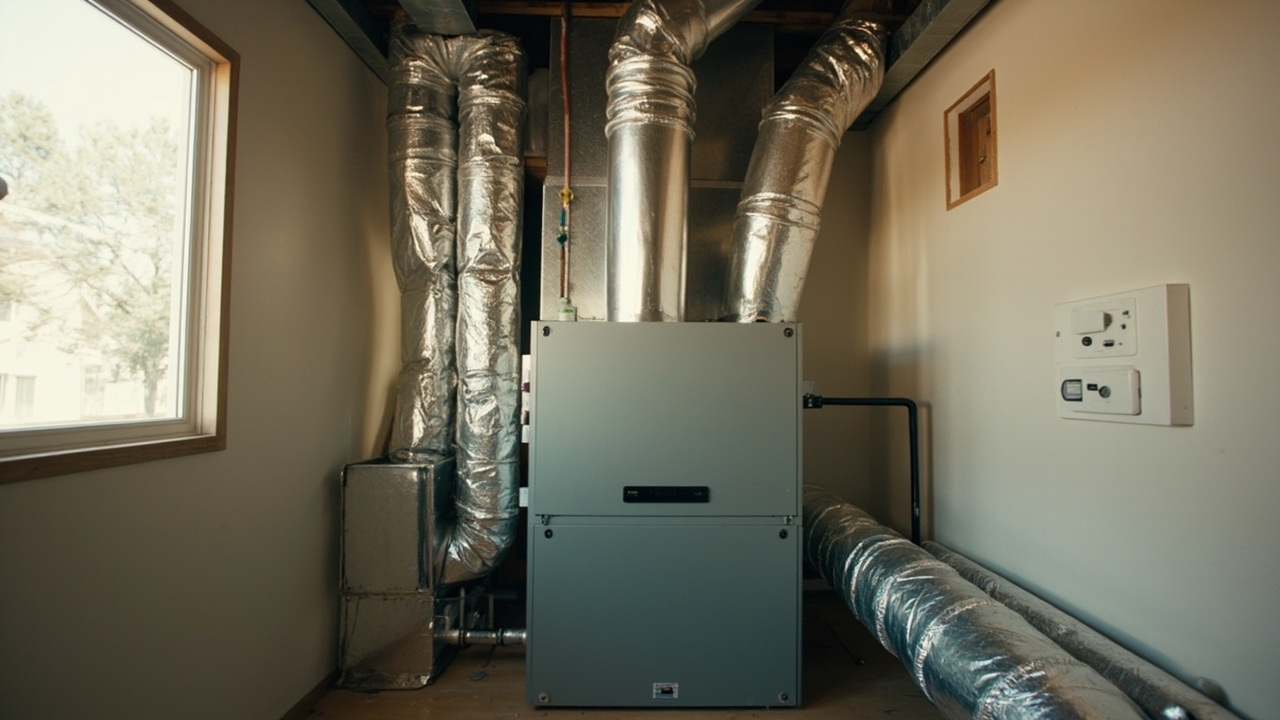
Residential repair and replacement
Residential work covers repair on furnaces, air conditioners and heat pumps, full system replacement, duct repair and sealing, thermostat and zoning work, and indoor air quality equipment. On a single stage system running through a long Woodway summer, the compressor cycles fully on and off all day, which is why a two stage or variable capacity replacement gets discussed even when the single stage unit could technically be repaired, since longer low speed runtime pulls more humidity out of the house at the same thermostat setting. A typical replacement call on a two story home built with one system and long flexible runs starts with a static pressure reading. The duct usually decides how the house has felt for years, regardless of equipment size.
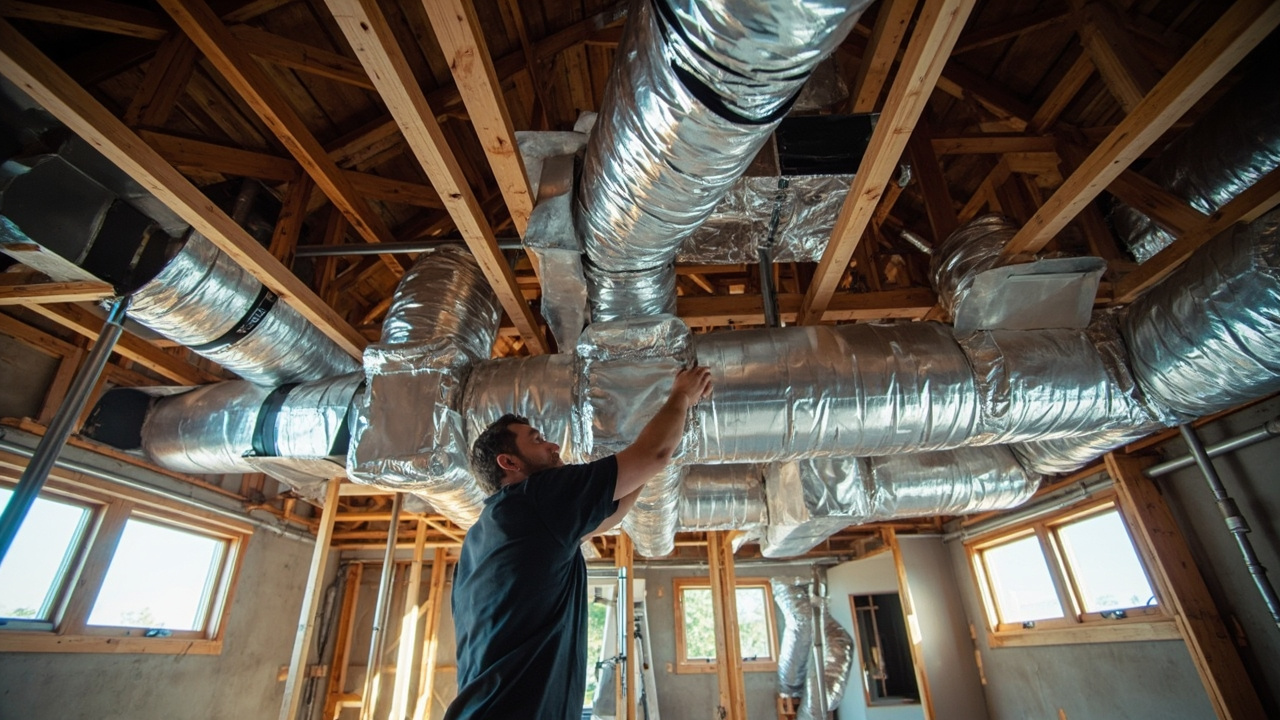
Commercial equipment and documentation
Commercial work covers packaged rooftop units and light commercial split systems, economizer and control work, exhaust and makeup air, and scheduled preventive maintenance agreements. Scheduling runs around occupied hours rather than around when a technician happens to be free, because downtime during operating hours disrupts tenant comfort and business flow in ways that overnight faults do not. The documentation from each visit covers amp readings, static pressure and any part replaced, which is the record a property manager or an insurer asks to see when a unit's history gets reviewed.

After hours and emergency response
Emergency work covers no cooling, no heat, a frozen coil, water coming from the air handler, a tripping breaker, and response to a carbon monoxide alarm once the building has been cleared. The first move on arrival at a tripped breaker call is to leave the system off at the thermostat and at the outdoor disconnect rather than resetting the breaker again, because a breaker that trips twice is telling you something electrical failed rather than tripped by accident. From there the clamp ammeter reading on the compressor decides whether the fix is a capacitor or something the sealed circuit has to answer for.
The HVAC problems we see most in Woodway
The pattern across most Woodway service calls is that the symptom and the cause sit in different places. A system that is not cooling is rarely the compressor, and water where it should not be is rarely a plumbing problem. One of the most common single complaints is a primary condensate drain plugged with biological growth, which backs water into the air handler pan and then, once the pan overflows, into the ceiling below it. The growth builds slowly inside the drain line over a full cooling season, so the pan fills gradually before anyone notices a stain forming.
The call now threshold on this trade runs through the electrical side rather than the drain. A weak dual run capacitor makes the compressor pull high starting amps every time it tries to cycle on, and that repeated hard start overheats the windings until what was a small part becomes a full condenser replacement. A system that hums, clicks, or trips its breaker on a hot afternoon should be shut off at the thermostat and the outdoor disconnect rather than run through another cycle.
The Search / Verify Licenses or Projects publishes the rules that govern work like this in your area.
Hail season and coil damage
Spring in Woodway brings severe thunderstorm activity with hail that dents and damages outdoor condenser coil fins, restricting the airflow the coil needs to reject heat. A coil with crushed fins runs at a higher head pressure through the following summer, and the compressor pays the electrical cost for it on every hot afternoon after the storm has already passed and been forgotten.
One system, two floors, uneven comfort
Woodway's dominant housing stock from that era put one system on two floors connected by long flexible duct runs. That layout asks a single thermostat to satisfy rooms with different loads, so upstairs runs hot while downstairs is comfortable, and a static pressure reading usually points at the run length rather than the equipment.
Clay soil moving the equipment pad
Expansive clay over limestone across the county shifts seasonally, and a slab mounted condenser pad settles or tilts as the ground moves under it. A tilted pad stresses the refrigerant lines at the unit connection and can throw the condenser fan slightly out of level, which shows up as new vibration or noise that was not there the season before.
Flexible duct nobody checks
Flexible duct dominates the attic runs in most Woodway homes, and a run left alone for years can sag, crush against framing, or pull loose at a joint without anyone noticing until a room stops cooling. Static pressure and duct condition end up mattering more to comfort here than the brand of equipment attached to the other end of it.
Find the sign you have, then read across to see whether it can wait.
| Symptom or first sign | What is already happening | What it becomes if ignored | When to call |
|---|---|---|---|
| A weak run capacitor | The compressor pulls high amps every time it tries to start | The windings overheat and what was a part becomes a whole condenser | Now, the same day |
| A slow refrigerant leak | The system runs longer for less cooling and oil stops circulating properly | The compressor loses lubrication and seizes | This week, while it is still one part |
| A plugged condensate drain | The pan overflows into the platform or the ceiling | The ceiling below stains and the rusted secondary pan lets the rest through | Soon, before it spreads past the repair |
| A cracked heat exchanger | Combustion gas mixes with the air being blown through the house | Carbon monoxide reaches the living space | Now, the same day |
What the first visit looks like
The first stop on a Woodway visit is the return and the filter, because a starved airflow path changes every reading that follows it, and that check takes only a few minutes before the gauges or the ammeter come out. Before you call, know when the symptom started, whether it changed after a storm or a hot stretch, and roughly how old the system is if you know it. Find the outdoor disconnect and the breaker location ahead of time, since being able to describe both saves time once the technician is on site.
Proper sizing follows the Manual J standard from the Air Conditioning Contractors of America, guesswork is how systems end up short-cycling.
You are told before the day changes
A visit gets confirmed once it is booked, and a second contact goes out on the day itself with a narrower arrival window. If a job ahead runs long enough to push that window, you hear about it before the original time passes rather than after, so the day does not simply run past without word.
The technician walks the problem with you first
The technician introduces himself, then asks to see whatever prompted the call, water at the pan, a vent that never cools, before touching anything. He asks when it started and what changed right before, since that timing narrows the diagnostic path before a single gauge comes out.
A reading closes the visit instead of a guess
Before leaving, the reading that opened the visit gets repeated and shown to you, whether that is a static pressure number or an amp draw, so you can see the fix held rather than take it on word alone. Any panel or access point opened during the visit gets closed and reset, and you keep a written note of what was checked.
From your call to finished work in Woodway
Most Woodway jobs run in two visits. The first settles what the actual fault is with instrument readings rather than a guess, and whether the fix needs an ordered part decides if the second visit happens the same week or has to wait on a delivery. During the first sustained hot week of the year and again in late August, when calls concentrate across the whole area at once, that scheduling gap can stretch further than it would in the shoulder months.
The three steps below carry the mechanics of each stage, from what gets logged on the initial call through the measurement that closes out the job.
Details logged on the call
When you call, we log what the system is doing, when it started, and whether anything changed just before it, a storm, a hot stretch, a breaker trip. That detail decides whether the visit gets scheduled as a same day dispatch or fits into the following day's route.
Diagnosis becomes a written scope
The visit produces readings first and a written scope after, listing any part, any duct correction and any control work separately rather than as one bundled number. Nothing gets ordered or opened until you have seen that list and approved it.
Work closed out against a reading
Finished work follows the adopted mechanical code for any permitted scope, and a static pressure or amp reading taken at handover confirms the fix rather than a visual glance at a running unit. That number gets recorded before signoff, so the job closes on a measurement rather than on the system simply starting back up.
Codes and inspections for HVAC work in Woodway
Mechanical equipment changeouts in Woodway are permitted and inspected locally, and that inspection checks the condensate route and the disconnect location on the finished job, not just whether the new equipment turns on. A full system replacement falls under that permitted category, while a like for like repair, a capacitor swap or a contactor replacement, usually does not need the same review, though the final call on any specific job belongs to the City of Woodway building inspections office rather than to the crew doing the work.
That condensate route check matters more here than it might elsewhere, because primary condensate lines across this housing stock are prone to plugging with biological growth over a full cooling season, and a route that was never routed to drain properly compounds that problem instead of correcting it. Sizing the replacement equipment itself rests on a load calculation rather than on the square footage of the house or the tonnage of the unit being removed. A two story house on one system built through the 1980s and 1990s was often constructed with equipment matched to availability and installed capacity of that period, not to the actual load each floor carries when occupied as it is now. Getting that number right before equipment is ordered is what keeps a new system from repeating the same uneven comfort complaint under a different label.
The clamp ammeter reading taken on the compressor and blower during diagnosis carries over into the completed job as well, since a system reinstalled or repaired without checking running amps against the new equipment's data plate can pass a casual glance and still be pulling more current than it should on day one. Verifying that number at handover is part of what closes out a job here rather than an optional extra step, and it is the same reading that opened the visit in the first place, now used to confirm the fix rather than to find the fault.
Refrigerant charge is verified by subcooling and superheat measurement rather than by weight alone, because a system that reads correct on the scale can still be undercharged or overcharged depending on the condensing temperature and the evaporator inlet temperature at the moment of test. These two readings together tell whether the charge state matches the installed equipment and the operating conditions, whereas weight alone leaves ambiguity that shows up later as capacity loss or compressor stress.
We install and service major brands like Carrier and register every unit to manufacturer specifications.
Zoned control faults that look electrical
A newer Woodway build with communicating equipment can throw a fault that looks like a failed contactor when the actual cause is a zone damper holding a circuit open. A clamp ammeter on the compressor and blower separates the two, since a contactor pitted from long summer run hours reads differently under load than a control fault ever does, and that reading decides which one gets addressed first.
Controls move the number most
On zoned or communicating equipment, the thermostat, the zoning dampers and the control board add cost that a single stage residential system never carries, since each zone needs its own damper and wiring run back to a panel. A homeowner replacing older equipment with a zoned system should expect that control layer to move the job upward, while keeping the existing single system approach holds it down.
Duct correction cannot be rushed
Sealing or resizing a flexible run through an attic takes longer than swapping equipment, since each joint has to be checked under a static pressure reading rather than by eye. A job finished properly reads static pressure at or under the blower's rated maximum at the plenum, not just a system that starts and runs.
Gas and electrical reviewed separately
Equipment tied to Atmos Energy gas service and equipment tied to Oncor Electric Delivery get reviewed as separate scopes on a permitted changeout, since a gas connection and an electrical disconnect are different inspection items even on the same job. What the inspector checks on either side is the condensate route and the disconnect location, as the City of Woodway building inspections office applies it.
Measured, sized, permitted, verified
Answers for Woodway Homeowners
Coverage depends on your policy and the cause of the failure. A hail damaged condenser coil from a spring storm is often a different claim category than a compressor that failed from age or a plugged condensate line, so the cause found during diagnosis is what your insurer will ask about first.
A written scope follows the diagnostic readings, not the other way around. Static pressure, amp draw or a refrigerant check comes first, and the scope lists any part, duct correction or control work as separate line items so you can see what each piece covers before approving anything.
The same reading that opened the visit gets repeated at the end and shown to you. On a completed changeout that means static pressure within spec and amperage matched to the manufacturer's nameplate, confirming the blower operates at design capacity and not merely that it cycles on.
Cost depends on what the job needs. Controls are one of the larger factors here, since a zoned system with dampers and a communicating thermostat carries more wiring and equipment than a single stage system, and access, whether it is an attic run over blown insulation or a slab equipment closet, moves the labor side of the job independently.
Response depends on what you describe on the call and how many others are calling with the same problem. Peak demand occurs when temperatures spike in early summer and at the end of August, when scheduling gaps stretch further than they do in the milder months.
Granite HVAC Waco reads static pressure and amp draw before naming a cause, rather than replacing a part on a guess. That order matters most on this housing stock, since a duct problem in an older attic run and a control fault on newer zoned equipment can produce the same symptom. Call (254) 221-8461 to describe what your system is doing.
It depends on which side of the sealed circuit the fault sits on. A capacitor or contactor is a part repair, while a compressor failure or a duct system that cannot move enough air for any equipment usually pushes toward replacement, since a new unit on the same undersized duct repeats the same complaint.
A system that hums, clicks or trips its breaker on a hot afternoon should be shut off at the thermostat and the outdoor disconnect rather than restarted. Water pooling near the air handler or a ceiling stain below an attic unit both point at a condensate problem that gets worse the longer it runs unaddressed.
A technician trained on the control platform involved, whether that is a single stage residential system or a zoned communicating build, arrives with gauges, a manometer and a clamp ammeter already in the truck. On any unfamiliar control setup, a second technician who has worked that platform reviews the readings before a part gets ordered.
HVAC Services in The Woodway Area
Explore our service area and locate Granite HVAC Waco with ease. We're proudly local and serve the surrounding neighborhoods with fast response and honest pricing. Use the map to check our coverage area, or call us and we'll confirm in seconds.
Address:
Granite HVAC Waco, Woodway, TX 76712
Changing filters on schedule, keeping the area around the outdoor unit clear, and rinsing the condenser fins with a garden hose with the power off at the disconnect are genuinely homeowner tasks. Work stops there. Refrigerant, anything behind the blower door, and anything inside an electrical panel or a gas burner is not a DIY step, and if a visit turns up work like that, we say so on the spot and explain what it involves before anything proceeds.
Last reviewed September 2026 by Dale Whitfield, Service manager.