




Why the gap between cooling season and heating season causes the calls
Waco's cooling season usually opens in April or May and runs through October, with the heaviest load landing in July and August. That long stretch means a filter, a coil or a control that was fine in March gets asked for full capacity all at once, and whatever was marginal shows up the same week the heat arrives. A homeowner sticking to a monthly hvac care task list rarely sees a surprise. A homeowner running the system on the same filter since last fall usually does.
A loaded filter is the most common starting point. Restricted airflow across the coil drops the coil temperature below what the system was designed to handle, so the equipment works harder to move the same amount of heat. That is not a minor inconvenience, it is the system being asked to operate outside the load it was built for, and it wears the compressor and the blower motor faster than a clean filter ever would. Thermostat drift is a quieter version of the same problem. A sensor that has fouled or a setpoint that has slipped a few degrees goes unnoticed for weeks, because the house still feels roughly right, until the first hot afternoon in May makes the gap obvious.
The condensate side is where a skipped seasonal check turns into property damage rather than discomfort. Late spring and early summer bring Gulf moisture into the area, which raises the humidity load on the system and increases the volume of water the coil pulls out of the air. A drain line that carries that water fine in a dry month can be partly fouled going into the humid stretch, and a partly fouled drain does not announce itself until it is fully plugged. When a condensate drain plugs, the pan overflows into the platform beneath the air handler. Left alone, that overflow reaches the ceiling below and stains it, and once the primary pan has failed the rusted secondary pan that was supposed to catch the overflow lets the rest through anyway.
That sequence, plugged drain to overflow to ceiling stain to a secondary pan that no longer holds, is the reason a spring ac maintenance checklist matters more here than the phrase suggests. It is not a tune up ritual. It is the difference between a five minute drain check in April and a ceiling repair in July.
More detail on how long does an hvac system last is on its own page.

The order we check things in, and why filter comes before gauges
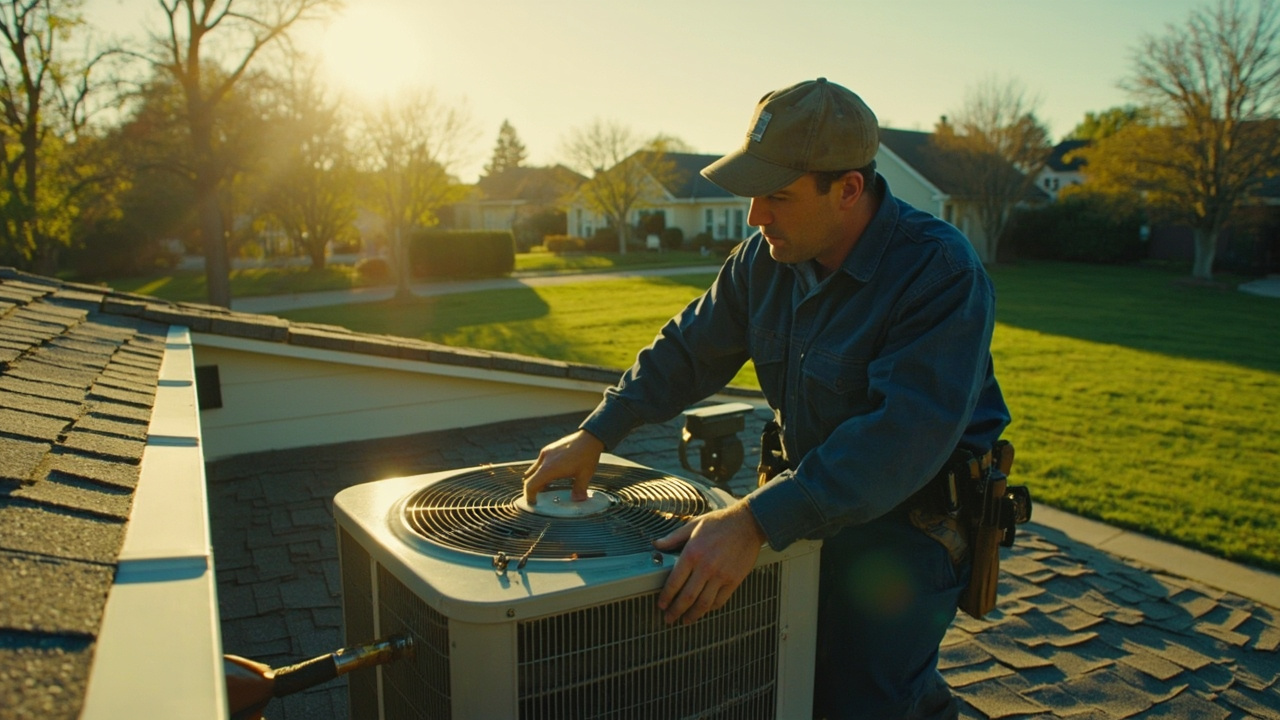
On a seasonal call the technician works the same order every time, filter first, then the coil, then the condensate path, because a matted filter throws off any reading taken past it and a coil check means little until airflow across it is known to be clean. That order is also what separates a routine seasonal pass from a monthly hvac care task, since a filter swap alone does not tell you what the coil or the drain are doing under real load.
Each check rules something out before the next one means anything. A filter that lets light through the pleats clears airflow as a suspect. A coil free of frost or matted debris clears the refrigerant side from having to work around a starved airflow problem. A dry pan with a drain that runs clear when water is poured through it clears the condensate path, which matters most in the months the latent load is highest. A fouled drain or an iced coil found at any of those steps stops the visit there, because pushing past it without fixing the airflow or drainage problem first just hides the next symptom under a different one.
For a home splitting its load between a furnace and a heat pump, the seasonal checklist has to account for both fuel paths rather than one. A gas furnace delivers the same output at any outdoor temperature and is rated on AFUE, so its seasonal check centers on ignition and airflow. A heat pump's output falls as it gets colder outside, so its check has to confirm the backup stage engages at the point the outdoor unit alone can no longer carry the load. Skipping that confirmation on a heat pump means the first hard freeze is the test, not the seasonal visit.
The condensate drain receives particular attention because blockages form in the trap where airflow slows, and a standing pan signals either a clogged line or a failed pump if the system uses one. Water pooling in the pan even after the coil has been cleaned points to drainage geometry or a backed-up vent line that lets atmospheric pressure trap water in the pan. Clearing the line with compressed air or a wet vacuum takes minutes but confirms the path is open to atmospheric pressure and drains by gravity alone when the system cycles off. A drain pan that stays wet under load after a clear line test points to an oversized coil or a humidity load the equipment was never sized to handle, a problem no seasonal call fixes but one that has to be known.
If this sounds close but not quite your situation, commercial hvac preventive maintenance contracts may be the better starting point.
Permit and inspection questions? Commercial Construction Permits is the office we coordinate with on every permitted Waco job.
How a seasonal checklist visit runs

The call and the first look
On the phone we ask what season you are heading into, whether the filter has been changed recently, and whether you have noticed anything at the drain or the outdoor unit. On site the order is the same every time. Filter first, since a matted filter makes every other reading unreliable. Coil next, checked for frost or matted fins. Condensate last, checked for a dry pan and a drain that runs clear when tested. That sequence tells us within minutes whether this is a clean pass or something that needs a closer measurement.
What happens if something turns up
If the filter, coil or condensate check comes back clean, the visit ends there and you get a plain summary of what was checked. If something is off, the finding gets shown to you before anything further is done, whether that is a fouled drain, an iced coil, or a switch that has stopped responding. From there we tell you whether the fix is inside the scope of a seasonal visit or whether it needs a scheduled repair, and nothing beyond the checklist starts without you saying yes to it.
What gets confirmed before we leave
Before the visit closes, the drain gets tested by pouring water through it and watching it run clear, and the pan is checked dry. The filter is left in place clean or replaced if it was near the end of its life. You get a plain rundown of what was found at the filter, the coil and the condensate path, and what that means for the season ahead, so the next seasonal check has something to compare against.
What a generic maintenance calendar misses here
A crew working off a fixed spring and fall date, set without regard for how long cooling season runs, books the seasonal visit whenever the schedule has room rather than when the load starts climbing. Cooling season here opens in April or May and holds through October, with the heaviest demand landing in July and August, so a checklist run in June instead of April leaves a marginal capacitor or a partly fouled drain untested through the weeks that load is climbing fastest. That gap is where a small problem waits for the first genuinely hot week to announce itself.
Dispatch during that first heat wave, or during the first hard freeze on the heating side, runs differently than a scheduled seasonal visit. Every household on the same load curve calls the same week, crews are booked back to back, and the parts everyone needs at once take longer to source. A homeowner who scheduled the seasonal check in the shoulder weeks before that rush avoids the queue entirely, because the filter, coil and drain were already confirmed clean before demand spiked.
The timing of a seasonal maintenance visit matters because the cooling and heating equipment operates under different stress levels across the year. When a technician inspects the system before the season's peak demand arrives, they can identify worn contactors, low refrigerant charge, restricted airflow across the evaporator coil, or algae and sediment blocking the condensate drain while the equipment still has capacity margin. Once outdoor temperatures climb into the high eighties and nineties, that margin shrinks. An airflow restriction that causes only a two-degree temperature drop in April becomes a ten-degree drop in July, forcing the compressor to run longer and hotter to reach setpoint.
A homeowner HVAC maintenance schedule built around the length of the local cooling season, rather than a spring and fall date picked without regard for it, gives the filter and drain checks room to catch a problem before the load peaks instead of during it. That timing difference is what separates a scheduled seasonal visit from an after-hours call placed the same week the grid is under strain and parts distributors are depleted.
See hvac tune-up & maintenance for how the related work is scoped and priced.
The EPA's indoor air quality resources are the reference we point customers to on ventilation and filtration questions.
What the seasonal checklist looks like once you are working with us
Booking around your season
When you call, we ask which season you are heading into and roughly when the filter was last changed, since that decides whether the visit is scheduled ahead of the load or squeezed in after it has already climbed. You get a window rather than a guess, confirmed before the visit. If a job ahead of yours runs long because something unexpected turned up at the coil or drain, we call and move your window rather than leave you waiting past it.
Keeping the work contained
Before the panel comes off the air handler, the area underneath gets a drop cloth, since a condensate check means pouring water through a line that may still hold standing moisture. Tools stay staged on that cloth rather than spread across the platform. A filter swap leaves the old one bagged rather than left leaning against the unit. When the visit closes, the panel goes back on, the area is wiped down, and nothing is left sitting out that was not there before we arrived.
What moves the visit's scope
A clean pass at the filter, coil and drain keeps the visit at its base scope. What moves it is what turns up at any of those three checks, a fouled drain that needs clearing rather than testing, a coil with frost that points to an airflow problem, or a float switch that no longer trips. Timing moves it too, since a visit booked during the first heat wave or the first hard freeze competes with every other household calling that same week. Any finding beyond the checklist gets shown to you before it is added, and nothing beyond the base check starts without your yes.
How we check a new technician
A new technician runs a set number of seasonal visits alongside a lead before working alone, and the lead confirms they can read a coil correctly, a matted filter versus a clean one, and test a drain the right way, water poured through and watched running clear rather than assumed. On any visit where a float switch has already failed or a secondary pan shows rust, a second technician looks at it before a scope gets written, since that finding usually means more than the checklist alone covers.
You Have Questions,
We Have Answers
An annual checklist starts with the air filter, evaporator coil and drain line, since those components control whether readings across the rest of the system are accurate. Add a thermostat calibration check and a visual inspection of the outdoor unit for debris. In Waco the spring pass matters most for the coil and drain, since humidity load peaks in late spring and summer, while the fall pass should confirm the furnace or heat pump backup stage before the first hard freeze.
A seasonal startup check confirms the filter is clean, the coil is free of frost or debris, and the condensate pan is dry with a drain that runs clear. On a cooling startup that sequence catches airflow problems before the first hot week does. On a heating startup the same visit should confirm ignition and flame response on a furnace, or backup heat engagement on a heat pump, since a system that has not run since spring needs to prove those steps rather than assume them.
Why Waco's cooling season sets this checklist's calendar
Cooling season here usually opens in April or May and runs through October, with the heaviest load landing in July and August, which is why the checklist front loads filter and coil work into spring rather than waiting for the first hot week to force the issue. Gulf moisture pushes humidity up hard in late spring and early summer, which raises the latent load a system has to remove and increases how much water moves through the condensate line during exactly the months a plugged drain does the most damage. The area's expansive clay soils also shift outdoor pads and pull at line sets and condensate runs over time, which is worth a visual check during the same seasonal pass rather than a separate call. Hard water common in the area leaves scale in any humidifier or water fed accessory tied into the system, which a seasonal check should catch before it restricts flow.
Filter loading is not steady across the year here. Cedar pollen in winter and oak pollen in spring push more particulate through the return than a summer month does, so a filter checked once in the fall can be near its limit again by the time cooling season opens. Attic heat works on the duct system in the same stretch, aging the tape and seals on flex duct and duct board a little more with each long summer, which is part of why a seasonal pass includes a visual look at the duct in the attic rather than just the equipment. Hail and blowing dust wear on the outdoor coil fins over time too, cutting airflow across the condenser gradually rather than all at once, which is why that check gets repeated each season instead of assumed clean from the last visit.
HVAC Services in The Waco Area
Explore our service area and locate Granite HVAC Waco with ease. We're proudly local and serve the surrounding neighborhoods with fast response and honest pricing. Use the map to check our coverage area, or call us and we'll confirm in seconds.
Address:
Granite HVAC Waco, Waco, TX, 76701
Additional Services We Offer
- Air Filter MERV Ratings Guide
- Ductless Mini-Split Buying Guide
- Furnace AFUE Ratings Explained
- Heat Pump vs. Furnace Comparison
- How Long Does an HVAC System Last
- How to Choose the Right AC Size
- HVAC Repair Cost Guide 2026
- HVAC Tax Credits & Rebates Guide
- R-454B Refrigerant Transition Guide
- Repair vs. Replace Your AC
- SEER2 Ratings Explained
- Signs You Need a New Furnace
Filter changes, clearing debris from around the outdoor unit, rinsing condenser fins with a garden hose from the inside out with power off at the disconnect, and pouring water down the condensate line to confirm it drains are genuinely homeowner tasks. The checklist stops at refrigerant, at anything behind the blower door, and at any gas burner or flue, because those require equipment and readings a filter change does not.
Before you call, know which season you are checking for and when the filter was last changed. If you can, look at the condensate line and note whether water runs freely when you pour some through it, and have the rough age of the system on hand. Those answers tell us whether this is a routine seasonal visit or something to look at sooner.
Last reviewed September 2026 by Dale Whitfield, Service manager.