


What a drifting walk in cooler is telling you in Waco
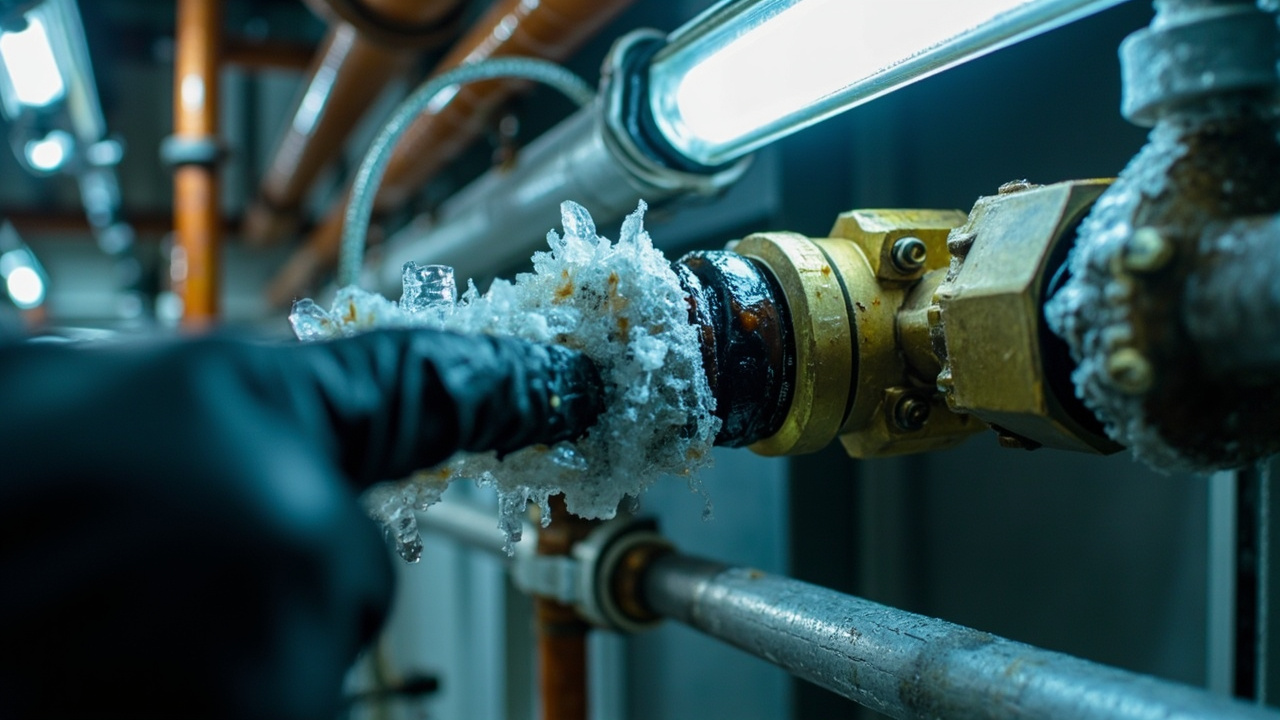
A walk in cooler that holds temperature in the morning and drifts by afternoon is losing capacity as the day gets hotter and the condenser has to reject more heat outside. A reach in case that cycles every few minutes instead of running long steady cycles is working harder to move the same amount of heat, which usually means the charge is off or the condenser coil is fouled. Ice building on the suction line, oil residue at a fitting, or a compressor that runs long and still cannot pull the box down are three different problems with three different fixes, and guessing among them wastes the operator's time twice, once on the wrong repair and again when the real fault shows up a second time.
Commercial refrigeration equipment in Waco runs through a long cooling season, often from April through October, and that extended run time means small faults get exercised constantly instead of occasionally. A condenser that is slightly fouled in May is choking by August. A capacitor that starts a compressor with a little more strain than it should in spring is failing outright by the first real heat wave, and food service and cold storage operators do not get to wait for a convenient day to find out.
The costliest mistake on a refrigeration call is treating a slow leak like a consumable. Refrigerant is not something a system burns through in normal operation, so a unit that is low again a few months after being topped off has a leak somewhere in the circuit, not a system that just needs more. Left alone, the sequence is predictable. The system runs longer for less cooling as the charge drops, oil that is supposed to circulate with the refrigerant stops moving properly through the compressor, and the compressor eventually loses lubrication and seizes. At that point a repair that would have been a fitting and a recharge becomes a compressor replacement, and the box goes down during service hours instead of during a scheduled visit.
A unit that needed refrigerant more than once in a year has a leak that requires finding and fixing. Ignoring the pattern and adding charge repeatedly costs far more than the technician time to locate where the circuit is leaking and seal it. The longer a leak runs unrepaired, the greater the risk that oil depletion will damage the compressor itself. Catching the problem early means staying in business without unexpected downtime during peak season.
Our page on commercial boiler services covers that side of the work in more depth.
Before any install, check the ENERGY STAR rebate finder, utility incentives regularly knock hundreds off a qualifying system.
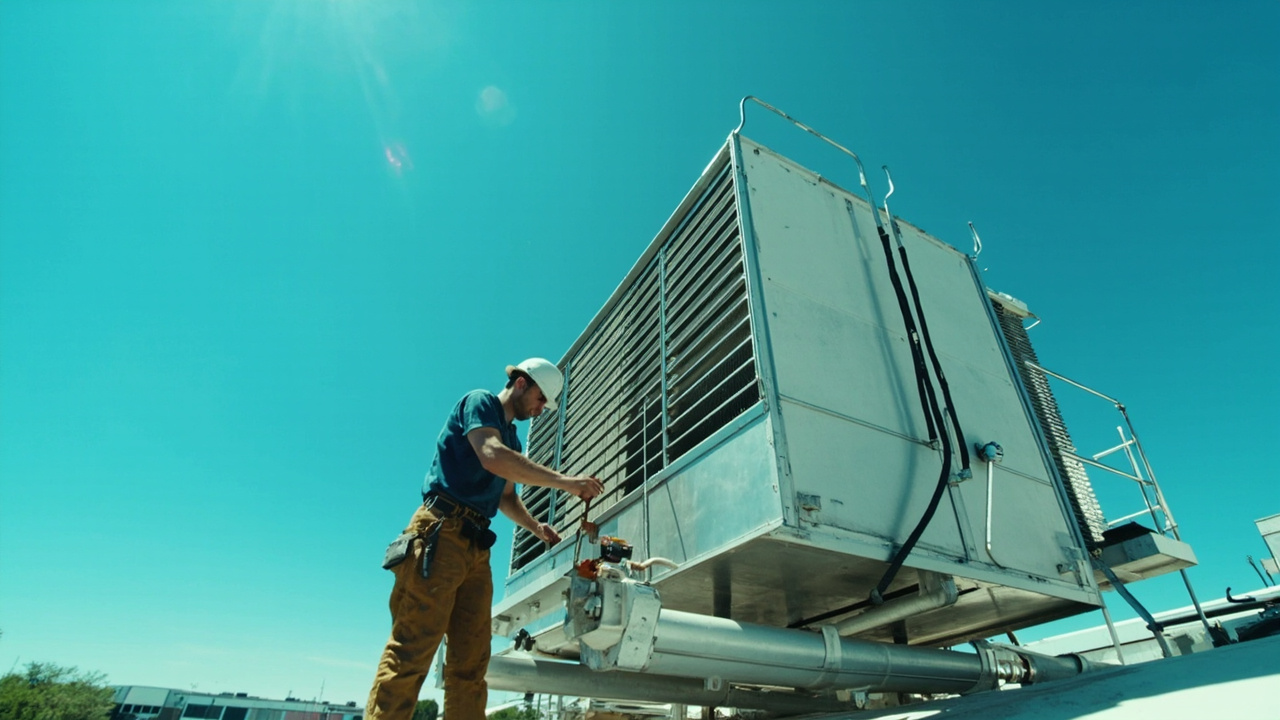
Why we check the vacuum before we check the charge
On a commercial refrigeration call, the sequence starts before any gauge goes on the unit. Filter condition and condenser coil cleanliness get checked first, since a fouled coil or a blocked airflow path changes what every later reading means. Next comes the metering device on the box, a thermostatic expansion valve or a fixed orifice, because that decides whether the charge gets judged on subcooling or superheat rather than one universal number. If a leak turns up, the repair addresses the leak. The fitting or joint gets fixed, the filter drier gets changed, and the system gets pulled down under vacuum before any refrigerant goes back in. Skipping straight to a recharge on a system that was already low once is how the same call comes back three months later with a compressor running hot.
The reading that decides whether that repair holds is the micron gauge during evacuation. Below 500 microns and holding there once the vacuum pump is valved off means the system is sealed and dry enough to charge. A number that climbs back up after the pump is off means moisture is still boiling out of the oil, or a joint somewhere is still open to air, and charging into that system just buys a callback. The gauge placement matters: position it at the far end of the line set from the pump, where a reading taken at the pump can look fine while the box end is still leaking. On a slow leak repair, that number is the difference between a fix that holds through August and one that fails the first hot week.
For a kitchen or cold storage facility deciding between equipment types rather than repairing what is already on the wall, the comparison usually comes down to a packaged rooftop unit against a light commercial split system. A packaged unit puts the compressor, coil and controls in one cabinet on a curb, sized by tonnage for the space it serves, and an economizer can bring in outside air when conditions allow it, cutting compressor run time. A light commercial split system puts the compressor outdoors and the air handling indoors, which usually means easier service access in winter since nobody is on a roof in freezing weather. The choice hinges on tonnage per cabinet, economizer use and where a technician has to stand to work on it, since efficiency ratings shift with application and equipment age.
If this sounds close but not quite your situation, commercial ductwork fabrication & installation may be the better starting point.
We install and service major brands like Carrier and register every unit to manufacturer specifications.
How a refrigeration call runs
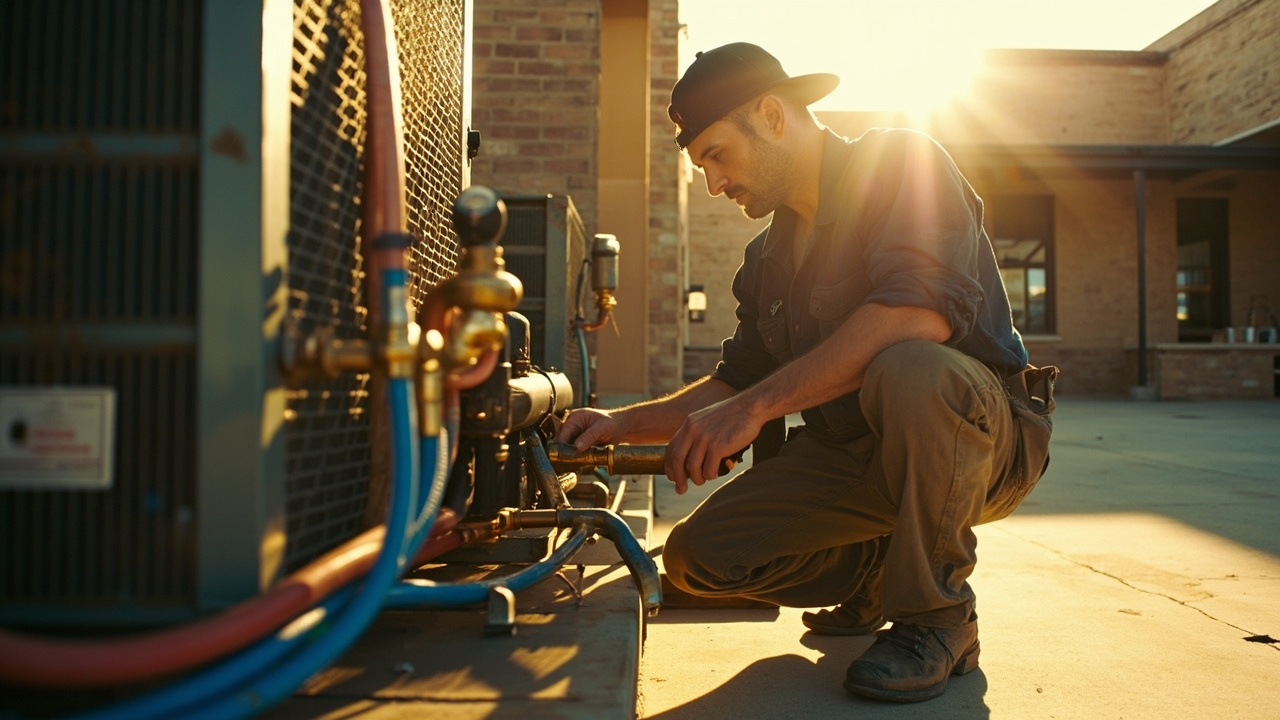
Intake and first look
On the phone we ask what the unit is doing, how long that has been happening, and roughly how old the equipment is. On site the order is the same every time. Filter and coil condition first, since a fouled condenser or restricted airflow affects every subsequent measurement. Only after that do gauges go on to check the charge, because a charge read before airflow is confirmed is a guess.
Repair with your approval
Once the scope is written and you have approved it, the system gets isolated and any refrigerant present gets recovered before a fitting is opened. If a leak is found, the repair means fixing the leak itself, changing the filter drier, then pulling the system down under vacuum before anything gets charged back in. If we find something behind a panel that was not part of the original scope, like a corroded wire or a pad that has shifted, we stop and show you before going further.
Verification before we leave
Before leaving, the micron gauge goes on the system during evacuation and has to read below 500 microns and hold there once the pump is off. After charging, we confirm the temperature split across the coil and the amp draw against the compressor's rated load. We walk you through what those readings mean and leave you with the numbers recorded, so the next visit has something to compare against.
Why commercial refrigeration work differs in Waco
A crew that has not worked commercial equipment through a Waco summer tends to underestimate how much continuous run time changes the failure pattern. Residential systems in this climate cycle off overnight. A walk in cooler or a reach in case in a restaurant runs around the clock, which means a marginal capacitor or a slightly fouled condenser gets exercised on every hour of the day instead of a few, and what would be a slow failure on a home system becomes a same week failure on a commercial box.
Soil movement is the other condition that catches an unfamiliar crew off guard. McLennan County sits on expansive Blackland Prairie clay that shrinks in dry weather and swells when it rains, and that movement shifts slabs and outdoor equipment pads over time. A condensing unit that was level when it was installed can tip slightly as the pad underneath it moves, which puts a steady strain on the refrigerant line set and on the condensate connections. A crew that has not seen that pattern before will chase a refrigerant leak at a fitting without checking whether the line itself is under mechanical stress from a pad that has shifted, and they end up repairing the same leak twice.
Response logistics across the metro matter for a business that cannot afford a box to sit down overnight. A cooler full of inventory does not wait for a convenient morning, and a facility that calls at the first sign of short cycling instead of after the box has already warmed up gives a technician time to diagnose properly instead of racing a clock. Commercial refrigeration maintenance services scheduled ahead of the hottest stretch of the year catch a fouled condenser or a marginal capacitor before it becomes an emergency call during service hours. Early detection also prevents the secondary damage that follows a prolonged shutdown, when food loss and equipment strain compound the cost of the repair itself.
More detail on commercial ac repair is on its own page.
Your local utility, Utility Bill City of Waco, publishes service and water-quality information every Waco homeowner should know.
Use this to ask what is driving the quote rather than asking for a rough number.
| Driver | Why it moves the estimate | What you control |
|---|---|---|
| Electrical work | The disconnect, the breaker and the wire size feeding the unit | Fixing the cause now rather than paying for the same visit twice |
| Access and rigging | An attic, a crawlspace, a tight closet or a rooftop with no easy path | Clearing the work area and the path before the crew arrives |
| Controls | The thermostat, zoning and any communicating equipment | How much control you want built into the system |
| The capacity and efficiency tier of the equipment chosen | Whether the indoor coil is matched to the new outdoor unit | The grade you choose, the rest of the work is set by the house |
What working with us looks like on site
Scheduling and arrival window
You call, we ask what the unit is doing, whether it is running constantly or short cycling, and whether product inside is at risk. Those answers tell us if this is a same day visit or one that fits a scheduled diagnostic slot. You get a confirmed arrival window before the technician leaves the prior stop. If a job ahead of yours runs long because of a leak that took longer to find than expected, you hear about the delay directly rather than finding out when nobody shows.
Protecting your space and product
Before a panel comes off, mats go down under the work area so nothing drips onto a kitchen floor or a storage room slab. Any refrigerant present gets recovered into a tank rather than vented, and tools stay staged on the mat instead of spread across the space. Old parts and filter driers leave with the technician rather than getting left in a corner. The last thing done before leaving is wiping down the panel and the surrounding area so the unit looks the way it did when the technician arrived, minus the fault.
What changes the cost
The driver most operators do not ask about is electrical, meaning the disconnect, the breaker and the wire size feeding the unit. Undersized wire or a worn disconnect adds work beyond the refrigerant circuit itself and moves the scope up. A repair that stays inside the sealed circuit moves the other way, since a fitting and a filter drier is a smaller job than anything touching the panel. Whatever the finding, the written scope goes over with you and gets your approval before any work starts, so the number you agreed to is the number on the invoice.
Field skill and sign off
A new technician runs a number of visits alongside a lead before working alone, and the lead signs off on specific tasks, including pulling a clean vacuum and reading a micron gauge correctly rather than guessing when the number has settled. On anything unusual, a refrigerant no longer in wide production, a compressor that has already been recharged more than once, or a line set under mechanical stress, a second technician looks at the findings before a scope gets written.
You Have Questions,
We Have Answers
Commercial refrigeration breaks into walk in coolers, reach in cases, and the condensing equipment that serves them, either packaged or split. Each holds temperature differently, so a walk in cooler drifting warm points at the condenser or the charge, while a reach in case short cycling points at airflow across a smaller coil. The diagnosis on either one starts with airflow and filter condition before a gauge ever goes on the unit.
The refrigerant is whatever the equipment manufacturer specified for that unit, not one standard chemical across every box. What matters more on a service call is the metering device, since it determines whether charge gets judged on subcooling or superheat once airflow and the condenser have already been checked. Older equipment sometimes runs a refrigerant no longer in wide production, which changes how a leak repair gets handled.
How Waco's climate and soil change commercial refrigeration work
Waco's cooling season runs long, typically opening in April or May and continuing through October, with peak heat in July and August pushing outdoor highs into the mid to upper nineties. Commercial condensing units serving walk in coolers and reach in cases work against that heat load for months without a real break, which means any weakness in the condenser, the run capacitor or the contactor gets exercised on every single cycle rather than occasionally. The late spring and early summer stretch also brings heavier humidity from Gulf moisture, which raises the latent load a refrigeration system has to remove and increases the volume moving through condensate lines on equipment with a defrost cycle. A system sized without accounting for that humidity load satisfies its thermostat while still leaving moisture in the space around it.
McLennan County's Blackland Prairie clay soil shrinks during dry stretches and expands when it rains, creating ground movement that displaces the concrete pads supporting outdoor condensing units. A unit installed level can end up slightly tilted months later, which puts ongoing mechanical stress on the refrigerant line set and on condensate connections at the joint. Catching that early during a routine inspection, before the leak it causes reaches the point of a compressor running long and losing oil circulation, is the difference between a fitting repair and a compressor replacement. Technicians familiar with how that soil behaves know to check for movement-induced stress on a repeat leak call rather than assuming the fitting itself is faulty. This pattern repeats across properties in the greater metro wherever clay soil predominates.
HVAC Services in The Waco Area
Explore our service area and locate Granite HVAC Waco with ease. We're proudly local and serve the surrounding neighborhoods with fast response and honest pricing. Use the map to check our coverage area, or call us and we'll confirm in seconds.
Address:
Granite HVAC Waco, Waco, TX, 76701
Additional Services We Offer
- Building Automation & Controls
- Chiller Repair & Maintenance
- Commercial AC Repair
- Commercial Boiler Services
- Commercial Ductwork Fabrication & Installation
- Commercial HVAC Contractors
- Commercial HVAC Preventive Maintenance Contracts
- Make-Up Air Unit Service
- Restaurant Kitchen Ventilation & Exhaust
- Retail & Office HVAC Systems
- Rooftop Unit Installation & Service
- Server Room & Data Center Cooling
Cleaning the condenser fins with a garden hose and keeping the area around outdoor units clear of boxes and debris are genuinely things staff can do between visits. What stops there is anything behind a panel, any refrigerant work, and any electrical work at the disconnect or breaker. If a diagnostic visit turns up structural or plumbing work tied to a leaking drain or a shifted pad, we say so on the first visit and tell you who handles that part.
Before you call, note the compressor's behavior and when the symptoms started. If you have maintenance records or know the equipment age, gather those details. Understanding the product's current condition helps us determine visit timing.
Last reviewed September 2026 by Dale Whitfield, Service manager.