




What it means when a commercial system runs but the space stays warm
The complaint usually comes in the same way. The rooftop unit or the split system is running, the thermostat reads satisfied or close to it, and the space still feels warm by mid afternoon. Sometimes it is one suite in a strip building, sometimes it is the whole floor. In Waco this shows up hardest in July and August, when outdoor units run close to nonstop for weeks and any weakness in the system gets exposed by the hours rather than by one bad day.
Most of the time the cause sits in one of two places, airflow or refrigerant charge, and they produce different symptoms. A restricted return or a fouled coil starves the system of air, so the coil runs colder than it should and the space still does not cool. A slow refrigerant leak does something different. As charge drops, the compressor runs longer to move the same heat, and oil that is supposed to circulate with the refrigerant stops moving the way it should. That is the point where a repair call becomes a compressor replacement if it sits too long, because a compressor running without proper lubrication loses that protection and seizes. Once a compressor seizes on a commercial condensing unit, the repair scope changes entirely, and so does the timeline for getting the space cooling again.
Not every warm space is a refrigerant problem, and treating it as one wastes a service call. A system that cools the front office and leaves the back stockroom warm, or a building where one zone runs fine while another never catches up, points at duct sizing, a starved return, or a blower setting rather than a charge issue. That distinction matters for a commercial account because a technician who charges refrigerant into a properly charged system to chase a distribution complaint leaves the real fault in place and the tenant complaint keeps coming back.
For a leased commercial space, a cooling failure is not just a comfort issue, it is a tenant relations and occupancy issue, and the diagnostic order decides how fast that gets resolved. A system read with gauges before anything is opened up tells you in one visit whether you are looking at a component fault, a slow leak that needs to be found and repaired, or a distribution problem that a new compressor will not touch.
More detail on commercial hvac contractors is on its own page.
We install and service major brands like Carrier and register every unit to manufacturer specifications.
How a technician reads a commercial system before quoting anything
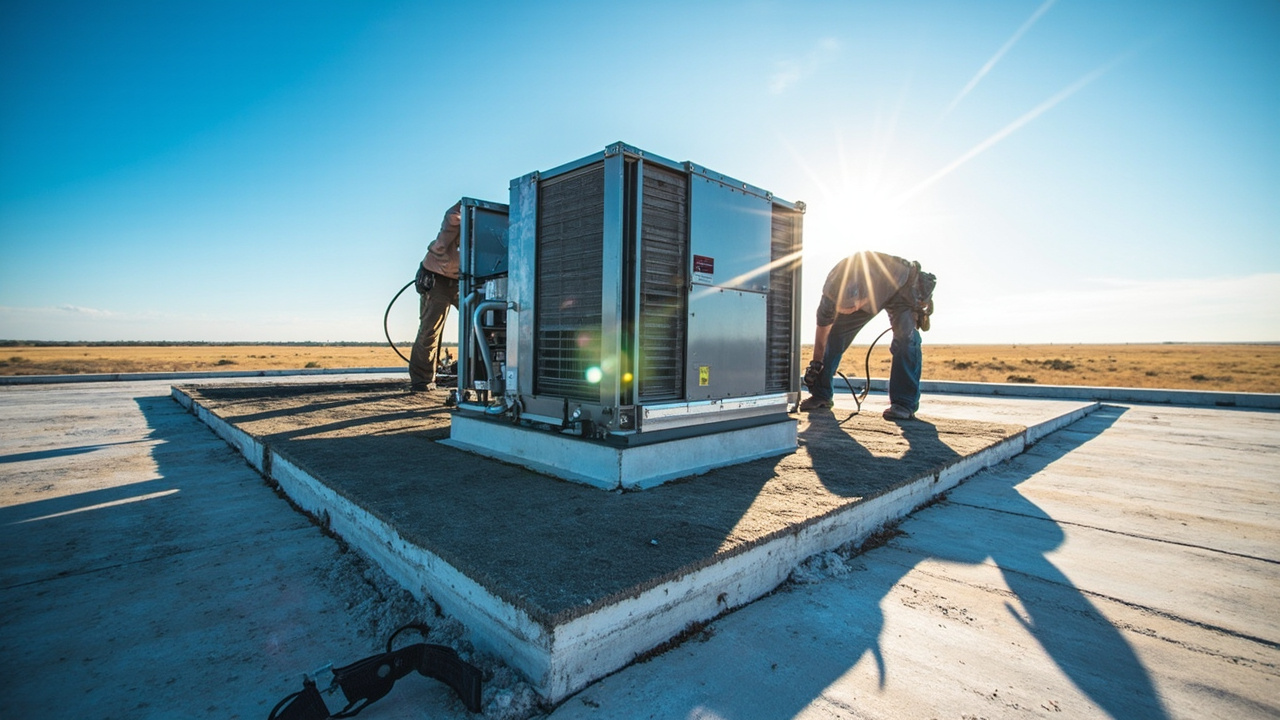
The visit starts at the filter, the coil, and the return path, because a restricted airflow path makes every reading downstream unreliable. Once that is ruled out, manifold gauges go on the system to read superheat and subcooling. What those numbers are compared against depends on what meters the coil. A system using a thermostatic expansion valve is judged mostly on subcooling, and a system on a fixed orifice is judged on superheat, so there is no single number that applies to every rooftop unit or every split system on a property. High superheat paired with low subcooling points at an undercharge or a restriction in the line set rather than a failing compressor, and that distinction is what keeps a working compressor from being condemned by mistake.
If the readings point at low charge, the job is to find where the refrigerant is leaving the system rather than to top it off and move on. Refrigerant is not consumed in normal operation, so a system that is low has a leak somewhere in the circuit, whether at a brazed joint, a coil, or a fitting that has worked loose from vibration or age. Finding it, repairing it, replacing the filter drier, and pulling the system down to a vacuum before weighing in a full charge is what keeps the same leak from reappearing in six weeks under a different work order.
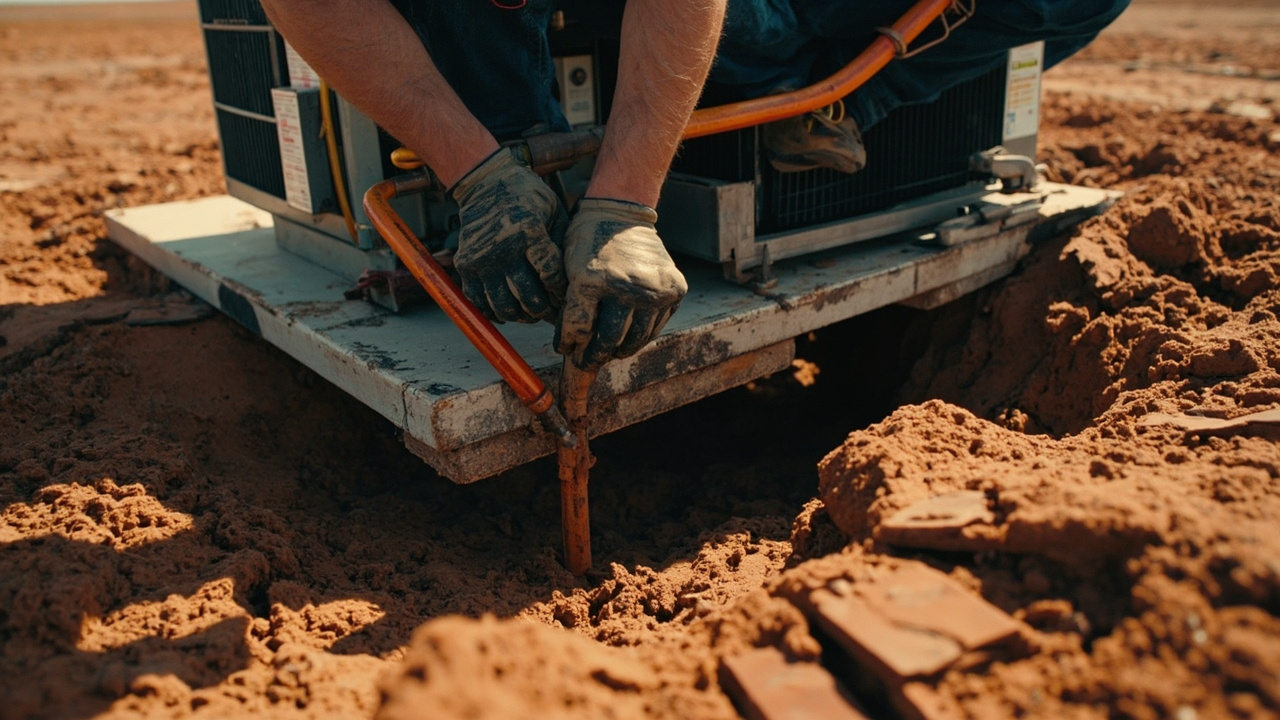
Commercial cooling in Waco is usually delivered one of two ways: a packaged rooftop unit sitting on a curb with everything in one cabinet, or a light commercial split system with the air handler indoors. The comparison that matters is not brand alone, it is tonnage per cabinet, whether the rooftop unit has an economizer that can bring in outside air when conditions allow it, and service access. A rooftop unit puts the compressor, coil, and controls in one place on the roof, which simplifies service in warm weather but means winter work happens outdoors. A split system puts the air handler indoors, which is easier to service when it is cold but adds a line set that has to be protected and, on this soil, kept level as the outdoor pad shifts with the ground beneath it. The economizer on a rooftop unit reduces compressor runtime during shoulder seasons by mixing outdoor air with return air, lowering energy use when exterior conditions fall within a narrow temperature band. Line set protection on a split system matters because exposed copper can corrode from atmospheric exposure, and the refrigerant charge has to flow through both directions without restriction.
If this sounds close but not quite your situation, commercial boiler services may be the better starting point.
Your local utility, Utility Bill City of Waco, publishes service and water-quality information every Waco homeowner should know.
How a commercial AC call runs
The intake call
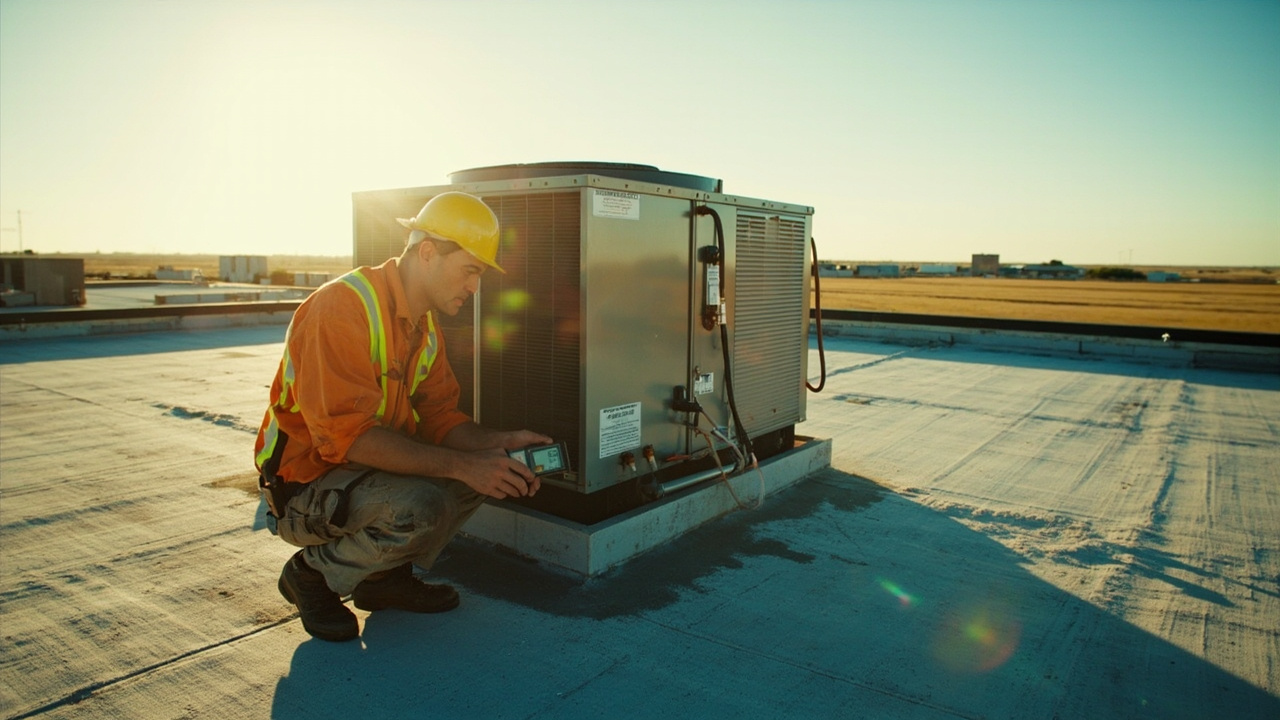
The call captures the basics that shape the visit, the equipment type, roughly how old the equipment is if known, what the symptom is, when it started, and whether the space is occupied and by how many people during business hours. That is enough to decide whether this is dispatched the same day or scheduled around occupancy. On site, the order is fixed, filter and coil first, then airflow, then charge, because reading refrigerant pressure before airflow is confirmed produces a number that means nothing on its own.
Diagnosis and approval
Once airflow is confirmed or corrected, manifold gauges go on and superheat and subcooling are read against what meters that specific coil, a thermostatic expansion valve or a fixed orifice. If a leak is found, its location and the repair needed are shown before anything is opened further, and the written scope covering parts, labor, and any code related work goes to you for approval before the compressor, coil, or line set is touched. Nothing proceeds past that point without your yes.
Verification before leaving
After the repair, the system runs long enough for readings to settle, then superheat and subcooling are checked again against the target for that metering device, and total external static pressure is confirmed against the blower data plate. You get a walkthrough of what was found, what was repaired, and the readings taken at handover, along with the documentation you keep for your own maintenance or lease records.
Why commercial rooftop work in Waco is not the same job as a house call
Commercial cooling equipment sits under building code requirements that a residential changeout does not, and a crew unfamiliar with commercial work sometimes treats a rooftop unit swap like a residential unit swap, matching tonnage without checking curb dimensions, electrical service, or how the existing ductwork was sized for the equipment it is replacing. That mismatch shows up later as a system that meets the equipment specification on paper but never satisfies the space, because the duct behind it was never sized for the airflow the new unit needs to move.
A property with multiple tenants adds a layer a single family house never has. Occupancy schedules, lease terms tied to comfort standards, and sometimes a building engineer who has to sign off on work all shape how a repair gets scheduled, not just how it gets performed. A technician who has worked commercial accounts in this metro through a Waco summer knows that scheduling a rooftop repair around occupied hours, or coordinating a lift or crane for equipment access, is part of the job, not an afterthought added after the estimate. The difference between a building that operates on a predictable schedule and one where tenants move in and out means tenant comfort disputes can complicate a straightforward equipment failure into a lease enforcement issue if the repair timeline slips.
Response across Waco and the surrounding county during peak cooling months means accounting for the fact that commercial calls and residential calls compete for the same dispatch capacity on the hottest days. A property manager calling about a failed rooftop unit on a business day in August is working against the same demand spike as every homeowner on the same block, and knowing that in advance is part of what shapes a realistic response estimate rather than an optimistic one given just to get off the phone. Commercial accounts that plan ahead for seasonal load and understand that August response times differ from April response times tend to lock in service agreements that reflect reality instead of discovering the gap between promise and performance when the unit fails during business hours.
See commercial ductwork fabrication & installation for how the related work is scoped and priced.
Proper sizing follows the Manual J standard from the Air Conditioning Contractors of America, guesswork is how systems end up short-cycling.
Use this to ask what is driving the quote rather than asking for a rough number.
| Driver | Why it moves the estimate | What you control |
|---|---|---|
| After hours dispatch during the first heat wave | Everyone calls at once | Calling in working hours when the problem can wait |
| The capacity and efficiency tier of the equipment chosen | Whether the indoor coil is matched to the new outdoor unit | The grade you choose, the rest of the work is set by the house |
| Whether the existing duct system can move the air the new equipment | The static pressure reading answers | Fixing the cause now rather than paying for the same visit twice |
| Electrical work | The disconnect, the breaker and the wire size feeding the unit | Fixing the cause now rather than paying for the same visit twice |
What working with us looks like on a commercial account
How a visit gets scheduled
The intake call asks what equipment is running, whether it is a rooftop unit or a split system, when the symptom started, and whether the space is occupied during business hours. Those answers decide whether the visit is same day or set around your building's hours. You get a window rather than an open ended promise, and if a call ahead of yours runs long because a leak search takes more time than expected, you hear about the shift before the window passes rather than after.
Keeping the space usable
Before a panel comes off a rooftop unit or an indoor air handler, the work area gets isolated so foot traffic in an occupied suite is not walking through open equipment. Drop cloths go down under anything that opens wet, and any parts or refrigerant containers pulled from the system are staged and removed rather than left on a roof or in a mechanical closet. The space is left the way it was found, with the equipment access point closed and secured.
What changes the repair scope
A part level fault, like a failed capacitor or contactor, costs less to resolve than a sealed system problem such as a leaking coil that also needs the line set addressed. Electrical service work adds scope if the feed to the unit needs upgrading. Calling during the first heat wave or the first hard freeze, when every account on the same grid is calling at once, affects how fast after hours dispatch can respond. None of that gets touched until the written scope is shown to you and approved.
How technicians earn solo calls
A newer technician works alongside a lead on commercial accounts before taking a rooftop or split system call without one, demonstrating things like reading superheat and subcooling correctly against the metering device and finding a leak rather than guessing at it. The lead signs off once those tasks are shown reliably. On a job with an unusual configuration, such as an economizer or a multi zone rooftop unit, a second technician looks at the readings before a scope goes out.
You Have Questions,
We Have Answers
It is almost always airflow or refrigerant charge, not the compressor. A technician checks the filter, coil, and return path first, because a restricted airflow path makes any refrigerant reading unreliable. If airflow is clear, manifold gauges read superheat and subcooling against whatever meters that coil, and since refrigerant is not consumed in normal use, a low reading means a leak somewhere in the circuit that must be located and sealed rather than temporarily topped off.
Why Waco summers and Blackland clay change commercial cooling work
Waco sits in the Blackland Prairie, where expansive clay soil shrinks in dry heat and swells when it rains, and that movement reaches condensing units set on ground level pads outside a commercial building. A pad that shifts even slightly tips the unit out of level, which strains the refrigerant line set and the electrical connections feeding it over time. Add a cooling season that runs from spring into October with peak load through July and August, and a rooftop unit or condensing unit in this metro logs far more run hours per year than the same equipment would in a milder climate, which is exactly why worn contactors, weak capacitors, and slow refrigerant leaks surface here on a predictable seasonal schedule rather than at random.
For a leased commercial building, the record a repair leaves behind matters as much as the repair itself. Waco's humid stretch through late spring and summer raises the latent load on rooftop and split systems, and condensate volume climbs with it, so a technician checks the trap and pan for standing water before signing off rather than treating a cool discharge as proof the system is right. A building engineer or property manager reviewing that visit wants the readings taken and the target they were checked against, not a note that the space feels fine today. Winter changes what gets checked instead. A hard freeze can ice a heat pump's outdoor coil and push backup heat strips past what they were sized to carry, so equipment serving a commercial space through a freeze gets that check added to the record before the season turns.
HVAC Services in The Waco Area
Explore our service area and locate Granite HVAC Waco with ease. We're proudly local and serve the surrounding neighborhoods with fast response and honest pricing. Use the map to check our coverage area, or call us and we'll confirm in seconds.
Address:
Granite HVAC Waco, Waco, TX, 76701
Additional Services We Offer
- Building Automation & Controls
- Chiller Repair & Maintenance
- Commercial Boiler Services
- Commercial Ductwork Fabrication & Installation
- Commercial HVAC Contractors
- Commercial HVAC Preventive Maintenance Contracts
- Commercial Refrigeration Services
- Make-Up Air Unit Service
- Restaurant Kitchen Ventilation & Exhaust
- Retail & Office HVAC Systems
- Rooftop Unit Installation & Service
- Server Room & Data Center Cooling
Changing filters, keeping the area around a condensing unit or rooftop curb clear, and watching for a tripped breaker or obvious water leak are reasonable for building staff to handle. Refrigerant work, anything behind an electrical panel or blower door, and gas burner or flue work are not staff tasks. If a first visit turns up structural duct work or an electrical service upgrade, we tell you on that visit and name who handles it.
Before you call, know whether the equipment is a rooftop unit or an indoor split system, when the complaint started, and whether it affects one tenant space or the whole building. Have the equipment age if it is on file, and know whether the space is currently occupied. Those answers usually tell us whether this needs a technician today or can wait for a scheduled visit.
Last reviewed September 2026 by Dale Whitfield, Service manager.