


Why your AC runs longer and cools less every summer
The system that used to keep the house comfortable now runs most of the afternoon and still leaves rooms warm by evening. That pattern usually means the equipment was never matched to the house in the first place, or it has developed a slow fault that grows with every long summer run.
Central Texas cooling seasons run from spring into October, and a system sized off the old unit or a square footage guess spends that whole stretch working outside its design point. An oversized condenser short cycles and never pulls enough moisture out of the air, while an undersized one runs continuously and still cannot catch up on the hottest afternoons. Either way the compressor logs more hours than it was built for.
The table below lists the early signs, what is happening behind each one, and when a call stops being optional.
A slow refrigerant leak is the version that gets ignored longest because the system still runs. As charge drops, the compressor works longer to move less heat and the oil that lubricates it stops circulating the way it should. Left running on a low charge, the compressor loses lubrication and seizes, which turns a repairable leak into a full replacement decided by a failure instead of a plan.
Oversizing creates its own damage pattern. A unit with too much capacity cools the space so quickly that the thermostat shuts it down before a full cooling cycle completes. The indoor coil stays cold and wet without the air circulation needed to evaporate surface moisture, so mold grows in the ductwork and the system spreads it through every room. The moisture that should have been removed stays in the walls and attic, where it feeds wood rot and degrades insulation. Short cycling also means the compressor starts and stops far more often than design specifications allow, and each startup surge strains the motor windings until one fails.
Undersizing creates constant demand. The system runs through peak afternoon heat without reaching the thermostat setpoint, so occupants lower the target temperature in frustration. Now the equipment runs even longer into the evening, still not catching up. The compressor never shuts down long enough to let the oil cool, and continuous operation on marginal refrigerant charge accelerates the same seizure risk as a leak does.
Either failure mode ends in a replacement that could have been prevented. The distinction between maintenance and rebuild starts with a system that matches the actual cooling load of the house and runs within its operating envelope.
See emergency blower motor replacement for how the related work is scoped and priced.
Find the sign you have, then read across to see whether it can wait.
| Symptom or first sign | What is already happening | What it becomes if ignored | When to call |
|---|---|---|---|
| A slow refrigerant leak | The system runs longer for less cooling and oil stops circulating properly | The compressor loses lubrication and seizes | This week, while it is still one part |
| A loaded filter | Airflow drops and the coil runs colder than it was designed | The coil ices over and the compressor takes liquid refrigerant back and fails | This week, while it is still one part |
| A cracked heat exchanger | Combustion gas mixes with the air being blown through the house | Carbon monoxide reaches the living space | Now, the same day |
| A plugged condensate drain | The pan overflows into the platform or the ceiling | The ceiling below stains and the rusted secondary pan lets the rest through | Soon, before it spreads past the repair |
| A weak run capacitor | The compressor pulls high amps every time it tries to start | The windings overheat and what was a part becomes a whole condenser | Now, the same day |
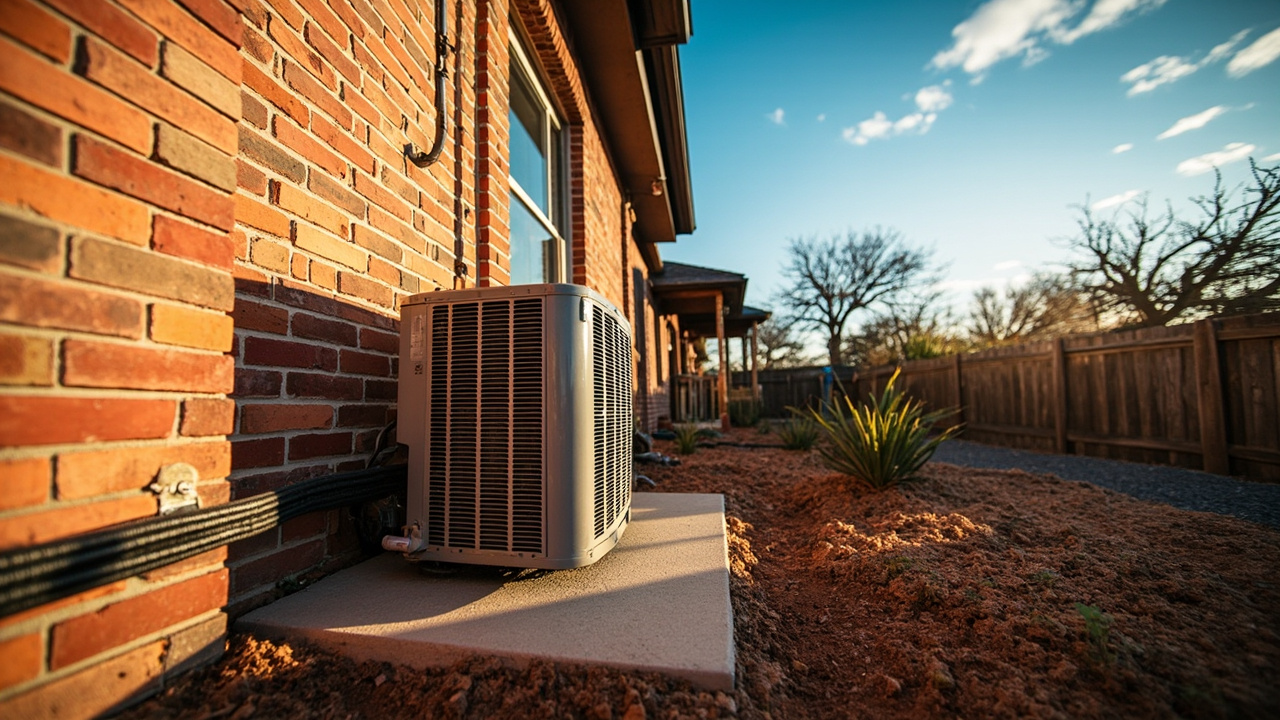
How we size and install a replacement system
The sequence starts before any equipment gets ordered. A Manual J load calculation sets the capacity range the house calls for, and that number gets checked against what the existing duct can carry, since a duct that chokes airflow will choke a new system exactly the way it choked the old one. Only once those two numbers agree does equipment selection happen, followed by line set routing and, on a raised floor house, a decision about how the coil and air handler sit in the crawlspace access that is available.
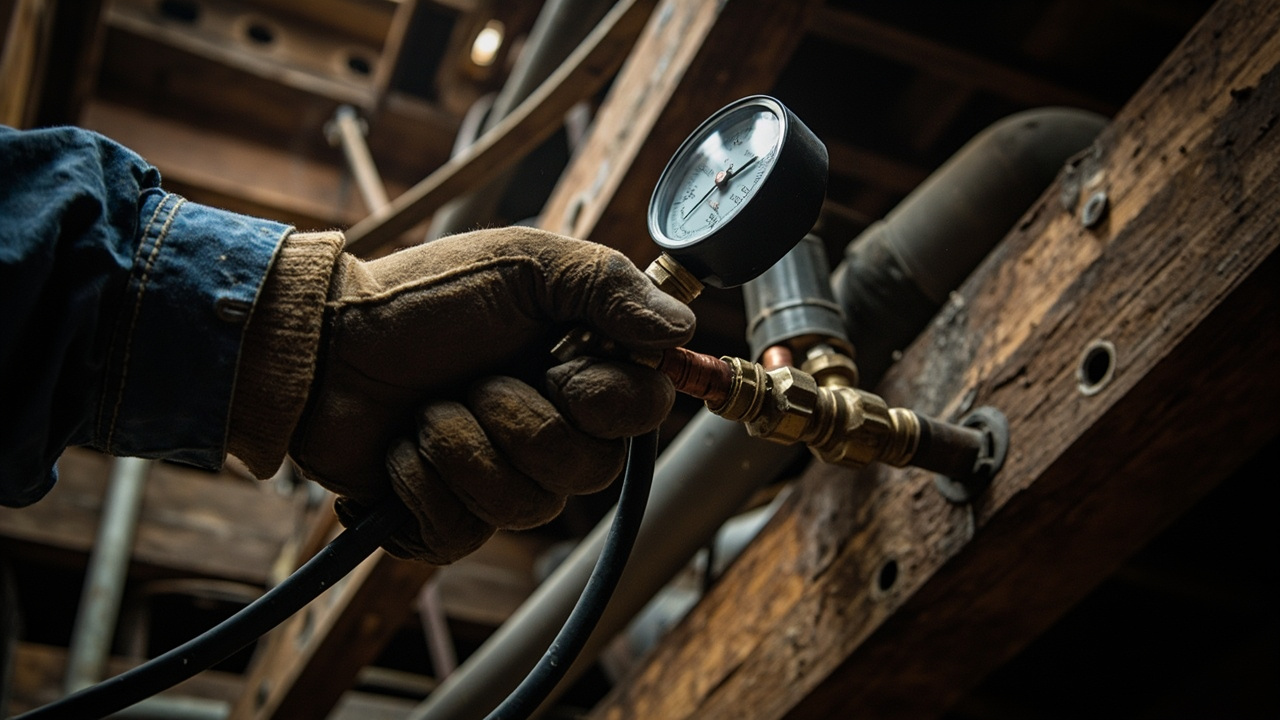
The reading that decides whether the job is done right happens after the equipment is set and before a pound of refrigerant goes in. A micron gauge on the far end of the line set, away from the pump, has to read below 500 microns and hold there once the pump is valved off. If the number climbs back up, moisture is still boiling off inside the line set or a fitting is not sealed, and charging the system on that reading locks in a leak path that shows up as a service call within the first year rather than a properly evacuated system.
Staging is the fork most buyers get wrong when they compare units. A single stage condenser runs at one capacity and cycles on and off, a two stage unit drops to a lower capacity for most of the day, and a variable capacity condenser modulates across a wider range and holds low speed longer than either. Longer low speed runtime is what pulls moisture out of the air during the humid stretch of a Central Texas summer, so the comparison that matters is how much of the day the unit spends at reduced capacity rather than the SEER2 number printed on the box, though that rating still tells you what the unit is rated to do across a full season.
The ductwork itself deserves attention during the selection phase. Unsealed ducts leak conditioned air into unconditioned spaces, and even minor leaks compound across the length of a trunk line. Sealing duct joints and insulating exposed sections in the attic or crawlspace keeps the air you paid to condition inside the living space where it belongs, which lowers the runtime the equipment needs to meet the thermostat setpoint and cuts both energy use and wear on the compressor.
More detail on emergency compressor replacement is on its own page.
Narrow this to two options before calling, then ask which one suits the house.
| Option | The numbers a buyer weighs | Best suited to |
|---|---|---|
| Single stage against two stage against variable capacity cooling | Compared on the SEER2 efficiency rating | Two story homes that never feel even |
| Packaged rooftop unit against a light commercial split system | Compared on tonnage per cabinet | Commercial buildings on a capital plan |
| Filtration choice | Compared on MERV rating against pressure drop | Allergy households with duct that can take it |
| Ducted system against ductless mini split | Mini splits are rated per indoor head | Additions and rooms the ducts never reached |
How an AC installation runs
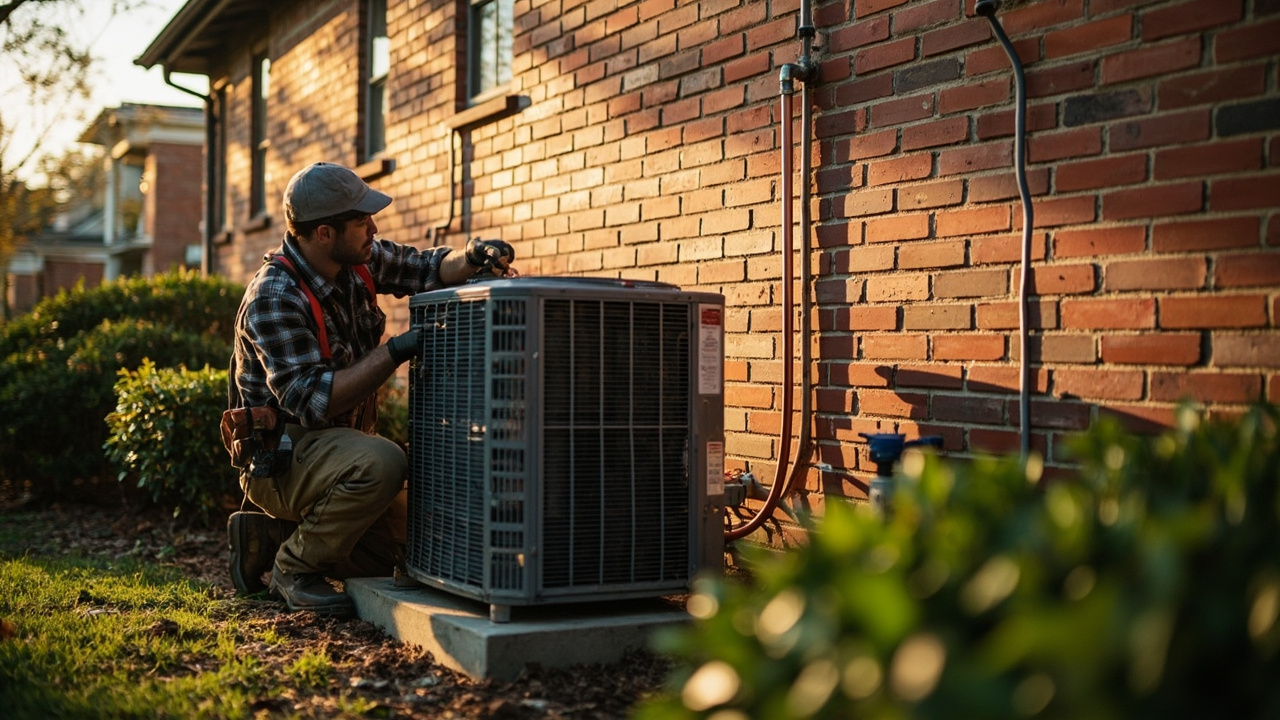
Assessment and load calculation
The first visit covers the house itself, the existing ductwork, insulation, window area and how the space is used, all of which feed the Manual J load calculation. You will see the technician measuring duct runs and checking the attic or crawlspace access rather than starting at the outdoor unit. That calculation sets the capacity range before any equipment gets discussed, which is what keeps the new system from being sized off the old one out of habit.
Approval and equipment change
Once you approve the written scope, the old equipment comes out first and the line set and duct connections get inspected for what has to be reused or replaced. The new condenser, coil and any duct correction go in next, in that order. If the crawlspace or attic access turns up a line set that cannot be reused or duct that has come apart, we stop and show you before going further rather than assuming.
Evacuation and verification
Before charge goes into the system, the micron gauge connects at the line terminus and must stay below 500 microns when the vacuum pump is valved off. We walk you through that reading along with the airflow check across the coil, and you keep the equipment documentation and the readings taken that day.
What changes when the crew knows Waco housing
Mechanical work in Waco falls under the International Mechanical Code, and permits for equipment changeouts go through City of Waco Inspection Services. A full system replacement typically needs a permit and an inspection, while a like for like repair on an existing unit usually does not, with the final determination made by the permit office rather than by the installer.
A crew unfamiliar with the older parts of the city tends to treat every changeout the same way, and that assumption is where the leak and seizure chain described earlier gets started again in a different house. Raised floor and crawlspace access limits how a line set can be routed and how much room there is to work the micron gauge and the recovery machine, and rushing that step in a tight crawlspace is exactly how a system gets charged before the evacuation reading is confirmed. Knowing ahead of time that a house will need crawlspace access, rather than finding out on arrival, changes how the job gets staged and how long the evacuation is allowed to run before charge goes in.
Response across the metro also depends on knowing which houses carry which equipment location before the truck leaves, since attic work and crawlspace work call for different tools and different time on site. Attic equipment requires ladders, safety lines and protective flooring to avoid stepping through ceiling material, while crawlspace work demands low-profile recovery equipment and extended hose runs to reach the condenser line connections without kinking the copper. The micron gauge itself needs stable positioning in either location, and vibration from nearby rafters or exposed joists can throw the reading off if the probe is not secured properly. A tech who knows the equipment location can stage the recovery machine at the right distance, run the hose with proper support, and position the gauge on a stable surface before evacuating. This preparation prevents the common mistakes that compromise system performance later.
If this sounds close but not quite your situation, furnace installation & replacement may be the better starting point.
Your local utility, Utility Bill City of Waco, publishes service and water-quality information every Waco homeowner should know.
What working with us looks like on an install
New system installation
A full installation includes the load calculation, equipment selection at the calculated capacity, a duct evaluation and the physical install, for new construction or for a retrofit where central air is being added to a house that has never had it. The load calculation happens before equipment gets ordered, so the capacity is set by the house rather than by whatever unit happens to be in stock.
Existing unit replacement
Replacing an existing system starts with a sizing check against the current duct and a look at whether the indoor coil can be matched to the new outdoor unit or needs to come out with it. Removal, disposal of the old equipment and installation of the new system happen in one visit once the scope is set, with the duct assessment folded into that same visit rather than billed as a separate trip.
Cost drivers explained upfront
The capacity and efficiency tier you choose sets most of the project, and whether the existing indoor coil gets matched to the new outdoor unit or stays in place moves it the other direction. A written scope goes over both before anything is ordered, and you approve that scope before work starts, so the number does not move once the truck is on site.
Technician competence on site
A technician runs installs alongside a lead before being sent out alone, and the lead signs off on the evacuation and charge sequence specifically, since that is the step most often rushed. On any job involving crawlspace or attic access with limited room to work, a second technician looks at the line set routing before the equipment goes in.
You Have Questions,
We Have Answers
Square footage alone does not set the price or the size. A Manual J load calculation accounts for insulation, window area, duct condition and how the house is used, which is why two 2000 square foot houses in Waco can call for different capacity equipment and different costs entirely.
No brand list settles this on its own, since most comfort complaints trace back to sizing, duct airflow or a charge that was never properly evacuated rather than the equipment badge. Granite HVAC Waco sizes off a Manual J load calculation and verifies evacuation with a micron gauge before charging, which determines whether a system holds up here. Call (254) 221-8461 to talk through what is installed in your house now.
Why Sanger Heights installs run differently
Streetcar era housing in this neighborhood dates from the late 1880s through the 1920s, with infill built through the 1940s and 1960s, and most of it predates central air by decades. Duct and equipment work in these houses usually happens in crawlspaces and attics that were framed for a house with no cooling system at all, which means shorter, tighter line set runs and less room to work than a modern attic gives. Installing a matched coil and condenser here means planning the line set path before the old equipment comes out, because there is rarely a straight run from the crawlspace to where the condenser sits outside. Getting that access wrong mid job is what turns a one day changeout into a two day one. The framing constraints make advance routing essential.
Mechanical permits for a full changeout go through City of Waco Inspection Services under code that governs how the new equipment is supported and vented in a crawlspace or attic space that was not built to hold it. Knowing that review is coming changes how the line set and the condensate line get secured on day one, since redoing a support bracket after an inspector flags it costs more time than building it correctly the first time. Familiarity with how these older spaces get inspected is what keeps an installation on its original schedule. An inspector reviewing a replacement in a house like this will verify that all connections meet local structural requirements for the foundation type and existing framing conditions. Equipment installed without accounting for these constraints during the initial setup creates callbacks and extended downtime.
HVAC Services in The Waco Area
Explore our service area and locate Granite HVAC Waco with ease. We're proudly local and serve the surrounding neighborhoods with fast response and honest pricing. Use the map to check our coverage area, or call us and we'll confirm in seconds.
Address:
Granite HVAC Waco, Waco, TX, 76701
Additional Services We Offer
Changing a filter, keeping the outdoor unit area clear and rinsing condenser fins with power off are homeowner tasks. The boundary sits at the sealed refrigerant circuit and anything behind the blower door, because that work involves pressurized refrigerant and line voltage. If an assessment points to electrical panel work or structural duct rebuilding beyond the AC scope, we say so on the first visit and tell you who handles it.
Before you call, know roughly how old the current system is and whether it has been charged with refrigerant before without the leak getting found. Note when the cooling problem started and what changed just before it, and check whether your attic or crawlspace access is easy to reach. Those answers tell us whether this is a same day assessment or a scheduled load calculation visit.
Last reviewed September 2026 by Dale Whitfield, Service manager.