




Why two HVAC repair quotes almost never match
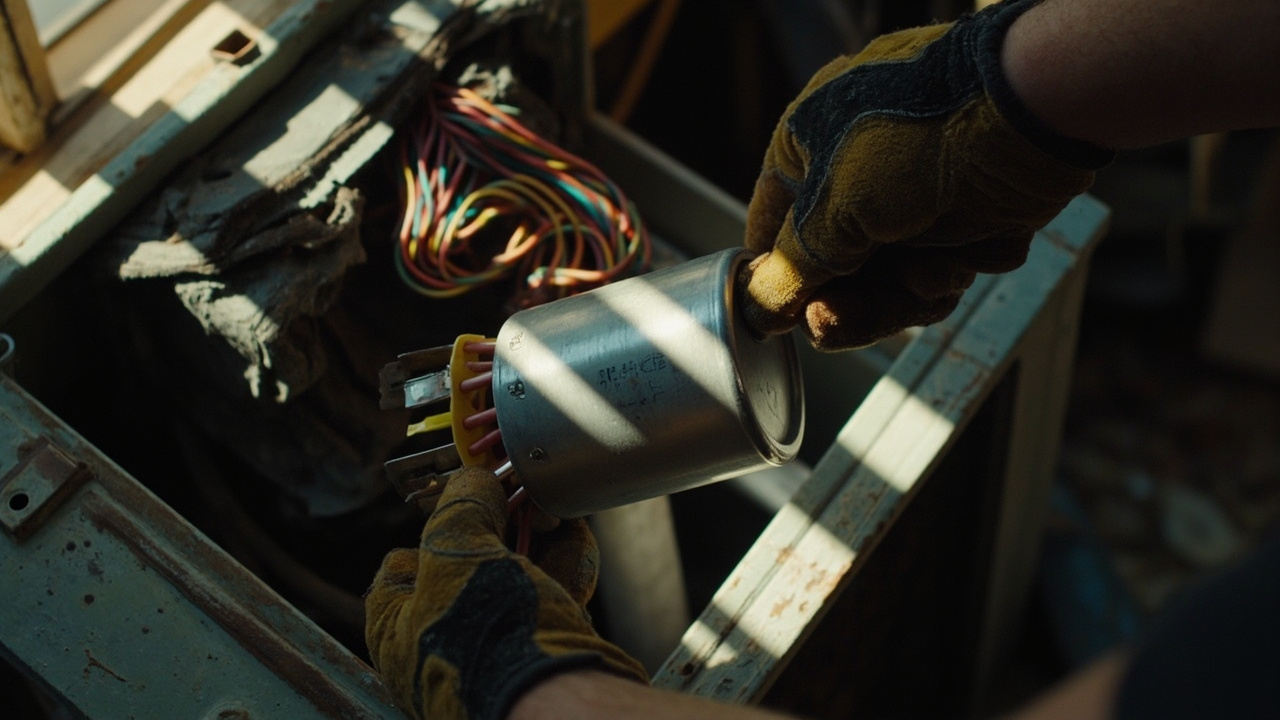
Two technicians can look at the same struggling system and hand you two different numbers, and the reason usually has nothing to do with pricing at all. It comes down to what each one measured before writing the quote. One tech hears the outdoor unit humming and quits, sees a tripped breaker, and prices a compressor. Another one runs a clamp ammeter against the rated load amps stamped on the data plate first, and finds a weak run capacitor forcing a hard start every single cycle instead of an easy one.
That gap between two quotes is the escalation chain playing out at different stages. A weak capacitor makes the compressor pull high amps on every start attempt. Left alone, the compressor keeps trying against that resistance until the windings overheat, and a part that would have been a straightforward swap becomes a full condenser replacement. Waco's long cooling season pushes that timeline faster than it runs in a milder climate, because the outdoor unit is starting and running for most of the day across a stretch of months rather than a handful of afternoons. A capacitor rated for a set number of start cycles burns through that rating sooner here, which is part of why a repair quoted in July can look nothing like the same repair quoted in April.
Electrical work at the disconnect adds another fork that a phone estimate cannot see. If the wire feeding the unit or the breaker itself needs attention alongside the failing part, that is a separate scope from swapping a capacitor, and it only shows up once someone opens the disconnect and checks it against the load the equipment draws. A quote that skips that check and prices only the part visible from across the yard misses the real problem. Diagnosing requires testing.
Waiting past a hard start rarely buys anything. Once the amp draw climbs toward locked rotor on every start attempt, the compressor is closer to seizing than the intermittent hum lets on, and a breaker that trips a second time after being reset is telling you the same thing louder. A reading taken with gauges and a clamp ammeter before the quote is written shows which side of that line a given system is standing on.
More detail on air filter merv ratings guide is on its own page.
When we spec replacement equipment, ENERGY STAR's heating and cooling ratings are the baseline we work from.
How we price a repair from what the gauges show
Pricing starts with a measurement approach grounded in diagnosis, because the most common error in HVAC service is treating symptoms of restricted airflow as a refrigerant problem. We check the filter, the coil and the return path first. Only once airflow is confirmed does charge get measured, using manifold gauges to read superheat and subcooling at the same time. A system metered by a thermostatic expansion valve is judged mostly on subcooling, and a fixed orifice system is judged on superheat, so the target we compare against comes from the equipment maker's chart for that specific unit, never a number we carry in from the last job.
That reading is what separates two very different repairs. High superheat paired with low subcooling indicates an undercharge or a restriction. Finding the source of that restriction means identifying whether we are facing a leak or internal blockage. If the charge and airflow both check out and the compressor still pulls high running amps, we use a clamp ammeter to compare actual draw against the rated load amps printed on the data plate. This comparison tells us whether the problem originates in a capacitor, a contactor, or the compressor itself. Each reading rules a branch out before it becomes a line item, which is how HVAC service call fees stay separate from the repair scope instead of getting blended into one total.
Staging capacity plays into this too, especially on replacement quotes that follow a repair conversation. A single stage condenser runs at full output every time it starts, a two stage unit spends more of the day at reduced capacity, and a variable capacity system modulates continuously. Longer, gentler runtime at low speed removes more humidity from the air and shows up as fewer hard starts on the capacitor and contactor over the life of the unit, which is part of why staging is a comfort and durability question as much as an efficiency one. The staging decision shapes how many hours a year the equipment spends cycling versus how many it spends in steady state, which compounds across thousands of start cycles over a decade of service.
A systems approach to diagnosis also catches problems that single-point testing misses. When we measure both temperature and pressure on supply and return lines, we see whether the equipment is matching its published performance curve. Deviation from that curve points to fouled coils, a failing compressor, or a metering device that has drifted out of spec. That pattern recognition is built on hundreds of jobs where the visual inspection said one thing and the instruments said another.
Our page on ductless mini-split buying guide covers that side of the work in more depth.
The U.S. Department of Energy's home heating and cooling guide explains the efficiency math behind our recommendations.
How a repair visit runs

Call and first look
On the phone we ask what the system is doing, when it started, and whether the outdoor unit runs, hums, or stays silent. That tells us what to bring. On site, the order is fixed: filter, coil and return path first, because restricted airflow can mimic a refrigerant fault and send a repair estimate in the wrong direction before anything else gets checked. Only once airflow is cleared does the visit move toward a charge or electrical reading, so the diagnosis is not guessed from the first symptom you described.
Measuring and deciding
With airflow confirmed, manifold gauges go on to read superheat and subcooling against the target for that specific metering device and equipment chart. That reading decides the fork. High superheat with low subcooling means a leak or restriction, and we trace it rather than adding refrigerant to a system that is not sealed. If charge and airflow both check out, a clamp ammeter against the compressor's rated load amps isolates whether the problem is electrical, in the capacitor or contactor, or mechanical in the compressor itself.
Confirming and handing off
Once the repair is made, the same instruments go back on. Superheat and subcooling have to land back in the range the equipment maker specifies, and running amps have to stay at or below the manufacturer's nameplate specification before we call the job done. We walk you through what the readings showed before and after, and you keep the written scope showing what was found and what was changed.
Why repair pricing in Waco does not travel from other markets
A repair cost breakdown built somewhere with a shorter cooling season does not transfer here cleanly. Waco's cooling season runs long, and outdoor units spend more hours per day, for more months, doing the work that shortens capacitor and contactor life. A technician unfamiliar with that duty cycle can read a slightly high amp draw as normal wear when here it is a unit that has already been cycling hard for years and is closer to a hard failure than the number alone suggests.
The housing stock adds another layer. Equipment and ductwork sitting in an unconditioned attic run hotter all summer than equipment in a conditioned closet, and that heat load ages flex duct, duct board and tape seals faster, which raises static pressure and pushes the system to work harder for the same cooling output. A crew that has not worked houses built this way may miss that airflow is the actual driver of a complaint that looks like a refrigerant problem.
Clay soil movement is part of the picture too. Ground that shrinks and swells with the season shifts slabs and outdoor pads, which puts strain on refrigerant line sets and condensate lines and can tip a condensing unit out of level over time. None of that shows up on a service call fee sheet, but it changes how often a line connection needs attention and how a repair is sequenced once the unit is opened up.
See hvac tax credits & rebates guide for how the related work is scoped and priced.
Your local utility, Utility Bill City of Waco, publishes service and water-quality information every Waco homeowner should know.
What working with us looks like
Getting a technician to your door
When you call, we ask what the system is doing, when it started, and whether the outdoor unit is running or silent. Those answers tell us whether this is a same day dispatch or a scheduled visit. You get a window rather than an open ended wait, and if a job ahead of yours runs long because a fault turned out to be more involved, we call and reset the window rather than leaving you guessing.
Protecting your home interior
Before a panel comes off or a filter comes out, we lay down protection under the work area so nothing tracks dust or condensate onto flooring. Tools and removed parts stay staged on a mat rather than scattered through the room. Anything replaced leaves with us. The last step before we walk you through findings is putting the space back the way it was when we arrived.
What sets the final number
Repair cost moves on a few things: how far the fault reached before the call, whether the disconnect, breaker and wire feeding the unit need attention alongside the part itself, and whether the failing component is still in production for that equipment. We separate the diagnostic fee from the repair scope, write the scope once the gauges and amp readings are in, and you see and approve that scope before any part is ordered or any work begins.
How a technician earns the truck
A new technician runs a number of visits alongside a lead before working solo, demonstrating an accurate superheat and subcooling read and a correct amp draw comparison against a data plate before that sign off happens. On anything involving a suspected compressor failure or an unusual electrical fault, a second technician reviews the readings before a repair scope goes out, so a costly call is never priced off one person's read.
You Have Questions,
We Have Answers
A service call should cover a full diagnostic sequence, not a guess at the part before the system is tested. That means airflow checked first, then a manifold gauge reading against the equipment maker's chart, then an amp draw check if the compressor is suspect, with the findings written down before any repair is quoted. A service call that skips straight to naming a part before those readings are taken is skipping the step that keeps the repair scope honest.
Pricing follows the fault and the season, not a yearly trend we can quote as a number. Repair costs rise on any individual job when electrical work at the disconnect or breaker is needed alongside the part, or when the failing part is no longer produced for older equipment. Demand also concentrates during the first stretch of sustained summer heat, when many units are asked for full output at once and weak components fail together.
Why repair costs shift with the Waco cooling season
Cooling season here typically opens in spring and runs into fall, with the heaviest load hitting in the peak summer months when outdoor highs sit in the mid to upper nineties for weeks at a stretch. That duty cycle is what separates a repair market here from one in a milder climate. A run capacitor rated for a certain number of start cycles reaches that number faster when the compressor is starting and running for most of a summer day rather than a few hours. A system properly sized to an ACCA Manual J load calculation cycles less aggressively than an oversized one, which is one reason two houses with identical equipment can show very different wear patterns on the same components after a few consecutive summers of operation in this region.
The humid stretch of the season adds a second load that a repair estimate has to account for separately from heat. Moisture removal strains the coil and the condensate system even when the thermostat is satisfied, which is why algae growth in condensate lines and pan overflows cluster in the same months as capacitor failures. A system sized only for temperature and not for the added moisture load runs short cycles that satisfy the thermostat while leaving water in the house, and correcting that is a sizing and airflow repair rather than a refrigerant top off, which is exactly the distinction that keeps a repair estimate honest instead of guessing at the fix.
HVAC Services in The Waco Area
Explore our service area and locate Granite HVAC Waco with ease. We're proudly local and serve the surrounding neighborhoods with fast response and honest pricing. Use the map to check our coverage area, or call us and we'll confirm in seconds.
Address:
Granite HVAC Waco, Waco, TX, 76701
Additional Services We Offer
- Air Filter MERV Ratings Guide
- Ductless Mini-Split Buying Guide
- Furnace AFUE Ratings Explained
- Heat Pump vs. Furnace Comparison
- How Long Does an HVAC System Last
- How to Choose the Right AC Size
- HVAC Tax Credits & Rebates Guide
- R-454B Refrigerant Transition Guide
- Repair vs. Replace Your AC
- Seasonal HVAC Maintenance Checklist
- SEER2 Ratings Explained
- Signs You Need a New Furnace
Changing filters on schedule, keeping the area around the outdoor unit clear, and rinsing the condenser fins with the power off at the disconnect are homeowner jobs and do not need us. Where it stops is anything behind the blower door, inside the electrical panel, or involving refrigerant, because those carry live voltage and pressurized gas. If a first visit finds gas or electrical work beyond the unit itself, we say so on the spot rather than after the invoice.
Before you call, know when the symptom started and what changed right before it, whether the outdoor unit is running, humming, or silent, and the age of the system if you have it. If you can safely check, note whether the breaker has tripped. Those answers tell us whether this needs someone today or can wait for a scheduled visit.
Last reviewed September 2026 by Dale Whitfield, Service manager.