





What a failing compressor sounds like before it stops for good
The outdoor unit hums for a second and quits. It clicks over and over without turning. The breaker trips the moment someone tries to start it, or it starts fine and the house still will not cool while the unit outside works harder than it used to. None of that is a house problem yet, it is the compressor motor struggling to turn against a fault sitting outside the sealed circuit.
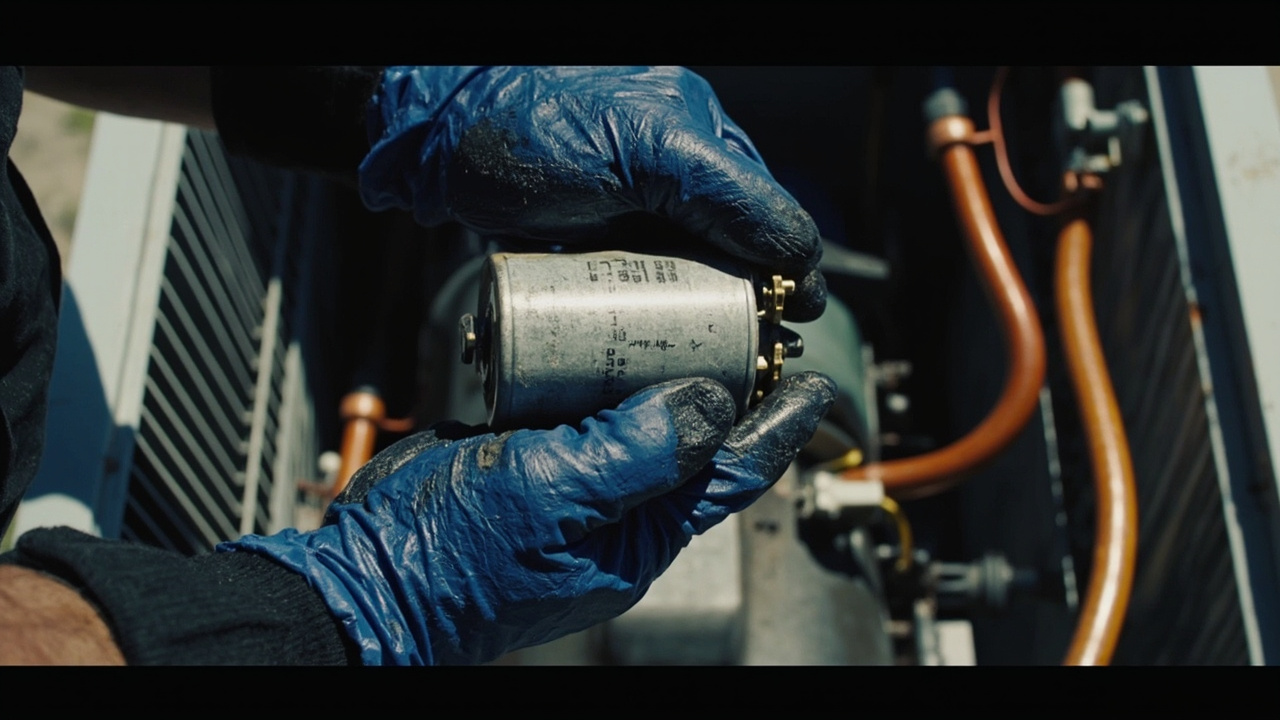
That struggle almost always starts with a dual run capacitor rather than the compressor itself. The capacitor stores the charge that gets the motor spinning on start, and once it weakens, the compressor draws far more current every time it tries, whether or not it manages to run at all. A pitted contactor does something similar, chattering instead of closing cleanly and dropping voltage at the exact moment the motor needs a clean surge to get moving. Either fault can look, from the driveway, exactly like a dead compressor.
Waco's cooling season keeps outdoor units running for long stretches across most of the year, and that duty cycle is what wears a run capacitor down long before the compressor would ever fail on its own. A unit that used to cycle on and off through a mild afternoon instead runs close to continuously through a hot one, and every one of those starts loads the same weakening capacitor a little further, day after day. The motor winding temperature climbs with each start attempt, even when the compressor manages to turn over.
A weak run capacitor is the start of a chain, not the end of one. Left in place, it forces the compressor to pull high amps on every start attempt, and each high current start heats the motor windings a little more than the last one did. Once the windings overheat past what the insulation can hold, the compressor itself fails, and what would have been a short repair becomes a full condenser replacement. A breaker that trips once on a hot afternoon is worth a call that day. A breaker that trips a second time on the same unit means the compressor is already being asked to start against a fault that will not correct itself. The window to catch the capacitor before compressor damage occurs narrows with every failed start cycle.
Our page on 24/7 emergency ac repair covers that side of the work in more depth.
How we confirm compressor failure before quoting replacement
The sequence starts with the electrical panel. A clamp ammeter on the compressor during a start attempt separates a weak capacitor or a pitted contactor from an actual compressor fault, because a bad capacitor makes a healthy compressor look dead and a genuinely failed compressor draws current the data plate never predicted. Once the fault is confirmed inside the sealed circuit rather than outside it, the decision moves from repair to a 24 hour ac compressor replacement service call, and the old compressor and line set become evidence of what happened rather than parts to keep.
The reading this job turns on is the micron gauge during evacuation. After the failed compressor is out and the new one is set, the system gets pulled down with a vacuum pump, and the micron gauge has to read below 500 and hold there once the pump is valved off. A number that climbs back up means moisture is still boiling off inside the lines or a fitting is not sealed, and charging a system that has not held vacuum just repeats the failure on a new compressor. Everything else the visit checks, superheat and subcooling on charge, static pressure on the duct, running amps against the data plate, is listed with its own good and bad reading in the table alongside this section.
The equipment decision that follows a compressor emergency call out is single stage against two stage against variable capacity cooling. A single stage condenser runs at one speed and cycles on and off, which is what wore out the failed unit's capacitor and contactor in the first place. A two stage or variable capacity condenser spends more of the day running at reduced capacity, which pulls more moisture out of the air and puts less starting stress on the compressor each cycle, and that lower cycling frequency is the argument for staging in a climate where the equipment runs for months at a stretch.
See emergency blower motor replacement for how the related work is scoped and priced.
Your local utility, Utility Bill City of Waco, publishes service and water-quality information every Waco homeowner should know.
Ask which of these readings was taken before any part is replaced.
| Instrument | Good reading | Bad reading | What it changes |
|---|---|---|---|
| Micron gauge during evacuation | Below 500 microns and holding there after the pump is valved off | A reading that climbs back up | Moisture is still boiling off inside or the system is not sealed |
| Clamp ammeter on the compressor and the blower | Running amps at or below the rated load amps stamped on the data plate | Amps steady above the rating, or a brief spike toward locked rotor on start | A failing capacitor, contactor or compressor |
| Two probes for delta T between return and supply air | A 16 to 22 degree drop across the coil in cooling at normal indoor humidity | A small drop means airflow or charge is wrong | An unusually large drop means the coil is being starved of air |
| Flame sensor signal check in microamps | A steady signal well above the control board dropout point | A weak or drifting signal | The sensor is coated and the burner will drop out |
How an emergency compressor call runs
Confirming the fault on site
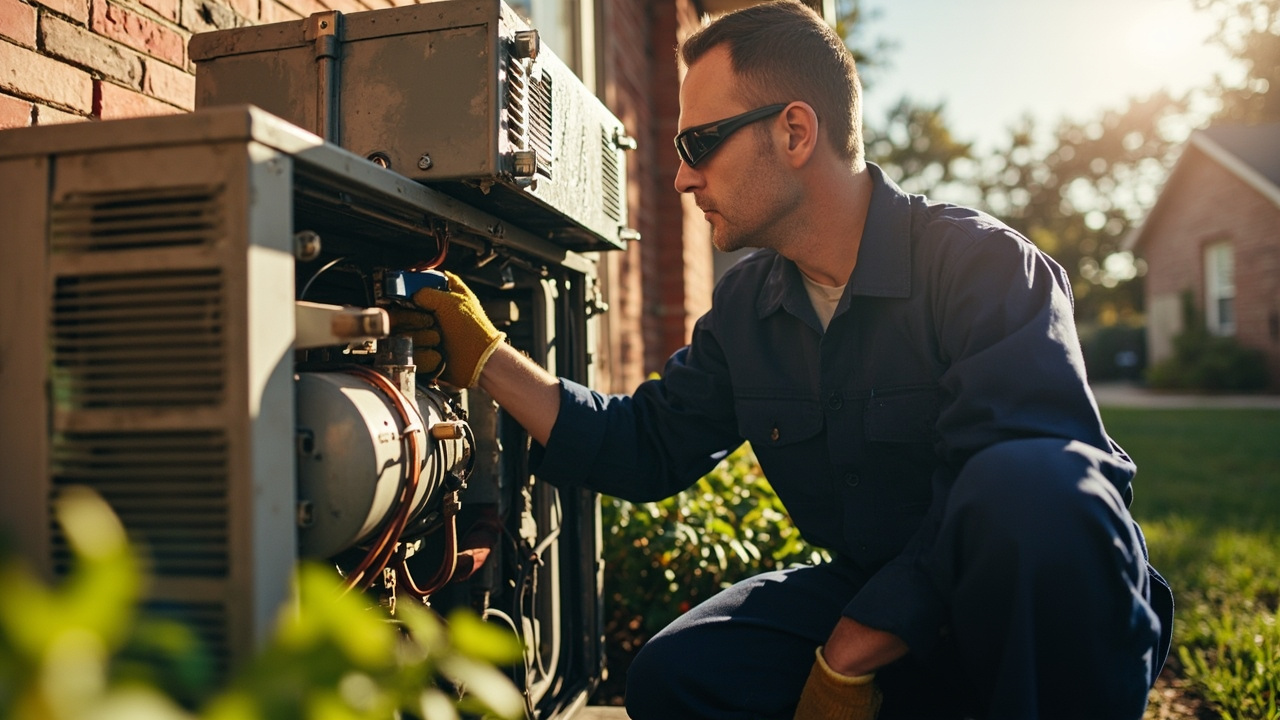
Before a technician arrives, we ask about the outdoor unit's behavior, whether the breaker tripped once or repeatedly, and how long the condition has persisted. On site, the first tool out is the clamp ammeter, checked against the compressor's rated load amps on the data plate, because a capacitor or contactor problem reads differently than a genuine compressor fault. Only after that reading points inside the sealed circuit does the visit move toward a replacement recommendation rather than a smaller repair.
Removing and replacing the compressor
Once the scope is approved, the system is isolated at the disconnect and refrigerant is recovered into a sealed cylinder before anything is opened. The failed compressor comes out along with the old filter drier, since a fresh drier is standard practice on any compressor swap. The new compressor goes in, connections are brazed, and if the line set shows kinking or repeated repair from ground movement, we stop and show you before reusing it.
Proving the system before we leave
The system gets pulled into a vacuum, and the micron gauge has to read below 500 and hold there once the pump is valved off before any refrigerant goes in. Charge is then set against the equipment maker's chart for that unit, and running amps go back on the clamp meter to confirm they sit at or below the rated load amps on the new compressor's data plate. We walk through both readings with you and leave you with what was replaced.
Why a compressor emergency in Waco is not a generic AC call
A crew unfamiliar with this county tends to treat a compressor call as the same swap everywhere, and that assumption misses what condenser access looks like on a lot of the housing stock around here. Older raised floor houses often route the outdoor disconnect and its wiring through additions made well after the original build, sized for whatever smaller equipment used to sit there rather than the run a two stage or variable capacity compressor now needs. Setting a stouter compressor onto wiring that was never upsized trips the same breaker that just failed, and an urgent ac compressor swap service call ends with the identical complaint it started with.
Responding across the greater metro on a same day compressor replacement means reaching houses built across very different decades in the same afternoon, some on slabs with everything in the attic, some on raised floors with the disconnect and wiring run underneath. Each layout puts the panel, the line set and the outdoor unit in a different relationship to each other, and that difference changes how fast an amp reading can be taken once someone is standing at the unit. A technician who has worked this mix before knows which layout to expect before opening the disconnect, which shortens the time between arrival and a confirmed fault.
The other place unfamiliarity shows up is in matching the replacement to what already failed rather than just to the compressor. Setting a new compressor behind a capacitor and contactor that were never checked repeats the same overheating pattern within a season, on ordinary weather rather than anything unusual. Confirming the parts around the compressor before it goes back together is what keeps a replacement from becoming a second emergency call on the same unit. A capacitor that has drifted out of its rated microfarad range will cause the new compressor to draw excess amperage through the same circuit, creating the conditions that failed the old one.
More detail on emergency thermostat replacement is on its own page.
Forums like r/hvacadvice show what homeowners nationwide pay and encounter, useful context for any quote you receive.
What working with us looks like on a compressor call
Getting a technician to your door
When you call about a compressor, we ask what the outdoor unit is doing, whether the breaker has tripped once or more than once, and how long the pattern has been going on. Those answers tell us whether this is a same day dispatch or a scheduled visit. You get a window before the technician leaves for your address, and if a call ahead of yours runs long because a fault turned out to be more involved than expected, we call and reset that window rather than let you wait without knowing.
Keeping your property clear
Refrigerant recovery and brazing happen with the outdoor disconnect open and the work area around the unit kept clear of tools and parts staged for a return trip. Anything removed, the old compressor, the old filter drier, comes off the property rather than sitting against the house. Indoors, if any part of the job touches the air handler or attic access, that path gets protected before anyone walks it, and the space is checked at the end so nothing is left behind.
What sets the price
Two things move the cost on a compressor emergency more than anything else. The capacity and efficiency tier of the replacement condenser is one, since a single stage, two stage or variable capacity unit are priced and sized differently. The other is whether the indoor coil gets matched to the new outdoor unit or the existing coil stays in place, which affects performance and long term reliability. Both are shown in the written scope, and you approve that scope before the compressor comes out.
Who is doing the work
A technician demonstrates reading a clamp ammeter against a data plate correctly, evacuating a system to a holding micron reading, and identifying line set damage before being cleared to run a compressor call without a lead present. On anything where the fault history is unclear, meaning repeated prior service calls or a line set that looks compromised, a second technician reviews the readings before the scope is written, so the replace decision does not rest on one set of numbers.
You Have Questions,
We Have Answers
A compressor itself is rarely repaired, it is replaced once the motor windings or the sealed bearings fail. What often gets mistaken for a dead compressor is a weak run capacitor or a pitted contactor outside the sealed circuit, both of which are real repairs. The deciding factor is where the fault sits, confirmed with amp readings, and whether the refrigerant the system was charged with is still available for that unit.
Why compressors fail differently on Waco summers
Waco's cooling season runs from around April or May through October, with peak load hitting in July and August when highs sit in the mid to upper nineties. An outdoor unit built to cycle in that stretch instead runs close to continuously, which accelerates wear on run capacitors and contactors well before the compressor itself would fail on its own. Expansive Blackland clay under McLennan County shrinks and swells with rain and drought, which can shift an outdoor pad out of level and put a bend or a stress point into the refrigerant line set at the wall. That misalignment shortens the life of whatever compressor gets installed if the line set is reused without checking it for kinks or crimps that restrict flow. Verifying pad level and line integrity before a compressor replacement prevents premature failures from hidden mechanical stress.
Winter storms bring a different local risk to the same equipment. Hard freezes can knock out power across the region, and the surge when power returns after an outage is a documented way equipment gets damaged on the spot, sometimes on a compressor that was already replaced earlier the same year. That is why a post replacement visit checks electrical readings against the data plate rather than assuming the new part is fine because it started. A compressor installed without that check can look successful for a few weeks and then fail the same way the last one did.
HVAC Services in The Waco Area
Explore our service area and locate Granite HVAC Waco with ease. We're proudly local and serve the surrounding neighborhoods with fast response and honest pricing. Use the map to check our coverage area, or call us and we'll confirm in seconds.
Address:
Granite HVAC Waco, Waco, TX, 76701
Additional Services We Offer
- 24/7 Emergency AC Repair
- After-Hours HVAC Service
- Carbon Monoxide Leak Response
- Emergency Blower Motor Replacement
- Emergency Boiler Repair
- Emergency Commercial HVAC Repair
- Emergency Furnace Repair
- Emergency Heat Pump Repair
- Emergency Refrigerant Leak Repair
- Emergency Thermostat Replacement
- No Cooling Emergency Service
- No Heat Emergency Service
Cleaning condenser fins with the power off, keeping brush and debris clear of the outdoor unit, and checking the breaker before calling are homeowner tasks. Refrigerant recovery, evacuation, and anything behind the compressor's electrical connections are not, because they involve pressurized refrigerant and line voltage. If what we find points to duct or wiring work outside this scope, we tell you on the first visit.
Before you call, know whether the outdoor unit hums, clicks, or stays silent, and whether the breaker has tripped once or several times. Note when it started and roughly how old the system is if you know it. Find the outdoor disconnect if you can reach it safely. Those details usually tell us whether this needs someone today.
Last reviewed September 2026 by Dale Whitfield, Service manager.