




Why a square footage guess gets AC size wrong
A house that never quite cools, even though the AC runs most of the day, usually gets blamed on the equipment being old or weak. In Waco that guess is often backwards. A unit picked off a square footage chart, or matched to whatever tonnage the last one carried, can be the wrong size for what the house and the humid air require it to remove, and a badly matched system behaves the same whether it is brand new or a decade old.
An oversized unit satisfies the thermostat fast and shuts off before it has run long enough to pull real moisture out of the air, so the house reads comfortable on the wall and feels damp everywhere else. An undersized unit does the opposite, running long stretches without ever catching up, which pushes the coil colder than it was built to run and starts pulling more current through a compressor that was never meant to work that hard for that long. Either mistake gets read as a broken air conditioner when the real problem is a tonnage that was never checked against the house.
A loaded filter makes either mistake worse and faster. Airflow across the coil drops, the coil runs colder than it was designed to, and a system already sized wrong starts icing along the coil face sooner than it would on a correctly matched unit. Once ice forms, the compressor stops seeing vapor coming back from the coil and starts taking liquid refrigerant into a chamber built to compress gas, and that is how a filter nobody changed turns into a failed compressor on a system that still had years left in it.
Waco's late spring and early summer stretch is where a sizing mistake shows up first, because Gulf moisture raises the moisture load on the coil faster than it raises the temperature load, and an oversized unit that felt fine on a mild March day starts leaving rooms clammy the moment that humid air arrives. Waiting past that point does not just mean a few damp weeks. It means running an undersized or oversized system through the hottest, most humid months of the year on a filter and coil already working harder than they should, which is exactly the sequence that turns a sizing problem into a compressor replacement.
See ductless mini-split buying guide for how the related work is scoped and priced.

How we find the load before we pick equipment
The walkthrough always comes before any tonnage number gets discussed. That order matters because a manual J load calculation is built from what the building itself does with heat and moisture, not from the number on the old unit's data plate. Insulation condition, window orientation, ceiling height and the duct path all go into that calculation, and skipping any of them produces a number that looks precise and is wrong.
The reading that confirms the calculation is delta T between return and supply air, taken with two probes placed in the duct close to the coil rather than at a register, since a register reading picks up duct gain and reports a number that has nothing to do with the coil itself. A drop landing roughly in the range the equipment maker expects for that coil means the system is pulling the load the calculation predicted. A drop well below that range points to low charge, a dirty coil, or a humidity load heavier than the calculation accounted for. A drop well above it points to restricted airflow, often a coil starting to ice, and no amount of added tonnage corrects that reading.
Once the load number and the duct condition are known, the equipment choice becomes a staging question rather than a size question. A single stage condenser runs at one capacity and satisfies the thermostat fast, which is fine on a dry day and poor on a humid one. A two stage unit spends more of the day at its lower capacity, which extends runtime and pulls more moisture out per hour. A variable capacity condenser goes further still, modulating output to match the load continuously, which is the setup that handles a long humid stretch without the short cycling a single stage unit falls into. The choice between them is decided by how much of the cooling season runs humid rather than by the tonnage alone.
The equipment maker's specifications for airflow across the coil also factor into the final selection. Restricted airflow starves the coil of the volume it needs to exchange heat efficiently, and this restriction often comes from a filter that has collected debris, flex ducting that has kinked or collapsed, or return air pathways that have been blocked. Measuring static pressure at the return plenum and at the supply trunk identifies where the restriction sits. Once located, clearing that path often resolves performance problems that seemed to require a larger unit. Equipment sized for unrestricted ductwork installed in a system with blockages will cycle short and fail to dehumidify, no matter how many tons the nameplate claims.
Our page on how long does an hvac system last covers that side of the work in more depth.
Permit and inspection questions? Commercial Construction Permits is the office we coordinate with on every permitted Waco job.
How a sizing visit runs
Phone intake and walkthrough
On the call we ask what the house is doing, whether it runs constantly or short cycles, and roughly how old the current system is. On site, the walkthrough starts with the building itself, insulation condition, window count and orientation, ceiling height, and where the duct and air handler currently sit, since a manual J load calculation depends on all of it rather than floor area alone. You see this happening room by room rather than hearing a number handed to you afterward.
Calculation and equipment selection
The walkthrough data goes into the load calculation, and the duct is checked against what the new equipment would ask it to move. If the existing duct cannot carry the air a larger unit would need, that gets flagged during equipment selection. You see the calculated load, the equipment tier options it supports, and how each one is expected to run through a humid stretch versus a dry one, and nothing gets ordered until you approve the written scope built from those numbers.
Commissioning and handover
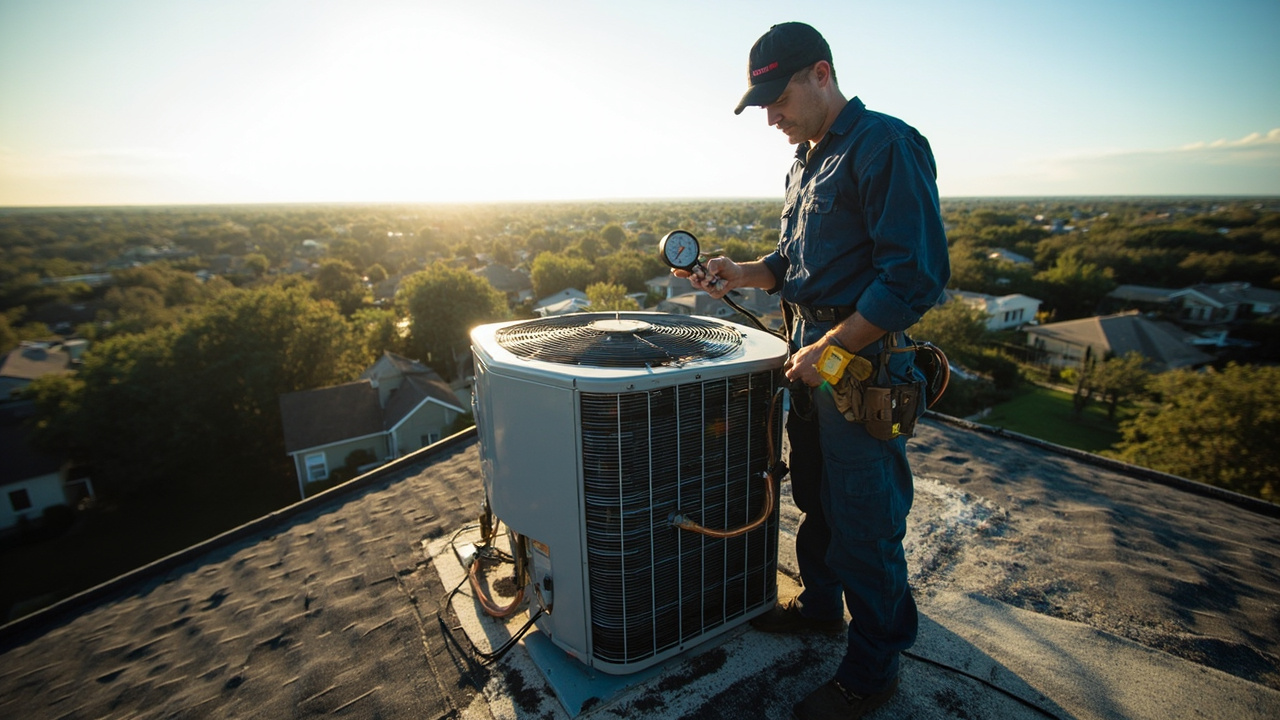
Once the equipment is running, two probes go across the evaporator coil to read delta T between return and supply air. We verify the measured temperature difference matches what the load calculation indicated, rather than assuming the paperwork was enough. We walk you through what that reading means for your house, plus how the equipment is expected to behave differently in a dry month versus a humid one, and you keep the load calculation and the reading on record.
Why sizing mistakes cost more in a humid climate
A crew working from habits built in a drier part of the state tends to size Waco jobs the same way they would size a job anywhere else, off a square footage chart or the tonnage already sitting on the pad. That approach misses the humid stretch running from late spring into summer, the season that decides comfort here, when the air carries more moisture than a dry climate rule of thumb ever accounts for. A unit sized only against a hot, dry afternoon reaches temperature and stops running before enough time has passed to remove that moisture, leaving the house reading fine on the thermostat while feeling damp in every room.
The mistake compounds when duct condition never gets checked before equipment is chosen. A house across McLennan County can have duct that was added years after the structure went up, run through an attic or a crawlspace never built for it, and a crew that skips a static pressure check has no way of knowing whether that duct can move the air the new equipment is rated to deliver. Equipment gets set against a number on a data plate instead of against what the house can physically carry, and the comfort complaint that brought the call in shows up again within a season, just with a different price tag attached.
Working this county through full cooling seasons means treating the humid stretch as a sizing input rather than an afterthought, and treating the duct as part of the sizing question rather than a separate repair to deal with later. That difference shows up in the field. A system sized without accounting for moisture removal and duct limits gets picked, then re-picked when it fails to deliver, then blamed for a problem the tonnage number was never built to solve. The homeowner pays twice for the same mistake.
Sizing against both moisture and airflow capacity also means a crew has to measure what exists before specifying what comes next. The static pressure reading tells whether the ductwork can handle the volume the equipment produces. The humidity reading during peak season tells whether the run time will be long enough to wring moisture out of the air. These two numbers together keep a unit from cycling on and off too fast, a pattern that leaves humidity high and energy bills high with it. A system built to the actual conditions of the house stays on long enough to finish the job it was sent to do.
If this sounds close but not quite your situation, air filter merv ratings guide may be the better starting point.
What happens after you call
Same call, clear next step
You call, we ask what the system is doing, whether it short cycles, runs constantly, or leaves the house damp, and how old it is. That tells us whether the walkthrough is a straightforward measurement visit or needs a closer look at duct condition first. You get a scheduled walkthrough rather than a same day promise, since sizing work is planned rather than an emergency repair, and if the day ahead runs long we call before the window passes rather than after.
Keeping the house intact
Walking the attic or crawlspace to check duct and insulation means dust and insulation fibers come down, so the access point gets covered before anyone goes up. Tools and gauges stay staged in one spot rather than spread through the house. Anything opened to check duct condition gets closed back up the same visit, and the space gets a final look before we leave so nothing is left disturbed from the walkthrough itself.
What moves the number
The biggest factor most people never ask about is whether the existing duct can move the air new equipment would need, which the static pressure reading answers directly. If the duct is undersized, correcting it moves the scope up before equipment tier is even chosen. Equipment tier, staging level and whether the coil matches the outdoor unit all move the number from there. Nothing gets ordered until you see the written scope built from the load calculation and approve it.
How the visit gets done right
A technician doing sizing walkthroughs demonstrates the full manual J data collection, insulation grading, window count, duct path assessment, alongside a lead before running one alone, and the lead signs off on reading the completed calculation correctly against the duct condition found on site. On a house with an unusual duct layout or a crawlspace access that limits inspection, a second technician reviews the numbers before the equipment tier gets written into the scope.
You Have Questions,
We Have Answers
It depends on the load calculation, not the square footage alone. A 3 ton unit on a small house often short cycles, satisfying the thermostat before it removes enough moisture, which is why Waco's humid stretch makes an oversized unit feel clammy rather than comfortable. Insulation, window count and duct condition can push the real load either direction, so the tonnage that fits gets confirmed by the calculation and by the delta T reading taken at commissioning, measuring the temperature difference across the coil.
Size comes from a manual J load calculation, not a square footage rule. The calculation weighs insulation, window orientation, ceiling height and duct condition together, then the delta T reading across the coil during commissioning confirms the equipment is pulling the load that calculation predicted. A number based on floor area alone skips the duct and humidity variables that decide comfort here, especially through the humid stretch in late spring and early summer.
It depends on what the load calculation finds, since two houses that size can carry different loads. Duct condition matters as much as tonnage, since undersized or leaky duct in an attic or crawlspace can leave a correctly sized 2 ton unit unable to move enough air across the coil. Granite HVAC Waco runs the walkthrough and the delta T reading before quoting a tonnage, so the equipment is matched to the house rather than assumed from square footage. Call (254) 221-8461 to get that walkthrough scheduled.
Why Waco humidity changes what right sized means
Late spring and early summer bring the most humid stretch of the year, when Gulf moisture raises the latent load on cooling equipment faster than the sensible heat load rises. A house sized only against a hot July afternoon can still feel damp in May, because the unit satisfies the thermostat while cycling too briefly to extract real moisture from the air. This matters more in older Waco houses where duct was added into an attic or crawlspace well after the house was built, since duct losses in that space eat into the capacity a load calculation counted on, and matters again in newer houses where attic heat adds load to duct that was sized tight to begin with. Either way, the equipment and the duct are being sized against the same humid stretch, not just the hottest single day.
The way we confirm sizing was right is the same delta T reading taken during commissioning, return air against supply air across the coil, checked against the range the equipment maker sets for that unit. A reading that lands short of that range during the humid stretch usually means the duct is not moving enough air across the coil rather than the load calculation being wrong, which is a different fix than a bigger unit. Recording that reading at handover gives you a baseline for comparison. If comfort complaints show up later in a humid month, there is a documented number from install day to compare against rather than a guess about whether anything changed. That baseline also catches drift in airflow that develops over time as filters load or dampers shift.
HVAC Services in The Waco Area
Explore our service area and locate Granite HVAC Waco with ease. We're proudly local and serve the surrounding neighborhoods with fast response and honest pricing. Use the map to check our coverage area, or call us and we'll confirm in seconds.
Address:
Granite HVAC Waco, Waco, TX, 76701
Additional Services We Offer
- Air Filter MERV Ratings Guide
- Ductless Mini-Split Buying Guide
- Furnace AFUE Ratings Explained
- Heat Pump vs. Furnace Comparison
- How Long Does an HVAC System Last
- HVAC Repair Cost Guide 2026
- HVAC Tax Credits & Rebates Guide
- R-454B Refrigerant Transition Guide
- Repair vs. Replace Your AC
- Seasonal HVAC Maintenance Checklist
- SEER2 Ratings Explained
- Signs You Need a New Furnace
Measuring your own rooms and noting window count is a homeowner job, and it helps the visit go faster. Where it stops is the actual load calculation and anything behind the duct or the electrical panel, since matching insulation values, orientation and duct losses into one number is not a guess you want to make yourself. If the walkthrough turns up duct work that needs correction beyond the sizing visit itself, we tell you on that first visit rather than after equipment is ordered.
Before you call, know roughly how old your current system is and whether it runs constantly, short cycles, or leaves the house feeling damp with the thermostat satisfied. If you can, note how many windows face the afternoon sun and whether any rooms were added or finished after the house was built. Those answers tell us how much of the walkthrough is straightforward and how much needs a closer look.
Last reviewed September 2026 by Dale Whitfield, Service manager.