




Why a running AC still blows warm air in Waco
The complaint sounds simple. The thermostat is set where it always is, the blower is running, and the air coming out of the vent is not cold. In a lot of Waco homes this time of year, that means the outdoor coil is not moving enough air to reject the heat it is pulling out of the house, and the compressor keeps running against a load it cannot clear.
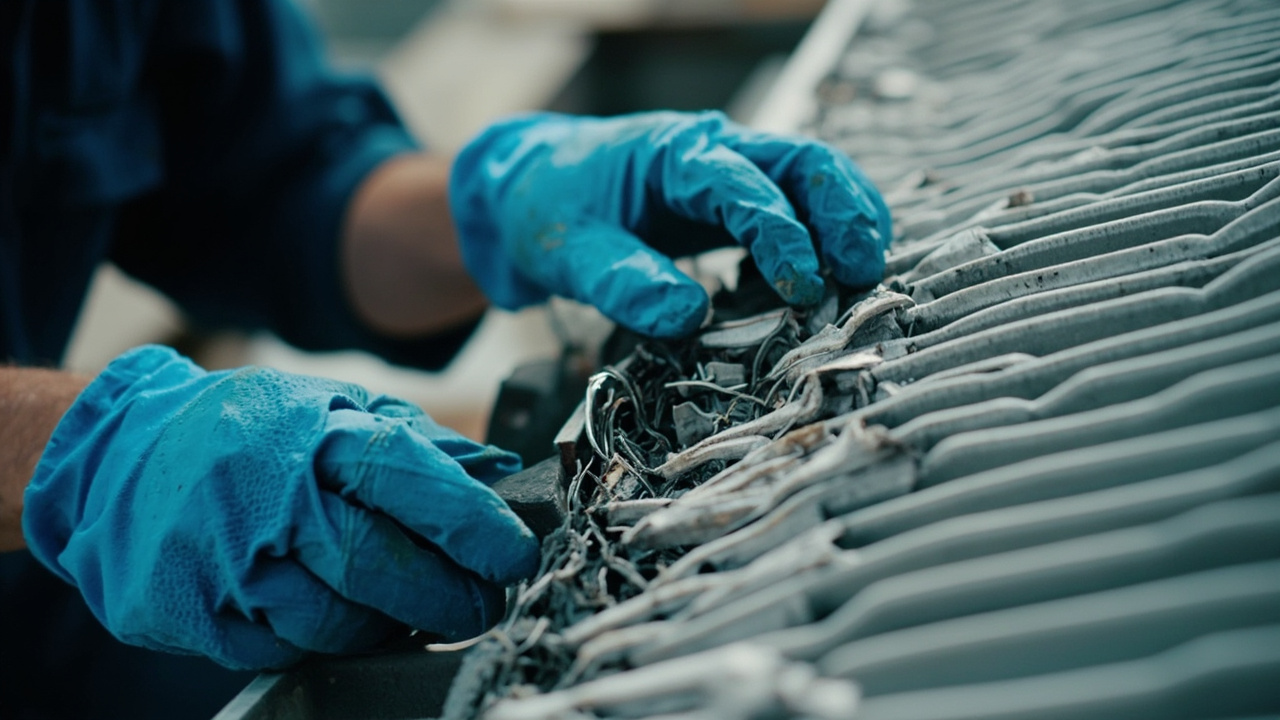
Hail is a big part of why. A storm that flattens the fins on the back or side of a condenser does not always leave a mark anyone notices from the front, but it closes off the surface area the coil needs to dump heat into the outside air. The system keeps calling for cooling, the compressor keeps working, and the house slowly loses ground even though nothing inside the equipment has technically failed. A coil that limped through a mild stretch of weather can look fine for weeks before the first stretch of real summer heat pushes it past what it can still handle.
Left alone, this pattern does not stay flat. A restricted coil forces the system to run long cycles for less cooling than it should be delivering, and that extended runtime is hard on the refrigerant circuit even when there is no leak involved yet. The problem compounds when an actual slow leak is present on top of a fouled coil. The system runs longer for less cooling and the oil that is supposed to travel with the refrigerant stops circulating the way it needs to. The compressor relies on that oil for lubrication during operation, and without it the internal metal surfaces begin to wear. Once that happens, the compressor is running without proper protection, and a compressor that seizes from oil starvation is a full system replacement rather than a repair.
That is the point where a warm air complaint stops being an inconvenience and starts being an expensive one. A coil blocked by hail damage or debris can be cleaned or replaced for a fraction of what a compressor replacement costs. The difference between catching the problem early and letting it run for another week or two is the difference between a straightforward repair and a system failure that empties the wallet. It is worth calling before the equipment has spent additional time working that hard against a coil that cannot do its job.
See air filter merv ratings guide for how the related work is scoped and priced.
Find the sign you have, then read across to see whether it can wait.
| Symptom or first sign | What is already happening | What it becomes if ignored | When to call |
|---|---|---|---|
| A slow refrigerant leak | The system runs longer for less cooling and oil stops circulating properly | The compressor loses lubrication and seizes | This week, while it is still one part |
| A plugged condensate drain | The pan overflows into the platform or the ceiling | The ceiling below stains and the rusted secondary pan lets the rest through | Soon, before it spreads past the repair |
| A cracked heat exchanger | Combustion gas mixes with the air being blown through the house | Carbon monoxide reaches the living space | Now, the same day |
How we check airflow before we touch the refrigerant
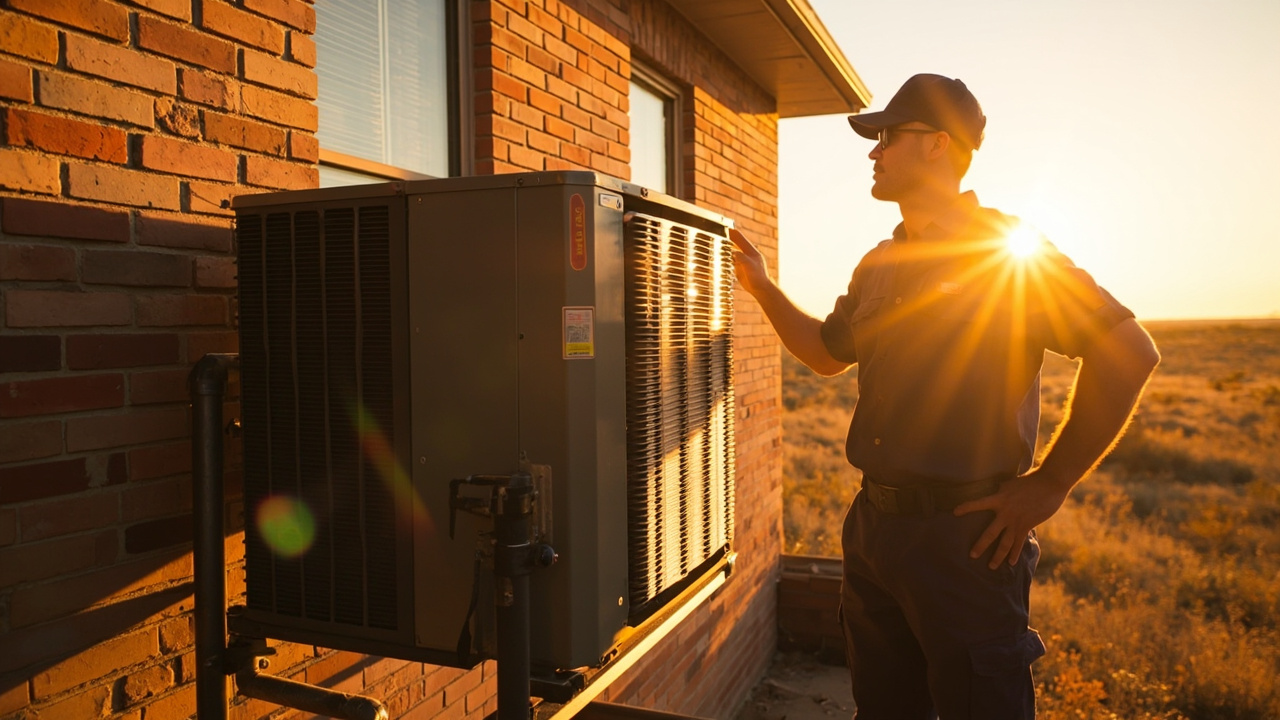
The visit starts at the filter and the indoor coil, then moves outside to the condenser fins before any gauge comes out. That order matters because a coil pressed flat by hail chokes the air a compressor needs to reject heat, and a choked coil looks like low charge on a warm afternoon. Only once fin damage or debris buildup has been ruled out or fixed does the outdoor unit get connected to manifold gauges, since a superheat and subcooling reading taken against a restricted coil tells a technician nothing true.
Once airflow is confirmed clean, the manifold gauges carry the rest of the diagnosis. Superheat and subcooling are read together, and which one gets weighted more depends on whether the system meters refrigerant through a thermostatic expansion valve or a fixed orifice. High superheat paired with low subcooling points at undercharge or a restriction rather than a tired compressor, and that pairing is what separates a coil that just needs straightening from a system leaking refrigerant into the yard. A reading that will not settle after the coil is clean is the sign that oil is not circulating properly and the compressor is running short on lubrication.
Staging decisions come up on replacement conversations that follow from this kind of call, since a single stage condenser, a two stage unit, and a variable capacity system are compared on how much of the day they run at reduced output rather than on a sticker efficiency number. Longer low speed runtime pulls more moisture out of the house during the humid stretch of a Waco summer, which matters more to comfort than a headline rating does. The compressor cycles fewer times per hour at reduced capacity, which cuts the wear that comes from repeated startup surges and extends bearing life over the equipment's span. It is worth naming that advantage before a homeowner assumes the highest rated unit is automatically the right one for a coil that already struggled once this season.
Our page on furnace blowing cold air covers that side of the work in more depth.
Your local utility, Utility Bill City of Waco, publishes service and water-quality information every Waco homeowner should know.
Ask which of these readings was taken before any part is replaced.
| Instrument | Good reading | Bad reading | What it changes |
|---|---|---|---|
| Manifold gauges with superheat and subcooling readings | Superheat and subcooling both landing in the range the equipment maker specifies for that metering device | High superheat with low subcooling | An undercharge or a restriction rather than a weak compressor |
| Two probes for delta T between return and supply air | A 16 to 22 degree drop across the coil in cooling at normal indoor humidity | A small drop means airflow or charge is wrong | An unusually large drop means the coil is being starved of air |
| Manometer for total external static pressure across the air handler | Static pressure at or under the maximum printed on the blower data plate | Static above the rating | The filter, the coil or the duct is choking the system |
| Clamp ammeter on the compressor and the blower | Running amps at or below the rated load amps stamped on the data plate | Amps steady above the rating, or a brief spike toward locked rotor on start | A failing capacitor, contactor or compressor |
| Micron gauge during evacuation | Below 500 microns and holding there after the pump is valved off | A reading that climbs back up | Moisture is still boiling off inside or the system is not sealed |
How a warm air call runs
The call and the first look
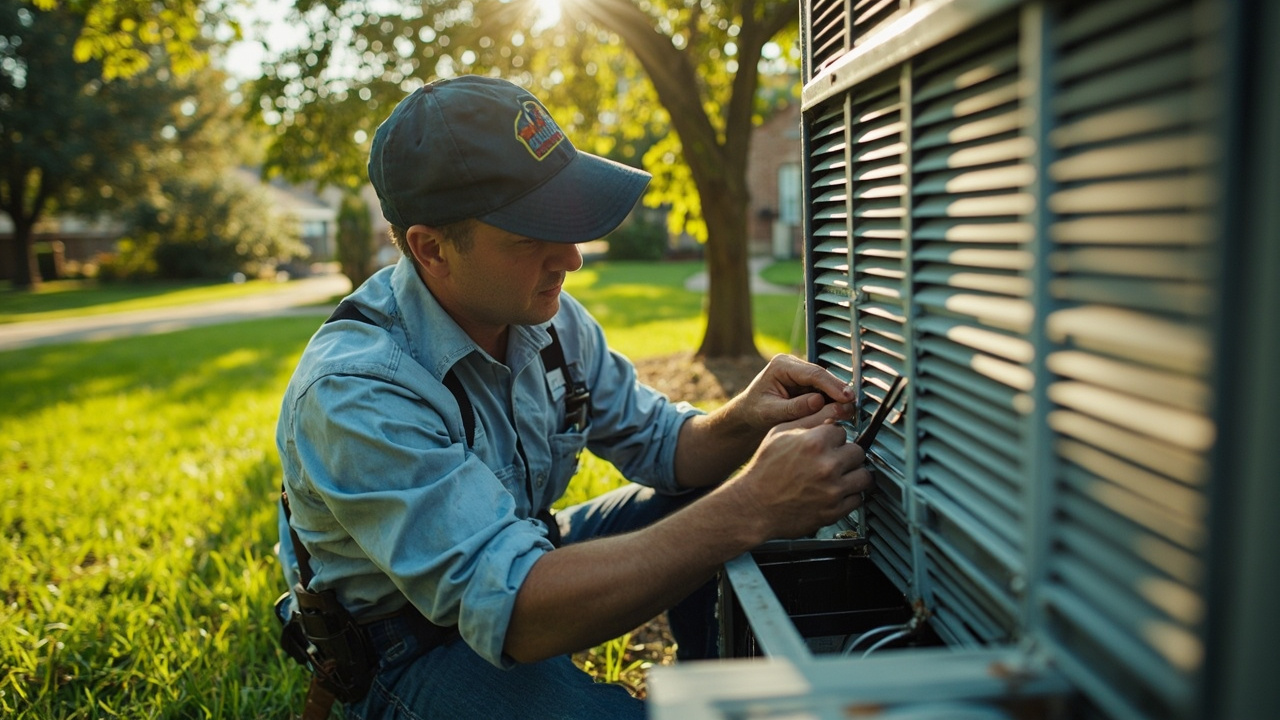
On the phone we ask when the symptoms started, whether the outdoor unit shows any dents or flattened fins, and if the system cycles on and off, since that combination tells us how urgent the visit is. On site, the filter and the indoor coil get checked first, then the outdoor coil gets inspected for fin damage or debris buildup. Only once that airflow picture is clear do the manifold gauges come out, because charging a system before airflow is confirmed just hides the real problem for a few weeks.
The repair, once you approve it
Once you approve the written scope, the outdoor unit gets isolated at the disconnect before any work starts on the coil. Fin comb work follows, straightening the flattened rows so air can pass through the coil the way it was designed to. If the readings taken afterward still point at a leak once airflow is restored, we stop and show you what the gauges say before recommending anything further, since that is a different repair than a coil straightening job.
Verification before we leave
Before the visit ends, temperature probes go back on the return and supply air near the coil to confirm the split has settled back into the roughly 15 to 20 degree range a properly working system holds. Manifold gauges confirm superheat and subcooling are tracking together the way they should for whichever metering device your system uses. We walk you through what changed and what the readings show, and you keep a note of the numbers taken that day.
Why a local read on this coil matters
A crew that does not work this area regularly tends to treat every warm air call the same way, gauges first, parts second. That habit costs a homeowner money on a hot Waco summer, because the failure that shows up most after a storm season is a restricted coil, not a low charge, and a technician who skips the coil inspection ends up recommending refrigerant work on a unit that just needs its fins straightened and cleaned. The mistake is not obvious from the invoice either, since a topped off system will cool for a while before the same warm air complaint comes back.
Housing age matters here too. Older houses around Waco built before central air was standard often have equipment and ductwork retrofitted into attics that were never designed to carry cooling loads, and newer houses built on slabs put the air handler and duct run in an unconditioned attic where summer heat adds its own load on top of whatever the coil is dealing with outside. A technician who does not know that pattern can spend time chasing duct losses when the actual restriction is sitting on the condenser in the side yard.
Response across the metro during the hottest stretch of the year runs differently than it does the rest of the year. When the first sustained heat of the season hits, every system that idled through spring is asked for full capacity at once, and the calls that come in that week skew heavily toward exactly this complaint, a system that runs and runs and never quite gets the house cool. Knowing that pattern changes how visits get sequenced that week, because a coil that is already marginal from hail damage is the one most likely to fail completely once the heat load goes up.
That sequencing matters because a homeowner who calls with a cooling complaint during peak season often has a system that is already stressed. The coil may show ice formation on the suction line, a visual sign of airflow restriction. A technician who recognizes this during the first visit can address the actual blockage instead of adding refrigerant to a system that cannot use it. The difference between that diagnosis and a misdiagnosis is whether the repair holds through August or whether the same problem surfaces again within weeks.
If this sounds close but not quite your situation, air duct cleaning may be the better starting point.
Proper sizing follows the Manual J standard from the Air Conditioning Contractors of America, guesswork is how systems end up short-cycling.
What working with us looks like
Same day or scheduled, decided fast
When you call about warm air, we ask when it started, whether the outdoor unit has any visible fin damage, and how long the system has been running this way. Those answers usually tell us within a couple of minutes whether this is a same day visit or one that fits into a scheduled slot. You get a confirmed arrival window before you hang up, and if the job ahead of yours runs long because of a coil repair, we call to reset your window rather than leaving you guessing.
Equipment left as found
Before a panel comes off or a coil gets combed, drop cloths go down around the outdoor unit and the indoor equipment area to keep grease and debris off your flooring and landscaping. Fin comb work throws bent metal shavings, so that area gets contained and swept clean before we pack up. Anything replaced, like a filter or a failed capacitor, leaves with us rather than sitting in your yard or your garage.
What moves the number
Cost on a warm air call depends first on whether the coil can be straightened and cleaned or needs replacement, since fin damage severity varies storm to storm. It also depends on access to the outdoor unit and whether the call lands during the first heat wave of the season, when dispatch runs tighter because every system idled through spring gets asked for full capacity at once. Once the coil and airflow readings are in, you see the written scope and approve it before any repair starts.
Crew verification process
A new technician spends a run of visits alongside a lead before working a warm air call alone, and part of what the lead signs off on is reading a superheat and subcooling pair correctly against a coil that has visible fin damage, not just against a clean one. On any system where the readings do not match what the coil looks like, a second technician looks at it before a repair gets written up.
You Have Questions,
We Have Answers
A sudden change usually means airflow across the outdoor coil dropped fast, often from hail-flattened fins, a fouled coil, or a failed capacitor cutting fan speed. Anything sudden after a storm points at the outdoor unit first, before refrigerant is even checked, since a restricted coil reads a lot like a leak on a gauge set.
It is either not moving enough air across the coil, or it does not have the refrigerant charge it needs, and the two get told apart by checking airflow and the filter before a gauge goes on. Refrigerant is not consumed in normal use, so a low charge means a leak somewhere, not a routine top off.
Hot outside air raises the load the coil has to reject, so any existing restriction from a fouled or flattened coil shows up worse on the hottest days rather than causing the problem on its own. A system that limped along in spring often fails outright the first week temperatures climb into the mid to upper nineties.
It depends on who is in the house and how long it has been running that way. Granite HVAC Waco treats it as urgent when an infant, an older adult, or anyone with a heart or lung condition is in the home, and otherwise as a same day priority, since a system running long against a restriction is what turns a leak into a seized compressor. Call (254) 221-8461 and say who is in the house when you call.
What Waco heat and storms do to a warm air call
Long, hot summers here mean an outdoor coil runs for months without much of a break, which is exactly when a coil already weakened by a hailstorm gives out. Houses built before central air was standard often carry retrofitted ductwork through crawlspaces or shallow attics never designed for a cooling load, while newer construction places the air handler and ducts in spaces that amplify heat gain on top of whatever the outdoor coil is already struggling with. Clay soil under much of the area shifts with wet and dry cycles, which can tip an outdoor pad out of level over time and put stress on the line set connecting it to the coil, a slow source of exactly the kind of leak this page has already walked through.
A properly working system pulls indoor air down roughly 15 to 20 degrees between the return and the supply side once it has settled into a steady cooling cycle, and that split is one of the fastest ways to confirm a system is back inside its design window after a repair. A drop well under that range still points at airflow or charge, and a drop well above it usually means the coil itself is starting to ice. Cooling season here runs long, typically opening in spring and holding through the fall, and the calls that come in hardest cluster around the first stretch of real heat each year, which is also when a coil that limped through the mild months finally gets asked for everything it has.
HVAC Services in The Waco Area
Explore our service area and locate Granite HVAC Waco with ease. We're proudly local and serve the surrounding neighborhoods with fast response and honest pricing. Use the map to check our coverage area, or call us and we'll confirm in seconds.
Address:
Granite HVAC Waco, Waco, TX, 76701
Changing filters on schedule, keeping the area around the outdoor unit clear, and rinsing the condenser fins with a hose from the inside out with power off at the disconnect are genuinely homeowner tasks. Where it stops is refrigerant, anything behind the blower door, and anything inside an electrical panel, because those carry pressure and voltage that are not safe to work on without training. If what we find crosses into gas or electrical work outside this system, we say so on the first visit.
Before you call, know when the warm air started and whether it lined up with any recent storm activity. Take a look at the outdoor unit if you can safely get to it and note whether the fins look bent, flattened, or covered in debris. Knowing the age of the system helps too. Those details usually tell us whether this needs someone today or can wait for a scheduled visit.
Last reviewed September 2026 by Dale Whitfield, Service manager.