





What a loaded filter starts before the house ever feels warm
A filter does its job quietly for months, and that is the problem. Dust and lint build across the pleats until the return side of the system is pulling air through a surface that used to be open and is now nearly sealed. The blower does not know the difference, so it keeps trying to move the same volume of air through a shrinking opening, and the coil on the other side starts to starve.
A coil that is not getting enough air across it still has refrigerant flowing through it at full rate, so it drops colder than the airflow can carry heat away from. That colder surface picks up moisture from the air and starts to frost. Frost is not a cosmetic problem, it is more restriction stacked on top of the restriction that caused it, so the ice builds faster once it starts. A homeowner usually notices this as weaker airflow at the registers before they ever see ice on the line set outside.
Waco's cooling season runs long, from spring into October with the heaviest load in July and August, so a filter here loads faster than the same filter would in a climate that only runs the system a few months a year. Mountain cedar in winter and oak pollen in spring add another layer of fine particulate to the return air in the shoulder weeks, which is exactly when a lot of homeowners assume the system is coasting and stretch the filter change interval instead of shortening it.
The sequence that follows a loaded filter runs the same way every time. Airflow drops and the coil runs colder than it was designed to. The coil ices over. The compressor takes liquid refrigerant back instead of vapor, and a part that was doing fine becomes a compressor that has to be replaced. Weak airflow at the vents, warm spots that were not there before, or a system that runs longer than it used to for the same result are the point to call rather than wait for ice to show up on the outdoor line.
A clogged filter also forces the blower motor to work harder to push air through the restrictive surface. The motor draws more current than it should, and heat builds inside the motor housing faster than the reduced airflow can carry it away. The windings degrade over time, and the motor either loses efficiency or fails entirely. Catching a loaded filter before this cascade starts saves the expense of replacing not just the filter but the compressor and motor together.
Our page on after-hours hvac service covers that side of the work in more depth.
The EPA's indoor air quality resources are the reference we point customers to on ventilation and filtration questions.

Find the sign you have, then read across to see whether it can wait.
| Symptom or first sign | What is already happening | What it becomes if ignored | When to call |
|---|---|---|---|
| A loaded filter | Airflow drops and the coil runs colder than it was designed | The coil ices over and the compressor takes liquid refrigerant back and fails | This week, while it is still one part |
| A slow refrigerant leak | The system runs longer for less cooling and oil stops circulating properly | The compressor loses lubrication and seizes | This week, while it is still one part |
| A cracked heat exchanger | Combustion gas mixes with the air being blown through the house | Carbon monoxide reaches the living space | Now, the same day |
| A weak run capacitor | The compressor pulls high amps every time it tries to start | The windings overheat and what was a part becomes a whole condenser | Now, the same day |
How a tune-up checks the parts nobody sees first
The visit runs in a fixed order because the order is the diagnosis. A technician starts at the filter, holding it to light to see how much of the pleat is still open, then moves to the coil to look for dust loading or frost on the fins, then to the condensate pan and drain to see whether water is standing or moving. Electrical checks come last, after airflow and drainage are known, because a capacitor or contactor reading means little if the coil behind it is starved.
Each of those checks decides something different. A filter that blocks light means the return side is already restricted before the coil is even touched. A coil with dust between the fins or a skin of frost means the restriction has moved downstream and the system is already dropping colder than it should. A pan holding water, or a float switch that has gone soft with corrosion, means drainage has failed even if airflow and charge are fine, and in an attic system that failure shows up as a stain on the ceiling below before anyone hears the compressor struggle. None of these get fixed in isolation, because clearing a coil behind a plugged drain just moves the water problem to next week.
Filtration choice gets decided at the same visit, and it is where a tune-up either helps the next season or sets up the next call. A high MERV filter in a one inch slot catches finer particulate but adds pressure drop the blower has to fight, which is the same restriction a loaded filter causes, only permanent. A four inch media cabinet carries more surface area for the same filtration level, so it holds the pressure drop down while still catching what a one inch high MERV filter would. Where the duct and cabinet can take a media filter, that is usually the better fit for a house running cooling for months at a stretch.
The technician documents findings in writing before leaving, noting filter condition, coil temperature drop across the system, pan drain flow rate, and any voltage or amperage readings that fell outside the equipment nameplate. That record becomes the baseline for the next visit and shows whether the system is drifting toward failure or holding steady through the season.
See commercial hvac preventive maintenance contracts for how the related work is scoped and priced.
Your local utility, Utility Bill City of Waco, publishes service and water-quality information every Waco homeowner should know.
Narrow this to two options before calling, then ask which one suits the house.
| Option | The numbers a buyer weighs | Best suited to |
|---|---|---|
| Filtration choice | Compared on MERV rating against pressure drop | Allergy households with duct that can take it |
| Packaged rooftop unit against a light commercial split system | Compared on tonnage per cabinet | Commercial buildings on a capital plan |
| Single stage against two stage against variable capacity cooling | Compared on the SEER2 efficiency rating | Two story homes that never feel even |
| Heat pump against gas furnace | A heat pump is rated on HSPF2 and its output falls as the outdoor temperature drops | Climates where the winter low decides the choice |
How a tune-up visit runs

Intake and inspection
The call covers what the system is doing, how long it has been since the last service, and the rough age of the equipment, which points the visit toward what to check first. On site, the technician starts at the filter and works to the coil and the condensate pan and drain before touching anything electrical. You see the filter pulled and the coil access panel opened, and any dust, ice or standing water gets pointed out and photographed before anything is cleaned or adjusted.
Cleaning and adjustment
Once the filter, coil and drain findings are laid out, cleaning proceeds on whatever needs it, the coil fins if they are fouled, the drain line if it is slow, and the filter is replaced or the filtration setup discussed if the current one is undersized for the load. If something turns up that goes beyond the routine visit, a coil that is icing despite recent replacement or a pan collecting water it should not, we stop and show you before deciding what comes next.
Measurement and handover
Before the visit ends, the temperature split across the coil is checked in the duct on both sides, and running amps on the compressor and blower are checked against the data plate rating. Those readings, along with what was found and what was cleaned or adjusted, go on the report you keep. You walk away with a written record of what the system measured that day rather than a verbal it looked fine.
Why we measure against the load calculation
A tune-up that stops at looking clean is not a diagnosis. The filter, coil and condensate inspection tells a technician whether airflow and drainage are working, but restoring a system to the way it was built to run means checking it against the manual J load calculation the equipment was sized to in the first place. Cleaning alone does not reveal whether the system still moves the air the load calculation calls for. If the coil, duct and filter can move that air, the numbers taken after cleaning mean something. If they cannot, cleaning a restricted system just delays the same call.
The instrument that decides most of this on a residential tune-up is a pair of probes reading the temperature split across the coil, taken in the duct close to the coil on both the return and supply side rather than at a register, where duct gain in a hot attic can quietly add a few degrees and hide the real number. A drop in the range of roughly 15 to 20 degrees Fahrenheit across the coil during normal cooling operation is what a properly loaded, properly draining system should show. A drop well under that range points back to airflow, a coil that is still fouled, or a heavier humidity load than the system was sized for. A drop well above it points toward a coil that is starting to freeze, which sends the technician back to the filter and coil inspection rather than forward to the refrigerant charge.
Electrical readings round out the visit. A clamp ammeter on the compressor and blower confirms running amps sit at or under what the data plate rates them for, since a weak capacitor can make a healthy compressor pull current like a failing one. None of these readings are guesses read off a gauge and called good. Each one answers a specific question about the system as it was designed to run, and the tune-up report documents what was measured against what the equipment calls for.
More detail on seasonal hvac maintenance checklist is on its own page.
We install and service major brands like Carrier and register every unit to manufacturer specifications.
What the visit looks like from your side
Getting a visit on the board
The call covers how the system is running, when the filter was last changed and roughly how old the equipment is, which tells us whether this is a routine tune-up or something that should move up the board. You get a scheduled window rather than a guess. If a job ahead of yours turns into something bigger, we call before the window passes rather than leaving you waiting on a technician who is still elbow deep in another attic.
Keeping your house intact
Filter changes and coil access happen with a drop cloth under the panel and the work area, since coil cleaning can shake loose dust and standing condensate. Any tools staged near the air handler stay off finished flooring. Whatever comes out of the filter or the drain line gets bagged and carried out rather than left for you to find later, and the access panel goes back exactly as it came off.
What changes the price
A routine visit with a clean coil and a draining pan costs less than one that turns up a fouled coil, a slow drain or a float switch that needs replacing, since that work extends the visit. Timing moves it too. Calls placed during the first heat wave or the first hard freeze land on a board where everyone in the metro is calling at once, which pushes dispatch later in the day than a scheduled shoulder season visit would. You see what was found before any of that work starts.
Who is doing the work
A technician runs a set number of tune-up visits alongside a lead before doing one alone, with the lead checking that the coil, filter and condensate sequence is followed in order rather than skipped to save time. Anything that turns up outside a routine visit, a coil icing behind a clean filter or a pan that will not hold a dry reading, gets a second set of eyes before a scope is written.
You Have Questions,
We Have Answers
A tune-up is a set order of checks, starting with the filter and coil and ending with electrical readings. The filter is checked for how much light passes through it, the coil is inspected for dust and ice, and the condensate pan and drain are checked for standing water before the capacitor, contactor and running amps are checked, and a temperature split across the coil is read before anything is called finished.
Why the condensate line matters as much as the coil
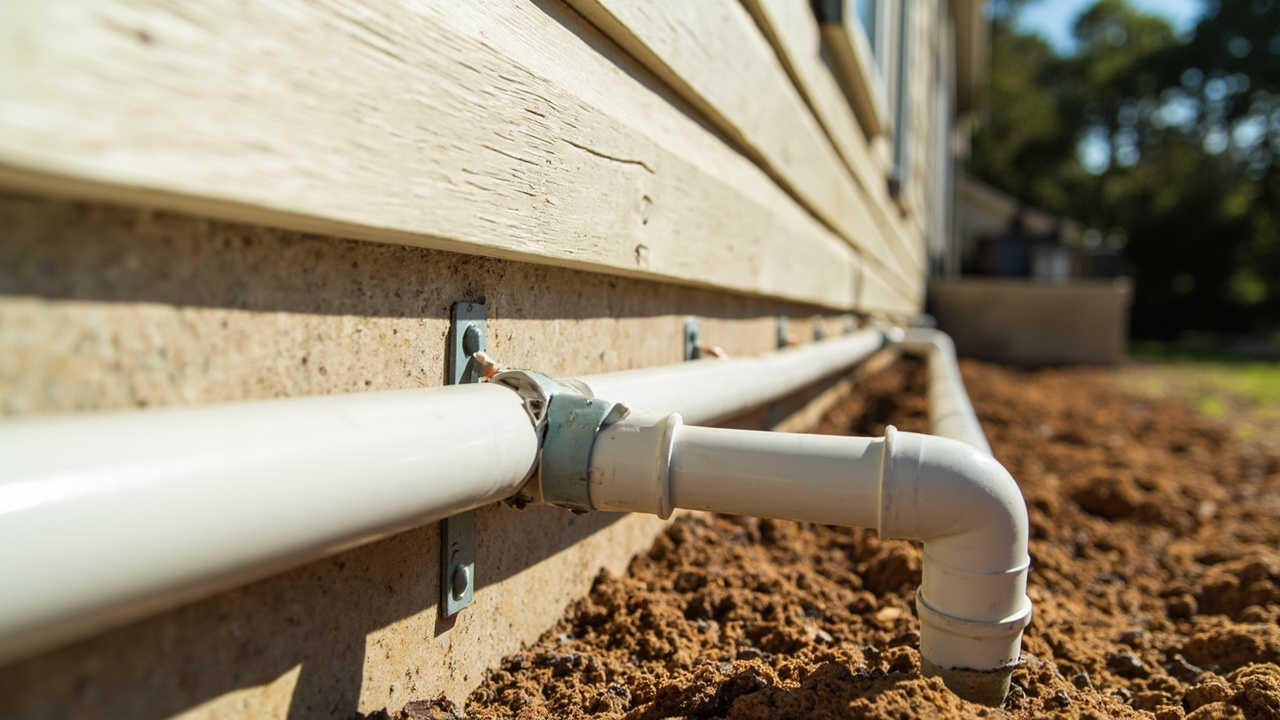
Clay soil under most of this county takes in rain slowly, so water pools in low yards and sits against foundations instead of draining away. A condensate line that empties at grade next to a slab is adding to that same problem every time the system runs, and the load calculation, blackland clay season here means that line runs for months on end. A tune-up traces the drain to where it discharges rather than stopping at the trap under the air handler, because a line dumping against the foundation is doing the opposite of what a homeowner wants on ground that already swells and cracks with moisture. Routing it to a trapped plumbing connection or well clear of the slab is part of what gets checked, not an afterthought once the coil and filter look clean.
The climate here gives equipment two real windows rather than one generic every year rule. Cooling season opens in spring and extends through fall, with peak demand arriving in midsummer when humidity climbs and fine cedar and oak pollen loads a filter fast. Heating season is short but includes hard freezes that ask a furnace or heat pump for full output with little warning. Scheduling a check before each of those stretches, rather than in the middle of one, catches a fouled coil or a slow drain before the humid late spring stretch raises the moisture load on the evaporator, and it catches equipment drift before that filter is fighting the coil for airflow during the most intense cooling demand. This rhythm keeps both seasons running at peak efficiency.
HVAC Services in The Waco Area
Explore our service area and locate Granite HVAC Waco with ease. We're proudly local and serve the surrounding neighborhoods with fast response and honest pricing. Use the map to check our coverage area, or call us and we'll confirm in seconds.
Address:
Granite HVAC Waco, Waco, TX, 76701
Additional Services We Offer
Changing the filter on schedule, keeping the area around the outdoor unit clear, and rinsing the condenser fins with a hose from the inside out are homeowner jobs. The boundary sits at the coil, the refrigerant circuit and anything behind the blower door or inside the electrical panel, because those carry pressure or line voltage. If a tune-up turns up a cracked heat exchanger or a leak inside the sealed circuit, we say so on the spot rather than after the invoice.
Before you call, know roughly when the filter was last changed and whether any room has felt weaker on airflow lately. If you know the age of the furnace or AC, that helps too. Check where the breaker for the outdoor unit and the thermostat are located so the technician can start there. Those few answers usually tell us whether this is a routine visit or needs a closer look first.
Last reviewed September 2026 by Dale Whitfield, Service manager.