




What ice on the coil means for a Waco air conditioner
A frozen evaporator coil shows up as weak or warm air even though the system is running, sometimes with visible ice on the indoor coil itself or on the suction line running out to the condenser. The coil is where refrigerant absorbs heat from the air moving across it, and that only works if enough air is moving across it at the right temperature split. When airflow drops, the coil surface gets colder than it was designed to run, moisture in the air freezes onto the fins, and the ice itself blocks even more air, so the problem gets worse the longer the system keeps running.
Waco's cooling season runs long, often opening in spring and holding through October, with the compressor cycling for many hours a day for months at a stretch. That kind of runtime loads a filter faster than a system that only works a few weeks a year, and cedar and oak pollen in the surrounding months add to what the filter is catching. A filter that would still be serviceable elsewhere can already be restricting airflow here, and a restricted filter is the single most common starting point for a frozen coil in this climate.
Ice on a coil is not itself the failure. It is the warning that airflow or refrigerant charge is already wrong, and running the system through it turns a fixable restriction into a mechanical failure. Two separate faults produce the same ice: a blocked airflow path starves the coil of warm return air, or a refrigerant leak means less refrigerant is available to carry heat away, so the coil runs colder than the charge was set for either way.
The sequence that matters most is this one. A loaded filter cuts airflow, the coil runs colder than the charge was set for, ice forms and thickens across the fins, and the compressor starts pulling liquid refrigerant back into itself instead of vapor. A compressor is not built to compress liquid, and that is how one blocked filter becomes a failed compressor. Once ice is visible on the coil or the line set, shutting the system off at the thermostat and letting it thaw is reasonable, but running it again without finding out why it froze repeats the same failure and moves it closer to the compressor.
More detail on ac leaking water is on its own page.
When we spec replacement equipment, ENERGY STAR's heating and cooling ratings are the baseline we work from.

How we trace a frozen coil back to its cause
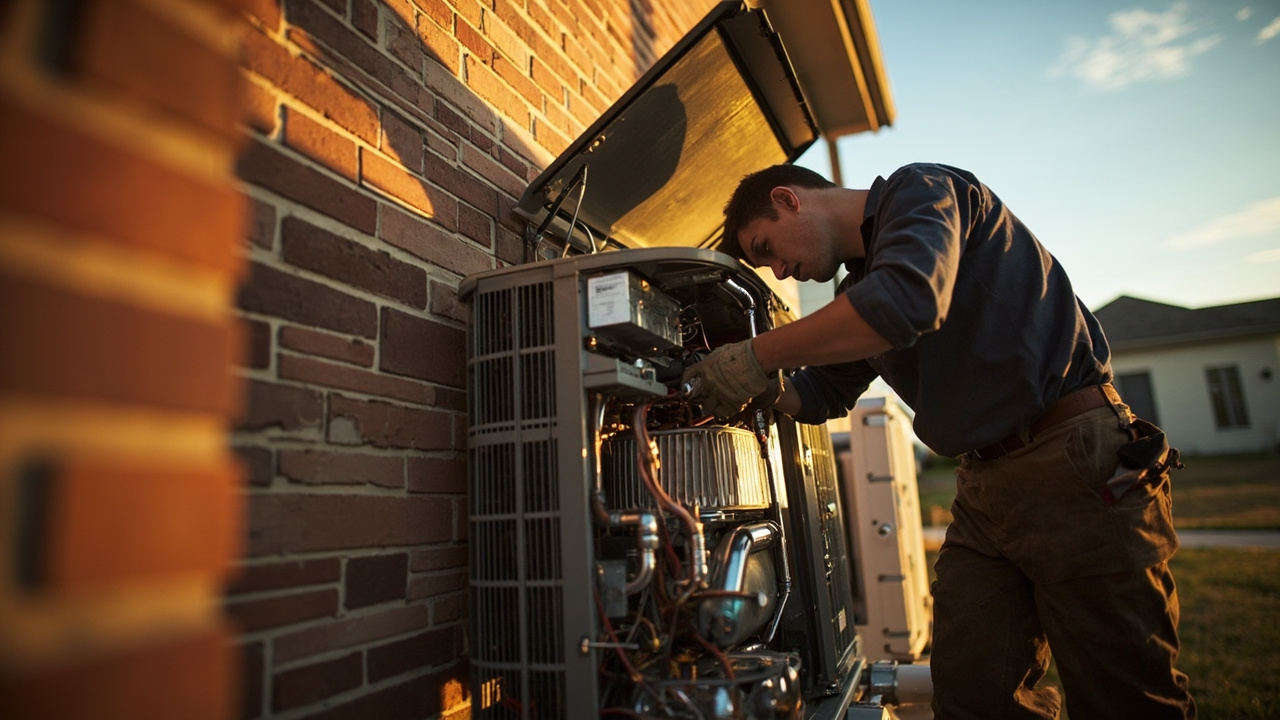
Airflow gets checked before refrigerant, in that order, because a correctly charged system behind a blocked filter or a fouled coil will still ice over, and charging it further only adds refrigerant to a system that was never short of it. The sequence starts at the filter, moves to the coil face and the return path, and only opens the gauges once airflow is confirmed clear.
The filter, coil and condensate inspection is the reading this visit turns on. Light should pass through the filter pleats, the coil fins should be clean rather than matted or iced, and the condensate pan should be dry with a clear drain. A filter that is loaded, a coil that is iced or matted, or a pan holding standing water tells us airflow or drainage is the fault, and the visit stays on airflow, defrosting the coil properly and correcting whatever is choking it rather than reaching for a refrigerant gauge. If that inspection comes back clean and the coil still iced, the next reading is the temperature split across the coil itself, and if that split is off with airflow already ruled out, the gauges go on to check superheat and subcooling against what the metering device calls for.
Refrigerant is not consumed in normal operation, so a system reading low charge has a leak somewhere in the sealed circuit, and adding refrigerant without finding that leak means the same ice returns within the season. On the equipment side, how a system stages its compressor affects how much this kind of icing shows up at all. A single stage unit runs at full capacity or not at all, while a two stage or variable capacity unit spends more of the day running at reduced output, which keeps the coil temperature steadier and the airflow more consistent across a long Waco cooling season. That difference matters more for a replacement decision than for a repair, but it is part of why the same house can have a coil that iced under one system and never iced under the next.
If this sounds close but not quite your situation, ac blowing warm air may be the better starting point.
Permit and inspection questions? Commercial Construction Permits is the office we coordinate with on every permitted Waco job.
Ask which of these readings was taken before any part is replaced.
| Instrument | Good reading | Bad reading | What it changes |
|---|---|---|---|
| Filter, coil and condensate inspection | Light passes through the filter pleats, the coil fins are clean | A matted filter, a coil with ice on it | A homeowner who has never seen the inside of their air handler makes a different decision |
| Flame sensor signal check in microamps | A steady signal well above the control board dropout point | A weak or drifting signal | The sensor is coated and the burner will drop out |
| Manifold gauges with superheat and subcooling readings | Superheat and subcooling both landing in the range the equipment maker specifies for that metering device | High superheat with low subcooling | An undercharge or a restriction rather than a weak compressor |
| Two probes for delta T between return and supply air | A 16 to 22 degree drop across the coil in cooling at normal indoor humidity | A small drop means airflow or charge is wrong | An unusually large drop means the coil is being starved of air |
| Manometer for total external static pressure across the air handler | Static pressure at or under the maximum printed on the blower data plate | Static above the rating | The filter, the coil or the duct is choking the system |
How a frozen coil call runs

Call and first look
On the phone we ask what you are seeing, when it started, and whether the system has been running the whole time or was shut off already. That tells us how far along the ice is and whether the visit should be same day. On arrival, the first look is visual, checking for ice on the indoor coil, on the suction line at the condenser, and inside the return ductwork, along with how long the system has been running and where the thermostat is set. That visual pass decides whether the coil needs time to thaw before anything else is checked.
Airflow and charge check
Once any ice has cleared, the filter comes out first, the coil face gets inspected, and the condensate pan and drain get checked for standing water. If that inspection is clean, a temperature split reading across the coil comes next, taken in the duct rather than at a register. If the split points to charge rather than airflow, the gauges go on to measure refrigerant pressure and temperature against manufacturer specifications for your metering device. If a refrigerant leak turns up, we say so before opening the system further and show you where it was found.
Confirming the fix
Before we leave, the system runs long enough to confirm the coil stays clear and the temperature split holds steady rather than drifting back toward the readings that caused the ice. We walk you through what was found, whether it was the filter, the coil, the drain or the charge, and you keep a record of what was checked and what was corrected. If the duct itself is part of the problem, that gets flagged as a separate conversation rather than folded into the same repair.
Why coil location and duct age change this job here
A crew that has not worked houses built across different decades tends to assume duct access looks the same everywhere, and on a frozen coil call that assumption costs time. Older housing with ducts run through low attics or through crawlspace framing has narrower filter and return access than newer construction with a full attic platform, so a technician who expects an easy pull can end up guessing at airflow instead of inspecting it. That guess is what turns a filter problem into a misdiagnosed refrigerant problem, since the coil looks iced either way and only the inspection tells you which fault caused it.
Duct age matters as much as duct location. Flex duct and duct board that have sat in attic heat for years lose their seal at the joints faster than newer material, and a leak in the supply trunk pulls hot attic air into the duct stream before it ever reaches the coil, which lowers effective airflow the same way a loaded filter does. A crew unfamiliar with how fast that material ages in this climate can clear the filter, watch the ice come back within days, and never look at the duct joints as the real restriction. Reading the coil, the filter and the duct together in one visit is what keeps a repair from being repeated on the next hot week.
The same failure mode appears in systems where supply and return ducts run parallel through unconditioned space. When the supply duct sweats and the insulation absorbs moisture over years, the material compresses and the joints separate, dropping static pressure and forcing the blower to work harder to move the same volume. A homeowner notices longer run times before calling, but a crew that does not trace the whole duct path can attribute it to a refrigerant shortage instead.
Coordinating calls across the greater metro follows the same priority every summer. A system already iced over and shut down waits behind a system still running and still freezing, because the running one is losing cooling capacity by the hour while the shut down one is stable. That ordering gets decided over the phone, from what the homeowner reports about runtime and filter condition, before a truck ever moves toward either address. Dispatch time is driven by which system is still in active decline.
See ac constantly running for how the related work is scoped and priced.
The U.S. Department of Energy's home heating and cooling guide explains the efficiency math behind our recommendations.
What the visit looks like from your side
Getting a visit scheduled
On the call we ask what the coil looks like, how long the system has kept running, and whether the thermostat has already been switched off. Those answers tell us whether the ice is still forming or already stable, which decides same day or scheduled. You get a window for the visit and a call ahead of arrival. If a job ahead of yours runs long because ice needs time to clear first, we tell you before your window slips rather than after.
Keeping the space clean
Before the filter comes out or the attic hatch opens, we lay down protection under the air handler and along the path to it, since a thawing coil means water is coming off the pan regardless of how careful anyone is. Tools stay staged on that same protected footprint instead of spread through the house. Anything removed, including a spent filter, leaves with us. The condensate area gets wiped down and the access panel goes back on square before we call the visit finished.
What moves the scope
A filter or a dirty coil moves the job toward a quick correction, while a duct that cannot carry enough air moves it toward a static pressure reading and a harder conversation about the duct itself. That static pressure check against the blower data plate is what tells us whether the duct is the real restriction rather than the filter. We write the scope from that reading. You see it and approve it before anything past the filter and coil gets touched.
How we vet field skill
A technician works alongside a lead on frozen coil calls before taking one alone, and the lead signs off specifically on reading a temperature split correctly and telling airflow faults from charge faults. That distinction is where most misdiagnosis happens in this trade, so it gets checked directly rather than assumed. On a coil that has iced more than once at the same house, a second technician looks at the duct and the sizing before we write a repeat repair.
You Have Questions,
We Have Answers
Cost depends on whether the fault is airflow, a refrigerant leak, or a duct restriction. A filter or condensate fix is the smallest job, a leak repair adds the sealed circuit work of finding and sealing it, and a duct that fails the static pressure check adds correction beyond the coil itself. We name which of those applies during the first visit and write the scope from the reading before anything past the filter and coil is touched.
Shut the system off at the thermostat and let the coil thaw before running it again. Running it iced pulls liquid refrigerant back into the compressor instead of vapor, which is how a filter problem becomes a compressor failure. Put towels under the air handler for the water that comes off the pan as it melts, and check whether the filter looks matted once you can see it, since that is usually where the restriction started.
Thawing takes several hours with the system off, longer if ice has built up thick across the coil fins and the line set. Running the indoor blower alone, without the compressor, speeds up the melt by moving room temperature air across the coil. Do not run the cooling cycle again until the coil is fully clear, because ice remaining on the fins narrows the passages between them and chokes off air movement.
Yes, ice melts on its own once the system is off and air keeps moving over the coil. Melting the ice does nothing about what caused it, so a matted filter, a fouled coil or a low charge is still there once the coil looks clear. Granite HVAC Waco checks the filter, coil and condensate before recharging anything, and running the system again without that check usually brings the ice back within days. Call (254) 221-8461 to get it checked before it refreezes.
Why long Waco summers make coil icing more common here
Waco runs a long, humid cooling season that opens in spring and holds through fall, with the compressor working for hours at a stretch through the hottest months. That kind of sustained runtime means a filter is doing more work here than it would in a climate with a shorter cooling season, and it means a coil that is already marginal on airflow gets pushed into icing faster during peak summer than it would during a mild stretch. Housing built through the mid century decades commonly runs its ducts through the attic, where summer heat adds load to the duct itself before the air ever reaches the coil, compounding whatever airflow restriction already exists at the filter or the return. Attic temperatures regularly exceed 130 degrees during July and August, accelerating refrigerant cycling and shortening service intervals.
Sizing matters as much as airflow once the ductwork is accounted for. A system sized from a proper manual J load calculation matches its capacity to the house and the duct it is paired with, while a system sized off the old equipment or off floor area alone tends to run either too long or too short for the load. An undersized system in a Waco summer runs almost continuously trying to satisfy a thermostat it cannot reach, which starves the coil the same way a blocked filter does, and an oversized system short cycles and never gets the coil cold enough for long enough to remove the humidity load properly. Either mismatch shows up first as a coil that ices more than it should for the runtime it is getting.
HVAC Services in The Waco Area
Explore our service area and locate Granite HVAC Waco with ease. We're proudly local and serve the surrounding neighborhoods with fast response and honest pricing. Use the map to check our coverage area, or call us and we'll confirm in seconds.
Address:
Granite HVAC Waco, Waco, TX, 76701
Changing a filter on schedule and keeping the outdoor unit clear of debris are genuinely homeowner tasks, and you do not need a call for either one. The boundary sits at the sealed refrigerant circuit and anything behind the blower door, because pressurized refrigerant and line voltage there are not safe to work on without the right equipment. If a first visit turns up a duct sizing issue rather than a simple airflow fix, we say so on the spot rather than folding it into the repair.
Before you call, know when the ice or the weak air started and whether the system has kept running since. Check whether the filter looks matted when you pull it, and know roughly how old the outdoor unit and indoor coil are if you have that on record. If the thermostat has been switched off already, mention that too, since it changes how far along the coil is in thawing.
Last reviewed September 2026 by Dale Whitfield, Service manager.