

When a new smart thermostat makes the system short cycle
Your app shows the compressor turning on and off every few minutes instead of holding one steady run, and the house never quite settles at the number you set. That fast cycling usually traces back to how the new thermostat was wired rather than to anything wrong with the compressor itself. A single stage control talking to a two stage or variable capacity condenser, or a common wire pulled from the wrong terminal, tells the outdoor unit to start and stop far more often than the equipment was built to handle.
Waco pushes this problem harder than a milder climate would. With cooling season running from spring into October and many days sitting in the mid to upper nineties, a thermostat that mis-stages the equipment is not just cycling wrong for a few afternoons a year. It cycles wrong for months, every time the system calls for cooling. The compressor spends the whole season taking more starts than the stage count and the run capacitor were sized for. Each extra start is a stress event the motor was not designed to repeat this many times.
That wear shows up in a fixed order. A capacitor already working near its limit weakens further under the extra starts, and once it is weak the compressor pulls high amps on every attempt to start rather than settling into a normal running current. The amp draw during startup is where capacitor failure becomes visible on an amp meter. Left long enough, that current heats the windings past what the insulation can take, and a job that would have been a capacitor swap becomes a full condenser replacement.
The timeline matters more in a hot climate. A thermostat wiring mistake that might cause slow degradation over two or three years in a northern climate can compress that same damage into a single season here. The compressor may run fine through spring, but by mid summer the accumulated stress from thousands of extra starts shows as higher amp draws and slower cooling recovery.
If the thermostat is short cycling and you can hear the outdoor unit trying to start more than once in a short stretch, that is the point to call rather than wait out the season. Watching the display cycle faster than usual for a week or two is the signal that the wiring and stage settings need to be checked before the next heat stretch runs the compressor through it again. The fix at this stage is straightforward rewiring or a settings adjustment.
If this sounds close but not quite your situation, emergency thermostat replacement may be the better starting point.
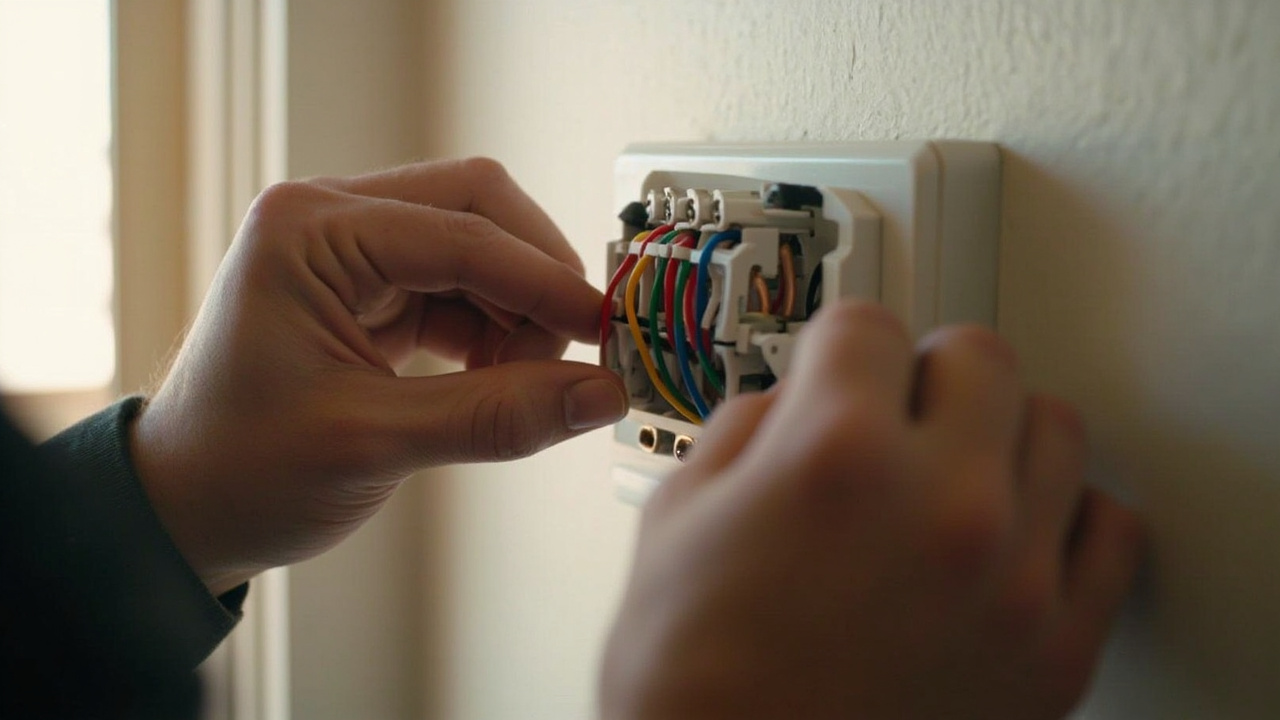
Find the sign you have, then read across to see whether it can wait.
| Symptom or first sign | What is already happening | What it becomes if ignored | When to call |
|---|---|---|---|
| A weak run capacitor | The compressor pulls high amps every time it tries to start | The windings overheat and what was a part becomes a whole condenser | Now, the same day |
| A cracked heat exchanger | Combustion gas mixes with the air being blown through the house | Carbon monoxide reaches the living space | Now, the same day |
| A slow refrigerant leak | The system runs longer for less cooling and oil stops circulating properly | The compressor loses lubrication and seizes | This week, while it is still one part |
| A coated flame sensor | The burner lights and drops out again and again | The board locks out on repeated trials and the house goes cold overnight | At the next visit, while the fix is small |
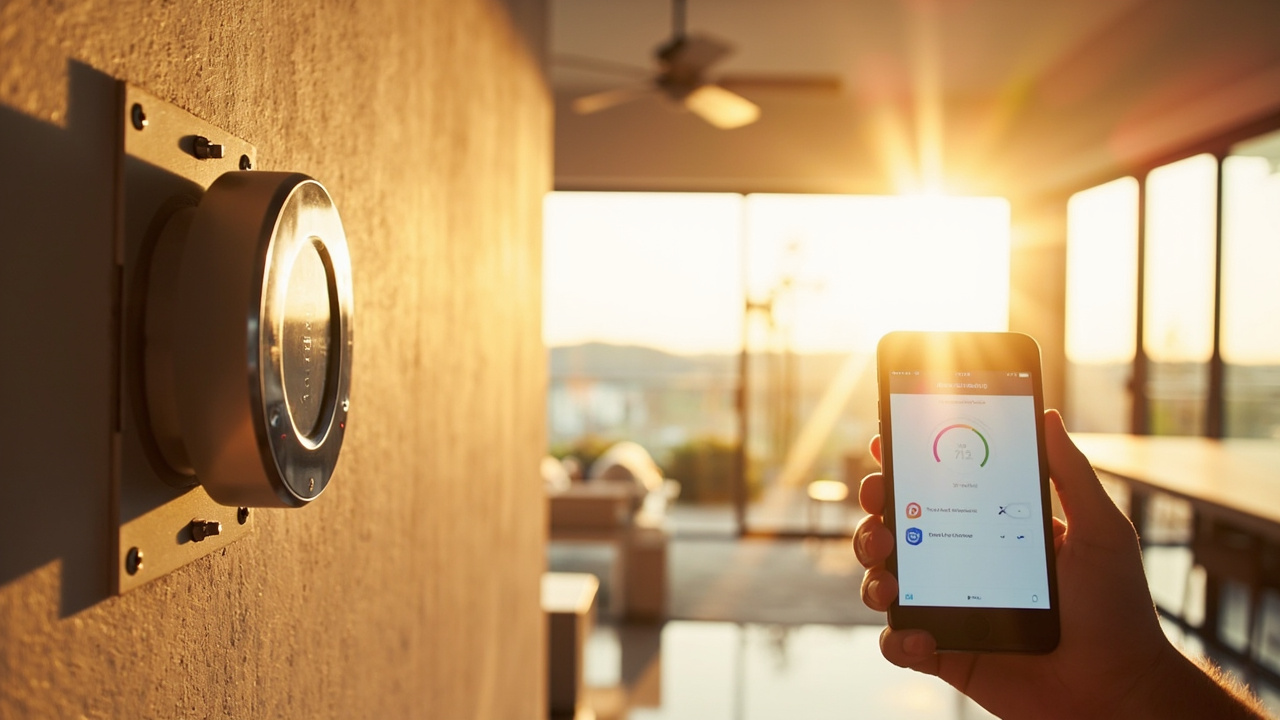
How we check the equipment before we program the thermostat
We start at the equipment, not the wall plate, because a thermostat can only report what it is told, and it has to be told the right thing. The technician pulls the furnace or air handler cover and reads the control board directly: stage count, terminal labeling, and whether a common wire is landed at all. That reading gets compared against what the old thermostat had wired to it. A mismatch here, a single stage thermostat wired to a two stage board, or a common wire pulled from a spare terminal instead of a dedicated C, explains fast cycling far better than a bad compressor does.
Once the wiring is confirmed, two probes go into the duct close to the coil to read delta T between return and supply air. A drop that lands in the range a correctly loaded system should produce means the equipment is moving air the way it was designed to, and the thermostat can be programmed to match the stage count the board reported. A drop that comes in low or high points somewhere else first: restricted airflow, low charge, or a coil starting to freeze. None of that gets solved by reprogramming a thermostat. The delta T reading is what decides whether the visit ends at the wall plate or moves to the equipment itself.
The staging comparison matters here. A single stage condenser runs at one speed and gives the thermostat one signal to send. A two stage or variable capacity condenser runs longer at lower output, which pulls more moisture out of the air during humid stretches and holds a steadier setpoint. This advantage only materializes if the thermostat is set to the stage count the equipment has. The board reports the stage count directly during the control board inspection, and that number must match the thermostat programming.
Programming a variable capacity system as if it were single stage throws away the runtime advantage it was bought for. That gap between intended performance and actual performance only shows up once the delta T and board readings are checked against each other. A technician who skips the duct reading and the board inspection, and goes straight to reprogramming, misses the real problem entirely. The equipment specifications and the thermostat settings have to be in alignment for the system to deliver what it was designed to deliver.
See thermostat not working for how the related work is scoped and priced.
Narrow this to two options before calling, then ask which one suits the house.
| Option | The numbers a buyer weighs | Best suited to |
|---|---|---|
| Single stage against two stage against variable capacity cooling | Compared on the SEER2 efficiency rating | Two story homes that never feel even |
| Filtration choice | Compared on MERV rating against pressure drop | Allergy households with duct that can take it |
| Heat pump against gas furnace | A heat pump is rated on HSPF2 and its output falls as the outdoor temperature drops | Climates where the winter low decides the choice |
How a thermostat installation visit runs
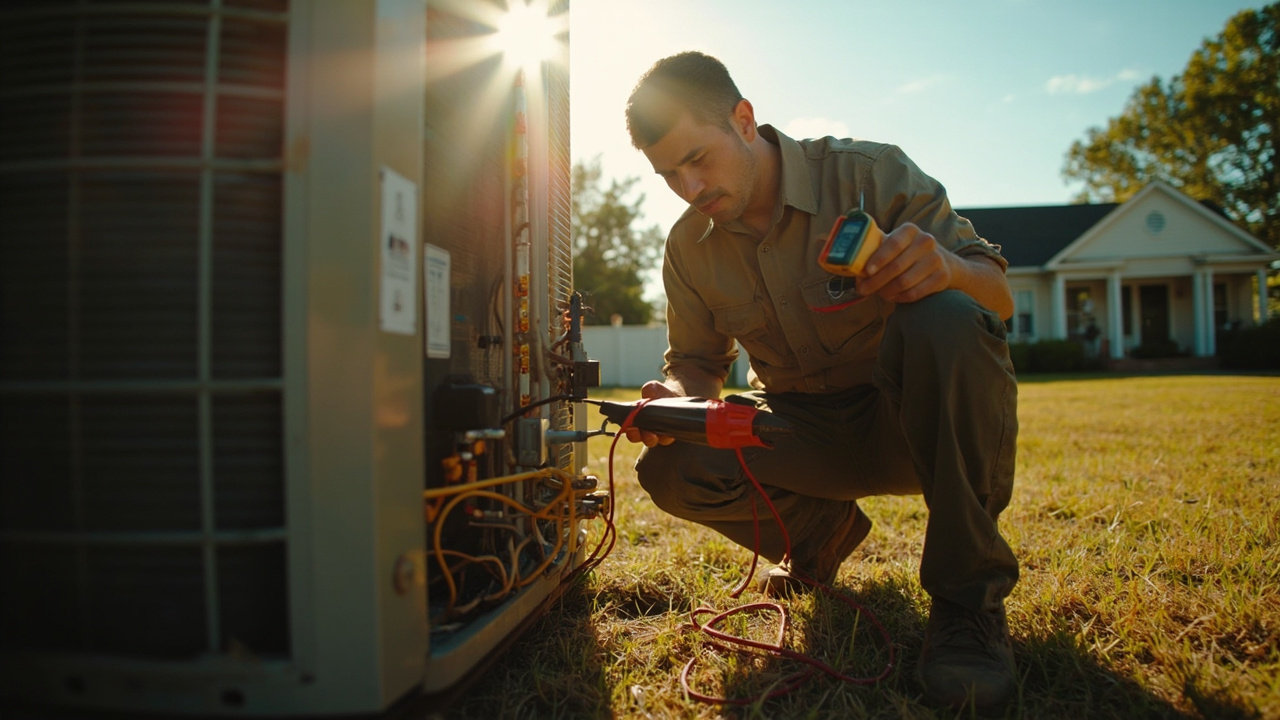
Call and equipment check
On the phone we ask what the thermostat display is doing, how old the equipment is, and whether the old thermostat has a common wire terminal used. On site, we start at the equipment rather than the thermostat, pulling the furnace or air handler cover to read the stage count and terminal wiring off the control board and comparing it against what is landed at the wall. That comparison decides whether the thermostat can be swapped as is or whether the wiring needs correcting first.
Wiring and programming
Once you approve the scope, we isolate power at the equipment before touching any wiring. Adding or correcting a common wire, landing the stage terminals, and setting the fan configuration come next, followed by programming the thermostat to match what the board reported rather than the app's default profile. If we find a stage mismatch or a wire that was never run to begin with, we stop and show you what is behind the panel before changing anything further.
Reading and handover
Before we call the job finished, two probes go into the duct near the coil to read the delta T between return and supply air, looking for a drop in the range a properly loaded system produces. We walk you through what the thermostat is now set to do at each stage and leave you with the equipment's stage count and wiring notes so any future service call starts from a known setup rather than a guess.
Why the equipment behind the wall wins over the app defaults
A crew that does not work Waco systems regularly tends to treat every thermostat install the same, wiring in whatever the box calls for and trusting the app's default stage settings. Older homes across the city and the county were often built for simple two or four wire mercury thermostats with no dedicated common wire run to the equipment. Landing a smart thermostat on that wiring without adding a common conductor, or without confirming the furnace board has a C terminal at all, leaves the thermostat drawing power through the same path it uses to signal the compressor, which is what produces the fast, unexplained cycling homeowners call about.
The mismatch gets worse on systems that were upgraded over the years without matching every component. A furnace replaced once and an outdoor condenser replaced again later can leave a two stage control board paired with equipment the installer assumed was single stage, because nothing on the thermostat display tells you that on sight. Programming defaults instead of reading the board means the thermostat runs the compressor on a cycle rate it was never built for, and the wear from that shows up as failed capacitors and contactors long before anyone traces it back to the thermostat install.
Because this happens on any given day across the county rather than on one street at a time, response gets planned around equipment mix as much as location. A crew that knows the common wiring gaps in older housing stock and the stage mismatches left behind by piecemeal upgrades checks for both before touching the thermostat. The verification step includes examining the furnace control board terminals, testing for a return path to ground, and confirming that any existing common wire can handle the current draw of the new thermostat's power demands. This is the difference between a call that gets fixed once and one that comes back within the season, recurring until the underlying wiring or equipment mismatch gets corrected at the source.
Our page on smart thermostat buying guide covers that side of the work in more depth.
Permit and inspection questions? Commercial Construction Permits is the office we coordinate with on every permitted Waco job.
What the visit looks like once you call
Scheduling around your equipment
When you call, we ask what the thermostat is doing, how old the furnace and outdoor unit are, and whether the old thermostat had a common wire landed. Those answers tell us if this is a same day visit or one that needs a longer slot to check staging and wiring. You get a window before anyone arrives, and if the job ahead of yours runs long because a control board needs more time, we call to move the window rather than leave you guessing.
Keeping your walls and equipment clean
Pulling a control board cover or an old thermostat plate can drop drywall dust and old wire clippings, so we lay down a drop cloth at the wall and the floor below the furnace or air handler before anything comes apart. Wire ends get capped and tucked rather than left loose behind the plate. Once the new thermostat is wired, programmed and the delta T check is done, the area gets wiped down and the old thermostat and any clipped wire go out with us.
What moves the price
The biggest factor is what the controls call for. A basic thermostat swap on existing wiring is the simplest case, adding a common wire where one was never run adds work, and zoning dampers or a communicating system that talks directly to the outdoor unit both add setup time. We write the scope after checking the board and the wiring, and you see that scope and approve it before we program anything or close up the wall plate.
How technicians learn the boards
A new technician runs a set number of thermostat and control board visits alongside a lead before working alone, and the lead signs off on reading a board correctly, matching stage count to the thermostat, and taking a clean delta T reading at the coil. On any system with zoning or communicating equipment, a second technician looks at the wiring diagram before the scope gets written, since a mismatch there is what causes callbacks.
You Have Questions,
We Have Answers
Cost depends mainly on what the wiring and controls call for. A straight swap onto existing wiring with a common wire already run costs less setup time than adding a common conductor, and zoning dampers or communicating equipment that talks directly to the outdoor unit add programming work on top of the mount. We confirm which of those apply before quoting anything.
Usually not, since thermostat wiring runs on low voltage control wire rather than household current. Where it crosses into electrical work is a dedicated circuit or line voltage feeding the equipment itself, and that is outside a thermostat install and where a homeowner job stops as well. Most calls stay on the control board side, checking terminals and stage settings rather than house wiring.
A smart thermostat requires the correct stage count and common wire setup for the equipment behind the wall during installation. Installers who trust the app's default profile instead of reading the control board end up with a system that short cycles on a perfectly good condenser.
Why Waco's cooling load decides how a thermostat gets programmed
Waco holds a long, hot cooling season, with many days in the mid to upper nineties from spring into October, so a thermostat here spends far more hours calling for cooling than one in a milder climate. A tight temperature swing that would barely be noticed over a short season adds up to a compressor starting far more often across months of that heat. Winter runs mostly mild with short hard freezes, so a heat pump paired with a smart thermostat needs its backup heat stage programmed correctly for those freezes rather than left on a default setting that either wastes strip heat or leaves the house cold during the coldest nights of the year. Proper sequencing between stages prevents short cycling during shoulder seasons when outdoor temperatures fluctuate rapidly.
The late spring and early summer stretch in this area carries heavier humidity than the dry heat of high summer, which raises the latent load on the equipment even when the temperature itself is not at its peak. A two stage or variable capacity system programmed to run its lower stage longer during that stretch pulls more moisture out of the air than one set to cycle hard and shut off once the thermostat is satisfied. Getting that staging right depends on the delta T reading taken at install, since a thermostat cannot be trusted to manage humidity correctly on equipment whose real capacity was never confirmed. Without this measurement, the system may short cycle and fail to dehumidify the space adequately during the critical transition months when occupant comfort depends most on moisture control.
HVAC Services in The Waco Area
Explore our service area and locate Granite HVAC Waco with ease. We're proudly local and serve the surrounding neighborhoods with fast response and honest pricing. Use the map to check our coverage area, or call us and we'll confirm in seconds.
Address:
Granite HVAC Waco, Waco, TX, 76701
Additional Services We Offer
Changing batteries, rebooting the app, or adjusting a schedule you already set up is genuinely something you can do yourself. Where it stops is opening the control board or running new low voltage wiring, because a miswired common or stage terminal can damage the board. If the equipment itself turns out to be undersized or failing for the load, we say so on the first visit rather than after the thermostat is already mounted.
Before you call, know what the thermostat is doing: short cycling, holding a setpoint intermittently, or not responding at all, and when it started. Have the age of your furnace and outdoor unit if you know it, and check whether your old thermostat has a common wire terminal. Those answers tell us whether this is a same visit fix or one that needs a closer look at the equipment first.
Last reviewed September 2026 by Dale Whitfield, Service manager.