




What a lockout on an old Waco heat system usually means
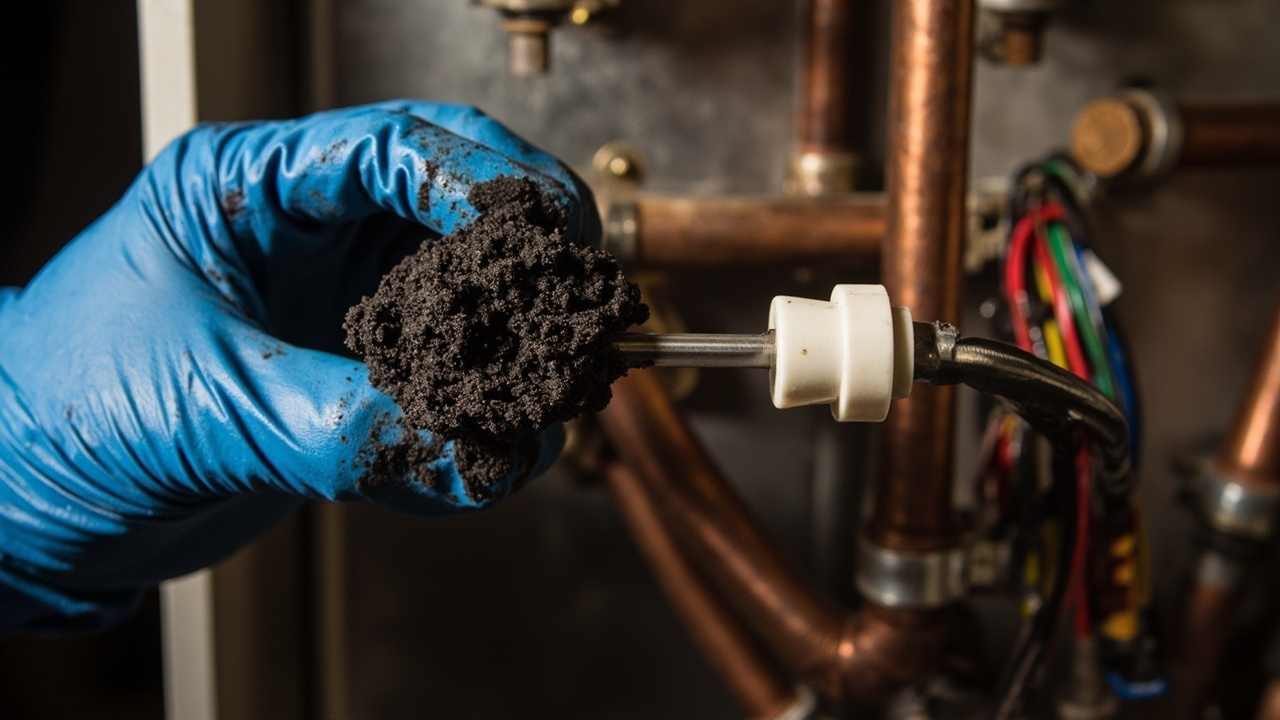
A lot of Waco calls that get called boiler trouble start the same way. The heat lights, runs for a few minutes, and quits, then relights an hour later like nothing happened. Some nights it holds through till morning and some nights it locks out three or four times before dawn. A few callers mention a faint exhaust smell near the floor grate or the closet door, and that detail changes how we answer the phone.
Most of what looks like a failing boiler in an older Waco house is a flame sensor coated enough that the signal drops below what the control board will accept, or a pressure switch stuck open because the flue or the condensate trap is blocked. Either fault produces the same lockout pattern a homeowner describes, the burner lighting and dropping out again and again until the board stops trying. Neither one means the appliance itself is dying, and neither shows up as a smell or a sound anyone can diagnose from the hallway.
Houses built before the 1930s in Waco were raised on pier and beam foundations with the original heat tied to a floor opening or a gas space heater, long before central cooling reached these blocks. Central air came later, often as a window unit before any duct went in, so the heating side of the house can still be the original appliance sitting in an opening nobody has looked at closely in years. That age is exactly why a lockout on this equipment gets treated differently than one on a newer furnace in a closet.
A locked out burner is a control problem until a heat exchanger is involved, and that is the fork that ends a repair conversation. A cracked heat exchanger lets combustion gas mix with the air the blower is pushing through the house, and once carbon monoxide reaches the living space the appliance gets shut off on the spot rather than patched and left running. That is the point where waiting stops being reasonable. Every visit on one of these older appliances ends with a combustion reading taken at the return air register and at floor level near the appliance itself, captured on an instrument rather than left as a guess or a reassurance based on what the homeowner remembers from a previous year.
Our page on commercial boiler services covers that side of the work in more depth.
Your local utility, Utility Bill City of Waco, publishes service and water-quality information every Waco homeowner should know.
Find the sign you have, then read across to see whether it can wait.
| Symptom or first sign | What is already happening | What it becomes if ignored | When to call |
|---|---|---|---|
| A cracked heat exchanger | Combustion gas mixes with the air being blown through the house | Carbon monoxide reaches the living space | Now, the same day |
| A coated flame sensor | The burner lights and drops out again and again | The board locks out on repeated trials and the house goes cold overnight | At the next visit, while the fix is small |
| A loaded filter | Airflow drops and the coil runs colder than it was designed | The coil ices over and the compressor takes liquid refrigerant back and fails | This week, while it is still one part |
How we decide if the old system is worth repairing
The first thing we do on an old heat system is confirm what is installed, since a floor furnace, a closet mounted unit and a true hydronic boiler get worked on in different order and with different parts on the truck. Once the equipment is identified, we prove ignition, then flame signal, then draft, in that sequence, because a coated flame sensor and a pressure switch held open by a blocked flue produce the identical lockout pattern from the hallway. Only after those three hold do we move to a temperature rise check against the data plate, which tells us whether the heat exchanger is doing its job before combustion ever gets measured.
The reading that ends the visit one way or the other comes from the combustion analyzer in the flue, run after the burner has settled rather than on the first minute of firing. Carbon monoxide has to hold low and steady with oxygen sitting where the appliance maker expects it. A number that climbs through the run, or any carbon monoxide reaching the space around the unit, ends the visit with the appliance shut off rather than repaired, because that reading points at a cracked heat exchanger rather than a part that can be swapped. A clean, steady reading means the fault sits with the ignition or draft components checked earlier, and that is where the repair stays.
Once a system is old enough that repair is a real question, the comparison worth having is heat pump against gas furnace rather than boiler against anything else, since true hydronic heat is rarely what is behind these calls. A gas furnace is rated on AFUE and delivers the same heat output no matter how cold the night gets, which matters here because winters are mostly mild but broken by short hard freezes that push heating equipment hard for a few days at a time. A heat pump is rated on HSPF2 and its output falls as the outdoor temperature drops, so it needs backup heat once the weather turns. A dual fuel setup that switches between a heat pump and a gas furnace at a set balance point often fits a house that only sees real cold a handful of nights a year. The choice between them turns on how many nights that year the outdoor temperature will drop below the balance point, what your electric and gas rates are, and whether the existing ductwork and refrigerant lines can support the heat pump without major reconstruction.
If this sounds close but not quite your situation, emergency boiler repair may be the better starting point.
Narrow this to two options before calling, then ask which one suits the house.
| Option | The numbers a buyer weighs | Best suited to |
|---|---|---|
| Heat pump against gas furnace | A heat pump is rated on HSPF2 and its output falls as the outdoor temperature drops | Climates where the winter low decides the choice |
| Single stage against two stage against variable capacity cooling | Compared on the SEER2 efficiency rating | Two story homes that never feel even |
| Packaged rooftop unit against a light commercial split system | Compared on tonnage per cabinet | Commercial buildings on a capital plan |
Heat system call process
Identifying the equipment
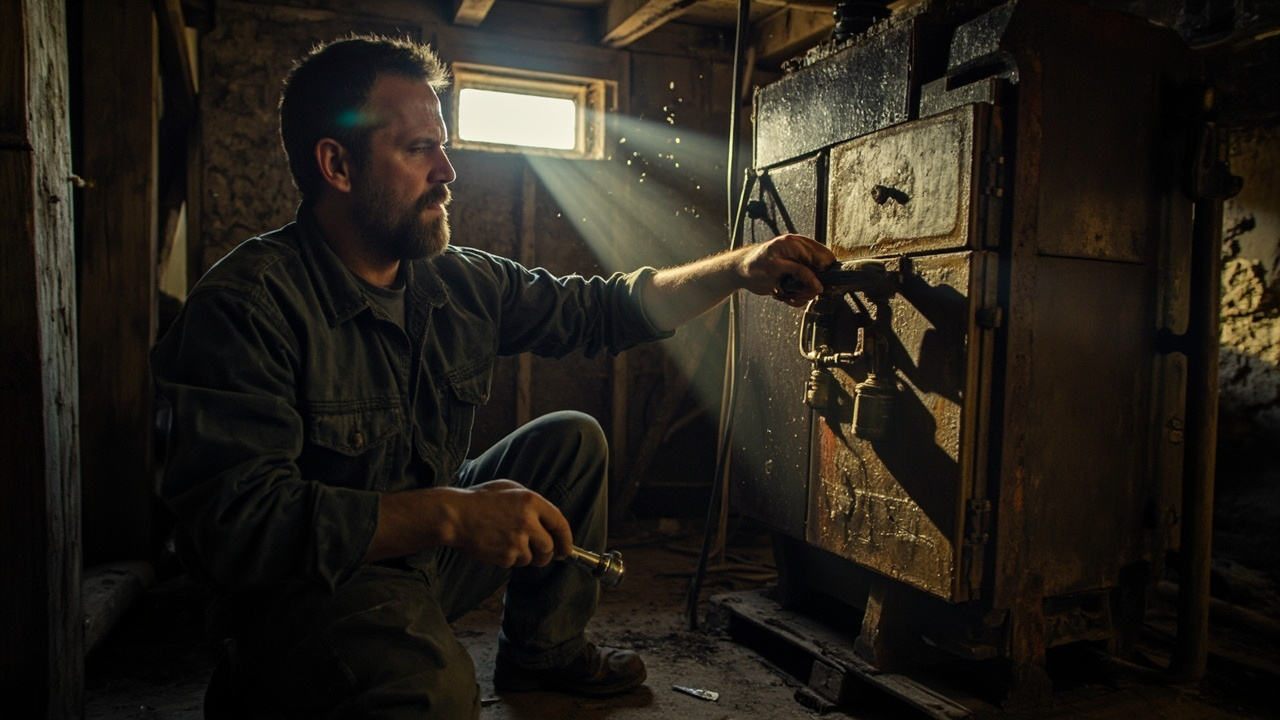
On the phone we ask what the unit looks like, whether it's a floor opening, a closet unit, or something else, when the trouble started, and whether anyone smells exhaust near it. On site, the equipment gets identified before anything is touched, since a lot of what gets called a boiler here is a gas fired floor furnace or space heater rather than a hydronic system. That identification decides which checks come next and which parts are even available for the unit in front of us.
Proving ignition and draft
With the equipment identified, we prove ignition, flame signal, and draft in that order, since a coated flame sensor or a stuck safety switch from flue blockage produces the exact same lockout pattern a homeowner describes on the phone. If something turns up behind the burner compartment, like scorching or a hairline crack near the heat exchanger, we stop and show you before going further, because that finding changes whether repair is still an option.
Reading combustion before we leave
The combustion analyzer goes into the flue and stays there until the burner has run long enough to settle, since early readings are always off. If carbon monoxide or oxygen drift outside the manufacturer's specification, the appliance shuts down immediately instead of continuing to operate. You get the readings explained in plain terms and, if the appliance passes, a note of what was checked for your records.
Why older Waco heat systems need someone who has seen them before
A crew that has not worked much of this county tends to quote for a repair on the wrong appliance. They hear boiler on the phone and price parts for a hydronic system, then find a floor furnace or a gas space heater on site and either mark up the visit or try to force a hydronic fix onto equipment that was never built for one. That mismatch costs the homeowner a second visit and, on a locked out burner, another cold night before anyone touches the real fault.
Houses old enough to have this equipment were built on pier and beam foundations with the floor raised off the ground, and the heat opening usually sits in that raised floor rather than in a basement or a slab closet. Reaching the burner compartment can mean working from underneath through a crawlspace access rather than standing in a hallway, and a technician who expects a modern closet furnace brings the wrong tools and the wrong posture for that job. Rigging a replacement appliance through a tight floor opening or a low crawlspace takes more time than swapping a unit that sits in an open closet, and that access difference belongs in the estimate before the first tool comes out, not after.
The scope of work on older residential streets across the county shifts with each address. One house may have a gravity furnace with a standing pilot, the next a sealed combustion unit with electronic ignition, and a third a vented heater that serves only one room. Equipment lifespan, local water chemistry, and the venting pathway all drive what fails and how to fix it. A technician who has worked a run of these calls confirms what is installed as the first step rather than the last, measures the flue gas with a combustion analyzer before any parts are ordered, and builds the estimate around the actual unit and its access conditions rather than guessing from the phone call. That order is the difference between a visit that ends with a combustion reading and one that ends with a return trip.
See ac installation & replacement for how the related work is scoped and priced.
What the job looks like from your side
Scheduling around a cold house
You call, we ask what the unit looks like, when the lockout started, and whether it happens every night or only some, and that tells us whether this is a same day visit or one that can wait a day. If anyone in the house needs steady heat overnight, we move the visit up. You get a window rather than an all day wait, and if the job ahead of yours runs long because a heat exchanger turns up cracked, we call to reset the time instead of leaving you guessing.
Keeping the house clean
Floor furnace grates and crawlspace access panels carry years of dust, so a drop cloth goes down before anything lifts out of the floor. Tools stay staged on that cloth rather than spread across the room, and anything pulled from the crawlspace or the closet gets bagged rather than set on the carpet. Once the combustion reading is taken and the appliance is back together, the grate or panel goes back flush and the area gets a final wipe down before we leave.
What moves the price
The biggest swing on an old system is access. A closet unit with an open front is a straightforward repair, while an appliance under a raised floor or behind a tight crawlspace opening adds time before any tool even reaches the burner. That access difference, along with whether parts for that specific unit are still made, sets the written scope, which you see and approve before any repair or replacement starts. Nothing gets swapped on a guess about what the space allows.
How we judge who works alone
A technician does not run one of these calls alone until a lead has watched them prove ignition, flame signal, and draft in the right order and read a combustion analyzer correctly on a live appliance. The lead signs off on that combustion reading specifically, since it is the one call that ends a job with the equipment shut off. On anything where a heat exchanger crack is suspected but not obvious, a second technician looks at the reading before we tell you the appliance is done.
You Have Questions,
We Have Answers
Cost depends mainly on how hard the equipment is to reach and whether parts are still made for it. A closet furnace with an open front costs less to work on than a floor furnace under a raised pier and beam floor, since reaching the burner there takes more time before any part is touched. Older units also run into parts that are no longer made, which shifts the conversation from repair to replacement. We name these factors during the visit and write the scope before anything is repaired or replaced, so you approve the direction before work starts.
Why pre war Waco houses change how this job gets done
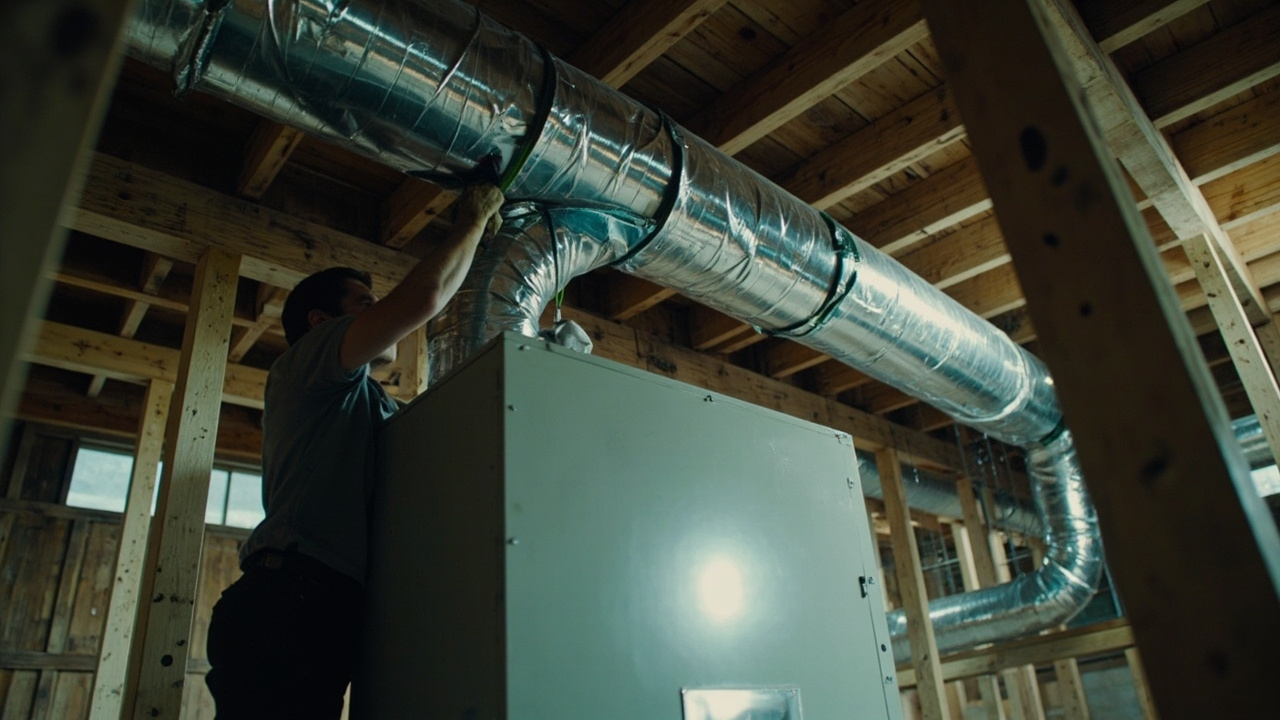
A lot of the housing stock where boiler calls come from in Waco is wood frame construction on pier and beam foundations with raised floors, built before central cooling was standard. Central air on these houses was usually added later, often starting with window units before duct went in at all. Because of that, what looks like a boiler search is more often an old gas fired floor furnace or space heater still feeding an original opening in the floor, sometimes alongside duct that was added and resized more than once as the cooling load grew. Ducts on this housing run through crawlspaces or shallow attics that were never designed for the equipment now tied into them, and returns are often small or centrally placed, which limits how much air a replacement system can move without changes to that path.
On a house like this, the work is checked against the readings taken on site rather than a look at the equipment. The combustion analyzer reading gets recorded once the burner settles, and that number, not an assumption about the appliance's age, is what decides whether it stays in service. Knowing that a floor opening or an added duct run is likely on a pre war house changes the order things get checked in, since combustion gets confirmed before any duct or access work starts, and that sequencing is what keeps a job from being reopened once the actual equipment behind the wall is found.
HVAC Services in The Waco Area
Explore our service area and locate Granite HVAC Waco with ease. We're proudly local and serve the surrounding neighborhoods with fast response and honest pricing. Use the map to check our coverage area, or call us and we'll confirm in seconds.
Address:
Granite HVAC Waco, Waco, TX, 76701
Additional Services We Offer
Changing filters, keeping clearance around outdoor equipment, and checking a thermostat or breaker before calling are genuinely homeowner tasks. Where it stops is anything behind a blower door, inside an electrical panel, or at a gas burner and flue, because those carry live voltage or combustion gas. If what we find on the first visit turns out to be water side plumbing work on true hydronic equipment, we say so and tell you it's outside what this visit covers.
Before you call, know when the lockout or cold spell started and how often it occurs. Note whether the equipment is in a floor opening, a closet, or a crawlspace, and whether you smell anything near it. Any age you have for the unit helps, and knowing whether anyone is in the house right now matters if it's a cold night.
Last reviewed September 2026 by Dale Whitfield, Service manager.