




Why a feature list will not tell you what to buy
Most people start shopping for a smart thermostat by comparing screens, scheduling apps and voice control. None of that tells you whether the thermostat will run your equipment. A thermostat is a low voltage switch that tells your furnace, air handler and outdoor unit when to fire, and it can only send signals your equipment is built to receive. If your control wiring does not include a common wire, some smart thermostats will not hold a steady connection to the app and may drain a battery pack that runs the display. If your furnace has two stages of heat or your outdoor unit is a heat pump, a thermostat built for a basic single stage system will not know how to call for the second stage or for backup strip heat.
In Waco, this matters because the housing stock spans several equipment generations. Older homes with a gas furnace added later often have the furnace in a hall closet or garage with attic ductwork, wired for basic heat and cool with no common wire ever pulled. Newer construction from the 1990s forward usually has the air handler in the attic with a heat pump or two stage furnace, wired for more zones of control. A thermostat bought for one configuration and installed on the other either fails to control the equipment correctly or runs it in a way that shortens component life. The mismatch between thermostat capability and system wiring is invisible until the device is powered up and put to work.
The system-type mismatch is why a coated flame sensor turns into an overnight no-heat call instead of a minor service item. A furnace with a weak or drifting flame sensor signal will light, run briefly, and drop out. If the thermostat is not correctly matched to the control board, or if wiring meant for a single stage system is asked to manage staged heat calls it cannot interpret, the burner keeps trying to light and dropping out through the night. Enough failed attempts and the control board locks out entirely, and the house is cold by morning with nobody home to catch it early. The sequence unfolds over hours, leaving you without heat when you need it most.
None of that gets fixed by buying a different brand of thermostat. It gets fixed by confirming what your system is, what your wiring supports, and matching the thermostat to both before it goes on the wall. That confirmation step protects your equipment and prevents the control failures that wake you to a cold house.
If this sounds close but not quite your situation, smart thermostat installation may be the better starting point.
Heat pump against furnace, and what each expects from the thermostat
A heat pump and a gas furnace ask different things of a control system, and a thermostat that does not understand the difference will run either one poorly. A furnace delivers the same heat output at any outdoor temperature, so a basic call for heat is enough. A heat pump loses capacity as the outdoor temperature drops, and its output eventually falls below what the house needs. At that point the system needs backup heat, either strip heat inside an electric air handler or a gas furnace in a dual fuel setup, and the thermostat has to know the outdoor temperature at which to make that switch. That switchover point is the balance point, and a thermostat with no way to read or set it will either bring on expensive backup heat too early or leave the house short of heat too long during a hard freeze.
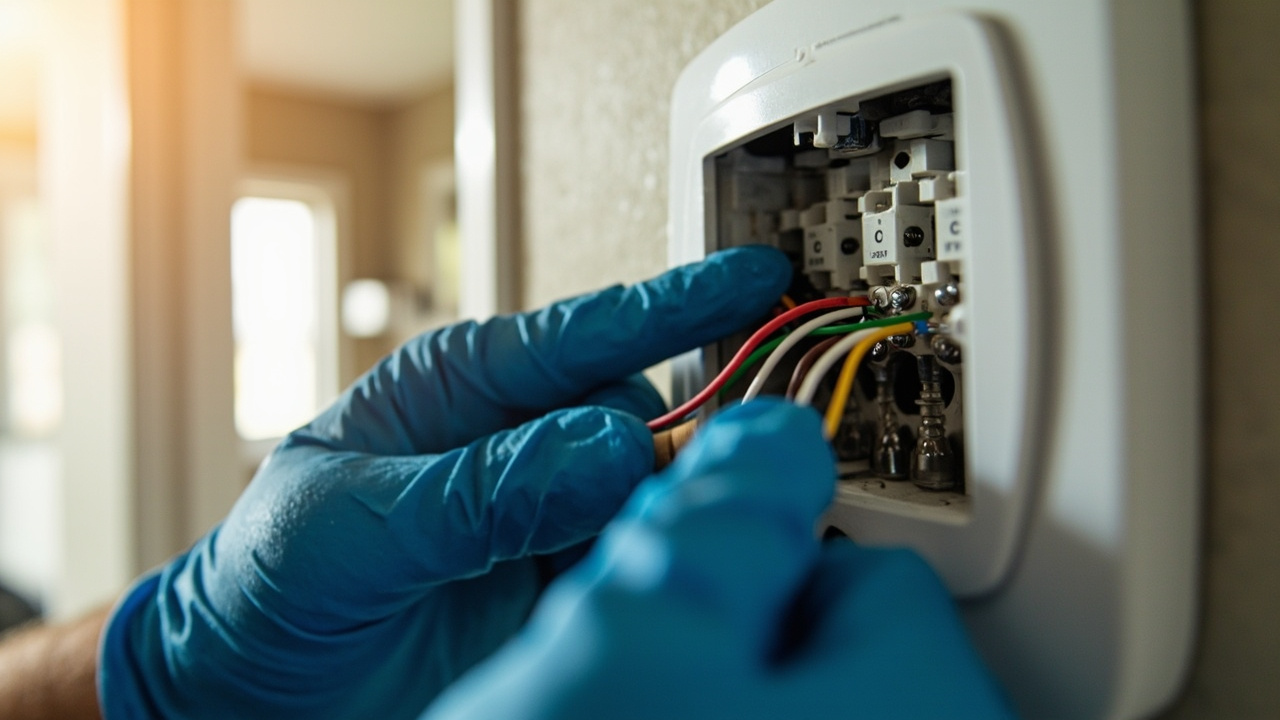
This is where compatibility checking earns its place before purchase rather than after. Confirm the wiring first: count the wires at the existing thermostat, note whether a common wire is present, and identify whether the system uses 24 volt control wiring, which almost all residential equipment does. Then confirm the equipment: read the furnace or air handler nameplate for stage count, and check the outdoor unit nameplate to see if it is an air conditioner or a heat pump. A single stage gas furnace with no common wire is compatible with a narrower set of thermostats than a two stage heat pump system with a full wiring bundle already in place. Running this check before comparing brands is a smart thermostat compatibility check in the practical sense, not the marketing sense, because it rules out models before you waste time comparing features they cannot use.
On feature parity, most current smart thermostats handle learning schedules, geofencing and voice control about the same. The real difference between competing lines shows up in staged equipment support, remote sensor networks for rooms far from the thermostat, and how gracefully the thermostat handles a missing common wire with a power adapter kit instead of running new wire. A model built to manage multi-stage heat pump operation with backup heat will generally out-perform a basic model on a dual fuel system, while a basic single stage gas furnace does not benefit from the more complex control logic at all.
See air filter merv ratings guide for how the related work is scoped and priced.
How a compatibility audit runs

The wiring and nameplate call
When you call, we ask what the outdoor unit nameplate says, whether it lists an air conditioner or a heat pump, and how many wires sit behind the existing thermostat plate. Those two answers tell us the equipment generation we are dealing with before anyone drives anywhere. If the furnace nameplate shows a stage count you cannot read from where you are standing, we walk you through finding it. This single call usually narrows the thermostat field enough that the visit, if one is needed, starts with a short list of compatible models rather than a blank comparison.
Confirming the balance point setup
Once the equipment type and wiring are confirmed, the visit turns to how the thermostat will manage staged calls. On a heat pump or dual fuel setup, we set the balance point that decides when backup heat takes over, rather than leaving it on a factory default. On a single stage furnace with no common wire, we confirm whether a power adapter kit solves the connection or whether new wire is the better long term move. You see each decision before it happens, and nothing gets mounted on the wall until the wiring path is settled.
Verifying the thermostat controls the system
Before the visit ends, we run the system through a heating and a cooling call and take a delta T reading with probes at the return and supply duct near the coil. A drop landing in the normal range for that equipment confirms the thermostat is staging calls correctly rather than just holding a connection. We walk you through what the reading showed and leave you with the wire count and stage information on hand for future reference.
Why buying local knowledge beats guessing at a big box store
A big box store associate sells whatever thermostat is in stock, not the one matched to your wiring and your equipment stage count. Someone who works furnaces and heat pumps across McLennan County every week has already seen the wiring pattern behind your specific thermostat plate before they touch it, because the pattern repeats across whole subdivisions and whole decades of construction.
The mistake an unfamiliar shopper makes most is trusting the box copy that says works with most systems. That phrase covers basic single stage compatibility and nothing about staged heat pump operation or a dual fuel balance point. A homeowner who buys based on that line often ends up with a thermostat that holds a connection but never calls the second stage of heat, so the furnace runs constantly on stage one and the house still falls short on the coldest mornings.
Response logistics across this area matter too, because the same equipment generations show up from one town to the next along Interstate 35 and the surrounding roads that connect them. A furnace wired without a common wire in one decade of construction shows up the same way whether the house sits in an older part of the county or a newer subdivision nearby, and knowing that pattern in advance is what turns a compatibility check into a fast phone conversation instead of a guessing exercise once the box is already open.
That advance knowledge also covers the thermostat models that fit a two wire setup where one wire carries heat and one carries cool, versus three wire or four wire patterns that handle dual fuel systems where a heat pump runs until outdoor temperature drops below the balance point, then switches to furnace heat. The difference between these wiring schemes means a thermostat bought off the shelf can work physically but fail operationally, calling for heat when the system is already running or never calling at all when conditions demand it.
Our page on ductless mini-split buying guide covers that side of the work in more depth.
Permit and inspection questions? Commercial Construction Permits is the office we coordinate with on every permitted Waco job.
What working with us on this looks like
Single stage furnace no common wire
This is the wiring pattern in many older Waco homes where cooling was added after the original heating. A basic smart thermostat that runs on a power adapter kit instead of a common wire usually works here, but it will not support staged heat or remote sensors well. The trade-off is a thermostat that holds a stable connection without new wire being pulled through a finished wall or a tight attic.
Heat pump or two stage system
Homes with a heat pump or a two stage furnace need a thermostat built to manage staged calls and a balance point for backup heat. These systems usually already carry a fuller wiring bundle, which lets you add sensors to distant rooms. Buying a basic single stage thermostat here means the second stage or the backup heat never gets called correctly.
Ductless or mini split equipment
A ducted smart thermostat does not control a ductless system, because a mini split head has its own onboard control logic. Wi-Fi capable controllers built specifically for that equipment are the only option, and they work through the manufacturer's own control interface rather than a wall thermostat wired the traditional way.
Older system limited wiring
Some pre war and mid century Waco homes still carry the original two or three wire bundle with no path for a new run. A basic smart thermostat with an adapter kit is often the practical choice here, and running new wire is only worth it if the equipment itself is also being upgraded to something that can use the added control.
You Have Questions,
We Have Answers
Start with your wiring and equipment type. Count the wires behind your existing thermostat plate and read the outdoor unit nameplate to determine whether you have an air conditioner or a heat pump. Limited wire availability eliminates many models, while a complete wiring bundle opens more options. Make this assessment before comparing any brand.
The best value is the simplest model that matches your equipment, not the one with the most features. A basic single stage furnace gains nothing from multi-stage heat pump logic, so paying for that control layer on equipment that cannot use it wastes money. A heat pump or two stage system, on the other hand, needs that layer to call backup heat at the right balance point.
No single model ranks best across every home, because compatibility depends on your wiring and equipment stage count rather than a published test score. A thermostat rated well for a heat pump with multiple wires can perform poorly when your furnace lacks a common wire. Match the thermostat to your nameplate and wire count before weighing outside reviews.
Neither wins outright, because the deciding factor is your equipment staging and wiring. Both handle learning schedules and remote sensors similarly on comparable equipment. The real gap between them shows up in how each manages staged heat pump calls and a missing common wire, which only matters once your wiring is known.
What McLennan County housing does to thermostat wiring
The gas furnace in many Waco area homes occupies a hall closet or garage served by attic ductwork, a layout common in mid century construction across the county. That placement often means the original low voltage wiring was run for a simple heat and cool call with no common wire, since cooling was frequently added to these houses well after the furnace was installed. Newer homes built from the 1990s forward more often put both the air handler and the thermostat wiring in during original construction, with a fuller conductor bundle that can support staged heating and remote sensors. Before buying, tracing the wire count at the existing thermostat plate tells you which category your house falls into, and that answer narrows the field of thermostats that will work far faster than comparing app screens or voice assistant support.
Waco's cooling season runs long, typically opening in spring and continuing into October, so a thermostat here spends most months managing air conditioning cycles rather than heating calls. That makes cooling stage logic and humidity handling more consequential in this county than in a climate with a shorter summer. The short hard freezes that arrive most winters are brief but sharp, and a heat pump thermostat with a poorly configured balance point either calls on backup strip heat sooner than it needs to or leaves the house short of heat while it waits. Getting the balance point set correctly during startup, rather than left on a factory default, is what keeps the system quiet and efficient during a normal cold snap and prevents unnecessary switching between heating stages.
HVAC Services in The Waco Area
Explore our service area and locate Granite HVAC Waco with ease. We're proudly local and serve the surrounding neighborhoods with fast response and honest pricing. Use the map to check our coverage area, or call us and we'll confirm in seconds.
Address:
Granite HVAC Waco, Waco, TX, 76701
Additional Services We Offer
- Air Filter MERV Ratings Guide
- Ductless Mini-Split Buying Guide
- Furnace AFUE Ratings Explained
- Heat Pump vs. Furnace Comparison
- How Long Does an HVAC System Last
- How to Choose the Right AC Size
- HVAC Repair Cost Guide 2026
- HVAC Tax Credits & Rebates Guide
- R-454B Refrigerant Transition Guide
- Repair vs. Replace Your AC
- Seasonal HVAC Maintenance Checklist
- SEER2 Ratings Explained
Checking wiring, reading equipment nameplates and confirming compatibility is work you can do yourself with a screwdriver and the existing thermostat plate off the wall. Where it stops is anything involving the control board inside the furnace or air handler, or running new low voltage wire to reach it, because that crosses into work best done with the panel open and the power confirmed off.
Before you call, pull the thermostat plate off gently and count the wires behind it, and note any letter markings you can read. Check the furnace or air handler nameplate for a stage count if it is visible. Identify your outdoor equipment type. Those answers usually settle which thermostats are even worth comparing.
Last reviewed September 2026 by Dale Whitfield, Service manager.