





What a climbing bill and a room that never cools usually means
The complaint almost always sounds the same. The thermostat says the system ran for hours, the vent in one room is barely moving air, and the bill went up without anyone changing the setting. That is rarely the compressor. It is more often a return or supply run losing conditioned air into an attic or crawlspace before it ever reaches the register, or pulling in unconditioned air on the return side and diluting what the coil already cooled.
Expansive clay soil under much of Waco swells after rain and shrinks in drought, and that movement does not stay in the yard. Foundations shift a little season to season, and any duct run tied to that structure, whether it hangs from floor joists or runs across a crawlspace, moves with it. A joint that was sealed tight when the house was built can separate at a boot or a takeoff a few seasons later, and the leak grows slowly enough that nobody notices until the bill does.
A duct leak on the return side also changes what the filter sees. Air pulled in through a gap in an unconditioned space carries dust, insulation fiber and whatever else sits in that crawlspace or attic, and the filter loads faster than it was ever sized to handle. From there the mechanism is the same one that ends a lot of cooling calls in this metro. A loaded filter drops airflow across the coil, the coil runs colder than the refrigerant charge was set for, ice builds on the fins, and the compressor starts taking liquid refrigerant back on its suction line instead of vapor. That is the point where a duct problem becomes a compressor problem.
Waiting through one more cooling season on a leak that is already dropping airflow is what turns a sealing job into a compressor replacement. If a room has stayed several degrees off the rest of the house for more than a season, or the filter is loading in weeks instead of months, that is the point to call rather than run another summer on it. The longer a duct leak persists unaddressed, the more stress it places on other components of the system, compounding the damage and narrowing the window for a less invasive repair.
More detail on ac repair is on its own page.
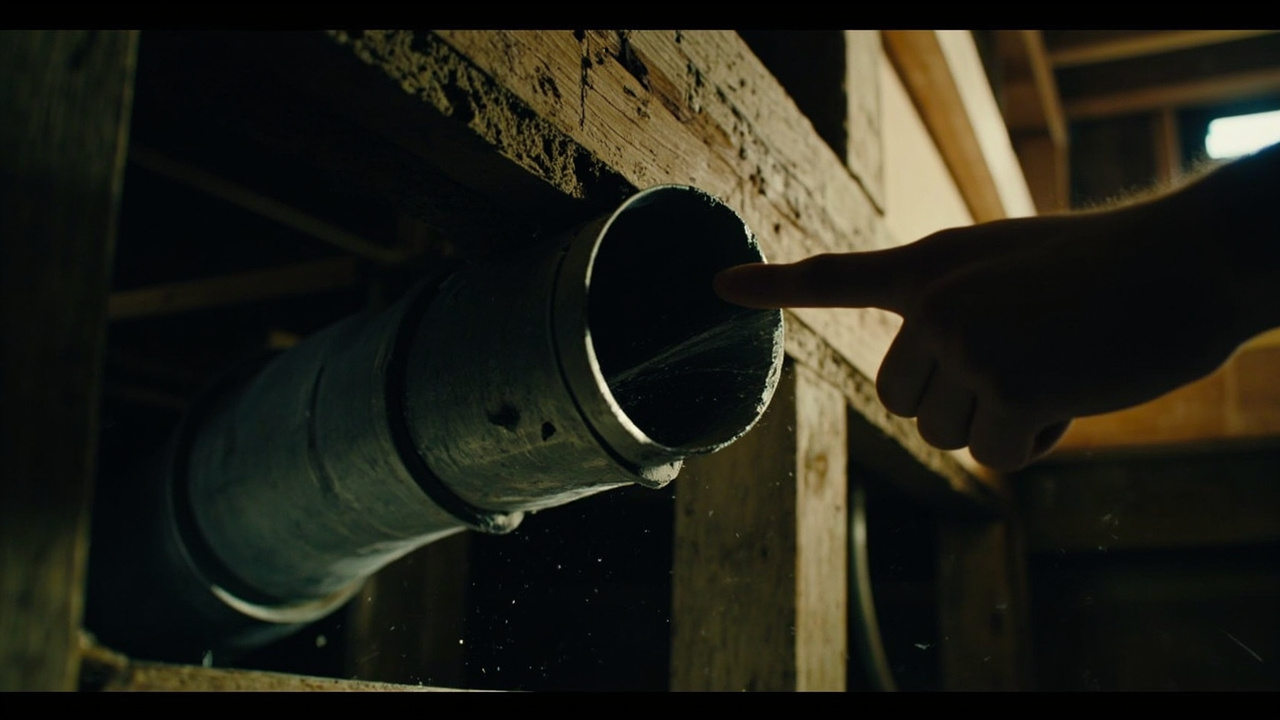
Find the sign you have, then read across to see whether it can wait.
| Symptom or first sign | What is already happening | What it becomes if ignored | When to call |
|---|---|---|---|
| A loaded filter | Airflow drops and the coil runs colder than it was designed | The coil ices over and the compressor takes liquid refrigerant back and fails | This week, while it is still one part |
| A slow refrigerant leak | The system runs longer for less cooling and oil stops circulating properly | The compressor loses lubrication and seizes | This week, while it is still one part |
| A cracked heat exchanger | Combustion gas mixes with the air being blown through the house | Carbon monoxide reaches the living space | Now, the same day |
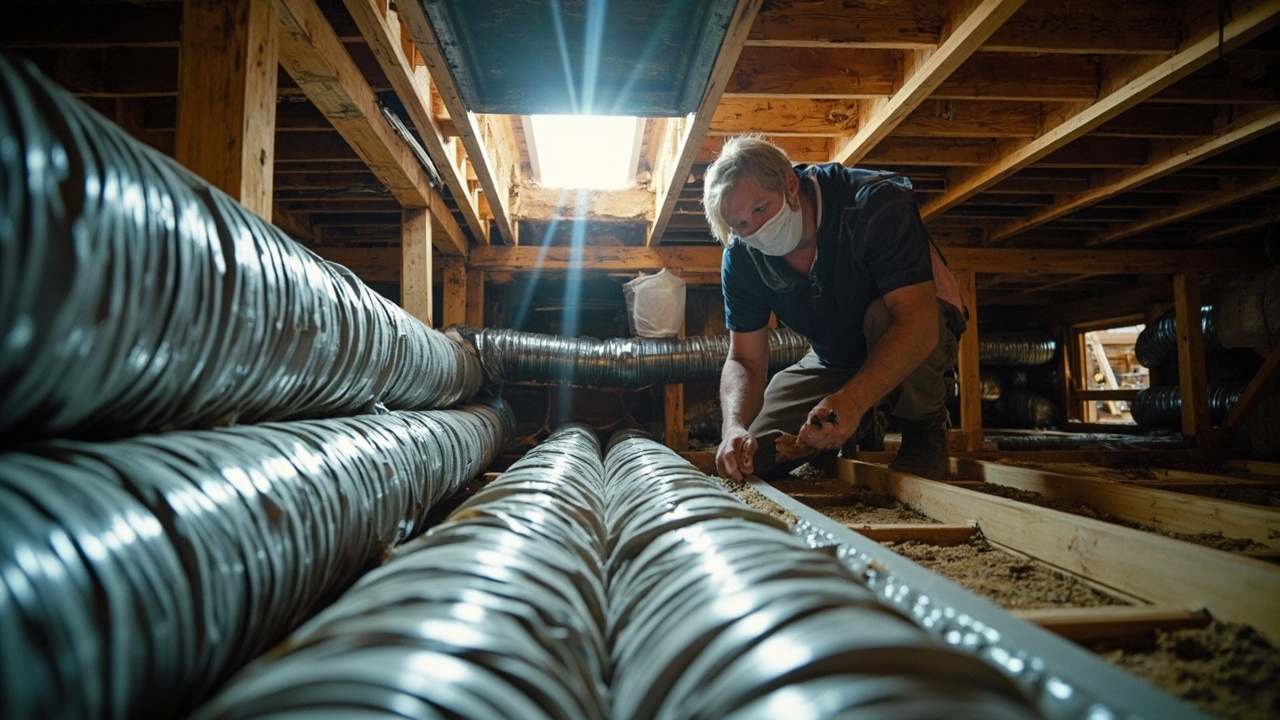
How we find the leak before we write the scope
The first instrument on the job is a manometer. We take total external static pressure across the air handler and read it against the number printed on the blower data plate. A system reading above that number is being choked somewhere between the return grille and the supply registers, and duct leakage is one of the most common reasons a system that used to move air fine no longer does. That single reading decides whether the visit continues into a duct survey or moves toward an airflow restriction inside the cabinet instead.
Once static pressure points at the duct system, we walk the accessible runs, checking boots, takeoffs and trunk connections by hand and by smoke or pressure test where a joint is buried in insulation and cannot be seen directly. Every separated joint gets marked with its location and how much it is pulling before any sealant is chosen, because a scope written before that survey is a guess dressed up as a quote. The supply and return trunk get checked separately, since a leak on the return side dilutes conditioned air differently than a leak losing it on the supply side into an attic.
Whether the house even has ducts worth sealing is its own question. A house with a single central return and short accessible trunk runs is a straightforward sealing candidate. A house where the crawlspace duct has separated at more than one joint, or where the run is buried under a floor with no practical access, is a different conversation, and in a few cases the more durable answer is a mini split serving the room that has never held temperature rather than chasing another leak in a duct system that keeps moving with the floor under it. The decision between sealing and replacing depends on how much of the duct is reachable, how often it has already needed work, what the structural access costs, and whether the existing system layout still matches how the house is being used. Some rooms heat or cool inconsistently because the duct was sized for a different layout or different occupancy than what exists now, and no amount of sealing fixes that mismatch.
Identifying what can be sealed without replacing the system means understanding where the weak points are and what caused them. A duct that pulled apart at a slip joint usually separated because movement in the house structure shifted the runs, not because the connection itself failed from age. A connection buried in fiberglass insulation where moisture accumulates may have corroded. These distinctions matter because they determine whether sealing solves the problem or whether the underlying cause will open new leaks within months.
If this sounds close but not quite your situation, air duct cleaning may be the better starting point.
Your local utility, Utility Bill City of Waco, publishes service and water-quality information every Waco homeowner should know.
Narrow this to two options before calling, then ask which one suits the house.
| Option | The numbers a buyer weighs | Best suited to |
|---|---|---|
| Ducted system against ductless mini split | Mini splits are rated per indoor head | Additions and rooms the ducts never reached |
| Filtration choice | Compared on MERV rating against pressure drop | Allergy households with duct that can take it |
| Packaged rooftop unit against a light commercial split system | Compared on tonnage per cabinet | Commercial buildings on a capital plan |
How a duct sealing visit runs

The call and the first reading
On the phone we ask which room never keeps up, whether the space above or below it is a crawlspace or an attic, and how often the filter has needed changing. Those answers decide what gear goes on the truck before it leaves. On site, the manometer goes on the air handler before anything else, and total external static pressure gets measured immediately. That single reading decides whether the visit turns into a crawlspace or attic duct survey or points toward a restriction inside the cabinet itself, and the homeowner sees the number before we move on to anything else.
Reconnecting before sealing
Once the survey marks every joint that is pulling air, we walk the scope with you and get approval before touching anything. Reconnection comes first wherever a boot or takeoff has shifted out of alignment with the floor framing, since sealing a joint still under tension only holds until the next round of clay movement pulls it apart again. Mastic and mechanical fasteners go on only after a joint sits flush and square. If a run turns out to be duct board that has degraded past sealing, we stop and show you before going further.
Retest and handover
Before we leave, the manometer goes back on the air handler and total external static pressure has to read at or under the number on the blower data plate, the same reading that opened the visit. We walk you through which joints were reconnected and sealed, room by room, and you keep the before and after static pressure numbers along with notes on what was found at each joint. That comparison is what tells you the leak closed rather than moved somewhere else in the run.
Why a Waco duct job runs differently than one worked an hour away
A crew that mostly works slab construction treats a separated crawlspace joint the same way it would treat an attic leak, running a bead of mastic over the gap without checking whether the boot has pulled away from its takeoff first. On a floor still moving on Blackland clay, sealant laid over a joint that is still under tension reopens within a season, and the callback reads as a bad repair when the real problem was skipping the reconnection step before anything got sealed. Getting the run squared back to the floor framing has to happen before the sealant, and that takes an eye for how far the joint has already shifted and how much play is left in the boot before it will hold a second seal.
Crawlspace access itself changes the job as much as the joint does. A crew used to attic work expects a hatch and standing headroom, and shows up without the low profile gear a pier and beam foundation needs to reach a takeoff without tearing the vapor barrier or the insulation batts already sagging under it. Working under a floor without disturbing what is already down there takes practice with this specific foundation type, not a general duct background picked up on slab jobs. The ductwork routing through a crawlspace often sits lower than it would in an attic, which means taking extra care during mobilization to avoid contact with existing runs while accessing the sealed joint.
Response across the greater metro runs along corridors that take this business into the surrounding cities it serves, and knowing which pockets sit on pier and beam rather than slab changes what goes on the truck before it leaves. A house with a crawlspace call loaded like an attic call means a second trip for gear that should have gone out the first time, and a slow leak that could have been sealed in one visit runs another week while the filter loads faster than it should and the coil behind it starts losing the margin it was charged for. That margin represents the heat transfer efficiency the system was designed to deliver, and once lost, it does not return until the coil gets cleaned or replaced.
See ac installation & replacement for how the related work is scoped and priced.
Forums like r/hvacadvice show what homeowners nationwide pay and encounter, useful context for any quote you receive.
What the job looks like from your side
Getting a visit on the calendar
On the call we ask which room is off, whether the duct behind it runs through a crawlspace or an attic, and how the filter has been loading lately. Those answers tell us whether this is a same day visit or one that fits into a scheduled window a few days out. You get a call or text confirming the arrival window before anyone drives out, and if the job ahead of yours runs long because a crawlspace turned out to need more reconnection than expected, we call to move your window rather than leave you guessing.
Keeping the crawlspace and attic clean
Before anyone goes under the floor or up into the attic, we lay down drop cloths at the access point so insulation and crawlspace dust stay off flooring and furniture inside the house. Tools and sealant stage outside the access opening rather than inside the living space. Anything pulled out, old duct board, a failed boot, loose insulation disturbed during the reconnection, goes out the same access point it came in through, and the last step is closing the hatch or crawl door back the way it was found.
What changes the price
Access is the driver that moves this job most. A crawlspace joint reached through a tight opening with low headroom takes longer to reconnect than a run hanging in open attic space, and a closet furnace with ducts stacked tight against framing adds time a straightforward attic run does not. We survey every reachable joint and mark what it will take to reach it before writing anything down, and you see that written scope, room by room, before any sealant goes on or anything gets approved.
How a technician earns crawlspace jobs
A new technician spends time working alongside a lead on crawlspace and attic duct calls before taking one alone, and the lead signs off specifically on whether that technician can identify a joint under tension from one that is simply loose, since sealing over the wrong kind wastes a visit. On any house where multiple duct joints have failed or where a mini split is on the table instead of another repair, a second technician looks at the survey before a scope goes to the homeowner.
You Have Questions,
We Have Answers
Cost depends mostly on how hard the duct is to reach, not on how much sealant goes on. A crawlspace joint behind a tight access opening takes longer to reconnect and reach than an open attic run, and a closet furnace with ducts stacked close to framing adds time too. We mark every joint during the static pressure survey and write the scope, room by room, before quoting anything, so the number reflects access and how many joints need reconnecting rather than a flat rate for the visit.
It is worth it when static pressure and the filter loading rate point to a duct leak rather than a weak compressor. A leak on the return side pulls dust and insulation fiber into the system, loading the filter faster and dropping airflow across the coil until ice forms and the compressor starts pulling liquid refrigerant. Sealing a joint that is verified to be pulling air stops that chain before it reaches the compressor, which is a different outcome than sealing a joint on a guess.
The 2 foot rule keeps a return air opening at least two feet from a fuel burning appliance such as a furnace. It matters in older Waco homes where a gas furnace sits in a hall closet close to a return grille, since return air pulled too close to the burner can draw combustion byproducts into the duct system instead of leaving them at the flue. We check that clearance any time a sealing job touches return duct near a gas appliance.
A joint that is reconnected to the floor framing before sealing holds through normal clay soil movement for years. A joint sealed without that reconnection tends to reopen within a season or two, since mastic over a joint still under tension is being asked to do a job mechanical fasteners are supposed to do. The reconnection step determines how long a repair on pier and beam duct holds up, while sealant alone cannot prevent the joint from reopening under tension.
Why moving floors change duct sealing in Waco
North Waco's housing runs mostly early 1900s through the 1940s, built on pier and beam foundations with raised floors that predate central air by decades. Ductwork in these houses was added later, running through a crawlspace rather than an attic, and pier and beam floors move more than a slab does as the clay underneath swells and shrinks through the year. That movement pulls at the takeoffs and boots feeding each room, and a joint sealed flat against a boot that has since shifted out of line reopens within a season rather than holding. Sealing work on this housing stock starts with checking whether the duct is still mechanically aligned to the floor framing, because sealant applied over a joint still under tension from a shifting floor is a short term fix rather than a repair.
Crawlspace duct work in this housing stock usually runs near a condensate line serving the same air handler, and the practice here is to keep that discharge running to grade outside or into a trapped plumbing connection well away from the foundation, since added water against a slab or a pier footing on expansive clay can add to the movement that pulled the duct joint apart in the first place. Checking where that condensate line discharges happens during the same crawlspace visit. We document the static pressure reading before and after the reconnection along with photos of each joint that was pulled back together, so what gets left with the homeowner is a record of what moved, what was reconnected, and what the retest confirmed, rather than a verbal assurance that the leak is gone.
HVAC Services in The Waco Area
Explore our service area and locate Granite HVAC Waco with ease. We're proudly local and serve the surrounding neighborhoods with fast response and honest pricing. Use the map to check our coverage area, or call us and we'll confirm in seconds.
Address:
Granite HVAC Waco, Waco, TX, 76701
Additional Services We Offer
Changing filters and keeping the outdoor unit clear are genuinely homeowner jobs and do not need a call. Duct sealing itself stops being a do it yourself project once a joint sits behind insulation in a crawlspace or above a finished ceiling, because reaching it without disturbing the structure around it takes tools and access most homeowners do not have. If a survey turns up damaged duct board that needs replacing rather than sealing, we say so on the first visit rather than after.
Before you call, know which room is the problem and roughly when it started feeling off. Note whether the space above or below that room is an attic or a crawlspace, and how often you have had to change the filter lately. If you know the age of the system, mention that too. Those details tell us what to bring and whether the visit needs to move up.
Last reviewed September 2026 by Dale Whitfield, Service manager.