




What a blank Waco thermostat screen usually points to first
If the outdoor unit is humming, buzzing, or tripping the breaker while the thermostat sits dark, turn the system off at the breaker and open the outdoor disconnect. Do not reset the breaker a second time. If anyone in the house is an infant, an older adult, or has a heart or lung condition and the thermostat has gone dead during a heat stretch or a hard freeze, move them to the one room you can keep comfortable and keep fluids going. Tell us who is in the house when you call.
A blank screen usually means the thermostat has lost the low voltage power that runs it, from a dead battery, a loose wire at the back plate, or a fault further back in the equipment it draws from. A screen that lights but will not change the temperature, or a system that short cycles on and off with no pattern, points at that same wiring path rather than the display itself. Thermostat failure service on a call like this starts at the wall plate and works outward, because replacing the thermostat before that path is checked can leave the actual fault sitting right where it was.
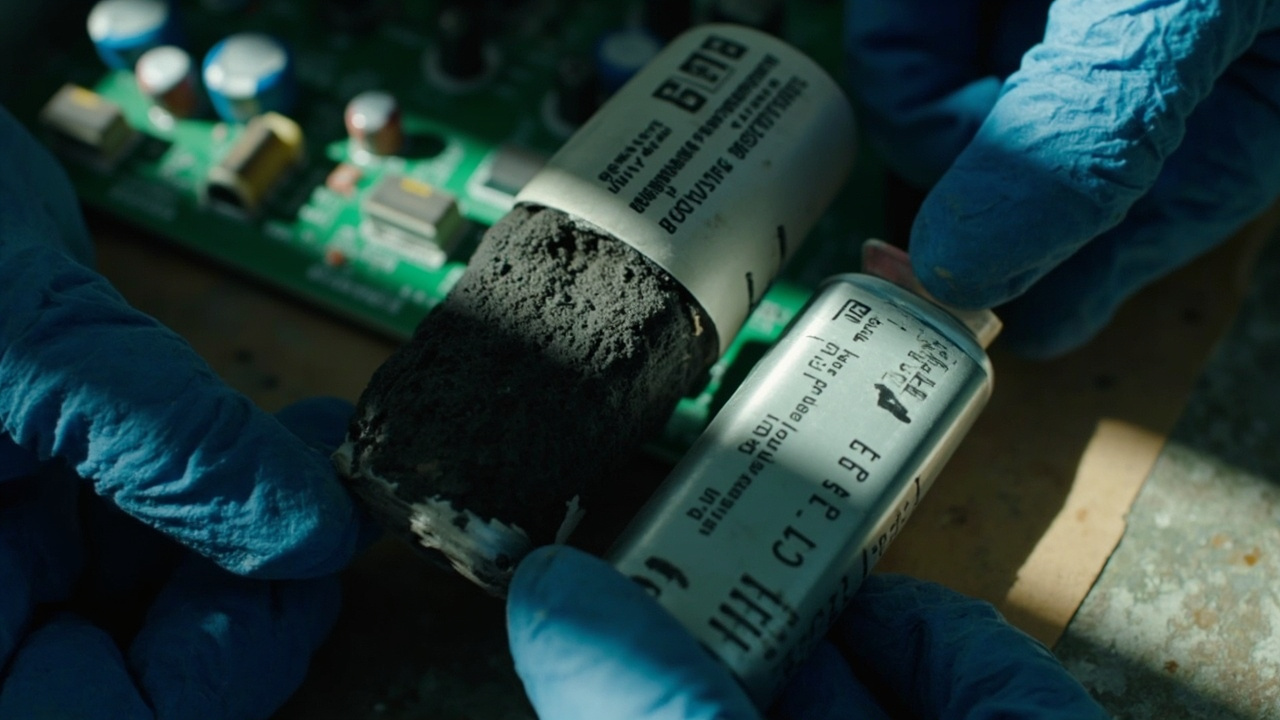
Waco summers push outdoor units to run for hours at a stretch through July and August, and that near constant run time is what wears out a run capacitor long before the compressor itself gives out. A weak capacitor can make a system look thermostat dead, since the board loses the ability to hold a call for cooling and the wall display goes quiet or stops responding to input, which is exactly what a thermostat blank screen fix call sounds like on the phone.
A weak run capacitor forces the compressor to pull high starting amps on every attempt to run. Those repeated high amp starts heat the windings past what they were built for, and a part that would have been a same day capacitor swap turns into a full condenser replacement. That is the point where an emergency thermostat repair call is not the right first move. The visit needs to start at the outdoor disconnect instead of the wall plate, because the compressor damage has already begun and the thermostat itself is still working fine. A capacitor check at the breaker takes minutes and saves the expense of replacing sealed equipment in the heat.
More detail on 24/7 emergency ac repair is on its own page.
Forums like r/hvacadvice show what homeowners nationwide pay and encounter, useful context for any quote you receive.

How we tell a dead thermostat from a dead capacitor
Before anyone opens a thermostat box, the sequence starts at the breaker and the low voltage terminal block. Power gets confirmed at the panel, the wiring at the back of the wall plate is checked for a loose screw or a corroded splice, and only then does a technician move to the equipment the thermostat is trying to control. Working outward this way keeps a control from getting blamed for a fault sitting somewhere else in the circuit, which is the mistake that turns a same day thermostat installation into a second visit a week later.
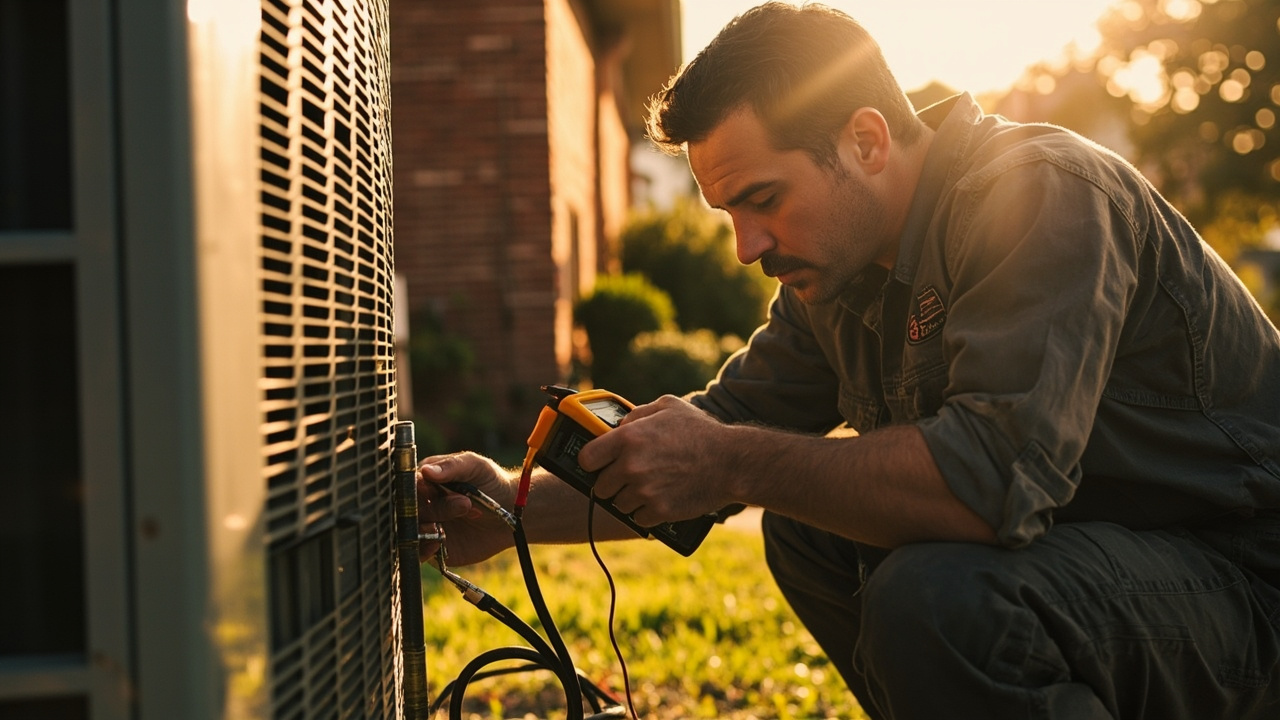
The reading that settles it is taken with two probes set in the return and supply duct close to the coil rather than at a register, since duct gain in a hot attic skews anything read farther away. A normal split there with the screen still dark says the control lost power or signal on its own, which clears the thermostat as the fault. A split that runs shallow or unusually wide instead points at airflow or charge pulling the board into a fault state that reads on the wall as no response, and in that case a clamp ammeter goes on the compressor next to check running amps against the rated load stamped on the data plate, because a start that spikes toward locked rotor is a capacitor problem wearing a thermostat's symptoms.
Once the fault clears as a control issue, the replacement itself has to match what it will run. A single stage system needs a control that does one thing well, but a two stage or variable capacity condenser needs a thermostat built to manage staged calls or the house loses the longer, lower speed runtime that pulls humidity down. A heat pump with backup heat strips needs the balance point set correctly in the new control, or the system falls back on strip heat on mild mornings when it should still be running on the compressor alone. Getting that setting wrong wastes the visit as badly as swapping the wrong part in the first place.
If this sounds close but not quite your situation, emergency blower motor replacement may be the better starting point.
Permit and inspection questions? Commercial Construction Permits is the office we coordinate with on every permitted Waco job.
Ask which of these readings was taken before any part is replaced.
| Instrument | Good reading | Bad reading | What it changes |
|---|---|---|---|
| Two probes for delta T between return and supply air | A 16 to 22 degree drop across the coil in cooling at normal indoor humidity | A small drop means airflow or charge is wrong | An unusually large drop means the coil is being starved of air |
| Manifold gauges with superheat and subcooling readings | Superheat and subcooling both landing in the range the equipment maker specifies for that metering device | High superheat with low subcooling | An undercharge or a restriction rather than a weak compressor |
| Flame sensor signal check in microamps | A steady signal well above the control board dropout point | A weak or drifting signal | The sensor is coated and the burner will drop out |
| Filter, coil and condensate inspection | Light passes through the filter pleats, the coil fins are clean | A matted filter, a coil with ice on it | A homeowner who has never seen the inside of their air handler makes a different decision |
| Micron gauge during evacuation | Below 500 microns and holding there after the pump is valved off | A reading that climbs back up | Moisture is still boiling off inside or the system is not sealed |
| Manometer for total external static pressure across the air handler | Static pressure at or under the maximum printed on the blower data plate | Static above the rating | The filter, the coil or the duct is choking the system |
How an emergency call runs
Call and first read
When you call, we ask what the screen is doing, when it started, and whether the outdoor unit is running, humming, or silent. Those answers tell us whether this is airflow, wiring, or a part at the outdoor unit before anyone arrives. On site, the check starts at the thermostat's low voltage connection and the breaker, then moves to the equipment itself. Two probes go into the return and supply duct near the coil to read the temperature split before any part gets condemned, because a control only gets blamed once the equipment behind it is confirmed to be running correctly.
Approval and the swap
Once the split confirms the fault sits in the control, we show you the reading and the scope before anything is touched. Power gets isolated at the breaker, the old thermostat comes off the wall plate, and wiring is checked at the terminal block for a loose or corroded connection along the way. If a wire shows heat damage or a splice that has failed inside the wall, we stop and show you what is there before running a new one, since that changes the job from a straight swap to a wiring repair.
Test before we leave
With the new thermostat set, we run the system through a full cooling and heating cycle and watch the split across the coil hold in the range it should. The control's staging and, where the house has one, the heat pump balance point get set to match the equipment before we leave. You get a walkthrough of the new screen and the settings, and you keep the model information along with the staging notes for anything that comes up later.
Why an unfamiliar crew replaces the wrong part
Housing stock across Waco spans wood frame houses on pier and beam foundations from the early twentieth century through slab houses built in the decades after, and each era hides the thermostat's low voltage wiring differently. Older houses often carry that wiring through a crawlspace that was never designed for a central system, spliced in when cooling was added later, and a crew that has not worked one of these houses can spend an hour chasing a wire path that a familiar technician expects on sight. Mid century houses more often run the wiring through a hall closet or garage where the furnace sits, with the run going up into an attic that traps summer heat and ages the insulation on that same wire.
A crew unfamiliar with how hard this county runs its outdoor units in July and August tends to walk in assuming the thermostat is the whole story, because that is the part the homeowner points at first. What gets missed is the capacitor that has been pulling high amps on every start for weeks before the screen finally goes dark, and a thermostat swapped onto a system that still has that weak part fails again within days, on the next hot afternoon. Reading the equipment before ordering the part is what separates a call that gets solved once from one that gets solved twice.
Expansive clay soil under much of the county also moves outdoor pads and foundations over time, which stresses low voltage connections at the point where they leave the house and reach the condenser. Those splices are usually taped rather than properly terminated, and a taped joint in a crawlspace that drains slowly after heavy rain corrodes faster than one that stays dry. A wire that tests fine indoors can still be the fault at that outdoor junction, and skipping that check is a common miss on a call treated as a simple control replacement.
See emergency compressor replacement for how the related work is scoped and priced.
Proper sizing follows the Manual J standard from the Air Conditioning Contractors of America, guesswork is how systems end up short-cycling.
What working with us looks like on this call
Same day scheduling
You call and describe what the screen is doing, whether it is dark, frozen, or cycling the system on its own, and that tells us whether this is a same day thermostat installation or a scheduled visit. Emergency thermostat repair calls get routed ahead of routine maintenance, and you get a window confirmed before anyone heads out. If the job ahead of yours runs long because a capacitor turned into a bigger repair, we call and reset the window rather than leave you guessing.
Careful work at the wall
Before the cover comes off the wall plate, we confirm the breaker is off and lay down a drop cloth if the thermostat sits near flooring that stains. Wire ends get labeled before disconnection so nothing gets crossed on reconnection. Once the new control is set and tested, the wall plate goes back on flush and any packaging leaves with us. You are not left with exposed wire or a hole in the drywall while a part gets ordered.
What moves the cost
The thermostat itself is one line, but what it has to control moves the job. A single stage system needs a simpler control than a two stage or variable capacity one, and a heat pump with backup heat needs a control that handles the balance point correctly or the house falls back on strip heat too soon. Zoning, if the house has it, adds wiring the base control does not need. We write the scope after the equipment is confirmed and you approve it before the new control goes on the wall.
How the crew is checked
A technician demonstrates a thermostat and low voltage diagnosis alongside a lead before working one alone, including reading the split across the coil correctly and telling a control fault from an equipment fault. On any call where the capacitor or contactor is already suspect, a second technician confirms the reading before a thermostat gets ordered, so a working part does not get replaced twice while the real fault waits.
You Have Questions,
We Have Answers
Call Granite HVAC Waco at (254) 221-8461 and explain what you are seeing on the display. We inspect the equipment connected to the thermostat, including voltage and temperature readings at the coil, before ordering a replacement control, and we match the new thermostat to your furnace, heat pump, or zoning setup rather than swapping in a generic model.
An emergency is a thermostat that has gone dark or stopped responding while the outdoor unit is running abnormally or shutting off circuits, or while a vulnerable person is indoors during extreme temperatures. A blank screen alone, with the equipment quiet and the breaker holding, can usually wait for a scheduled same day thermostat installation instead of an after hours call.
Why long Waco cooling seasons strain thermostat controls
Waco's cooling season typically opens in April or May and runs into October, with July and August holding highs in the mid to upper nineties, so a thermostat and the control board behind it are asked to hold a call for cooling for months without a break. That long run time is what ages a run capacitor and a contactor faster than the thermostat itself usually wears, which is why a control replacement call this time of year often turns out to be an equipment call first. Housing stock built between the 1940s and 1960s commonly puts the furnace in a closet or garage with ductwork running through an attic that traps heat, and the low voltage wire connecting that equipment to the wall thermostat runs through that same attic heat for years before it becomes the actual point of failure. The soil composition here also shifts outdoor pads over time, which stresses the low voltage connection where it leaves the house.
Oncor delivers the electric service that feeds both the outdoor unit and the low voltage transformer inside the furnace or air handler that powers the thermostat, and a winter storm outage followed by a hard restart sends a surge through that same transformer before anyone touches the wall plate. A thermostat that goes dark right after power comes back on is not always the part at fault. The check that matters is a voltage reading on the transformer's secondary side, since a transformer knocked out of range by a surge will starve the thermostat of the steady low voltage signal it needs, and a new control set on top of a damaged transformer goes dark again the next time the system cycles. Confirming that reading before ordering a replacement control is what keeps a storm season call from turning into two separate visits instead of one.
HVAC Services in The Waco Area
Explore our service area and locate Granite HVAC Waco with ease. We're proudly local and serve the surrounding neighborhoods with fast response and honest pricing. Use the map to check our coverage area, or call us and we'll confirm in seconds.
Address:
Granite HVAC Waco, Waco, TX, 76701
Additional Services We Offer
- 24/7 Emergency AC Repair
- After-Hours HVAC Service
- Carbon Monoxide Leak Response
- Emergency Blower Motor Replacement
- Emergency Boiler Repair
- Emergency Commercial HVAC Repair
- Emergency Compressor Replacement
- Emergency Furnace Repair
- Emergency Heat Pump Repair
- Emergency Refrigerant Leak Repair
- No Cooling Emergency Service
- No Heat Emergency Service
Checking batteries, resetting a tripped breaker once, and confirming the thermostat has power are genuinely homeowner steps, and you do not need us for those. Where it stops is the low voltage wiring behind the wall plate and anything at the outdoor disconnect, because that is live equipment work. If what we find on the first visit turns out to be a capacitor or contactor rather than the control itself, we say so on site and price that instead.
Before you call, know when the screen went dark or started acting up, and whether the outdoor unit produces sound or stays quiet. Check the breaker and swap the batteries if you have not already. Any age you have for the furnace or condenser helps, and knowing whether the house has a heat pump or a gas furnace tells us what control to bring.
Last reviewed September 2026 by Dale Whitfield, Service manager.