





What a dead blower motor feels like in a Waco house
The furnace kicks on, the burner lights, the condenser outside is humming, and still nothing comes out of the vents. That is the blower motor telling you it has stopped moving air, and it is a different problem than a system that will not start at all. Sometimes the motor hums and never turns. Sometimes it starts, runs a few minutes, and shuts itself off. Sometimes it runs weak, pushing enough air that a hand at the register feels something but the house never catches up. All three show up on a clamp ammeter as a different number, which is the reading that tells us which one we are dealing with before anything gets pulled apart.
A blower that is turning but underpowered does the same thing to the system as a filter that has gone stiff with dust. Airflow across the evaporator coil drops below what the coil was built to handle, and the coil starts running colder than it should. That is the mechanism that matters here, because it is the same one that turns a blower problem into a compressor problem if nobody catches it in time. Reduced airflow, whatever the cause, starves the coil of the warm air it needs to stay above freezing.
The chain runs the same way every time. Airflow drops, the coil runs colder than it was designed to, ice builds across the fins, and once the coil is iced the compressor starts pulling liquid refrigerant back down the suction line instead of vapor. Liquid refrigerant does not compress, and a compressor that keeps trying to compress it wears out fast. That is the point where a blower motor replacement, which is a contained electrical and mechanical job, turns into a compressor job, which is a much larger one.
A blower motor failure is worth treating as its own emergency rather than something to watch for a day or two. It is a self-contained part behind the filter, not a sealed refrigerant component, so replacing it does not require opening the refrigerant circuit at all. The urgency is in what a weak or dead blower does to everything downstream of it, not in the part itself. Catching the problem early means the motor gets swapped out before the cold coil begins the icing cycle that leads to compressor damage.
More detail on emergency compressor replacement is on its own page.
Your local utility, Utility Bill City of Waco, publishes service and water-quality information every Waco homeowner should know.

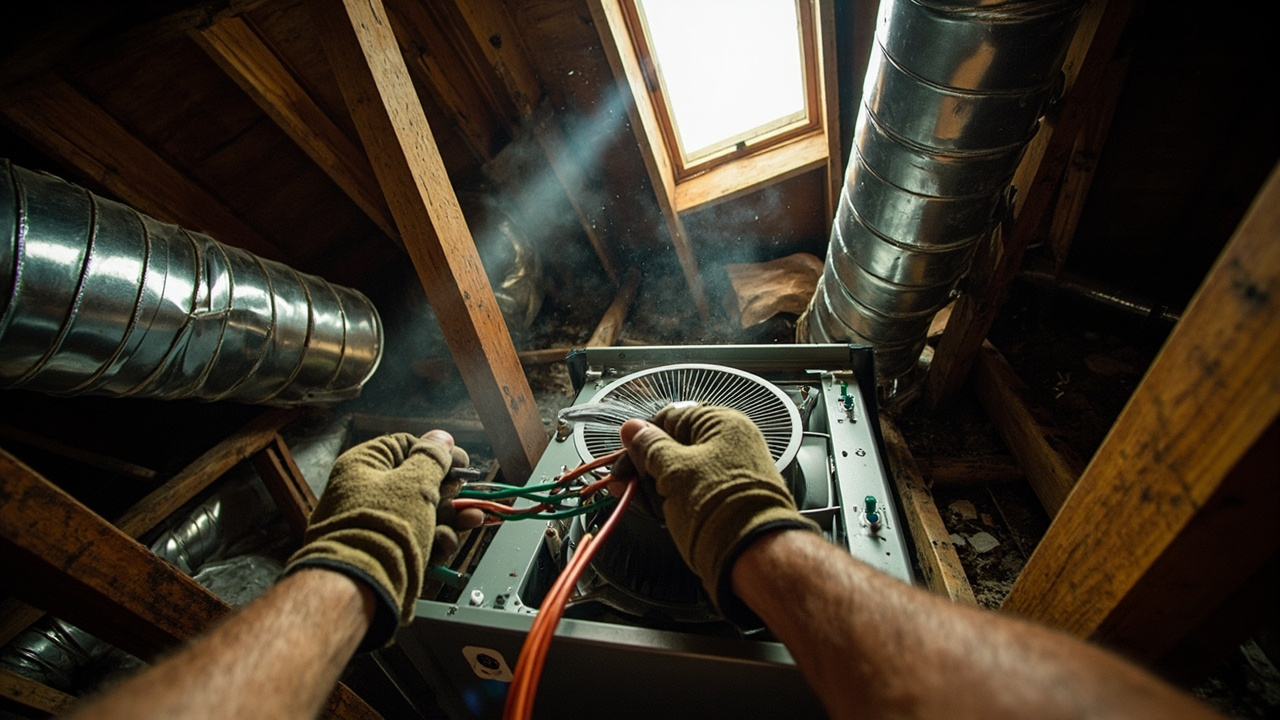
How we confirm it is the motor before we quote the job
On an emergency blower call, the capacitor gets checked before the blower housing ever comes open, since a failing dual run capacitor can make a working motor look dead and rules out the easiest fix first. Only once the capacitor is cleared does the clamp ammeter go on the blower circuit, reading the current the motor draws while it runs. That same ammeter also goes on the compressor line, because a coil that has already started icing from weak airflow puts a different load on the compressor than a coil running clean. Reading both circuits in the same visit is what tells us whether this is a contained blower repair or something that has already reached the refrigerant side.
Blower running amps sitting at or below the rated load amps stamped on the motor's data plate clears the motor itself and points back at the capacitor, the contactor, or a wiring fault instead. Amps sitting steady above that rating, or a spike toward locked rotor on start, means the motor is the failure and gets replaced rather than repaired. On the compressor side, running amps still sitting near its rated load figure means the icing has not yet reached the point of pulling liquid refrigerant back through the suction line, which keeps this a blower job. Amps climbing above rated load on the compressor changes the scope, because a compressor pulling liquid refrigerant wears down with every added minute the blower stays weak, and that reading gets shown to you before any parts get ordered.
Replacement motors usually come down to a standard single speed motor or an ECM blower matched to the existing board, and the choice is a runtime and humidity question rather than a horsepower one. A single speed motor runs at one output whenever it is on, while an ECM blower ramps to match the duct and tends to run longer at a lower output, which pulls more moisture out of the air during the humid stretch of a Waco summer. Where the existing board and wiring support it, matching the original motor type keeps the swap contained to the blower compartment. Where the board has already been replaced or upgraded, the ECM option is worth pricing even though it is not the faster install.
Our page on emergency thermostat replacement covers that side of the work in more depth.
Before any install, check the ENERGY STAR rebate finder, utility incentives regularly knock hundreds off a qualifying system.
Ask which of these readings was taken before any part is replaced.
| Instrument | Good reading | Bad reading | What it changes |
|---|---|---|---|
| Clamp ammeter on the compressor and the blower | Running amps at or below the rated load amps stamped on the data plate | Amps steady above the rating, or a brief spike toward locked rotor on start | A failing capacitor, contactor or compressor |
| Filter, coil and condensate inspection | Light passes through the filter pleats, the coil fins are clean | A matted filter, a coil with ice on it | A homeowner who has never seen the inside of their air handler makes a different decision |
| Two probes for delta T between return and supply air | A 16 to 22 degree drop across the coil in cooling at normal indoor humidity | A small drop means airflow or charge is wrong | An unusually large drop means the coil is being starved of air |
| Flame sensor signal check in microamps | A steady signal well above the control board dropout point | A weak or drifting signal | The sensor is coated and the burner will drop out |
| Manometer for total external static pressure across the air handler | Static pressure at or under the maximum printed on the blower data plate | Static above the rating | The filter, the coil or the duct is choking the system |
| Manifold gauges with superheat and subcooling readings | Superheat and subcooling both landing in the range the equipment maker specifies for that metering device | High superheat with low subcooling | An undercharge or a restriction rather than a weak compressor |
How a blower motor call runs

Call and initial questions
The first question concerns what you are hearing at the vents, whether the furnace or condenser is running while no air moves, and whether the blower has been making noise or cycling off on its own. Those answers tell dispatch whether this is a same day blower motor repair or one that can wait for the next open slot. On site, the capacitor gets checked first, since a failing unit can mask a working motor in shutdown mode, and only after that does the ammeter connect to the blower circuit itself to read running amps against the rated load figure.
Diagnosis and your approval
Once the amp reading points to the motor rather than the capacitor or a wiring fault, the technician runs a load calculation against your duct trunk to confirm the CFM the replacement motor needs to move. That scope, including access and any concurrent capacitor work, gets shown to you before anything is ordered. If the mounting bracket or the wiring behind the blower does not match what the new motor expects, we stop and show you what turned up before going further.
Install and final check
The new motor gets mounted and wired, then the clamp ammeter goes back on it running under load. A reading at or below the rated load amps on the new motor's data plate is what closes out the job. We walk you through the reading before we pack up, and you keep the load calculation and the amp readings from both before and after as your record of what changed.
Why attic access changes a blower motor swap in Waco
A crew that has not worked mid century Waco ranch houses tends to treat every blower motor job the same way, and that assumption costs time on the ones where the air handler sits in a low attic with barely enough room to turn a wrench. The escalation from a weak blower to an iced coil to a strained compressor moves faster in a house like that, because there is less room to catch a partial airflow problem early with a quick visual check. An unfamiliar technician who has to work blind, without knowing the attic is going to be tight before the ladder goes up, loses time mid job pulling insulation or rerouting a drop cloth around a duct run that was never meant to be worked on from that angle.
The mounting and wiring on an older blower assembly in that kind of attic is often original to the house, run before central cooling was common in ranch construction, which means the wire gauge and the mounting bracket sometimes do not match what a newer motor ships with. Knowing that ahead of time changes what gets loaded into the truck before the visit, rather than discovering it after the old motor is already out and the house has no airflow at all. A technician who recognizes the setup from the intake call can stage the correct adapters and fasteners, avoiding the dead stop that happens when original wiring or brackets block a direct swap.
Response across the Waco metro on a blower call means getting to a house with no air moving before the coil has a chance to ice, which is why the amp reading happens first rather than after a motor has already been ordered. Checking the run amperage against the nameplate rating before any parts are removed tells whether the motor is simply worn or whether a blockage upstream has already stressed the compressor. A crew that treats every attic the same way plans for a straightforward swap and then loses the afternoon to a clearance problem nobody flagged going in. Experience with the houses in this area narrows that risk from the moment the call comes in.
If this sounds close but not quite your situation, 24/7 emergency ac repair may be the better starting point.
Forums like r/hvacadvice show what homeowners nationwide pay and encounter, useful context for any quote you receive.
What working with us looks like on a blower call
Same day blower motor visits
Every call starts with what you are hearing at the vents and whether the furnace or condenser is still running with no air moving. Those answers decide whether the visit lands within hours or on the next open slot. Dispatch confirms an arrival window by phone once a technician is routed, and if the job ahead of yours runs long, you get a call with an updated time instead of being left checking a clock. On a blower call, that window matters because every hour without airflow moves the coil closer to icing.
Attic and duct protection
Before the attic hatch opens, a drop cloth goes down across the pull-down stairs and the floor space below, since insulation and duct dust come down with anyone working overhead. Tools and the new motor stage at the base of the ladder rather than getting carried up piecemeal, which cuts trips through the house. Old insulation or duct debris disturbed during the swap gets bagged rather than left loose on the attic floor, and the hatch and stairs get wiped down before the visit ends.
What changes the cost here
Access is the driver that moves this job more than the motor itself. A blower motor in an open garage closet is a straightforward swap, while the same motor mounted in a low attic with little clearance around the platform takes longer to reach, stage tools for, and pull free without damaging surrounding duct. That difference in access time is priced into the scope before work starts, along with whether the mounting bracket and wiring match what the replacement motor expects. You see the written scope, including the access time, before anything is ordered or installed.
How technicians earn solo work
A new technician runs a set number of blower and capacitor calls alongside a lead before working alone, and the lead signs off on reading a clamp ammeter correctly against a motor's rated load amps before anyone is cleared for it. On a job where the compressor reading comes in high alongside a failed blower, a second technician looks at both readings before a scope gets written, since that combination changes the job from a motor swap into a larger repair.
You Have Questions,
We Have Answers
That number is not something we track, since it belongs to city offices rather than an HVAC company. Check the city's own directory for a direct line. What we handle instead is the mechanical side of a home, confirming a blower motor failure with amp readings before quoting the repair. For a gas odor or a power problem, Atmos Energy and Oncor keep their own emergency contact lines separate from city hall.
Repair is cheaper when the fault is a contained part such as a blower motor rather than a compressor or a coil. A blower motor replacement stays on the repair side of that line since it does not open the refrigerant circuit at all. Where the amp readings show the compressor already pulling liquid refrigerant from prolonged icing, that changes the calculation, because a compressor failure alongside an aging system pushes the conversation toward replacement instead.
An estimate here follows the amp readings rather than a guess over the phone. The capacitor gets checked first, then the clamp ammeter goes on the blower and the compressor, and those readings decide whether this is a motor swap or something larger. Once the readings point to the motor, the access time for reaching it, whether that is a garage closet or a tight attic, gets added to the scope and shown to you before parts are ordered.
That is a question best asked directly on the call, since terms can vary and are not something to state here without confirming them with you first. What we can say is that the written scope, including any access time for reaching the blower motor, is shown to you before work starts so there is no surprise once the job is underway. Ask about payment arrangements when you call about the repair itself.
Cost on this job moves mostly on access, meaning whether the blower sits in an open closet or a tight attic with little clearance around the platform. A hard to reach motor takes longer to pull and reset, and that time gets added to the scope rather than hidden in it. Whether the mounting bracket and wiring match the replacement motor is the other factor, since a mismatch adds work before the new motor goes in. No figure is quoted until those readings and that access are confirmed on site.
A technician cleared for blower and capacitor calls has demonstrated competence with a clamp ammeter, comparing observed current draw to the motor nameplate specification. When a compressor amperage check also returns elevated, a second technician verifies both measurements before the scope is written, since this pattern indicates a condition beyond motor replacement.
Coverage for a blower motor failure depends on the policy and the cause, and that is a question for the insurer rather than for us. A motor that fails from ordinary wear after years of long summer runtime is usually treated differently than damage tied to a specific covered event. Keeping the amp readings and the written scope from the visit gives you documentation to bring to that conversation if you decide to file a claim.
Granite HVAC Waco leads with ammeter readings on both blower and compressor circuits before any part is ordered. Tight attic access gets scoped in advance so no surprises emerge mid-job. When you phone (254) 221-8461 with details about the noise at your vents, the technician can tell you whether the problem needs immediate attention or can wait.
Why Landon Branch attics change a blower swap
The neighborhood went up mostly in the 1950s and 1960s, ranch construction with attic ductwork that was rarely built with much room around the air handler. A blower motor mounted in that kind of attic means working in a crouch, with the duct trunk and the platform positioned so tightly that extracting the old unit and installing a replacement requires extra time compared to the same job in a garage closet. That changes how a technician stages tools and parts before climbing up, because a second trip down the ladder for a forgotten bracket or a different length of wire costs real time on a hot afternoon when the house already has no air moving. Knowing the attic layout ahead of time is part of scoping the job correctly rather than discovering the clearance problem with the panel already off.
Housing built across Waco from the 1970s through the 1980s put blower motors and ducts in the attic too, often with duct board or early flex duct that has spent decades in summer attic heat. That aged duct changes what the static pressure looks like on the return side of a new blower motor, since a motor sized correctly for the system still fights harder against a duct run that has sagged or lost seal over time. Checking the return path before the new motor goes in, rather than after, is what keeps the finished reading matching the rated load amps instead of running high again within a season.
HVAC Services in The Waco Area
Explore our service area and locate Granite HVAC Waco with ease. We're proudly local and serve the surrounding neighborhoods with fast response and honest pricing. Use the map to check our coverage area, or call us and we'll confirm in seconds.
Address:
Granite HVAC Waco, Waco, TX, 76701
Additional Services We Offer
- 24/7 Emergency AC Repair
- After-Hours HVAC Service
- Carbon Monoxide Leak Response
- Emergency Boiler Repair
- Emergency Commercial HVAC Repair
- Emergency Compressor Replacement
- Emergency Furnace Repair
- Emergency Heat Pump Repair
- Emergency Refrigerant Leak Repair
- Emergency Thermostat Replacement
- No Cooling Emergency Service
- No Heat Emergency Service
Refrigerant work is not part of this job. A blower motor swap does not open the sealed circuit, and if the coil has already iced or the compressor is pulling liquid refrigerant, that is a separate repair we scope on its own rather than folding into the motor cost. Homeowners can check filters and breakers themselves before calling. Where the coil or refrigerant charge turns out to be involved, we tell you on the first visit rather than after installation.
Before you call, know whether the furnace or the outdoor unit is running while no air moves, and when that started. Note whether the blower has been humming, clicking, or cycling on and off before it quit. If you can, find the breaker or disconnect for the system and know roughly how old the furnace or air handler is. Those answers tell us fast whether this is a same-day visit.
Last reviewed September 2026 by Dale Whitfield, Service manager.