




What a boiler that lights then quits is telling you
Most calls come in as one of two things. Either the boiler will not light at all, or it lights, runs for a short while, and shuts itself off, then tries again. The second pattern is the one people wait on, because the house is still getting some heat between cycles. That waiting is what turns a small part into an overnight no heat call.
A gas fired heating system shuts itself down on purpose when something in the combustion or safety chain reads wrong. A pressure switch held open by a blocked flue path, an inducer motor no longer proving draft, or a flame sensor that has lost its signal will all cause the same lockout behavior from the outside, the burner lighting and then quitting. You cannot tell which one it is by listening to it click.
Waco's heating season is short but it drops hard. Most days through late fall and winter are mild, then an arctic cold snap pushes overnight lows down fast, and that is exactly when a system that has been limping along on a partial fault finally locks out for good. A burner that barely made it through a mild December night does not make it through a hard freeze in January, because the system runs longer per cycle and the weak component is asked to hold longer than it has all season.
Here is the sequence that matters. A coated flame sensor lets the burner light, and the flame goes out again before the control board is satisfied it is real. The burner tries again, and again, because that is what the board is built to do. After enough failed attempts in a row, the board locks out completely and stops trying on its own. At that point the house goes cold overnight with nobody able to restart it from the thermostat.
A boiler on lockout will not respond to the thermostat dial or the reset button, because the safety interlock is electrical, not manual. The board has determined that something in the firing sequence cannot be verified, and it will not cycle again until a technician manually resets it after finding and correcting the fault. That lockout is the call now line. If your boiler is short cycling and dropping out, calling before the freeze deepens is the difference between a flame sensor cleaning and a cold house at three in the morning with no way to reset it yourself.
See 24/7 emergency ac repair for how the related work is scoped and priced.
How we read the burner before we touch anything
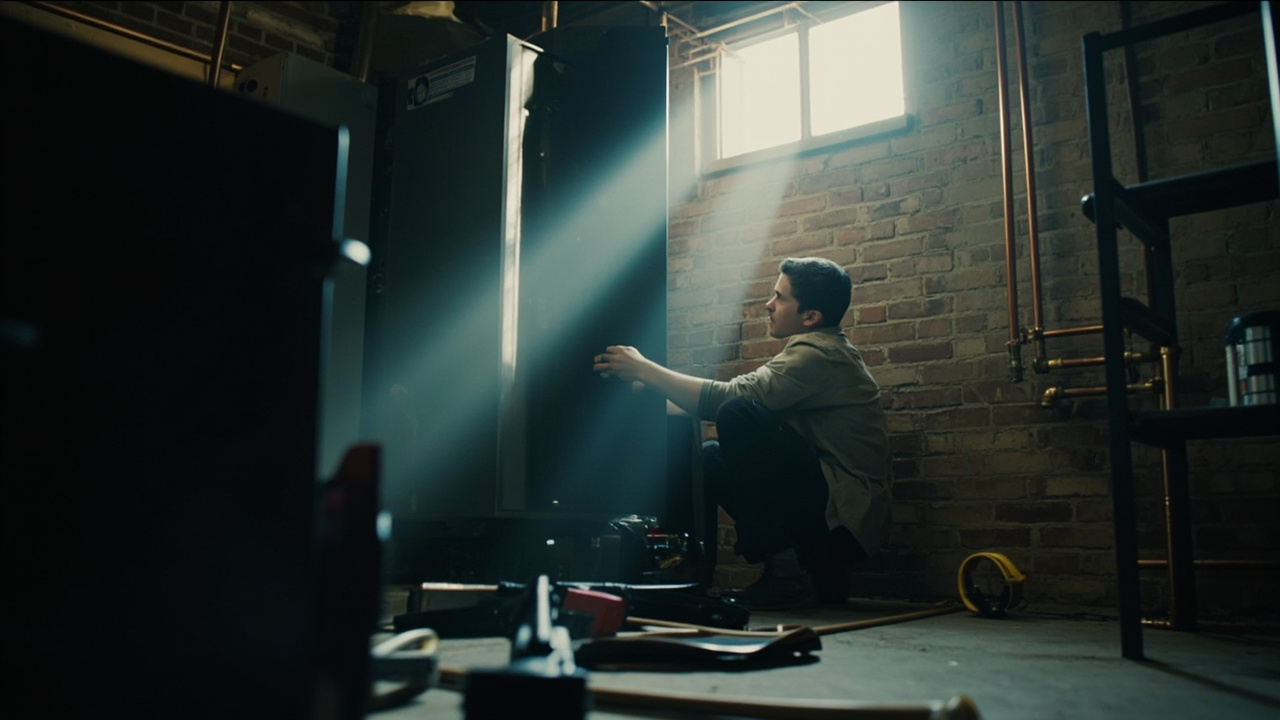
The visit follows the same order every time because guessing at a part before the safety chain is proven wastes the call. We check for gas smell and carbon monoxide first, since either one ends the visit with the equipment off rather than repaired on the spot. Once the space is confirmed safe, we walk the ignition sequence: does the burner light, does it hold flame, does the pressure switch prove draft before gas is allowed to flow. Each step either clears or points at exactly where the chain is breaking.
The reading that decides the rest of the visit comes from a combustion analyzer placed in the flue once the burner has settled, several minutes in rather than at first light off, because startup numbers always look worse than they are. A steady, low carbon monoxide reading with oxygen sitting where it should means the burner is combusting cleanly and the fault is somewhere else in the control chain, usually the flame sensor or the pressure switch. Carbon monoxide that climbs instead of settling ends the diagnosis right there. That reading means the heat exchanger or venting path is compromised and the unit stays off until repair is complete, because cleaning or adjustment cannot change a physical breach in the system boundary.
Whether the fix is a part or a bigger decision comes down to which side of that reading the fault lands on. A flame sensor, a pressure switch, or an inducer motor is a component swap, the kind of thing a boiler repair service handles on the same visit. A cracked heat exchanger or a venting fault shows up as rising carbon monoxide and demands system replacement. No cleaning or adjustment changes that number once it climbs. We measure the gas stream and the oxygen present to tell you which category the reading puts you in, then walk through what the next step looks like and what it involves. The combustion analyzer reading is the instrument that separates a quick fix from a larger decision, and it stays on the flue long enough to settle before we call it.
More detail on emergency blower motor replacement is on its own page.
Ask which of these readings was taken before any part is replaced.
| Instrument | Good reading | Bad reading | What it changes |
|---|---|---|---|
| Filter, coil and condensate inspection | Light passes through the filter pleats, the coil fins are clean | A matted filter, a coil with ice on it | A homeowner who has never seen the inside of their air handler makes a different decision |
| Manifold gauges with superheat and subcooling readings | Superheat and subcooling both landing in the range the equipment maker specifies for that metering device | High superheat with low subcooling | An undercharge or a restriction rather than a weak compressor |
| Manometer for total external static pressure across the air handler | Static pressure at or under the maximum printed on the blower data plate | Static above the rating | The filter, the coil or the duct is choking the system |
| Two probes for delta T between return and supply air | A 16 to 22 degree drop across the coil in cooling at normal indoor humidity | A small drop means airflow or charge is wrong | An unusually large drop means the coil is being starved of air |
How an emergency boiler call runs
The intake call
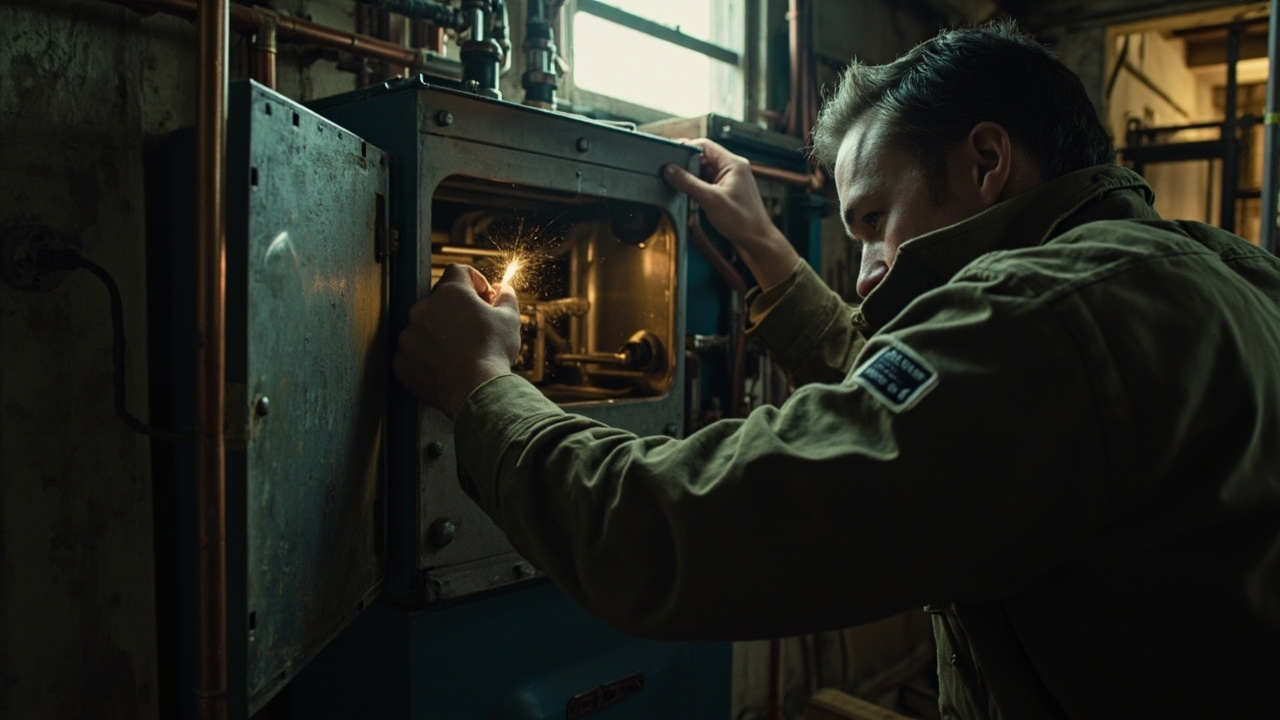
We ask what the boiler is doing right now, whether it lights and drops out or does not light at all, how long it has been happening, and the age of the unit if you know it. Those answers tell us whether this is a same day boiler repair or one that needs immediate dispatch tonight. You are told what to expect before the technician arrives, including whether the space needs to be cleared for access. On site, the safety check comes first, gas smell and carbon monoxide, before any panel is opened.
Diagnosis and your approval
If the lockout pattern from the intake call turns out to be a coated flame sensor, stabilization means clearing the immediate fault so the burner holds flame again, which gets heat running while the full diagnostic continues underneath it. The ignition sequence is checked component by component, pressure switch, inducer motor, flame sensor, and the combustion analyzer reading is taken once the burner has settled. Whatever the reading points to gets written down as a scope, part replacement or a larger repair, and you see it before work moves past stabilization.
Verification before we leave
Before the visit ends, the combustion analyzer goes back in the flue for a settled reading, and that reading has to hold low and steady rather than climb, or the equipment does not go back into unattended operation. We walk through what the reading showed and what was replaced or adjusted. You keep the readings taken on that visit, which matters if the same fault comes up again during the next cold snap.
Why the age of the house changes what a boiler call finds
The fault a boiler call turns up depends heavily on when the house was built and where the unit was fitted into it. Pre war wood frame houses on pier and beam foundations often carry a heating setup added well after the house went up, sometimes still showing an old floor furnace or gas space heater opening that was never fully retired. Gas lines and vent runs from that era were sized and routed for a different unit than what may be running today, and a crew unfamiliar with that pattern can misread a draft problem as a control fault instead of tracing it back to a vent path that was never updated to match the equipment now attached to it.
Post war and mid century houses more often put the unit in a hall closet or garage, tight quarters where the vent run and gas line are close to combustible material and where past work has sometimes been layered on top of past work. A closet installation limits how a technician can trace the vent path visually, so a coated flame sensor and a partially blocked flue can produce the same lockout symptom from the outside, and the difference only shows up once a combustion analyzer reading is taken rather than guessed at. The reading itself confirms whether the flame sensor is faulty or the blockage is upstream in the venting system.
Later houses with equipment on a slab and ducts run overhead usually have simpler gas and vent runs, but decades of service on the same unit means components have aged together, so a lockout on one part is often a sign the rest of the ignition chain is close behind it. A crew that has not worked a range of these setups tends to treat every lockout as the same repair, when the fix and the time it takes both depend on how the unit was installed and what has been changed around it since. The ignition sequence involves a gas valve, a transformer, a control board and a flame sensor all working in concert, and when one ages past its threshold, the others are typically not far behind.
Permit and inspection questions? Commercial Construction Permits is the office we coordinate with on every permitted Waco job.
What working with us looks like on a boiler call
Same day scheduling by symptom
We ask what the boiler is doing, whether it lights at all, how long it runs before it drops out, and when it started. Those answers sort a no heat emergency boiler repair call into same day dispatch or a scheduled visit. You get a window before the technician leaves for your address, and if a call ahead of yours runs long because a combustion fault needed more time to clear, you are told before your window passes rather than after.
Careful equipment handling
Access to a boiler in a closet or crawlspace means tools and parts get staged before anything comes apart, so nothing sits loose on a floor. Drop cloths go down anywhere a panel or burner tray has to be pulled through a living space. Anything removed for inspection goes back the way it came unless it fails the reading, and the space is left as it was found once the diagnostic is finished.
What moves your approval point
Access and rigging move the job more than anything else on a boiler call. A unit in an open utility space takes less time than one behind a tight closet door or up in a low attic where tools have to be carried in piece by piece. Whether the fault is a single part or a heat exchanger issue also changes scope. Once the combustion reading and the access are both known, the scope is written down and you approve it before any repair starts.
How technicians earn solo calls
A technician runs boiler and furnace lockout calls alongside a lead before taking one solo, and the lead signs off specifically on reading a combustion analyzer correctly once the burner has settled, not just on replacing a sensor. On any call where carbon monoxide reads high or keeps climbing, a second technician reviews the reading before the equipment goes back into service.
You Have Questions,
We Have Answers
A boiler emergency is any loss of heat combined with a safety reading that has gone wrong. That includes a burner that will not stay lit, repeated lockouts, a carbon monoxide alarm, or a smell of gas near the unit. A boiler that heats unevenly but keeps running through a cycle requires a scheduled repair rather than an emergency response, because the difference lies in whether the safety chain or the ignition sequence is the thing failing.
It counts as an emergency once the system stops producing usable heat during cold weather or shows a safety fault, such as a lockout that will not clear on its own or a rising carbon monoxide reading. A single dropout that resets and holds afterward is worth a call but rarely urgent. Repeated lockouts in the same evening, especially during a hard freeze, are the pattern that turns into a cold house by morning.
There is no flat figure, because access and rigging move the cost more than the fault itself does. A unit in an open utility space costs less time to reach than one wedged in a cramped closet or upper floor, and whether the defect involves a single component or multiple systems changes scope from there. The written scope, based on the combustion reading and what the access requires, is shown to you before any repair starts.
What Waco's water and housing stock do to a boiler
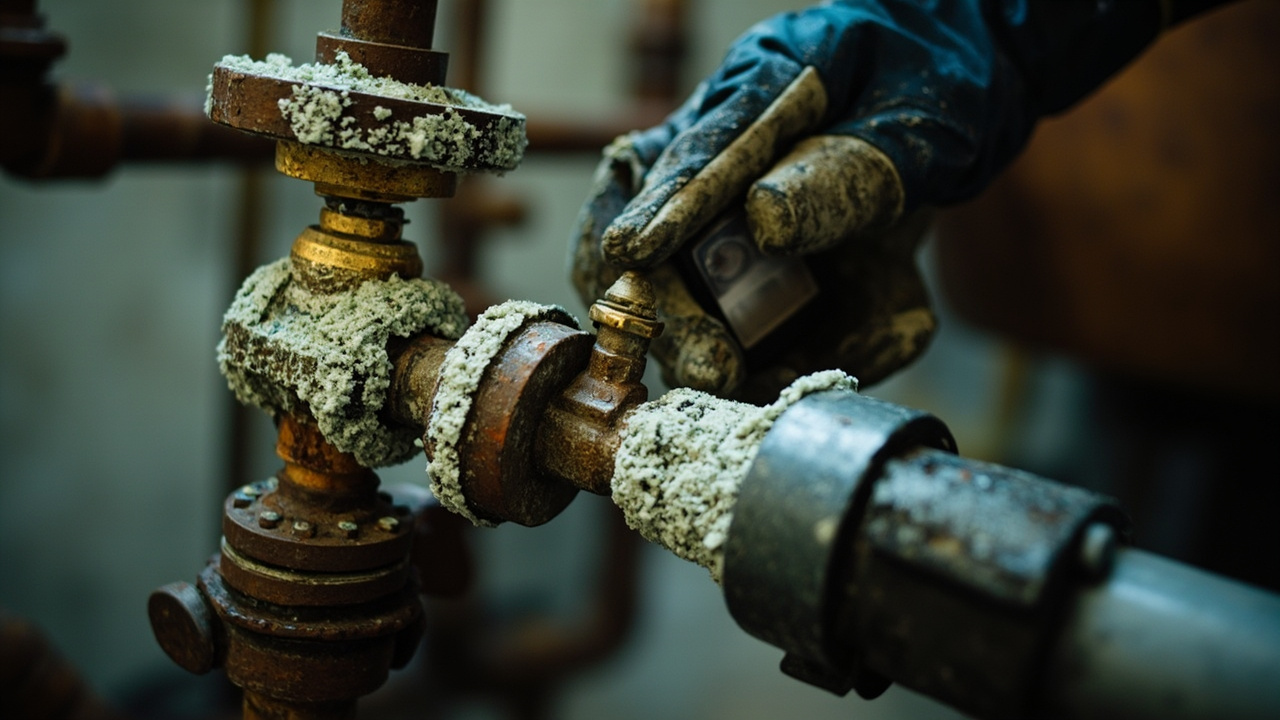
City of Waco Water Utility Services delivers treated surface water from Lake Waco that runs moderately hard, carrying calcium and magnesium that settle out as scale inside any water-fed component it passes through. On a gas-fired heating system that means feed and relief hardware slowly picks up mineral buildup over years of service, which changes how those parts seat and how reliably they hold pressure. A boiler that has been running on that water supply for years without ever having those components checked is carrying more wear in that hardware than its burner side shows on the surface. Mineral scale on relief valve seats reduces their ability to reseat cleanly after pressure cycles, and scale on feed valve ports restricts water flow during fill sequences. This is one reason an emergency call gets checked past just the ignition chain.
The access conditions a technician finds in an older closet or crawlspace installation get written into the job record along with the combustion readings. Documenting how the unit sits and what it took to reach it means the next visit, whether a follow-up on the same fault or a routine check, starts with that layout already known instead of relearned from scratch. That record is also where a documented carbon monoxide reading lives, creating a paper trail showing what the equipment was doing on the day it was serviced. Subsequent technicians can plan their approach based on actual site conditions rather than assumptions about access difficulty.
HVAC Services in The Waco Area
Explore our service area and locate Granite HVAC Waco with ease. We're proudly local and serve the surrounding neighborhoods with fast response and honest pricing. Use the map to check our coverage area, or call us and we'll confirm in seconds.
Address:
Granite HVAC Waco, Waco, TX, 76701
Additional Services We Offer
- 24/7 Emergency AC Repair
- After-Hours HVAC Service
- Carbon Monoxide Leak Response
- Emergency Blower Motor Replacement
- Emergency Commercial HVAC Repair
- Emergency Compressor Replacement
- Emergency Furnace Repair
- Emergency Heat Pump Repair
- Emergency Refrigerant Leak Repair
- Emergency Thermostat Replacement
- No Cooling Emergency Service
- No Heat Emergency Service
Checking a thermostat's batteries, resetting a breaker once, and knowing where your gas shutoff is are things you can and should do before calling. Anything past that, opening the burner compartment, testing gas pressure, or reading combustion gases, needs a combustion analyzer and training with live gas equipment, so that stops being a homeowner job. If what we find points to a heat exchanger or venting problem, we say so on the first visit and explain what that decision involves before any work continues.
Before you call, know whether the boiler lights at all or lights then quits, and how long that pattern has continued. Check the thermostat batteries and note the breaker position if you can safely reach it. The unit's age and whether anyone needs heat tonight helps determine if this is a same day visit or urgent call.
Last reviewed September 2026 by Dale Whitfield, Service manager.