



What no heat in your house means once the furnace has sat idle
The call sounds the same every year. The thermostat is set to heat, the furnace tries, you hear the blower kick on, then it quits within a minute. A few minutes later it tries again. Some houses report the burner lighting and going out three or four times before the system stops calling for heat at all. That is a heater not working emergency in the plain sense, the system is trying and failing rather than doing nothing, and each failed attempt is doing something to a control board that only tolerates so many failed starts before it locks out and stops trying altogether.
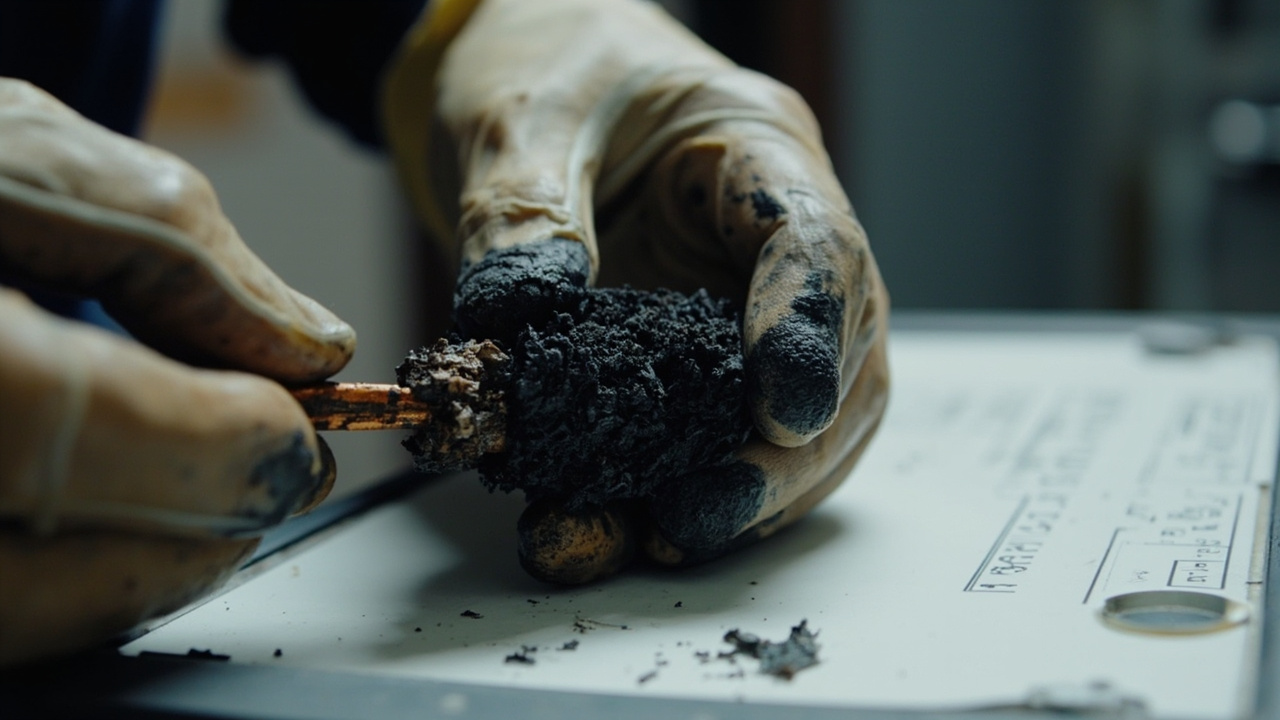
Most of what shows up as a no heat in house emergency this time of year traces back to ignition rather than to the heat exchanger or the blower motor. A furnace that sat idle through McLennan County's long cooling season collects a film of dust and combustion residue on the flame sensor, the small metal rod that proves a flame is present before the control board keeps the gas valve open. A coated sensor sends a weak signal, the board reads it as no flame, and the burner shuts down even though it lit correctly a second earlier. The furnace looks broken. The sensor is dirty.
That is where this becomes emergency no heat repair rather than a maintenance call. A coated flame sensor makes the burner light and drop out again and again. Each retry the board allows is one attempt closer to a lockout, and once the board locks on repeated trials the furnace stops trying on its own, so the house goes cold overnight with nobody home to notice until morning. A furnace that runs fine but never quite warms one room is a comfort complaint and can wait for a scheduled visit. A furnace that will not stay lit at all, on a night headed toward a hard freeze, does not wait the same way.
House freezing no heat calls climb every time a cold front finally reaches McLennan County after a mild stretch, because that is the first real test the equipment has faced since spring. If you smell gas anywhere near the furnace, leave the house and call from outside before calling anyone else. Short of that, a furnace that keeps trying and quitting is worth a same night call rather than a wait and see, which is why 24 hour no heat service exists for exactly this pattern instead of the slow leak or minor noise that can sit until daylight.
See emergency blower motor replacement for how the related work is scoped and priced.
How we trace a no heat call to the actual fault
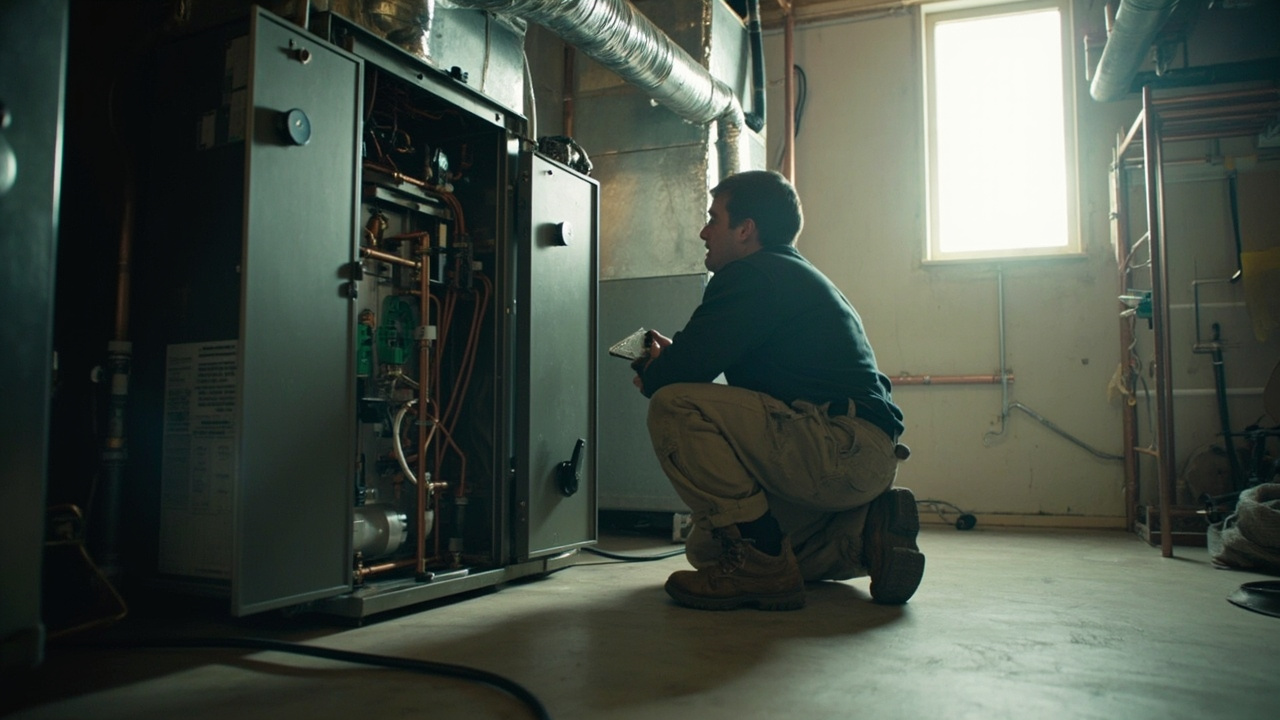
The sequence on a no heat call starts before the burner compartment ever opens. Power and thermostat call get confirmed first, then the ignition sequence gets watched through a full attempt, and only if the burner lights and quits does the flame sensor come out for a signal check. That order matters because a board that looks locked out can be reacting correctly to a weak signal rather than failing on its own, and opening the board first wastes a trip.
The flame sensor signal check in microamps is what settles it. A steady reading well above the control board's dropout point means the sensor is proving flame correctly and the fault sits somewhere else in the ignition chain, the pressure switch or the inducer motor. A weak or drifting reading, especially one that starts strong and fades as the burner runs, means the sensor is coated and the board is doing exactly what it should by cutting gas to a flame it can no longer confirm. That single number decides whether the fix is a two minute cleaning or a longer chase through the pressure switch and inducer motor, and it is read before any part gets replaced rather than after.
Where the choice gets bigger than one furnace is heat pump against gas furnace, and Waco splits the two by how the winter behaves. A heat pump loses output as the outdoor temperature drops and leans on backup strip heat through a hard freeze, while a gas furnace delivers the same heat output regardless of how cold it gets outside, which is why a furnace lockout on the coldest night of the year reads as urgent in a way a heat pump defrost cycle does not. A house running dual fuel switches between the two at a set balance point, and knowing which fuel and which failure pattern applies changes the first question asked on the phone before a technician ever opens a panel.
Our page on emergency heat pump repair covers that side of the work in more depth.
Permit and inspection questions? Commercial Construction Permits is the office we coordinate with on every permitted Waco job.
Ask which of these readings was taken before any part is replaced.
| Instrument | Good reading | Bad reading | What it changes |
|---|---|---|---|
| Flame sensor signal check in microamps | A steady signal well above the control board dropout point | A weak or drifting signal | The sensor is coated and the burner will drop out |
| Manometer for total external static pressure across the air handler | Static pressure at or under the maximum printed on the blower data plate | Static above the rating | The filter, the coil or the duct is choking the system |
| Micron gauge during evacuation | Below 500 microns and holding there after the pump is valved off | A reading that climbs back up | Moisture is still boiling off inside or the system is not sealed |
| Manifold gauges with superheat and subcooling readings | Superheat and subcooling both landing in the range the equipment maker specifies for that metering device | High superheat with low subcooling | An undercharge or a restriction rather than a weak compressor |
How a no heat call runs
First call and diagnosis
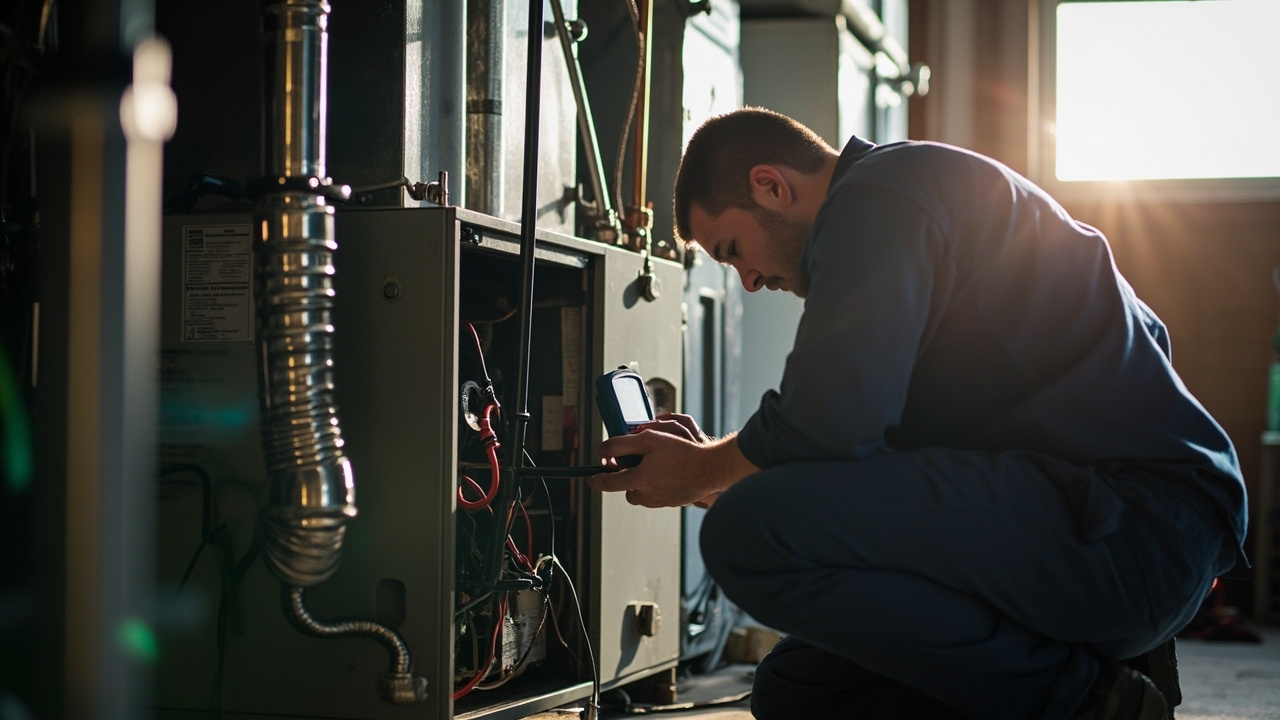
On the phone we establish whether the heat stopped, if the burner lights and quits or never tries, and if the breaker has tripped. That tells us whether ignition or power is the likely fault before anyone leaves. On site the order stays the same every time, thermostat and power path first, then the ignition sequence, then the flame sensor signal in microamps if the burner is lighting and dropping out. Each step rules out a branch, so the furnace gets opened once, not three times, and you see which check found the fault.
Repair after you approve
Once you approve the scope, power to the furnace gets cut at the switch before any panel comes off. Cleaning or replacing the flame sensor is the most common fix, followed by a pressure switch or inducer motor check if the signal comes back clean. If the burner compartment shows scorching or a hairline crack in the heat exchanger, we stop, show you what we found, and shut the equipment down rather than restart it, because that finding changes the job from a repair to a replacement conversation.
Verification before we leave
Before we call it done, the flame sensor signal gets read again in microamps and has to sit well above the board's dropout point through a full burner cycle, not just at start up. A combustion analyzer confirms carbon monoxide is low and steady once the burner settles. We walk you through what failed and what changed, and you keep a written note of the reading and the part replaced for your own file.
Why an unfamiliar crew misses this fault
Waco's winters are mostly mild, broken by short hard freezes, so a furnace built for occasional use gets one real test a year and any fault that formed over the summer shows up on that one cold night. Furnaces around Waco and the rest of McLennan County sit in a mix of locations that changes how fast a no heat call gets diagnosed. Post war and mid century houses commonly keep the furnace in a hall closet or a garage with the ductwork running through the attic above, which puts the flame sensor, the pressure switch and the inducer motor all within reach of one small access panel. Newer construction moves the same components into the attic itself alongside the air handler, so a crew unfamiliar with that layout spends the first several minutes finding the unit before they can open the burner compartment at all.
An unfamiliar crew that has not worked many of these furnace layouts tends to jump straight to the control board once a lockout shows up, because a board swap looks like progress even when the actual fault is a coated flame sensor sitting a few inches away. That swap does not fix anything. The furnace locks out again on the next cold night because the signal reaching the new board is exactly as weak as it was reaching the old one, and the homeowner pays for a part that was never the problem. A systematic check catches the real cause before any parts come off the shelf.
Response across the metro during a hard freeze runs on the same order every time: thermostat and power first, ignition second, flame sensor signal third. That sequence finds the fault whether the furnace sits in a decades old hall closet or a house finished last year. The house changes how long it takes to reach the components, not the order the checks happen in. Each step confirms or rules out a specific failure point, moving toward the cause instead of guessing at expensive solutions.
If this sounds close but not quite your situation, 24/7 emergency ac repair may be the better starting point.
Proper sizing follows the Manual J standard from the Air Conditioning Contractors of America, guesswork is how systems end up short-cycling.
What the call looks like from your side
Same night arrival windows
You call and we ask what the thermostat is doing, when it started, and whether the burner is lighting and dropping out or not trying at all. Those answers tell us whether this is a same night dispatch or a next morning visit. During the first hard freeze of the season, when the whole area calls at once, we tell you where you land in that order right on the phone instead of leaving you guessing. If a job ahead of yours runs long on a stuck ignition sequence, we call and give you the new window.
Furnace closet left clean
Furnace closets and attic hatches are tight spaces, so a drop cloth goes down before any panel comes off and tools stay staged on it rather than on the floor. Wiring and burner components come out onto that cloth in the order they came off, which keeps track of what goes back where. Insulation disturbed while reaching an attic unit gets set aside and replaced, and the panel goes back on and gets checked for a tight seat before we call the job finished.
What moves the cost
The biggest swing on a no heat call is timing. A call when dispatch handles everyone at once during the season's first hard freeze costs more in wait time than the same repair made on a mild week. Part access matters too, a furnace behind a tight attic hatch takes longer than one in an open closet. Whatever the fault turns out to be, we write down what we found and what it takes to fix before any work starts, and you see that scope and say yes before a tool touches the burner.
Earning the call alone
A technician does not run a no heat call alone until they have shown a lead the full sequence on a real furnace, thermostat and power check, ignition proof, and a flame sensor microamp reading read correctly rather than guessed at. The lead signs off on that sequence before it happens unsupervised. Anything involving a cracked heat exchanger or carbon monoxide in the living space gets a second technician's eyes before the equipment goes back into service.
You Have Questions,
We Have Answers
Yes, once indoor temperature keeps falling and a hard freeze is underway outside. McLennan County winters are mostly mild with short hard freezes mixed in, and those are the nights a furnace that keeps lighting and dropping out needs same night attention rather than a scheduled visit, since pipes and anyone vulnerable in the house are both at risk once the house tracks toward outdoor temperature.
Call Granite HVAC Waco at (254) 221-8461 and describe what the furnace is doing. Diagnosis follows a fixed order, thermostat and power first, then ignition, then a flame sensor signal read in microamps, so a coated sensor is not mistaken for a failed control board. That sequence matters most during the first hard freeze, when dispatch is busiest and getting the fault right the first time keeps a second visit off the schedule.
Why Waco's short hard freezes catch idle furnaces off guard
Waco's winters are mostly mild, broken by short hard freezes, so a furnace gets one real test a year instead of months of steady use. Post war and mid century houses across McLennan County commonly keep that furnace in a hall closet or garage with duct running through the attic, which puts the ignition components close together behind one panel. Newer construction moves the whole assembly into the attic alongside the air handler, adding a longer crawl before a technician reaches the burner. Heating season here runs roughly from late November through February, most of it mild, so a fault that formed silently in October only announces itself on the first night cold enough to demand full output, which is exactly when a coated flame sensor or a weak ignition signal finally shows itself.
Gas service in older parts of the area comes through Atmos Energy, and a smell of gas near the furnace means leaving the house and calling Atmos Energy or emergency services from outside rather than touching a switch. Electric heat pumps depend on Oncor's grid holding through the same cold snap, and a hard freeze that overloads backup heat strips or drops power briefly can leave a heat pump icing on its outdoor coil right when the surge on power's return does its own damage. Knowing which fuel and which utility feeds a given house shapes the diagnostic work before a technician arrives, because a gas furnace lockout and a heat pump defrost problem require different initial troubleshooting steps, different equipment access points, and different verification procedures to confirm the system is safe to restart.
HVAC Services in The Waco Area
Explore our service area and locate Granite HVAC Waco with ease. We're proudly local and serve the surrounding neighborhoods with fast response and honest pricing. Use the map to check our coverage area, or call us and we'll confirm in seconds.
Address:
Granite HVAC Waco, Waco, TX, 76701
Additional Services We Offer
- 24/7 Emergency AC Repair
- After-Hours HVAC Service
- Carbon Monoxide Leak Response
- Emergency Blower Motor Replacement
- Emergency Boiler Repair
- Emergency Commercial HVAC Repair
- Emergency Compressor Replacement
- Emergency Furnace Repair
- Emergency Heat Pump Repair
- Emergency Refrigerant Leak Repair
- Emergency Thermostat Replacement
- No Cooling Emergency Service
Thermostat batteries, a tripped breaker, and a furnace filter changed on schedule are genuinely homeowner jobs, and checking those before you call can save a wasted trip. Where it stops is the burner compartment, the flue and anything behind the blower door, because gas ignition and combustion venting are not safe to open without training. If what we find points to a cracked heat exchanger or a venting problem, we say so on the first visit and tell you what has to happen next.
Before you call, know when the heat stopped and the specific failure pattern: does the burner attempt to ignite then shut down, or does it fail to ignite entirely. Check that the thermostat is set to heat above room temperature and that the breaker is on. Know roughly how old the furnace is and whether anyone in the house needs to stay warm right away. Those answers tell us how fast this needs someone there.
Last reviewed September 2026 by Dale Whitfield, Service manager.