



Why a storefront or office feels the fault before the equipment fails
The complaint usually starts as a feeling rather than an alarm. The sales floor is fine at open and uncomfortable by mid afternoon. A conference room runs cold while the reception desk runs warm. A stockroom holds humidity that a house never would, because a retail space packs more people, more lighting load and more door traffic into the same square footage a residential system was never built to answer. Office space fails differently. One zone satisfies its thermostat while the zone next to it never does, because the duct or the packaged unit serving that tenant space was sized for a different layout before the walls moved.
A rooftop packaged unit or a light commercial split system carries a heavier duty cycle than a house system, and it carries it in direct sun on a roof or against a wall with no shade. Waco summers push equipment into long stretches of continuous run time for months, which is exactly the condition that finds a weak run capacitor before anything else fails. The compressor still tries to start every cycle. It just starts harder each time, pulling more amps than the motor windings were built to carry on a repeated basis.
That is the chain worth knowing before it becomes a closed sign on the door. A weak run capacitor lets the compressor pull high amps on every start attempt. Left running that way, the windings heat past what the insulation on the wire can tolerate, and a capacitor that would have taken a service call to replace turns into a compressor that takes the whole condensing unit with it. The point to call is the point where the outside unit hums, clicks, or trips a breaker rather than starting clean, because that is amp draw already climbing rather than a comfort complaint you can wait out.
An occupied retail floor or a leased office suite does not get the luxury of waiting for a full breakdown to make the decision easy. The zone that is uncomfortable today is the zone whose motor is working hardest today, and the reading that separates a fifteen minute capacitor swap from a compressor replacement is the one worth getting before the unit stops mid afternoon on a Saturday. Equipment age matters too. Older packaged units and split systems run their capacitors harder as the coils accumulate dust and airflow resistance grows, which accelerates the wear cycle and brings forward the point at which a preventive check becomes urgent rather than optional.
More detail on after-hours hvac service is on its own page.

How the first visit reads the fault before we quote anything
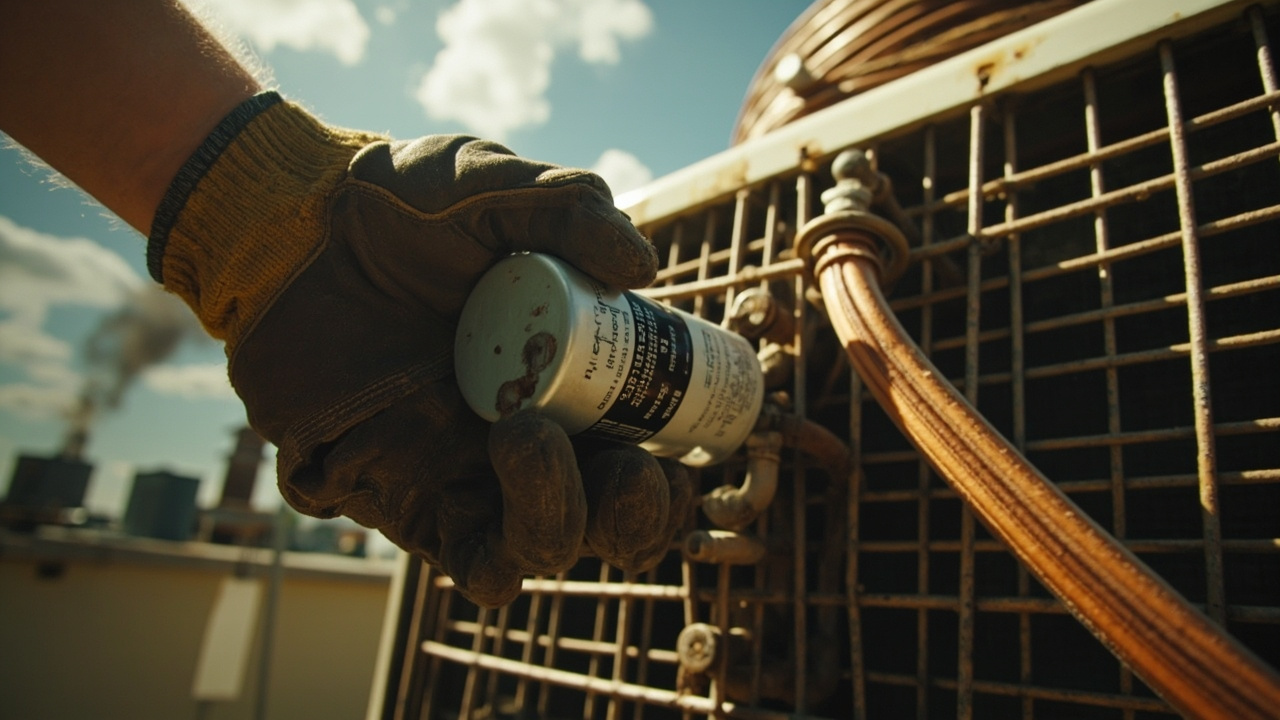
A technician working a retail or office rooftop unit does not start at the gauges. The visit starts with the electrical side, because a packaged unit or light commercial split system that will not hold a zone temperature is as often a controls or a starting component problem as a refrigerant problem. Amp draw on the compressor and the condenser fan gets checked against the data plate first, since a motor pulling above its rated load or spiking toward locked rotor on start points straight at a failing capacitor or contactor before the refrigerant circuit gets touched at all.
Once the electrical side is cleared, manifold gauges go on to read superheat and subcooling. What that pair means depends on how the coil is metered. A unit running a thermostatic expansion valve gets judged mostly on subcooling, and a fixed orifice system gets charged on superheat, so there is no single number that applies across every rooftop unit on a strip of storefronts. High superheat paired with low subcooling points at an undercharge or a restriction rather than a tired compressor, and that distinction decides whether the visit ends with a leak search and a repair or with a recommendation to plan a replacement. Refrigerant is not something a system consumes on its own, so a unit that is low was built with a leak somewhere, and finding it before recharging is the difference between a repair that holds and one that gets called back out in a month.
The choice between a packaged rooftop unit and a light commercial split system usually comes down to what the building already has rather than which is better on paper. A packaged unit puts the compressor, coil and blower in one cabinet on a curb, which keeps service access on the roof and out of the tenant's occupied space, and it can carry an economizer that brings in outside air when conditions allow it. A light commercial split system puts the air handler indoors, which matters in a multi tenant office building where roof access is shared or restricted, and it puts the more frequent filter and blower service inside where it does not need a ladder. Neither wins outright. The building's roof access, tenant layout and existing infrastructure decide which one a given storefront or suite should run.
If this sounds close but not quite your situation, commercial hvac contractors may be the better starting point.
Your local utility, Utility Bill City of Waco, publishes service and water-quality information every Waco homeowner should know.
How retail and office HVAC calls run

Diagnosis before anything is quoted
The call starts with which zone or unit, whether the space is occupied, and whether the equipment is still running. On site, the check goes electrical first, amp draw on the compressor and condenser fan against the data plate, because a starting component fault looks like a refrigerant problem until it is ruled out. Manifold gauges go on next to read superheat and subcooling against what that specific unit's metering device expects. You see the readings as they are taken, not a conclusion handed to you afterward, and the fault gets named before a single part gets ordered.
Approval before the unit comes apart
Once the scope is written from the readings, it gets reviewed with you before anything is replaced or opened up. The disconnect gets locked out first so no one is working a live circuit. If the fault is a starting component, the capacitor or contactor gets swapped and the compressor is retested under load. If it is refrigerant, the leak gets found and repaired, the filter drier gets changed, and the system is pulled to vacuum before any charge goes back in. If something unexpected turns up behind the coil or in the controls wiring, we stop and show you before going further.
Verification before we leave the roof
Before the ladder comes down, the gauges go back on and superheat or subcooling has to land where that unit's metering device calls for it, and amp draw on the compressor has to sit at or under rated load with the unit running under real conditions rather than just cycling once. We walk the zone controller or thermostat setting with you so you know what changed, and you keep a record of the readings taken and the part replaced, which matters if the same unit gets serviced again down the line.
What a commercial rooftop or light split system needs that a house does not
A crew that works houses all week reads a rooftop unit the same way they read a residential condenser, and that habit costs time on a storefront or office job. A packaged unit on a curb carries an economizer and a controls package a house system never has, so a technician who skips straight to the compressor misses the damper or sensor fault sitting in front of it. The same mistake shows up on controls. A single tenant thermostat gets treated like the whole story when the building runs a zoned or communicating setup tying several units together, and a change made on one zone controller without checking the others can leave a second suite fighting the first.
Access changes the job too. A house call means a driveway and a side yard. A retail or office call means a locked roof hatch, a shared ladder, or a mechanical closet inside a space that has customers or staff working a few feet away while the panel is open. A technician unfamiliar with that layout loses time figuring out how to reach the unit without walking through the sales floor or blocking a hallway, and that time comes out of the tenant's occupied hours rather than an empty house.
Waco's long run of hot months adds a wrinkle a crew from a milder climate underestimates. Continuous cooling across a whole summer wears starting components on a schedule a shorter season never produces, and a rooftop unit that tested fine on a spring visit can be pulling high amps by July with no other symptom yet. Knowing that pattern changes what gets checked on a routine visit rather than waiting for the unit to hum and quit on its own. A technician trained on commercial equipment in this climate recognizes the accelerated wear cycle and catches the rising amperage draw during preventive maintenance, when repair options still exist and downtime stays measured in hours rather than days.
See commercial hvac preventive maintenance contracts for how the related work is scoped and priced.
Use this to ask what is driving the quote rather than asking for a rough number.
| Driver | Why it moves the estimate | What you control |
|---|---|---|
| Controls | The thermostat, zoning and any communicating equipment | How much control you want built into the system |
| After hours dispatch during the first heat wave | Everyone calls at once | Calling in working hours when the problem can wait |
| Access and rigging | An attic, a crawlspace, a tight closet or a rooftop with no easy path | Clearing the work area and the path before the crew arrives |
| Whether the existing duct system can move the air the new equipment | The static pressure reading answers | Fixing the cause now rather than paying for the same visit twice |
| The capacity and efficiency tier of the equipment chosen | Whether the indoor coil is matched to the new outdoor unit | The grade you choose, the rest of the work is set by the house |
What working with us looks like on a retail or office job
Getting a technician to the roof
You call, and we ask which unit or zone is affected, whether the space is occupied, and what the outside unit is doing right now, since a unit that hums and quits moves ahead of a slow comfort complaint. That tells us whether the visit is same day or scheduled. You get a window before the technician arrives, and if the job ahead of yours runs long on the roof, you hear about the shift before the window passes rather than after.
Floor access during work
Ladder access and roof work stay off the sales floor entirely, so foot traffic is not routed around open panels or hanging wire. Inside a mechanical closet or a suite ceiling, drop cloths go down before any coil or filter comes out, and any debris from a filter change or a capacitor swap leaves in a sealed bag rather than sitting in a hallway. The space you hand us is the space you get back, aside from the fault that brought us there.
What affects pricing
The controls tied to a unit move the scope more than most owners expect. A single zone with a simple thermostat is a short visit. A building running zoning or a communicating thermostat networked to several units adds wiring and programming time before the fault is even isolated. We write the scope from what the amp draw and the gauge readings show, walk it with you, and nothing gets replaced or reprogrammed until you approve it.
How technicians earn roof alone
A technician new to commercial work rides along on rooftop and light split system calls before working one solo, and the lead checks that they can read amp draw against a data plate and pull a correct superheat or subcooling number depending on how the coil is metered. On a building running zoned controls or a communicating thermostat setup, a second technician reviews the wiring before a scope is written, since a controls mistake affects more than one tenant.
You Have Questions,
We Have Answers
Pricing for retail & office hvac in Waco depends on the scope of the job, access, and the materials involved. Most projects fall within a predictable range, and Granite HVAC Waco provides an upfront, itemized quote before any work begins, no surprises when the job is done. Call (254) 221-8461 for a fast estimate.
Most building owners policies cover sudden, accidental damage but not gradual wear or the aged part that failed. Adjusters separate the damage from its cause, and documentation decides the close calls. Granite HVAC Waco photographs what we find and writes the repair description with your claim file in mind. Your policy and adjuster make the final call.
Local crews who know Waco buildings, upfront itemized pricing, and a real person on the phone 24/7. We show up when we say we will and document the work before we leave, that's why so many of your neighbors call us first.
Granite HVAC Waco is the name Waco neighbors keep recommending for retail & office hvac systems, and the reasons are practical. Local crews who know Waco buildings, written upfront pricing, and follow-through when something needs a second look. We answer 24/7 and show up when we say we will. Compare the quote line by line, then decide.
Give us a call at (254) 221-8461 to explore the best options for your situation. One of our friendly technicians will evaluate what is going on, walk you through your choices in plain language, and make sure you know exactly where things stand before any work begins.
Some minor maintenance is building owner-friendly, but most retail & office hvac work involves code requirements, specialized tools, and failure modes that can turn a small problem into major damage. A qualified pro protects your building and gets it done right the first time.
We accept all major credit cards, checks, and cash, and financing options are available for larger projects. Ask about current financing terms when you call (254) 221-8461.
As a rule of thumb, if a repair costs more than half the price of a replacement, or the equipment is past roughly two-thirds of its expected lifespan, replacement usually wins on total cost. We walk you through both numbers so you can decide with real figures in front of you.
National chains and big-box stores typically subcontract this work and add a markup, with limited follow-up if something goes wrong. Granite HVAC Waco handles retail & office hvac systems with our own local technicians and transparent pricing, and the person who answers our phone works in Waco, not a call center. Call (254) 221-8461 to compare quotes.
Unusual noises, rising utility bills, recurring problems that come back after quick fixes, and visible water, rust, or damage are the classic red flags. Catching these early almost always means a smaller, cheaper repair. If you're seeing any of them in Waco, it's worth a call to (254) 221-8461.
Why Waco summers decide how this equipment is built and staged
Waco carries long stretches of mid to upper nineties heat through the peak of summer, and a rooftop packaged unit or light commercial split system serving a retail floor or office suite runs through that heat for months without much of a break. That duty cycle is what turns a marginal run capacitor or a slightly undersized duct run into an afternoon comfort complaint rather than a quiet fault nobody notices. A storefront with glass frontage and steady foot traffic adds a cooling load a similarly sized office suite does not carry, which is part of why equipment sized off square footage alone tends to leave one or the other uncomfortable by the second half of the day. The thermostat may read satisfied while the back corner or sales floor stays warm, a gap that proper load calculation catches before installation.
The late spring and summer humidity that builds across the metro does more than raise the cooling load. It grows algae inside condensate drains faster than a dry climate would, and on a packaged rooftop unit or a closet mounted air handler serving a retail floor, that buildup backs the pan up long before anyone notices a drip inside the ceiling. Checking the drain and the trap on every commercial visit, rather than only when a leak is reported, catches that failure before it reaches a tenant's ceiling tile. Winter works the opposite way. A hard freeze pushes a heat pump to lean on its backup strips, and a unit that has not been checked for correct staging can run those strips longer than the coil condition calls for, which shows up as a power bill spike rather than a comfort complaint. Watching for both, humidity load in one season and strip heat staging in the other, is what keeps a controls or maintenance visit from missing the fault that has not failed yet.
HVAC Services in The Waco Area
Explore our service area and locate Granite HVAC Waco with ease. We're proudly local and serve the surrounding neighborhoods with fast response and honest pricing. Use the map to check our coverage area, or call us and we'll confirm in seconds.
Address:
Granite HVAC Waco, Waco, TX, 76701
Additional Services We Offer
- Building Automation & Controls
- Chiller Repair & Maintenance
- Commercial AC Repair
- Commercial Boiler Services
- Commercial Ductwork Fabrication & Installation
- Commercial HVAC Contractors
- Commercial HVAC Preventive Maintenance Contracts
- Commercial Refrigeration Services
- Make-Up Air Unit Service
- Restaurant Kitchen Ventilation & Exhaust
- Rooftop Unit Installation & Service
- Server Room & Data Center Cooling
Boiler plants, cooling towers and large chiller systems fall outside what a retail storefront or a small office suite typically runs, and that kind of central plant work is a different job with different equipment. Where a first visit turns up a building automation system tied into equipment far beyond a single rooftop unit or split system, we say so on that visit and tell you it needs a different scope before anything gets touched.
Before you call, know which zone or unit is acting up and whether the space is occupied right now. Note when the comfort complaint started, whether the outside unit is running, clicking, or tripping a breaker, and roughly how old the equipment is if you have it on a service tag. Those answers usually tell us whether today is the day or a scheduled visit works.
Last reviewed September 2026 by Dale Whitfield, Service manager.