


What HVAC without automated controls costs a Waco building
The complaint that reaches a building manager is rarely stated as an HVAC failure. It arrives as a leasing complaint about a conference room that runs warm every afternoon, or a facilities report showing a rooftop unit cycling longer than its schedule calls for while the lobby thermostat still reads satisfied. A single point thermostat covering several zones cannot see either problem, because it reports what one sensor feels rather than what the building as a whole is doing. The building keeps running on a control loop that looks correct on the wall display and is already wrong for at least one occupied zone.
Behind that mismatch is usually a control point that never existed. A filter overdue for change restricts airflow across the coil, and a schedule built around temperature alone keeps calling for the same runtime because nothing in the control logic reads static pressure or the split across the coil. The coil begins running colder than it was designed to. Ice forms on the fins, blocks what airflow remains, and the compressor pulls back liquid refrigerant on the next cycle instead of vapor. That failure lands on a service ticket as a compressor replacement, but the cause sat upstream in a control sequence that never measured the condition that caused it.
For a leased building, that gap is a liability question before it is a comfort one. An occupant complaint that recurs across a lease cycle becomes something a tenant can cite at renewal, and a rooftop unit that fails mid-summer takes a zone offline during business hours rather than overnight. An energy management system hvac upgrade earns its place by catching the drift in the reading before the coil ices, not by replacing a thermostat with a nicer display.
A building automation system installation gives a facilities team a log to point to instead of a memory of when a filter was last checked, which matters during a lease renewal or an insurance review that asks whether the mechanical system was maintained on a documented schedule rather than run until something failed. Waiting past the point where a zone keeps drifting off its setpoint, or supply air temperature climbs during a run, is the threshold that turns a scheduled service call into an unplanned compressor replacement and a zone down during occupied hours. The same escalation repeats every summer in a building where nothing is set up to catch it early.
See commercial boiler services for how the related work is scoped and priced.
How we read airflow before setting any control point
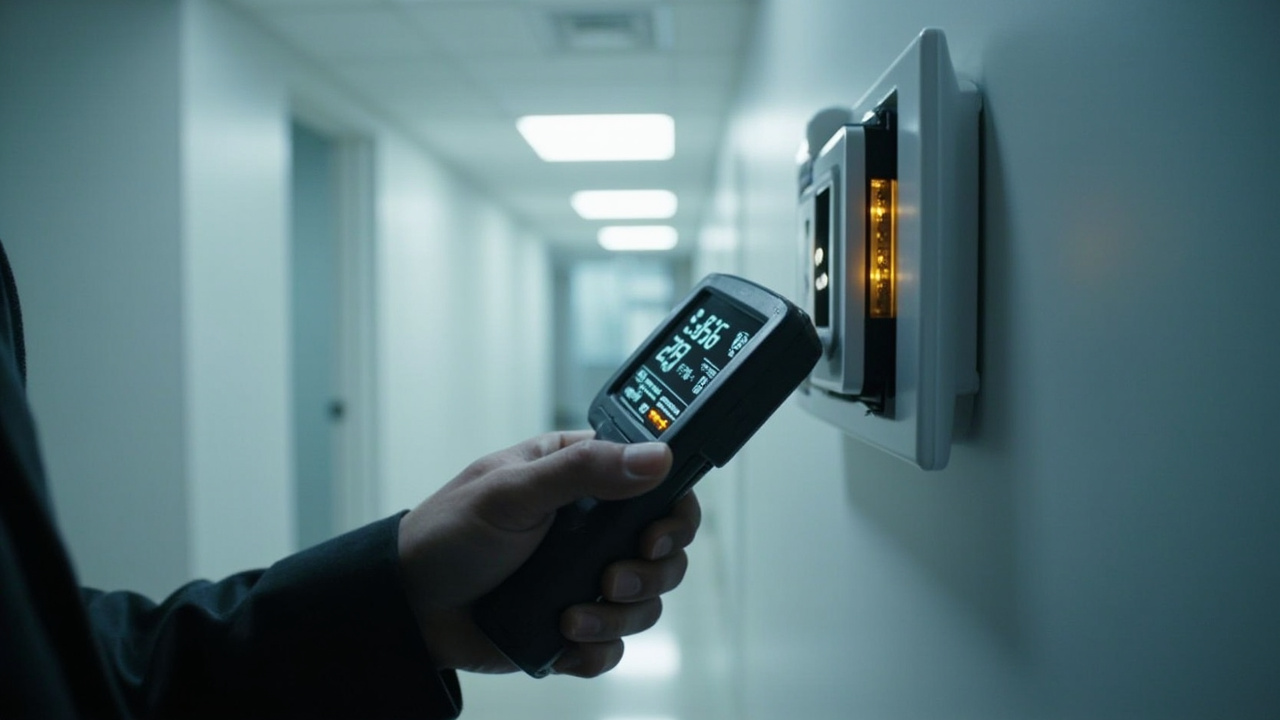
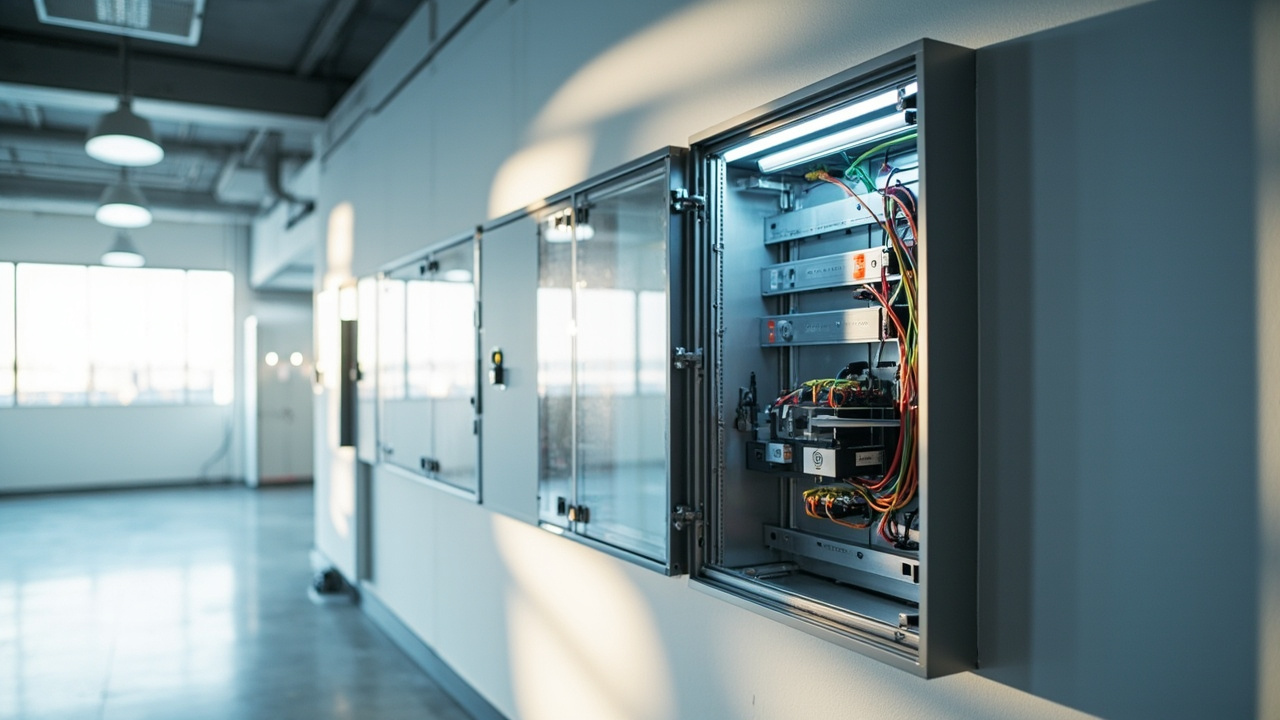
On a controls job the sequence starts with what is already installed rather than with new hardware. We trace existing sensor wiring and zone control points against the building's real zone layout, then check the filter, the coil and the return path by hand before assuming a comfort complaint is a programming problem. Only after airflow is confirmed clean does a delta T reading mean anything, because a control sequence programmed around a starved coil just automates the wrong number and reports comfort nobody in the zone is feeling.
Two probes go into the duct near the coil, one on the return side and one on the supply side, and the split between them decides what happens next. A drop of roughly 15 to 20 degrees Fahrenheit in normal cooling operation means the coil is doing what it was built to do, and any zone logic layered on top of that reading is working from a sound baseline. A drop well below that range points to a fouled coil or a refrigerant charge that a controls upgrade cannot correct, and a drop well above it points to restricted airflow that will ice the coil before any schedule catches it. Writing zone logic before that reading is taken builds a system that reports a setpoint met while a tenant is still uncomfortable.
Which control architecture makes sense depends on what sits on the roof. A packaged rooftop unit puts the coil, the compressor and the controls in one cabinet, which is where an economizer can pull in outside air once the outdoor condition is cool enough to cut mechanical cooling, and that economizer needs its own control points wired into the DDC logic to work at all. A light commercial split system keeps the air handler indoors, where a technician can reach the coil and the control panel without roof access in winter, and that access difference often decides which building gets a full BAS controls contractor scope and which gets a lighter upgrade layered onto equipment already in place. Neither architecture gets judged on tonnage alone, since the economizer and the service access are what decide what the controls have to manage day to day.
The delta T baseline also tells us whether the system can sustain comfort across multiple zones without fighting itself. When the coil delivers consistent temperature rise to the supply duct, the zone dampers and valve positions can modulate without chasing phantom load swings caused by upstream equipment drift. A control system built on unstable baseline conditions will hunt continuously, wearing actuators and confusing occupants who never get stable conditions no matter what setpoint they request.
Our page on chiller repair & maintenance covers that side of the work in more depth.
Your local utility, Utility Bill City of Waco, publishes service and water-quality information every Waco homeowner should know.
How a controls job runs
First call and site survey
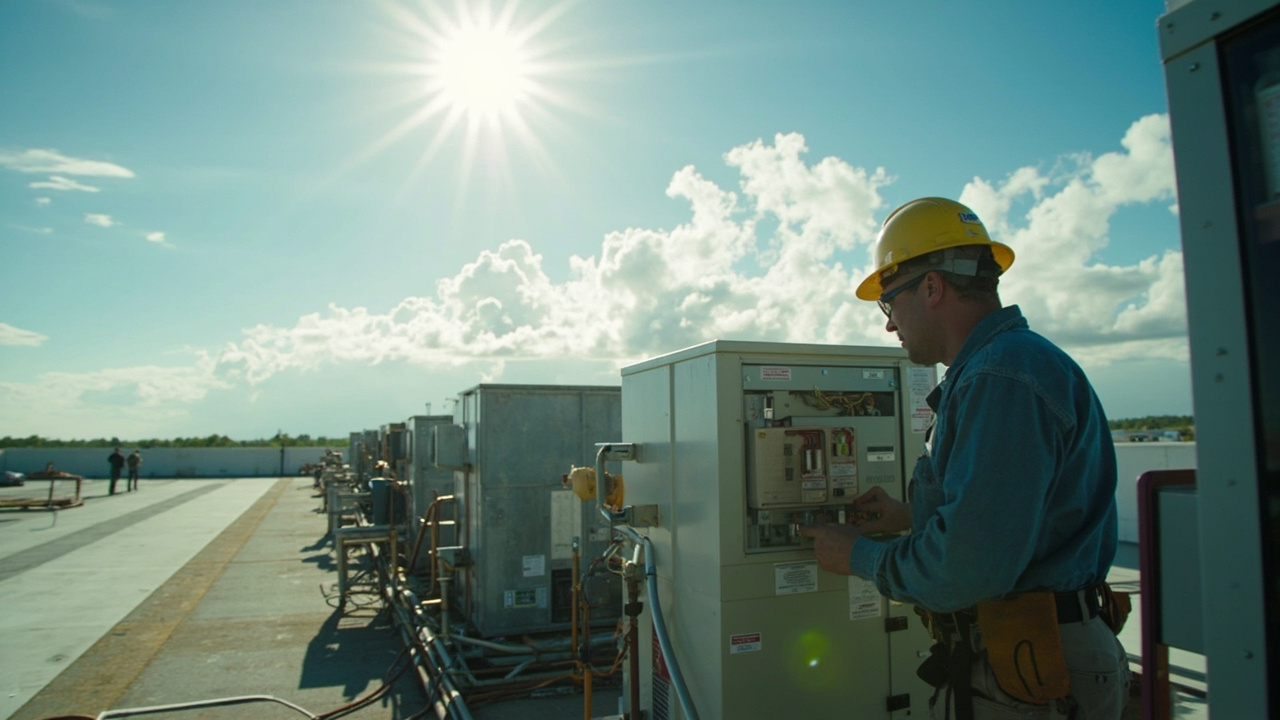
On the phone we ask about building size, zone count, the age and type of existing thermostats or panels, and whether the space stays occupied during the day. On site the order is fixed. We check the return and supply air path and take a delta T reading near the coil first, then trace existing sensor wiring and control points, then compare what we find against the building's actual zone layout. That sequence tells us whether the complaint is airflow, a control gap or both before any equipment gets specified.
Design, approval and installation
Once the scope is approved, we isolate the zones being worked on so occupied areas stay on their existing schedule while new points go in. DDC logic gets programmed and setpoint bands and seasonal schedules get built for the zones identified in the survey. If a legacy panel behind a wall turns out to be wired differently than the survey showed, we stop and show you what we found before continuing, rather than guessing at the wiring and moving on.
Commissioning and verification
Before we leave, the delta T probes go back on the return and supply air path and the reading has to land in the range the equipment maker specifies for normal cooling operation. Every control sequence gets run through its heating, cooling and any emergency mode to confirm it responds the way it was programmed. We walk building staff through the schedule and setpoint bands on screen, and you keep the as-built configuration document for your own records.
Why Waco operating conditions change controls work
Summer highs in Waco run into the mid to upper nineties through July and August, and the equipment behind any control system holds that load for hours at a stretch rather than cycling on and off the way it might in a milder climate. A crew used to a shorter cooling season often programs wide dead bands and loose setpoint tolerances, the kind that work fine where the load is intermittent. Here that same tolerance lets a zone drift for hours before the control sequence responds, and in a leased building that drift is a documented complaint a tenant can raise at renewal, not just a discomfort a facilities team hears about once.
Hail storms in this area are common enough to flatten condenser coil fins across a rooftop bank in one afternoon, and a control system that only tracks a thermostat reading has no way to flag that kind of airflow loss until a zone stops cooling outright. A crew unfamiliar with that risk builds monitoring around temperature alone instead of adding an airflow or pressure point at the coil that would catch fin damage before a full zone failure. The same gap shows up in winter, when a hard freeze pushes a heat pump onto backup strip heat and a control point that never checked strip runtime lets the strips run longer than the building's electrical service was sized for.
Expansive clay soil under much of this area shrinks in dry weather and swells when it rains, and that movement works on outdoor equipment pads and the conduit running to them year over year. A control point that reads correctly at commissioning can develop an intermittent fault once a pad tilts or a conduit joint installed for a level, fixed connection starts to flex. Building that movement into how wiring is run and secured at the outdoor unit is the difference between a sensor fault that shows up once and one that returns every year the ground shifts again.
If this sounds close but not quite your situation, commercial ac repair may be the better starting point.
We install and service major brands like Carrier and register every unit to manufacturer specifications.
Use this to ask what is driving the quote rather than asking for a rough number.
| Driver | Why it moves the estimate | What you control |
|---|---|---|
| Controls | The thermostat, zoning and any communicating equipment | How much control you want built into the system |
| After hours dispatch during the first heat wave | Everyone calls at once | Calling in working hours when the problem can wait |
| The capacity and efficiency tier of the equipment chosen | Whether the indoor coil is matched to the new outdoor unit | The grade you choose, the rest of the work is set by the house |
| Whether the existing duct system can move the air the new equipment | The static pressure reading answers | Fixing the cause now rather than paying for the same visit twice |
What working with us looks like on a controls job
Scheduling the first site visit
The first call covers building size, how many zones need independent control, whether an existing thermostat or a legacy panel is already in place, and whether the space is occupied during business hours. That tells us whether the survey needs to happen after hours or can run during the day. You get a confirmed date and window for the site visit, and if a job ahead of yours runs long because a fault turned out deeper than expected, we call before the window closes rather than after it.
Protecting the building during installation
Sensor wiring and control runs usually go above ceiling tiles and through mechanical rooms rather than through occupied space, and any tile or access panel that comes down goes back exactly where it was. Cable runs are labeled at both ends before anything gets buried behind a ceiling again. Tools and spools stay staged in one contained area rather than spread through the building, and debris from any wiring or panel work goes out with us at the end of each day.
What moves the estimate
Controls work moves on what the thermostat, zoning and any communicating equipment already in the building can support. A legacy panel that cannot talk to modern DDC hardware pushes more of the job into new controllers rather than reused wiring, while an existing network-capable thermostat setup narrows the scope. The table beside this section breaks out how each driver moves the job. Once the survey and the delta T readings are in, we write the scope with those drivers named, and you approve it before any programming or installation starts.
How technicians earn approval
A technician works alongside a lead on control programming and sensor calibration before taking a DDC job alone, and the lead signs off specifically on reading a delta T split correctly and matching a control sequence to it rather than to a wall display. On any building with a legacy panel or an unusual zoning layout, a second technician reviews the proposed control logic before it gets written into the scope, because an integration mistake here shows up as a comfort complaint months later.
You Have Questions,
We Have Answers
Coverage depends entirely on your policy and your insurer. Some property policies treat BAS equipment as part of the building's mechanical systems and others carry it separately, so the written scope and commissioning documentation we provide after a job is what most owners submit to their insurer or lender for review.
An estimate follows a site survey and a delta T reading, not a guess from a floor plan. The survey identifies which zones need independent control and what existing wiring can be reused, and you see the written scope with each cost driver named before anything gets programmed or installed.
It depends on the season and what the call describes. During the hottest stretch of summer, when equipment across the metro runs near its limit, controls faults compete with straight breakdown calls for the same crews, so a building with an active comfort complaint or a coil already icing gets priority over a scheduled upgrade survey.
A technician trained specifically on delta T diagnostics and DDC programming handles the survey and installation, working alongside a lead until signed off on reading airflow splits correctly. On buildings with older equipment or complex zoning arrangements, a second opinion validates the control logic before scope finalization.
That depends on how the scope is phased, since a controls upgrade can often be split between an initial retrofit on priority zones and a later phase on the rest of the building. Payment structure is something to work through once the written scope is in hand, during the call that follows the site survey.
A zone that stays uncomfortable while the thermostat reads satisfied, a filter overdue for change, or a supply air temperature that climbs during a run are the signs worth acting on. Left alone, a loaded filter drops airflow until the coil ices and the compressor takes liquid refrigerant back on the next cycle, which turns a filter change into a compressor failure.
It comes down to whether the fault sits in a sensor or control point, which is a repair, or in a legacy panel that cannot integrate with current DDC hardware, which is a system decision. A delta T reading and a survey of the existing panel's communication capability decide which side of that line the building is on.
Cost moves on what the existing thermostat, zoning and communicating equipment can support, on how many zones need independent control, and on whether wiring already exists or has to be run new. Those drivers get named in the written scope after the survey rather than estimated ahead of it.
Filter changes, keeping clearances around equipment clear, and checking a breaker are reasonable for facility staff to handle. DDC programming, sensor calibration inside a control panel, and any wiring behind it require opening live low voltage circuits and mechanical equipment, which is where the work stops being a facility task.
Why Waco conditions shape how controls get designed here
Waco's cooling season runs long, typically opening in spring and holding through October, and the equipment behind any control system works near constant hours through the hottest stretch. Late spring and early summer add a heavy humidity load on top of that heat load, which raises the latent demand on the coil and the condensate system faster than it raises the temperature demand. A control sequence written for temperature alone will satisfy the thermostat and still leave moisture in the building. The ground under much of the metro is expansive Blackland Prairie clay, which shrinks and swells with rainfall and moves outdoor equipment pads and the conduit and line sets running to them, so sensor and control wiring at the outdoor unit has to account for that movement rather than assume a fixed, level connection.
The delta T reading taken during commissioning is not a one time number. Logged over weeks, that same reading becomes a trend that shows whether a zone is drifting before a tenant notices, which is the actual value of a building automation system installation over a single service call. Oncor delivers the electric service most commercial buildings in the metro run on, and a control system that logs runtime and zone demand gives a building operator the data needed to shift non-critical loads or curtail HVAC during a utility demand response event, rather than reacting to a rate notice after the fact. Real time visibility into consumption patterns also prevents the reactive cycling that shortens equipment life and drives energy waste across the greater metro area.
HVAC Services in The Waco Area
Explore our service area and locate Granite HVAC Waco with ease. We're proudly local and serve the surrounding neighborhoods with fast response and honest pricing. Use the map to check our coverage area, or call us and we'll confirm in seconds.
Address:
Granite HVAC Waco, Waco, TX, 76701
Additional Services We Offer
- Chiller Repair & Maintenance
- Commercial AC Repair
- Commercial Boiler Services
- Commercial Ductwork Fabrication & Installation
- Commercial HVAC Contractors
- Commercial HVAC Preventive Maintenance Contracts
- Commercial Refrigeration Services
- Make-Up Air Unit Service
- Restaurant Kitchen Ventilation & Exhaust
- Retail & Office HVAC Systems
- Rooftop Unit Installation & Service
- Server Room & Data Center Cooling
Building automation manages what the mechanical system underneath it can already do. If a coil is starved for air or a rooftop unit is undersized for the zones assigned to it, no schedule or setpoint band corrects that, and we say so before writing a controls scope. Filter changes and keeping clearance around outdoor equipment are reasonable facility tasks. Opening a control panel, wiring a new sensor point, or calibrating anything inside it is not, and that is where the job stops being something staff handle themselves.
Before you call, know how many zones or areas the building has and whether they currently share one thermostat. If you have it, note the age of the HVAC equipment and whether any existing panel or thermostat already communicates with a network. Knowing whether the space stays occupied during business hours helps us plan the site survey around your schedule instead of around ours.
Last reviewed September 2026 by Dale Whitfield, Service manager.