




Why calling only when something breaks costs more here
A facility without a maintenance contract only sees its HVAC equipment when someone reports a problem, and Waco summers do not leave much room for small problems to stay small before they turn into complaints from a tenant. Rooftop units and light commercial split systems both depend on a clear filter and a clean coil to move enough air, and neither gets checked unless a visit is scheduled for that purpose. A dirty coil or a loaded filter shows up first as a comfort complaint, weeks before an obvious equipment failure would occur, so it goes unaddressed while the unit works harder to compensate.
The condensate line is the part of the system most likely to fail without warning anyone. Algae builds inside the drain line and the pan over weeks of humid operation, and without an inspection nobody notices the flow slowing down until the pan is already holding standing water. A float switch that has rusted in place stops doing the one job it has, which is shutting the unit off before that water goes anywhere it should not.
A plugged condensate drain backs the pan up first. Left alone, the pan overflows onto the platform under the unit or straight into the ceiling below it. From there the ceiling stains, and once the rusted secondary pan gives out, the water reaches whatever sits underneath, a tenant space, stored inventory, or a finished ceiling that now has to be replaced along with the drain itself.
For a facility manager, that sequence carries consequences beyond the repair bill. It triggers a tenant complaint, a possible dispute with a landlord or an insurer over water damage, and a gap in the maintenance record that makes the incident harder to explain after the fact. The standing water that develops in the pan also creates conditions for mold growth and further deterioration of the pan itself. A contract that puts eyes on that drain line on a fixed quarterly date catches the algae building before it plugs the line, and the inspection report becomes the record showing the failure was not from neglect. That same schedule catches rust forming on the float switch before it seizes, and catches coil buildup before it restricts airflow enough to trigger a comfort complaint.
If this sounds close but not quite your situation, commercial hvac contractors may be the better starting point.
Your local utility, Utility Bill City of Waco, publishes service and water-quality information every Waco homeowner should know.
Rooftop unit or split system, and what a contract has to check on either
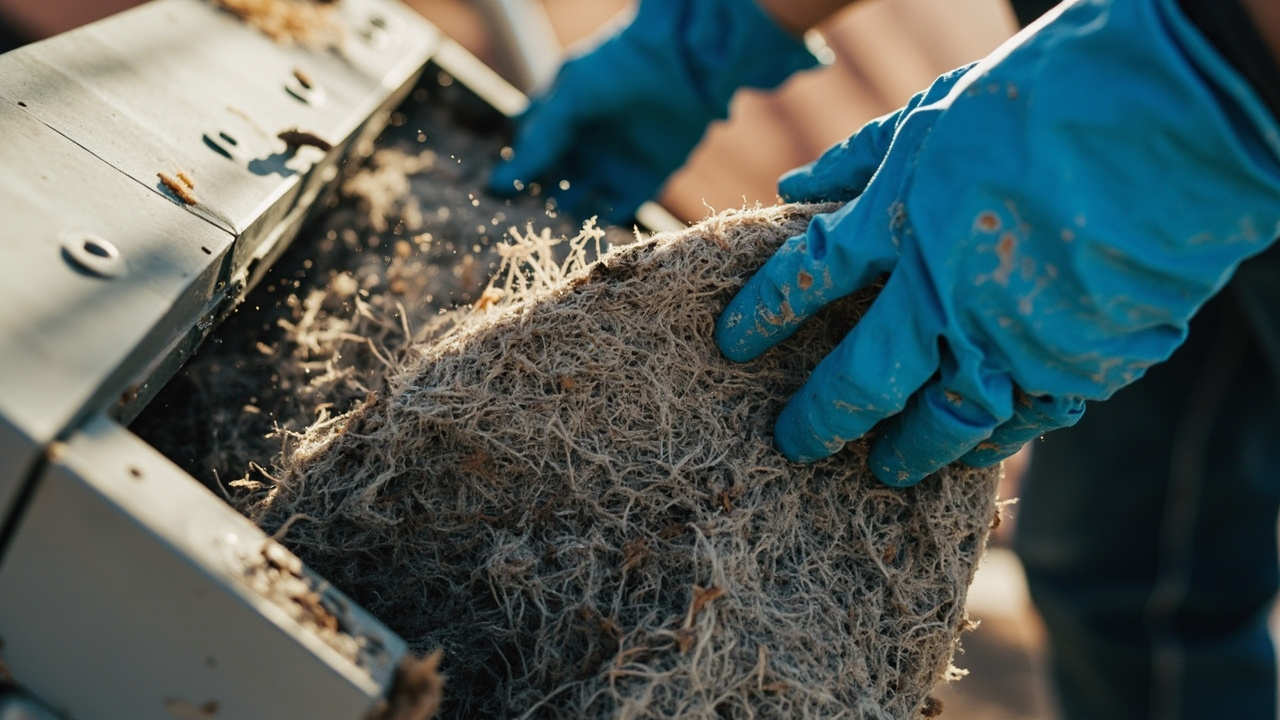
On a commercial visit, the sequence starts at the filter and works outward rather than starting at the refrigerant circuit. A technician pulls the filter first and checks how much light passes through the pleats, because a loaded filter starves the coil behind it before anything else on the unit is worth testing. Next the coil gets checked on both the return side and the supply side for buildup, since a coil coated in dust or grease shows up as reduced airflow long before it shows up as a leak. Only after filter and coil are confirmed clean does the condensate pan and drain get checked for flow, because a plugged drain downstream of a clean coil is a different problem than one caused by a coil dripping faster than the drain line can carry it away.
Each check rules out a branch rather than confirming a suspicion. Light passing evenly through the filter pleats clears airflow as a cause and points any remaining complaint toward the coil or the charge. A coil with light dust and no matting on either face clears the airflow path across the whole unit. A dry pan with a clear path to the drain and no rust on the float switch clears the condensate side entirely. Where the pan holds standing water or the float switch shows rust, that unit gets flagged for drain service before the visit closes out, because a float switch that no longer trips is the only thing standing between a slow drain and a soaked ceiling tile.
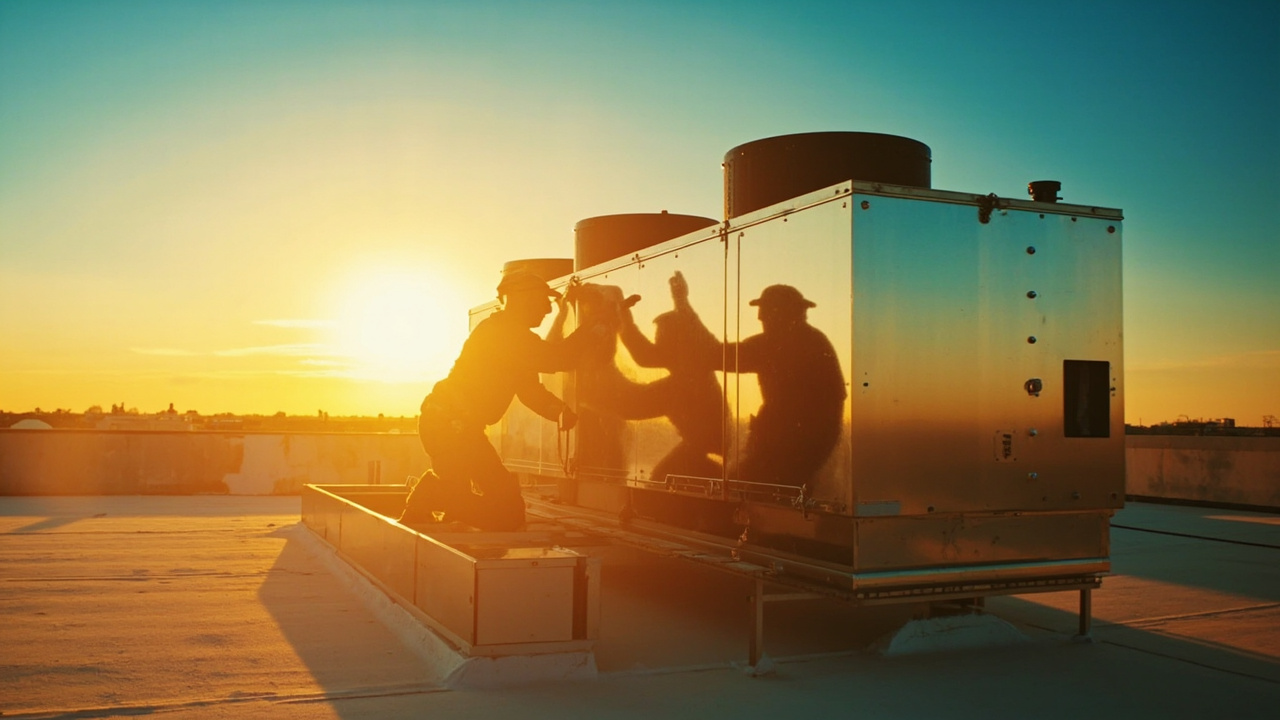
Which equipment a facility runs changes what the checklist emphasizes. A packaged rooftop unit puts the coil, the blower and the electrical components in one cabinet on the roof, so service access means getting a technician and a ladder up there instead of into a mechanical closet, and the economizer on that unit gets checked for whether it is bringing in outside air when conditions allow it. A light commercial split system puts the air handler indoors, which makes coil and filter access easier in cold weather but spreads the inspection across two locations instead of one. Tonnage per cabinet also differs between the two, so a facility comparing them on a bid is comparing service access and future repair convenience as much as it is comparing cooling capacity.
See emergency commercial hvac repair for how the related work is scoped and priced.
How a maintenance contract runs
Walk through and baseline
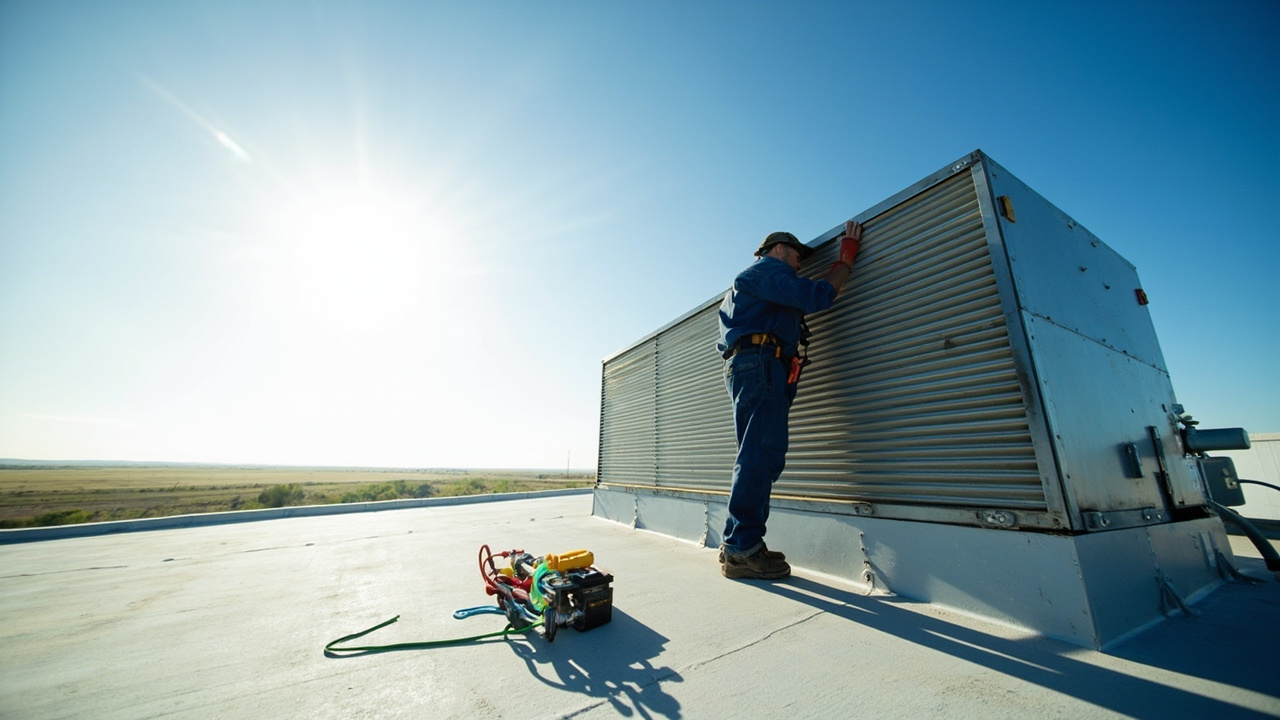
Before the first scheduled visit, a technician walks the facility to identify every piece of HVAC equipment on the property, whether that is a single rooftop unit or several split systems across a building. Filter sizes, coil condition, condensate routing and current amp draw are recorded as a baseline for that equipment. This walk through is also where the maintenance calendar gets set, timed against the facility's own operating hours and against the seasonal load shift ahead of summer and ahead of the first hard freeze.
Scheduled quarterly visit
On each scheduled date, the technician works the same standardized inspection form used at every visit. Filters are checked or replaced, coils are inspected on both sides for buildup, and the condensate line is checked for flow and for algae growth in the pan. Refrigerant charge and electrical connections are checked against the equipment's own history rather than a generic target. Anything reading outside the established baseline for that unit gets flagged before the visit closes out, and the facility manager is told at that point rather than after the report is filed.
Report and next date
Before the technician leaves, the readings from that visit are recorded next to the readings from the prior cycle so drift is visible immediately rather than buried in a stack of separate tickets. The facility manager receives a written record of what was checked, what was measured, and any component recommended for repair or replacement. The next scheduled date is confirmed on the spot, so the maintenance calendar stays intact rather than depending on someone remembering to call.
Why a facility on a maintenance contract calls less often
A facility running on scheduled maintenance is not avoiding failures by luck. It is avoiding them because someone with a checklist and an instrument was on site before the failure condition developed, and because the report from that visit gives the facility manager a written baseline to measure the next visit against. A building without that history has no way to tell whether a compressor's amp draw today is normal for that unit or a warning sign, because nobody wrote down what it read six months ago.
The mistake an unfamiliar crew makes on commercial work here is treating every visit as a fresh inspection instead of a comparison. Checking a filter without comparing airflow to the last reading, or cleaning a coil without noting how much buildup had accumulated since the previous cycle, throws away the one thing a maintenance contract is supposed to produce, which is a trend. A facility manager reviewing three quarters of readings can see a compressor's running amps creeping upward before it trips a breaker. A facility manager holding three unconnected service tickets cannot see that at all.
Across a multi building portfolio, the same standardized inspection form and the same measurement points at every property let a facility manager compare buildings against each other, not just each building against its own history. That consistency is what turns a maintenance contract from a series of visits into an actual record of equipment condition, and it is the record that supports a replacement decision made on evidence rather than on how old a unit looks.
Equipment degradation happens gradually enough that a single snapshot tells almost nothing. A motor bearing temperature of 165 degrees Fahrenheit means something only if the previous reading was 155 degrees or 175 degrees. Refrigerant subcooling at the condenser outlet rises when a system is fouled and drops when charge is lost. Neither condition triggers an alarm on the first occurrence, but both signal toward failure when trended across months. The facility manager who receives measurements from every visit builds a dataset. The one who receives a service report saying the unit is running fine receives only an opinion, and an opinion formed during a two hour visit carries no more weight than one formed by looking at how the unit sounds.
More detail on hvac tune-up & maintenance is on its own page.
Use this to ask what is driving the quote rather than asking for a rough number.
| Driver | Why it moves the estimate | What you control |
|---|---|---|
| After hours dispatch during the first heat wave | Everyone calls at once | Calling in working hours when the problem can wait |
| Electrical work | The disconnect, the breaker and the wire size feeding the unit | Fixing the cause now rather than paying for the same visit twice |
| The capacity and efficiency tier of the equipment chosen | Whether the indoor coil is matched to the new outdoor unit | The grade you choose, the rest of the work is set by the house |
| Access and rigging | An attic, a crawlspace, a tight closet or a rooftop with no easy path | Clearing the work area and the path before the crew arrives |
What working with us looks like
Scheduling your quarterly visits
You call and tell us how many rooftop units or split systems the property runs, and we set a quarterly date against your operating hours rather than around ours. Confirmation goes out ahead of each visit so your facility manager can plan around tenant spaces or roof access. If a storm or an equipment emergency at another property pushes the schedule, we call ahead and move the date rather than showing up unannounced or letting the cycle slip.
Working around your tenants
Rooftop access means our technicians work above occupied space rather than inside it, so tenant areas stay undisturbed while the unit gets checked. Where an indoor air handler needs attention, a drop cloth goes down before the access panel comes off, and any debris from a coil or filter change leaves in a sealed bag rather than through common areas. The visit ends with the access panel reseated and the mechanical space left the way it was found.
What moves your contract cost
Cost on a maintenance contract moves with the number of rooftop units or split systems covered and how often each one gets visited, and one driver applies to every facility here regardless of size. After hours dispatch during the first heat wave or the first hard freeze costs more, because that is the week every contract account and every walk-in caller wants a technician at once. The written scope for your equipment count and visit frequency is reviewed and approved before the agreement starts, so the numbers behind it are visible before you sign.
How our technicians qualify
A technician working commercial rooftop units has already run residential change outs and been evaluated on the specific tasks a rooftop visit demands, from reading a filter correctly to spotting a float switch that no longer trips. A lead reviews that work before someone handles a property alone. On anything involving an economizer or unusual roof access, a second technician looks at the unit before the scope goes into the report.
You Have Questions,
We Have Answers
Cost depends on how many rooftop units or split systems are covered and how often each is visited. A facility with several rooftop units on a quarterly schedule costs more per year than a single split system on a semi-annual one, and emergency calls during peak demand periods move cost the most since every facility requests service that same week. The written scope is finalized and accepted before work begins, so the driving factors are visible up front rather than discovered later.
It is a scheduled agreement to inspect and measure a building's HVAC equipment on a fixed calendar instead of waiting for a breakdown call. A quarterly hvac maintenance visit checks filter condition, coil cleanliness and condensate flow, and logs each reading against the last one so drift shows up before it becomes a failure. Granite HVAC Waco documents every visit in a written report, giving facility managers a record they can use for budgeting and replacement decisions. Call (254) 221-8461 to see what a documented cycle looks like for your equipment.
What Waco's climate demands from a maintenance schedule
McLennan County summers run long and hot, with cooling season opening in April or May and holding through October and peak load landing in July and August. Outdoor units here do not get the daily break a milder climate gives them, so a run capacitor, contactor or condenser fan that would last years somewhere cooler wears out faster under near constant cycling. Late spring and early summer add a humidity load on top of the heat load, which is exactly the stretch when condensate drains grow algae fastest and when a plugged drain is most likely to overflow a pan before anyone notices. A quarterly cycle timed to land before that stretch, rather than during it, is what keeps a slow drain from becoming a ceiling stain in the first place.
Winter here is mostly mild, broken by short hard freezes, and heat pumps in particular need their backup heat checked before that first cold snap rather than after it fails on the coldest night of the year. A facility running gas furnaces instead carries more of its heating load through those short freezes, so the fall maintenance cycle is the point to confirm ignition and airflow before demand spikes rather than after a tenant reports no heat. Utility costs tracked alongside maintenance records give a facility manager a way to see whether a coil that is running dirtier each quarter is also driving the electric bill up, which turns a maintenance report into a budgeting tool. Indoor air quality suffers when filters clog during heavy use, making the inspection schedule a chance to catch restrictions before they reduce airflow to occupied spaces.
HVAC Services in The Waco Area
Explore our service area and locate Granite HVAC Waco with ease. We're proudly local and serve the surrounding neighborhoods with fast response and honest pricing. Use the map to check our coverage area, or call us and we'll confirm in seconds.
Address:
Granite HVAC Waco, Waco, TX, 76701
Additional Services We Offer
- Building Automation & Controls
- Chiller Repair & Maintenance
- Commercial AC Repair
- Commercial Boiler Services
- Commercial Ductwork Fabrication & Installation
- Commercial HVAC Contractors
- Commercial Refrigeration Services
- Make-Up Air Unit Service
- Restaurant Kitchen Ventilation & Exhaust
- Retail & Office HVAC Systems
- Rooftop Unit Installation & Service
- Server Room & Data Center Cooling
Changing a one inch filter on a schedule and keeping the area around outdoor condensing units clear are reasonable in house tasks. The work stops being a facility job once it involves refrigerant, anything behind an electrical panel or blower door, or a gas burner and flue, and any reading in that range gets flagged on the visit report rather than worked around.
Before you call, know how many rooftop or split systems the facility runs and roughly how old the equipment is. If you have any past service history or a copy of an existing maintenance agreement, have it nearby. Knowing whether tenants have reported comfort complaints recently helps decide the first visit's starting point.
Last reviewed September 2026 by Dale Whitfield, Service manager.