




What a struggling hood system does to a Waco kitchen
The complaint usually starts at the cook line. Smoke hangs under the hood instead of pulling into it, the kitchen smells like the fryer an hour after close, or the back door pulls shut on its own when the exhaust fan kicks on. Staff prop doors open to relieve it, which is the surest sign the kitchen is short on makeup air. None of that is a cleaning problem. It is an airflow problem, and it usually traces to the exhaust system and the makeup air unit fighting each other instead of working as a matched pair.
A hood is designed to capture cooking effluent at a set velocity, and that capture only works if air comes back into the room at close to the same rate it leaves through the duct. In Waco, cooling season runs long, and the makeup air unit doing that replacement job is also carrying a heavy humidity load for months at a time. That unit works harder here than it does somewhere with a shorter summer, and a restaurant that never checks its condition finds out on the first heat wave, at the same time every other kitchen in town does.
Grease buildup in the exhaust duct compounds it rather than causing it. As grease coats the duct interior, the effective path narrows, and static pressure across the whole run climbs. The escalation is predictable. A grease loaded filter restricts the return path into the makeup air coil, so airflow across that coil drops. The coil starts running colder than it was built to. Left long enough, it ices, and the compressor behind it takes liquid refrigerant back into a part of the machine designed to see gas only. What began as a filter change becomes a failed makeup air unit in the middle of a dinner rush.
That is the point to call rather than wait. If the hood is smoking under normal ventilation, if doors are pulling shut when the exhaust fan runs, or if the makeup air unit is short cycling or icing, the airflow balance is already gone and it gets worse under load, not better. A kitchen that keeps operating on borrowed airflow is running past the point where a filter change fixes it. The longer the delay, the more damage accumulates in the compressor and the coil, turning a service call into equipment replacement.
More detail on chiller repair & maintenance is on its own page.
When we spec replacement equipment, ENERGY STAR's heating and cooling ratings are the baseline we work from.

How we measure a hood system before we scope the fix
The sequence starts at the filter and the grease trap. We look at how much light passes through the hood filters, check the duct access panels for grease depth, and trace the makeup air path from the unit to the kitchen grilles before touching a gauge. Airflow has to be cleared as a suspect first, because a hood that captures smoke correctly on a system starved for makeup air will still smoke, no matter what gets replaced.
The reading that decides the rest of the visit is total external static pressure across the makeup air handler, taken with a manometer at the unit. That number gets compared against the static pressure the blower data plate is rated for. A reading at or under that rating means the duct and grille sizing can move the air the hood exhaust is calling for, and any smoke or balance complaint points somewhere else, usually the hood capture geometry or a damper left in the wrong position. A reading above the rated static means the duct or the grease buildup is choking the system before refrigerant charge or fan speed ever enters the conversation, and no fan swap fixes a duct that is too small or too fouled to carry the air.
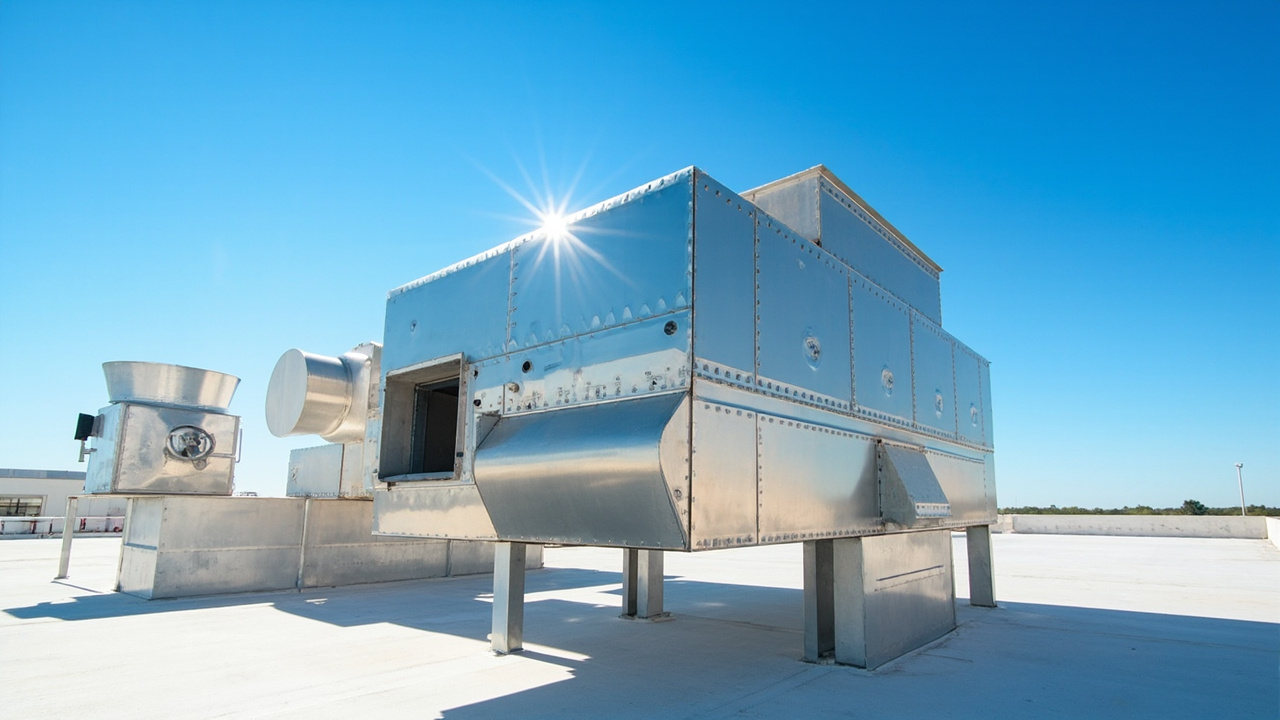
Where the kitchen is replacing rather than repairing equipment, the choice usually comes down to a packaged rooftop unit against a light commercial split system. A rooftop unit puts the whole assembly, including an economizer that can bring in outside air when conditions allow it, in one cabinet on the roof, and it is sized in tonnage per cabinet to match the kitchen's makeup air demand directly. A light commercial split system puts the air handler indoors, which trades roof access for a machine room or closet, and it is usually the better fit where roof structure or roof access is limited and indoor service space already exists. Both systems require sizing based on the hood's actual exhaust CFM and the kitchen's total sensible and latent load, which means the tonnage rating must account for the volume of conditioned air the hood is pulling out and the heat load from cooking equipment that makeup air replacement cannot fully offset. The exhaust CFM and load calculation determine whether the system can sustain kitchen operations without temperature swing or humidity creep during peak service periods.
Our page on commercial ac repair covers that side of the work in more depth.
Before any install, check the ENERGY STAR rebate finder, utility incentives regularly knock hundreds off a qualifying system.
How a kitchen exhaust call runs
Assessment on site
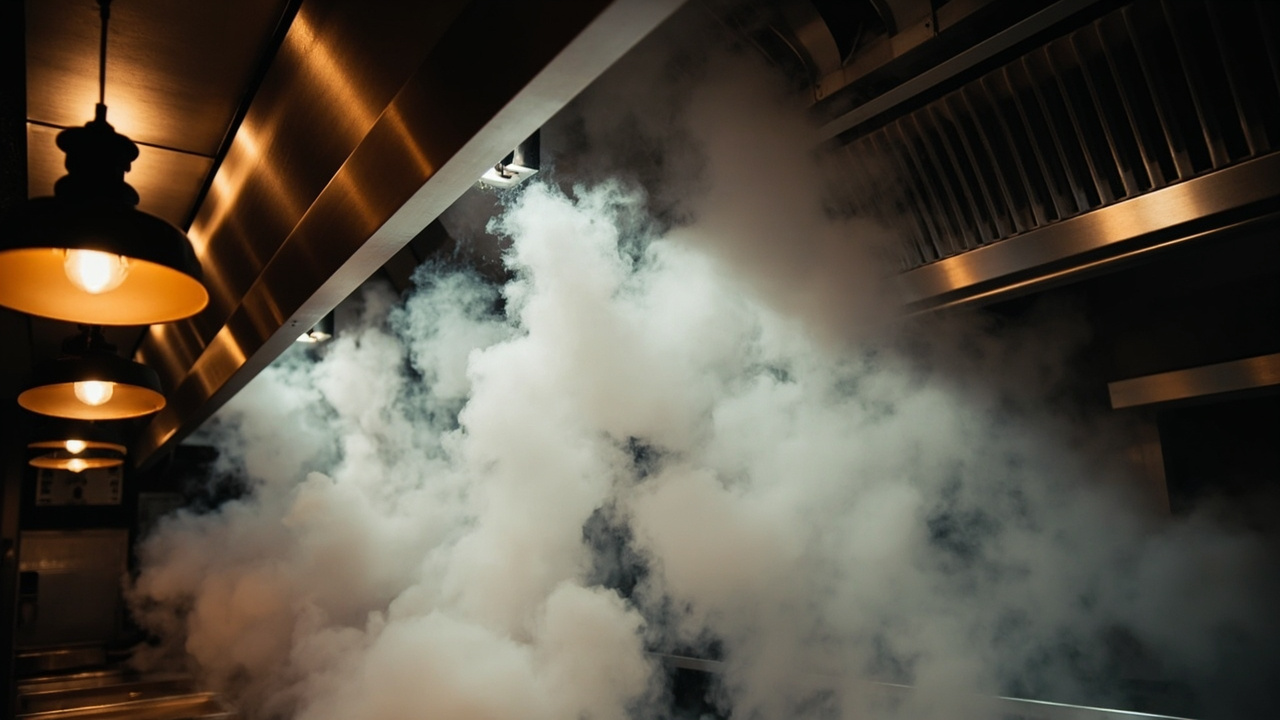
On the phone we ask what the hood is doing, whether smoke is escaping capture, whether doors pull shut when the fan runs, and how long the makeup air unit has been running loud or short cycling. On site, we look at the hood filters and grease depth in the duct first, then trace the makeup air path from unit to grille, before any gauge goes on anything. That order rules out a fouled filter or a closed damper before a static pressure reading is even taken.
Work after approval
Once the written scope is approved, the exhaust fan and the makeup air unit get isolated at their disconnects before any panel comes off. Grease duct degreasing or duct section replacement follows, matched to the pitch and sealing the run needs. If we find duct undersized for the hood's rated exhaust CFM once we are inside it, we stop and show you the reading before extending or replacing anything, since that changes the scope beyond what a cleaning alone would fix.
Verification before we leave
Before we close up, the manometer goes back on the makeup air unit and the reading has to sit at or under the static pressure rated on its data plate, the same check that opened the visit. We walk you through what changed, filter condition, duct path, any damper repositioned, and you keep a copy of the readings taken that day alongside the approved scope, which is what an inspector or your insurer will ask to see later.
Why kitchen exhaust work in Waco runs on the mechanical code
Kitchen exhaust and makeup air work in Waco falls under the International Mechanical Code, and permits for this equipment route through City of Waco Inspection Services rather than being handled informally by whoever shows up with a truck. A new hood, a new makeup air unit, or a change to the exhaust fan tied to it typically needs a permit reviewed against that code, while a like for like filter change or a fan motor swap on existing equipment usually does not, with the final determination resting with the inspector rather than the installer.
A crew unfamiliar with McLennan County kitchens tends to size the makeup air side against the square footage of the dining room instead of the hood's rated exhaust volume, which leaves the kitchen fighting negative pressure the day the system goes live. Another common miss is fabricating grease duct without the pitch the code expects for that material and run length, which traps grease at low points instead of draining it back toward the hood, and the failure only shows up months later when the duct is opened for cleaning and the buildup is already dense.
Working across kitchens throughout McLennan County rather than a single site means seeing the same code applied to buildings from different eras in the same week, a strip center kitchen with a straight rooftop duct run next to a converted storefront kitchen with a duct routed through several turns to reach the roof. The hood's rated exhaust CFM is the driving factor for makeup air sizing on every one of them, regardless of floor plan or building layout. Treating the code as a single number instead of a calculation tied to the specific hood and its actual airflow capacity is where an out of town estimate goes wrong. A properly sized makeup air system must match the hood's exhaust capacity precisely, measured in cubic feet per minute, to prevent the pressure imbalances that compromise kitchen performance.
See building automation & controls for how the related work is scoped and priced.
Your local utility, Utility Bill City of Waco, publishes service and water-quality information every Waco homeowner should know.
Use this to ask what is driving the quote rather than asking for a rough number.
| Driver | Why it moves the estimate | What you control |
|---|---|---|
| After hours dispatch during the first heat wave | Everyone calls at once | Calling in working hours when the problem can wait |
| The capacity and efficiency tier of the equipment chosen | Whether the indoor coil is matched to the new outdoor unit | The grade you choose, the rest of the work is set by the house |
| Whether the existing duct system can move the air the new equipment | The static pressure reading answers | Fixing the cause now rather than paying for the same visit twice |
| Electrical work | The disconnect, the breaker and the wire size feeding the unit | Fixing the cause now rather than paying for the same visit twice |
| Access and rigging | An attic, a crawlspace, a tight closet or a rooftop with no easy path | Clearing the work area and the path before the crew arrives |
What working with us looks like from the pass window
How a visit gets scheduled
When you call, we ask what the hood is doing and whether the kitchen is open for service, and that decides whether the visit lands same day or on the next open slot. You get a window rather than an all day wait, and someone confirms it by phone before the technician leaves the prior job. If a duct opening on an earlier call runs long, we call ahead with a new window instead of leaving you checking the door.
Keeping grease and dust contained
Before an access panel comes off, we lay down protective sheeting under the hood and along the cook line so grease and duct debris land on something we can roll up and carry out rather than the floor. Any section of duct removed for degreasing or replacement gets bagged at the access point instead of carried loose through the kitchen. The last step is wiping down the filters and the area around the makeup air unit so the space you get back looks like the one we walked into.
What moves the scope
Permit and inspection requirements move the number first, since new equipment or a changed exhaust run needs review that a filter service does not. Duct condition and pitch come next, a run that has to be rebuilt costs more than one that only needs degreasing. Electrical and gas connections at the makeup air unit add work where wiring or piping falls short of what new equipment needs. We write every driver we find into a scope you see and approve before anyone opens a panel or cuts duct.
How technicians earn the board
A technician works a set number of hood and makeup air calls alongside a lead before taking one alone, and the lead signs off on reading a manometer correctly and matching a static pressure result against the right data plate. On any job involving structural duct rework or a system feeding more than one hood, a second technician reviews the readings before the scope goes out. That check catches a misread gauge before it turns into a wrong quote.
You Have Questions,
We Have Answers
The cost depends on hood size, duct routing and makeup air needs found during an on-site assessment. A hood vent priced without that assessment usually misses whether the existing duct can carry the required exhaust CFM or whether a new makeup air tie in is needed, which is the driver that moves the number most. We write the scope after the static pressure and airflow readings are in hand.
The best system is the one sized to the hood's rated exhaust volume rather than to kitchen square footage. Beyond the rooftop unit against light commercial split system choice, filtration on the makeup air side matters too, a deeper media cabinet handles finer filtration without adding the static pressure penalty a high MERV one inch filter would put on the same duct.
Operating cooking equipment under a hood system that is not exhausting properly does not meet the standard the mechanical code and the permit authority expect for a functioning kitchen exhaust system. Grease laden vapor with nowhere to go raises fire risk at the duct and hood surfaces, and most kitchens stop cooking anything that produces smoke or grease vapor until the system is repaired and reads correctly again.
Installation cost is driven by duct material and fabrication, welded grease duct with the correct pitch costs more to build than straight sheet metal runs, plus whatever electrical and gas connection work the new equipment requires. Permit and inspection requirements for a new system add review time on top of the labor and materials, which is why a walkthrough happens before any number gets written down.
Why Waco summers change kitchen exhaust work
Cooling season in Waco runs from spring into fall, with the heaviest load in the peak summer months, and a kitchen's makeup air unit works through nearly all of it while carrying humidity on top of temperature. That combination means a makeup air coil here spends more hours near its rated capacity than the same equipment would somewhere with a shorter summer, and a duct or filter restriction that would be a minor inefficiency elsewhere shows up as a real capacity shortfall during a Waco August. Hail from summer storms is also a factor for any rooftop mounted equipment, since bent condenser fins on a rooftop unit cut airflow across the outdoor coil at the same time the kitchen needs full capacity from it. Regular inspection of coil surfaces catches this damage early.
Inspection on a kitchen exhaust job happens after the duct and makeup air work is in and before the hood goes back into cooking service, and the inspector checks duct seam sealing, pitch back toward the hood, clearance to combustible material, and whether the makeup air volume matches what the exhaust fan is pulling. Knowing that order in advance changes how we sequence the job. We take the static pressure reading and confirm makeup air balance before the duct access panels are closed for good, rather than after, because reopening a sealed run to fix a shortfall found at inspection costs more time than checking it while the panels are still off. A kitchen that passes on the first inspection gets back to full service days sooner than one that gets sent back for a duct or airflow correction.
HVAC Services in The Waco Area
Explore our service area and locate Granite HVAC Waco with ease. We're proudly local and serve the surrounding neighborhoods with fast response and honest pricing. Use the map to check our coverage area, or call us and we'll confirm in seconds.
Address:
Granite HVAC Waco, Waco, TX, 76701
Additional Services We Offer
- Building Automation & Controls
- Chiller Repair & Maintenance
- Commercial AC Repair
- Commercial Boiler Services
- Commercial Ductwork Fabrication & Installation
- Commercial HVAC Contractors
- Commercial HVAC Preventive Maintenance Contracts
- Commercial Refrigeration Services
- Make-Up Air Unit Service
- Retail & Office HVAC Systems
- Rooftop Unit Installation & Service
- Server Room & Data Center Cooling
Wiping down hood filters and keeping the area around the makeup air unit clear are genuinely things kitchen staff can do between visits. Where it stops is anything behind an access panel, inside the duct run, or on the gas or electrical connections feeding the unit, because that work involves grease duct integrity and live equipment that a wipe down does not touch. If a visit turns up structural duct damage or an electrical fault, we say so on the spot and scope it separately.
Before you call, know what the hood is doing, smoke escaping capture, doors pulling shut, a smell that lingers after close, and when it started. Have the age of the makeup air unit if you know it, and note whether the kitchen is currently open for service. Those details tell us whether this needs someone today or can wait for a scheduled visit.
Last reviewed September 2026 by Dale Whitfield, Service manager.