




What an aging furnace is telling you before it fails
The calls that lead here usually start the same way. The furnace lights, runs a few minutes, and cuts off before the house gets warm, or it runs constantly while the rooms farthest from the closet stay cold. Some callers mention a burner flame that looks orange or yellow instead of a clean blue, and some are just tired of writing a check for the furnace every winter and want to know if the money is better spent on a new one. Utility bills climbing over a couple of winters with no change to the thermostat setting is part of the same pattern, and it is one of the clearest furnace replacement warning signs a homeowner can track without opening a panel. Those are the old furnace symptoms that usually mean the equipment is past the point where one more repair settles anything.
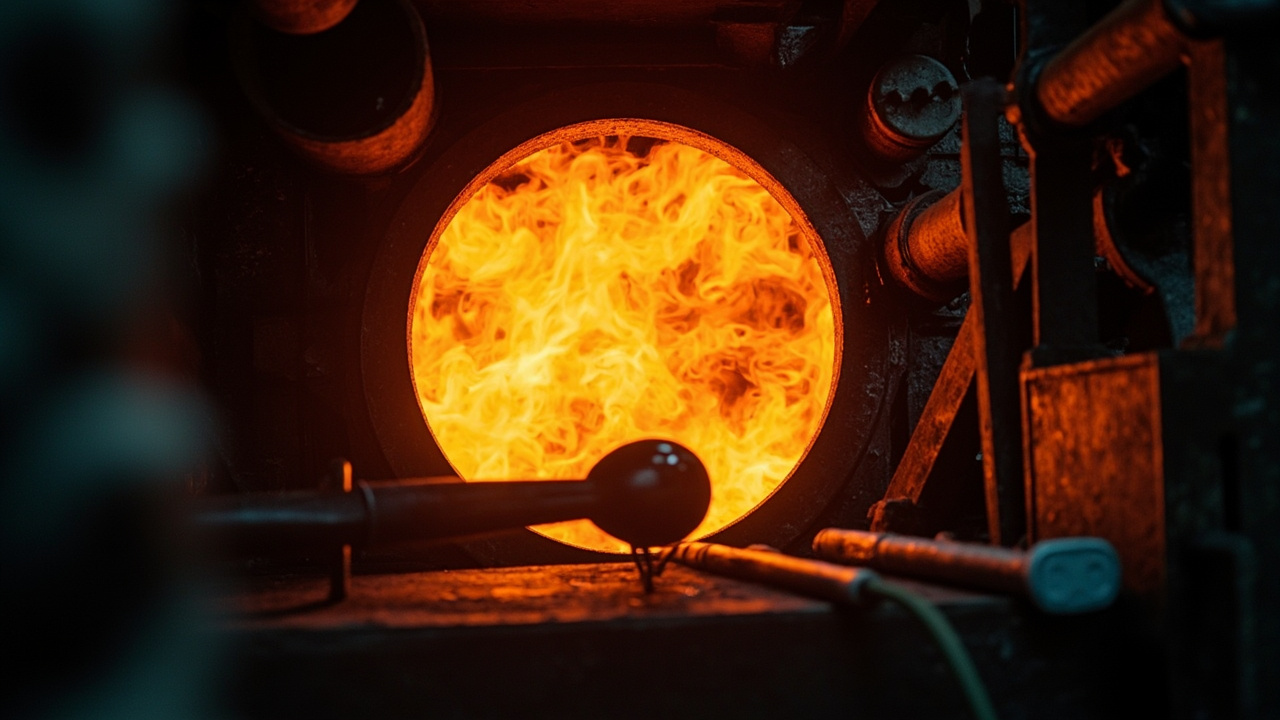
A yellow or orange flame at the burner ports means the gas is not burning completely, which leaves soot on the heat exchanger and raises the odds that carbon monoxide is forming instead of just heat. A clean blue flame is the sign combustion is complete. Heat exchangers are thin metal that expands and contracts every time the burner cycles, and after enough winters of that stress a hairline crack opens along a seam. Once that crack is there, no cleaning or adjustment closes it back up.
McLennan County heating season is short, but it is not gentle. A furnace that sits idle for months gets asked to hold a steady flame through consecutive nights of hard freeze with almost no warm up period, and a unit already carrying a cracked heat exchanger or a corroded pressure switch does not get gentler treatment for having waited. That is where furnace repair costs adding up becomes the real signal. A part that fails once is a repair. A part that fails every season, on equipment where the burner assembly or the exchanger itself is getting harder to source, is when to replace furnace rather than patch it again.
The chain that ends a repair conversation for good is the cracked heat exchanger. Once the metal splits, combustion gas mixes with the air the blower is pushing through the supply trunk and into the rooms, and carbon monoxide reaches the living space instead of staying in the flue. At that point the furnace gets shut off rather than patched, because no repair reseals a heat exchanger, and running it again means running it broken.
See furnace afue ratings explained for how the related work is scoped and priced.
The U.S. Department of Energy's home heating and cooling guide explains the efficiency math behind our recommendations.
How we decide repair or replace before quoting either one
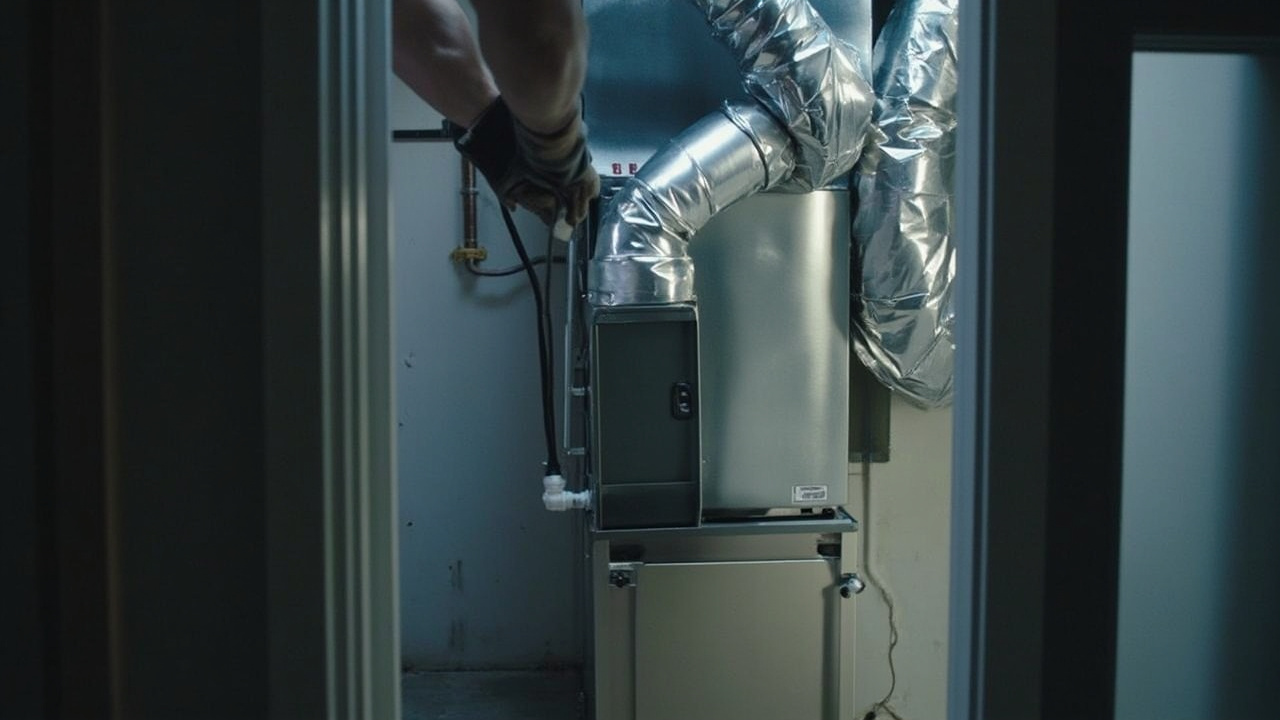
On a gas furnace we do not start at the burner. We check whether the unit fires and holds flame on the first try, then prove draft and the pressure switch response, since a pressure switch that will not close usually means the flue or the condensate trap is blocked rather than the switch itself being bad. Temperature rise across the supply and return gets checked against the furnace data plate next, because a rise outside that range points at blower speed or duct rather than the burner. Combustion goes last, read once the burner has settled into a steady run, since startup readings are always messy.
The combustion analyzer in the flue is the reading that ends the guessing. Carbon monoxide should stay low and hold steady once the burner settles, with oxygen sitting where the equipment maker expects it. Carbon monoxide that climbs through the run, or any of it reaching the living space, ends the visit with the furnace shut off rather than repaired, because that reading points at a heat exchanger or flue problem rather than a part we can swap. A weak or drifting flame sensor signal, read in microamps against the control board's dropout point, is a different fork entirely, since that is a part that gets cleaned and rechecked rather than a reason to replace anything.
Where a system is being replaced rather than repaired, the heat pump against gas furnace decision usually comes down to how the heating load behaves here. A furnace delivers the same heat output at any outdoor temperature. A heat pump's output falls as the outdoor temperature drops, and it needs backup heat once it passes its balance point, which matters in a county where hard freezes interrupt an otherwise mild winter. A dual fuel setup lets an installer set that balance point so the furnace carries the coldest nights and the heat pump carries the rest, and which one fits a given house depends on the duct already in place and what the load calculation shows the house needs.
The balance point is where outdoor temperature and indoor heat loss cross, the threshold where the heat pump alone stops meeting demand. Below that point, electric resistance or the furnace burner turns on to make up the difference. In most mild climates, the balance point sits high enough that the heat pump handles most winter days. Where cold snaps push outside air well below balance point for extended periods, dual fuel lets the furnace run the hard hours while the heat pump handles the shoulder season. The choice between a single heat pump, a single furnace, or a combination depends on how many days per year the county experiences temperatures below the load calculation's balance point.
More detail on heat pump vs. furnace comparison is on its own page.
How a furnace visit runs
The call and first checks
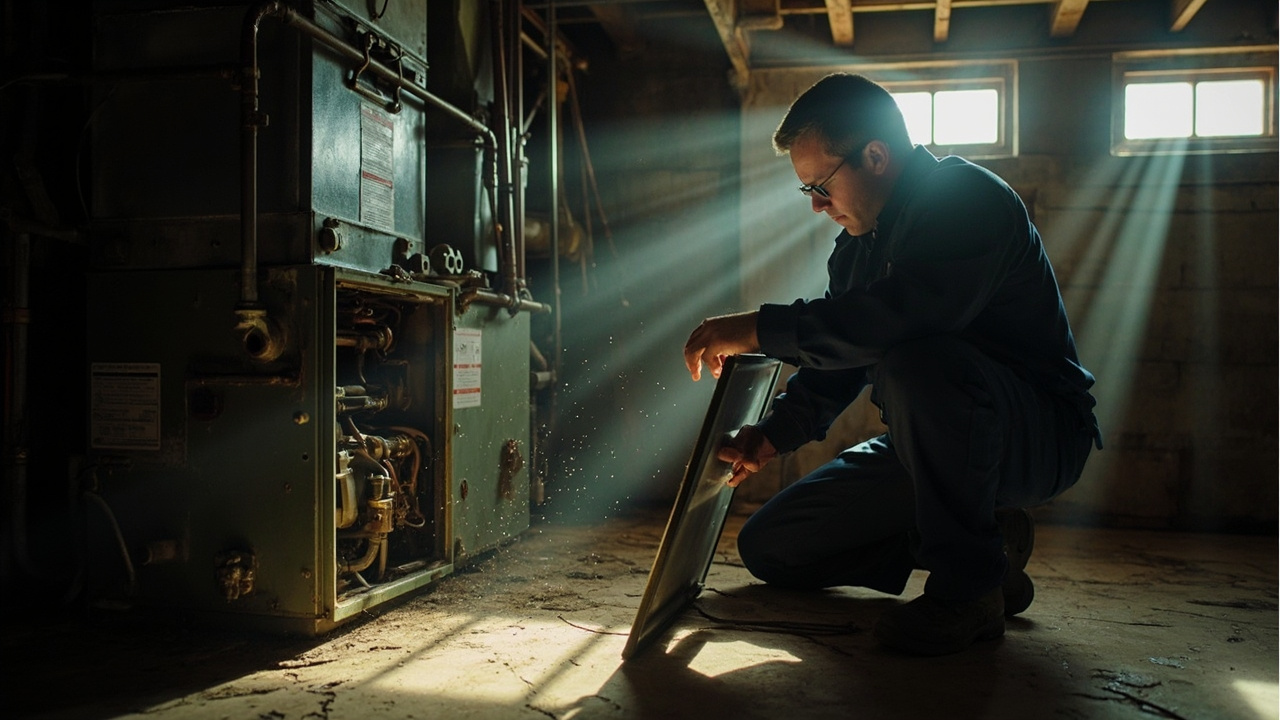
On the phone we ask the furnace's age, what the flame looks like, and whether anyone has noticed a smell near the unit, since those answers decide whether this is a same day visit. On site we verify ignition and flame stability, then measure draft and switch closure, since a switch that will not close usually points at a blocked flue or condensate trap rather than a bad switch. We compare the temperature differential between supply and return lines against the data plate before anything else, because an abnormal differential suggests blower speed or duct restrictions rather than burner performance.
What happens after you approve
Once you approve the scope, we isolate the furnace at the breaker and the gas valve before anything comes apart. If the visit is a repair, the failed part, a pressure switch, a flame sensor, an inducer motor, gets swapped and rechecked against its reading. If a heat exchanger has cracked, we stop there and show you the combustion reading that proves it before discussing replacement, rather than pulling the furnace apart first. Any duct correction tied to the static pressure reading gets scoped and shown to you the same way, before it becomes part of the job.
What we check before leaving
Before we leave, the combustion analyzer goes back into the flue for a final reading, and carbon monoxide has to sit low and steady with the burner running normally. We walk you through what that reading showed, what the flame looks like now, and what the temperature rise across the supply and return came out to. You keep a record of those numbers, so if the furnace is called for service again, whoever answers that call knows what was already checked and ruled out.
Why a furnace this old gets judged differently here
A crew unfamiliar with furnace stock around McLennan County often treats every unit over a set number of winters as an automatic replacement, without pulling a load calculation or checking whether the existing duct can move the air a new furnace needs. That shortcut gets a homeowner a bigger furnace pushed into the same undersized trunk, and the room farthest from the closet stays cold for another winter regardless of what the new equipment is rated for. Sizing a furnace off the square footage of the house, rather than off a load calculation and a static pressure reading on the actual duct, is the fastest way to repeat the same comfort complaint under a different unit. The furnace's age matters less here than what those two readings say about the house it sits in.
The bigger gap shows up at the burner. A crew that skips the combustion analyzer and judges a furnace by flame color alone can miss a heat exchanger that has started to corrode along a seam but has not cracked wide enough yet to change how the flame looks. Reading carbon monoxide with the burner settled into a steady run catches that corrosion before it opens into a full crack, and a crew working from sight alone has no way to catch a fault at that stage. That gap matters most on a furnace where the burner assembly is already hard to source, since a corroded exchanger caught early is still a straightforward swap, and one caught late ends with the furnace shut off.
Furnace calls in this county arrive in a burst rather than spread evenly through winter. Once a hard freeze moves through, most of the calls land within the same few days, and a crew scheduling as if each call stands alone ends up stacking same day emergencies against routine repairs that could have waited for milder weather. Knowing that pattern changes how a visit gets triaged over the phone, before anyone drives out, which is the difference between a house going a few hours without heat and going through a cold night before a technician reaches the door.
Permit and inspection questions? Commercial Construction Permits is the office we coordinate with on every permitted Waco job.
What working with us looks like on this call
Getting a technician to your door
You call and we ask how old the furnace is, what the flame looks like, and when the trouble started. Those answers sort a carbon monoxide concern needing same day attention from a furnace that can wait for a scheduled slot. You get a window for arrival rather than an open ended promise, and if the visit ahead runs long because of a cracked heat exchanger found mid job, we call to move your window rather than leave you guessing.
Keeping the closet and attic clean
Before the furnace panel comes off, we lay down a drop cloth at the closet or attic hatch so soot and insulation stay off your floors. Combustion testing and any burner work happen with the area around the furnace protected, and anything pulled out, an old filter, a failed pressure switch, a burned wiring section, gets bagged rather than left on the floor. The furnace panel goes back on and the space around it looks the way it did before we started.
What decides the number
The duct is usually the bigger factor than the furnace itself. If the static pressure reading shows the existing duct cannot move the air new equipment needs, that duct work adds to the job before any furnace gets picked. Whether the coil and air handler are matched to new equipment, access into the closet or attic, and any gas or electrical work the change requires all move the number as well. You see the written scope, with each of those items listed, before anything gets ordered or installed.
Who shows up on the job
A technician does not run a furnace call alone until they have handled combustion readings and heat exchanger inspections alongside a lead on a set number of visits, with the lead signing off on the combustion analyzer routine specifically. On anything where the reading is borderline, meaning carbon monoxide that is elevated but not clearly climbing, a second technician looks at the flue reading before we tell you it is a heat exchanger problem rather than a part.
You Have Questions,
We Have Answers
A furnace needs replacing when the fault sits in the heat exchanger or the flue rather than in a part. If the combustion analyzer shows carbon monoxide climbing once the burner settles, or the flame is yellow instead of blue at the ports, that indicates a heat exchanger and safety issue requiring replacement. A furnace where the failing parts are still in production, and the duct already moves enough air for a load calculation, is usually still a repair candidate instead.
Age alone does not decide it, but twenty five winters usually means the burner assembly or heat exchanger is harder to source. In McLennan County, a furnace that old has spent most of its life idle and then run hard through short, hard freezes, which is exactly the start stop pattern that cracks a heat exchanger. If the combustion reading and the flame color check out clean, the furnace can keep running. If either one is off, that age is the reason parts availability makes replacement the faster path.
Why Waco winters wear on an old furnace differently
Furnaces around McLennan County spend most of the year doing nothing, since the heating season here runs only from late November through February and most of those days are mild. Then a hard freeze moves through and the same furnace that has not run in months must fire continuously through several cold nights with almost no gradual warm up. That start-stop pattern stresses a heat exchanger more than a steady, cold climate would, because the metal expands and contracts hardest on the first hard call of the season rather than gradually. Furnaces installed in a garage or an unconditioned hall closet feel outdoor temperature swings more directly than one set in conditioned space, so the same age unit in one of those locations tends to show a cracked exchanger or a failing pressure switch sooner than a comparable furnace tucked into an interior closet.
Any furnace we call a replacement rather than a repair gets that call backed by the combustion analyzer reading and the load calculation, not by how it sounds or how old it is. We record the carbon monoxide reading, the flame sensor microamp signal, and the temperature rise across the coil at the visit, and that record is what tells the next technician, whether that is us again or somebody else, what has already been ruled out. Knowing that a furnace in this county sits idle for months and then runs hard for a few weeks changes how closely we watch the pressure switch and the heat exchanger on a unit already past fifteen or twenty winters, because that is where the failure shows up first.
HVAC Services in The Waco Area
Explore our service area and locate Granite HVAC Waco with ease. We're proudly local and serve the surrounding neighborhoods with fast response and honest pricing. Use the map to check our coverage area, or call us and we'll confirm in seconds.
Address:
Granite HVAC Waco, Waco, TX, 76701
Additional Services We Offer
- Air Filter MERV Ratings Guide
- Ductless Mini-Split Buying Guide
- Furnace AFUE Ratings Explained
- Heat Pump vs. Furnace Comparison
- How Long Does an HVAC System Last
- How to Choose the Right AC Size
- HVAC Repair Cost Guide 2026
- HVAC Tax Credits & Rebates Guide
- R-454B Refrigerant Transition Guide
- Repair vs. Replace Your AC
- Seasonal HVAC Maintenance Checklist
- SEER2 Ratings Explained
Changing filters on schedule, keeping the area around the furnace clear, and checking the thermostat batteries and the breaker before calling are genuinely homeowner jobs. Where it stops is the burner and the flue, and anything behind the blower door, because that is gas and line voltage together. If what we find on the first visit points to a heat exchanger or a flue problem, we say so on that visit and shut the furnace off rather than leave it running.
Before you call, know roughly how old the furnace is and when the trouble started. If you have looked at the burner, note what color the flame is, blue or yellow, since that changes what we check first. Know where the breaker and the furnace shutoff are, and whether anyone in the house has noticed a smell near the unit.
Last reviewed September 2026 by Dale Whitfield, Service manager.