




Why a high AFUE number and a high winter bill can both be true
A furnace can carry a high AFUE number stamped right on the door and still leave you paying more than you expected once the arctic snap hits and the burner runs longer than it should. What you notice first is usually the bill rather than the comfort, because the house still feels warm enough while the gas meter keeps turning. That gap between a good rating and a bad bill almost never means the number on the door is wrong. It means the furnace is not delivering that rating in your actual house, which is a different problem than the one the sticker is supposed to answer.
The mechanism behind that gap is airflow and sizing more than combustion. A furnace rated at a high AFUE still depends on the duct system moving the volume of air the burner is designed around, and on a load calculation that matched the unit to the house rather than to the furnace that used to sit there. When ductwork is undersized or leaking into unconditioned attic space, or when a furnace was sized off the old equipment instead of the house's actual heat loss, the burner cycles more often to make up the shortfall, and that extra runtime shows up on the meter no matter what the rating says. The furnace is not underperforming its combustion. It is compensating for air it cannot move. A blower moving insufficient volume through the house cannot distribute heat evenly, so some rooms stay colder than others even as the burner works harder.
Where this turns into a real safety question rather than a comfort complaint is the heat exchanger. A cracked heat exchanger lets combustion gas mix with the air the blower is pushing through the house, and once carbon monoxide reaches the living space the furnace gets shut off on the spot rather than serviced further. That is not a number that improves with a tune up or a new filter, and it is the one failure on this list where waiting is not a scheduling decision. Everything else here, the bill that does not match the rating, the short cycling on a cold morning, the duct that never got tested, the rooms that stay cold despite a running burner, can wait for a scheduled visit. A cracked exchanger and any carbon monoxide reading in the house cannot.
More detail on heat pump vs. furnace comparison is on its own page.
How we check what a furnace delivers
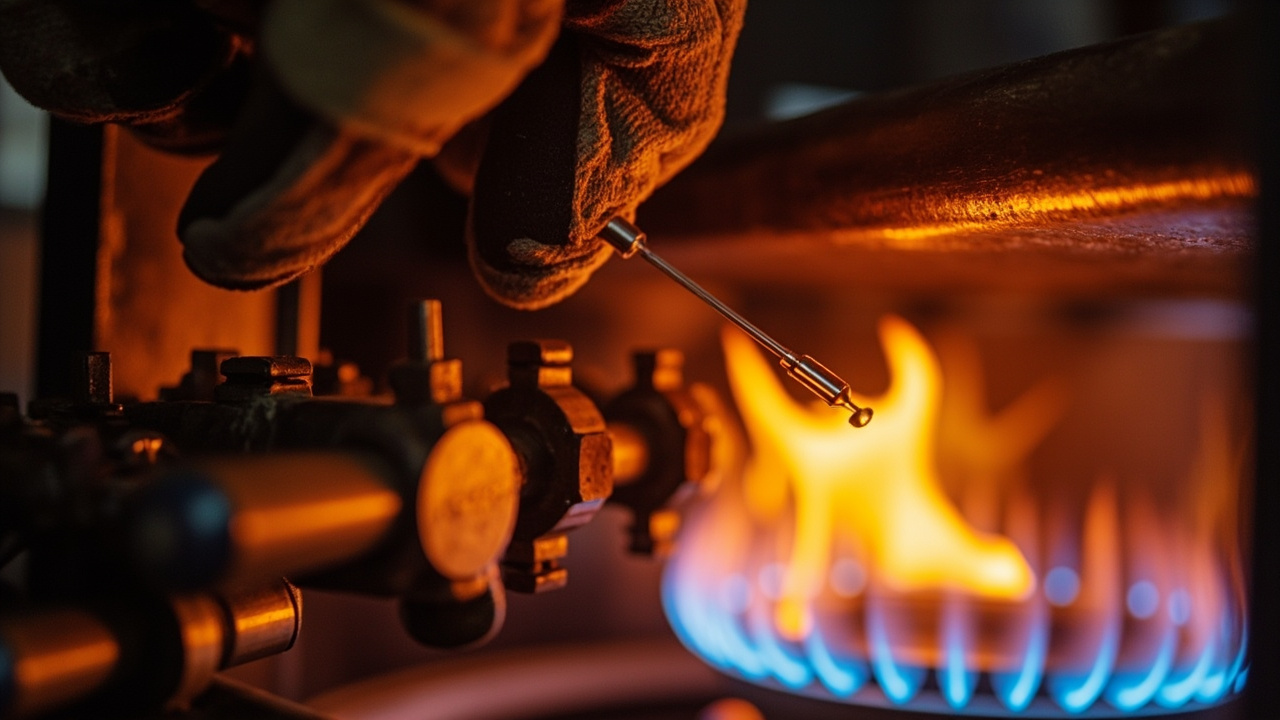
On a furnace call, the sequence runs the same order every time. We prove ignition and flame sensor signal first, then draft and the pressure switch, then temperature rise across the heat exchanger against the furnace's own data plate. Only after those check out does the combustion analyzer go into the flue, because a burner that has not settled gives ugly numbers that mean nothing yet.
The analyzer reads carbon monoxide and oxygen once the burner has run several minutes and settled into a steady flame. Low, steady carbon monoxide with oxygen sitting where the furnace maker expects it confirms the burn is clean and the heat exchanger is doing what the AFUE rating assumes. Carbon monoxide climbing through the run, or any of it reaching the living space, ends the visit with the furnace shut off rather than serviced further, and that reading points to a failed heat exchanger rather than a burner tuning problem. This is the reading that decides whether a furnace can be repaired at all or has to be replaced, and it is the one a visual inspection alone cannot give you.
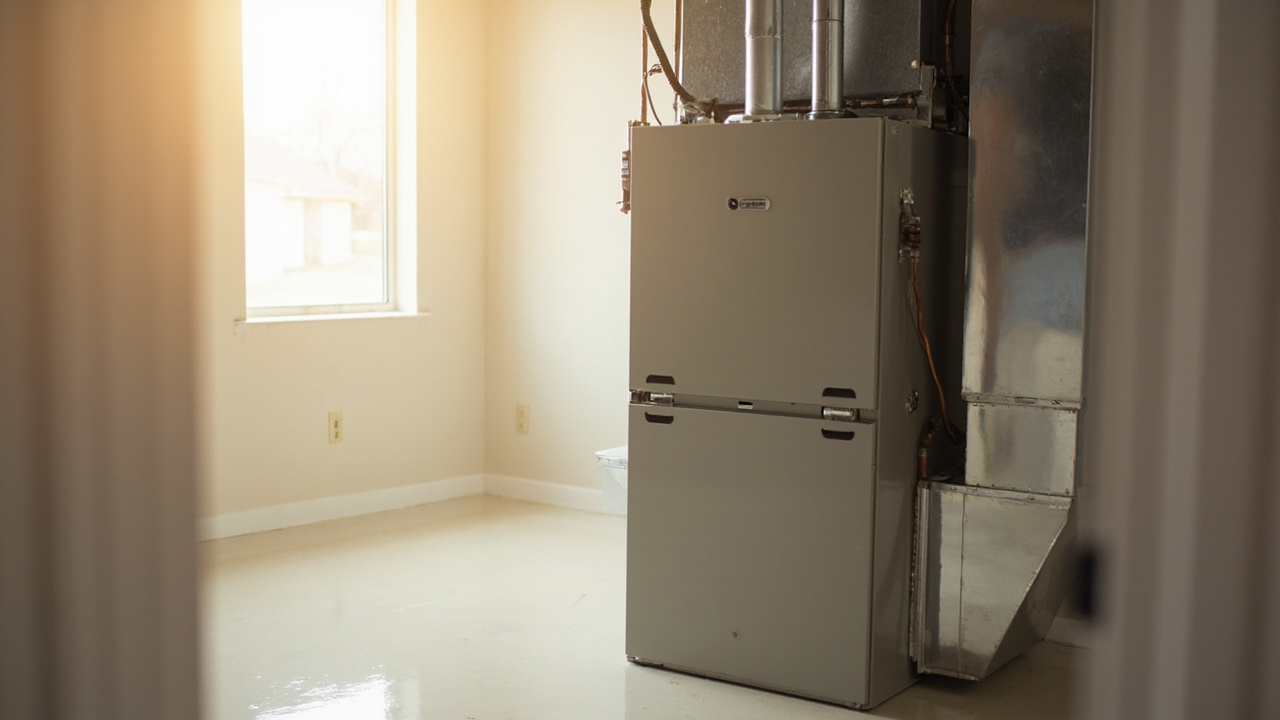
Furnace tiers stack the same way underneath the rating. An 80 AFUE furnace uses a single heat exchanger and vents the leftover heat straight out, capping near the high eighties no matter how it is tuned. A 90 to 95 AFUE condensing furnace adds a second heat exchanger that pulls more heat out of the flue gas, which is why it needs its own condensate drain, the same fitting a cooling coil uses. A 96 and higher furnace usually pairs that second exchanger with a modulating burner, so it spends most of the season firing low rather than cycling on and off. Compared against a heat pump, a furnace holds its AFUE rating at any outdoor temperature, where a heat pump's output falls as it gets colder outside and its HSPF2 rating describes an average rather than a fixed number. That difference in performance across the heating season is why dual fuel systems pair a furnace with a heat pump, giving the heat pump the lead on mild days and switching to the furnace on the nights when outdoor temperature drops and the heat pump alone cannot keep up with demand.
If this sounds close but not quite your situation, seer2 ratings explained may be the better starting point.
Your local utility, Utility Bill City of Waco, publishes service and water-quality information every Waco homeowner should know.
How an AFUE evaluation runs
The call and first check
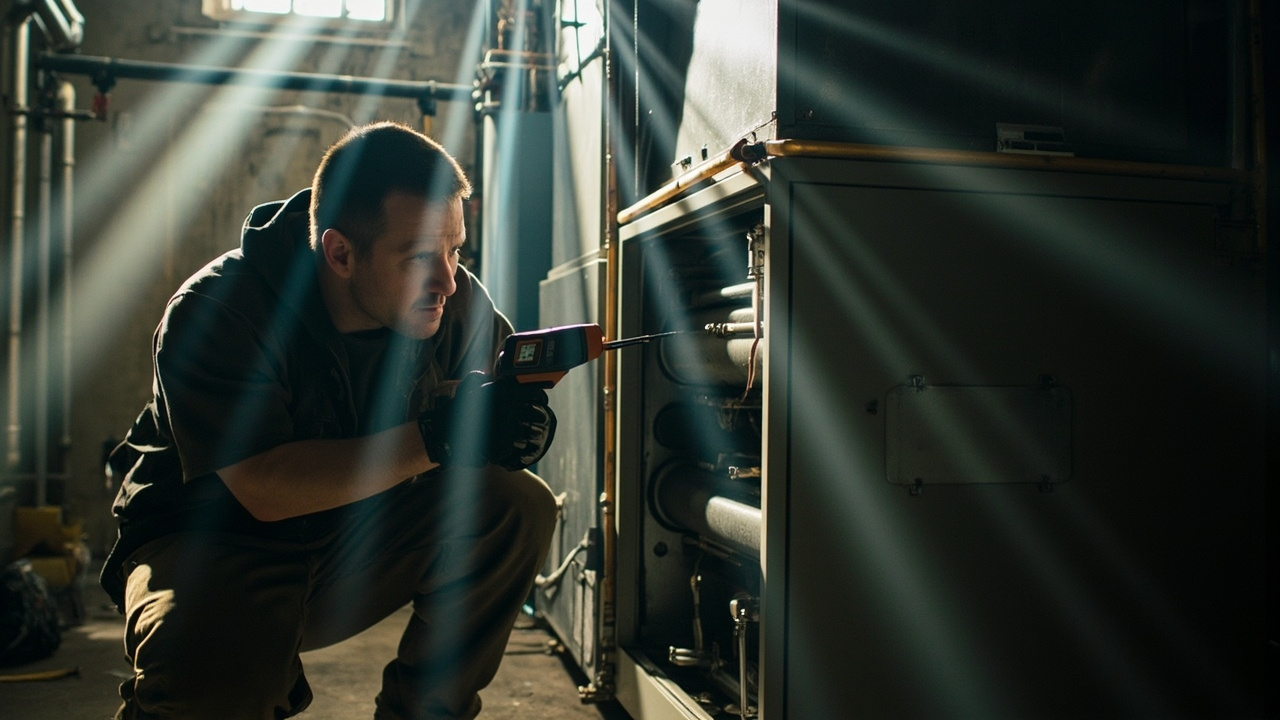
On the phone we ask what the furnace is doing, whether the AFUE rating is printed on the furnace or on old paperwork, and how the house has felt through the last cold snap. That tells us whether the visit starts with a manual J load calculation, a combustion check, or both. On site, the sequence starts with ignition and flame sensor signal, then moves to draft and the pressure switch, then compares temperature rise against the furnace's own data plate. The combustion analyzer only goes into the flue after the burner has settled, because early readings during a cold start would send us chasing the wrong number.
Work after you approve
Once you approve the scope, we isolate the furnace at the breaker or the gas valve before any panel comes off. Combustion tuning, heat exchanger inspection or duct correction follows, depending on what the first visit found. If we find a cracked heat exchanger or duct undersized for the load calculation once panels are open, we stop and show you what we are looking at before any part gets ordered or any work continues past that point.
What we verify before leaving
Before the visit ends, the combustion analyzer goes back in the flue and has to read clean and steady once the burner has settled, and we check temperature rise one more time against the data plate. We walk you through what those numbers mean for the furnace's real AFUE performance and leave you with the readings, so the next visit starts from a known number instead of a memory of how the furnace used to run.
Why Waco's mild winters make sizing the deciding factor
A load calculation done by the manual J method tells a technician which AFUE tier helps a specific house, and this differs from sizing off the furnace already sitting there. A crew unfamiliar with McLennan County housing often replaces an old furnace one for one, matching tonnage to tonnage instead of running the load number, and reproduces the same short cycling problem in a newer cabinet. Houses on slab in this area commonly put the furnace in an attic or a closet with duct running through attic space that gains and loses heat before it reaches a register, and that duct loss has to be counted in the load figure or the new furnace ends up undersized for the job. Older pier and beam houses carry duct through crawlspaces instead, and the load calculation has to account for a different heat loss path along that run.
Confirming that an installed furnace holds its rated AFUE is a measurement, not an assumption. Combustion readings, cycle length and temperature rise get checked against the furnace's own data plate once it is running under real load in the house, during actual operation rather than in the bench test the manufacturer used to earn the sticker. A furnace sized to a load calculation that fits this county's mild winters and long shoulder weeks spends most of its life at part load rather than full fire, so the tier that pays off here is the one whose staging matches how little that furnace has to work most nights. The highest number on the shelf does not always deliver the best return when most operation happens below full capacity. During the short arctic snaps that break up an otherwise mild winter, the same furnace has to prove it can still hit full output on demand, which means the part load efficiency and the full load capacity work together as a single performance picture. Staging efficiency in the mild months and reserve capacity in the cold ones both matter equally to the annual operating cost.
See air filter merv ratings guide for how the related work is scoped and priced.
What a furnace efficiency conversation with us looks like
Getting a technician scheduled
When you call about AFUE or a furnace that seems to be underperforming, we ask what the furnace is doing, how old it is, and whether anyone has ever pulled a load calculation for the house. Those answers usually tell us whether this is a diagnostic visit with the combustion analyzer or a longer conversation about replacement. You get a window rather than a guess, and if the job ahead of yours runs long because of a cracked exchanger or a stubborn draft problem, we call before your window passes instead of after.
Keeping your home protected
Furnace work usually means opening a closet, an attic hatch or a crawlspace access, so we lay down protection before anything gets pulled apart and keep the work area contained while ducts, panels or a heat exchanger are open. Anything that comes out, including an old filter or a failed part, leaves with us rather than sitting in your yard. Before we close the cabinet back up, the space gets swept and the access point goes back the way we found it.
What moves the cost
The biggest swing is the capacity and efficiency tier you choose, and whether the new furnace's indoor coil is matched to it or half the old system stays in place, since a mismatched coil undercuts the AFUE rating you just paid for. Ductwork condition, electrical requirements and attic or crawlspace access move it from there. We write the scope against the load calculation and the readings taken on site, and you see and approve that scope before anything gets ordered or installed.
Technician training and sign off
A new technician rides with a lead through a set number of furnace and combustion calls before working alone, and has to demonstrate a clean combustion analyzer reading and a correct temperature rise check before that sign off happens. On anything involving a heat exchanger that might be cracked or a load calculation for an unusual house, a second technician looks at the numbers before we write a scope.
You Have Questions,
We Have Answers
A good AFUE rating is 90 percent or higher, with 96 and up the condensing tier. What counts as good for a specific house depends on a load calculation, since that decides how much of the season the furnace spends at part load rather than full fire. A furnace matched to the house through that calculation often matters more than the number printed on the box.
The two recurring complaints are a condensate drain that needs upkeep and a higher installed cost than a single stage furnace. The condensate is acidic and has to drain properly or the float switch shuts the furnace down, the same mechanism that protects a cooling coil's pan. The second complaint traces to the extra heat exchanger and modulating burner controls that raise installation cost on the higher tier.
No single brand owns the highest AFUE rating across the board. AFUE tiers top out in the same range for every major manufacturer, from 80 in a single stage unit up to 96 and higher in a modulating condensing model, and the rating printed on the box only holds if the furnace is sized to a load calculation and the duct can move the air it puts out. A furnace with a top tier rating installed on an undersized return will post a lower real world number than a mid tier furnace installed correctly.
How Waco's climate changes what AFUE tier pays off
Waco's heating season runs from late November into February most years, with mild days broken by short hard freezes rather than a long stretch of deep cold. That pattern means a furnace here spends more hours running at partial output than at full fire, which is where a modulating or two stage burner earns its higher rating and a single stage 80 AFUE unit does not, since a single stage furnace has only one setting to offer no matter how mild the night is. McLennan County's flat, low elevation means no altitude derate applies to combustion equipment, so a data plate reading here means the same thing it would at any low elevation site. The humid stretch that arrives with late spring adds latent load to the whole system, which is a cooling season issue more than a heating one, but it is the same ductwork that has to carry both loads well.
A furnace with a high AFUE number can still leave a gas bill that barely moves, and the usual reason is duct leakage rather than the burner. Atmos Energy meters what comes into the house while conditioned air leaking into an attic run before it reaches a room forces the furnace to run longer to make up for it, and the bill reflects that added runtime rather than the rating printed on the door. Comparing one winter's gas usage against the next only tells you something real once duct leakage and thermostat setpoints get accounted for separately, because both move the number as much as the equipment tier does. That is why a bill alone never proves or disproves an AFUE rating without checking the duct run feeding it.
HVAC Services in The Waco Area
Explore our service area and locate Granite HVAC Waco with ease. We're proudly local and serve the surrounding neighborhoods with fast response and honest pricing. Use the map to check our coverage area, or call us and we'll confirm in seconds.
Address:
Granite HVAC Waco, Waco, TX, 76701
Additional Services We Offer
- Air Filter MERV Ratings Guide
- Ductless Mini-Split Buying Guide
- Heat Pump vs. Furnace Comparison
- How Long Does an HVAC System Last
- How to Choose the Right AC Size
- HVAC Repair Cost Guide 2026
- HVAC Tax Credits & Rebates Guide
- R-454B Refrigerant Transition Guide
- Repair vs. Replace Your AC
- Seasonal HVAC Maintenance Checklist
- SEER2 Ratings Explained
- Signs You Need a New Furnace
Changing the filter on schedule and checking the breaker and thermostat batteries are real homeowner jobs, and you do not need us for those. Anything past that, meaning the burner, the flue, the gas connection or the sealed refrigerant side on a heat pump, stops being a DIY question, because combustion and live components are involved. If a first visit combustion reading turns up a cracked heat exchanger, we tell you on the spot rather than after we have already gone further.
Before you call, know how the furnace is behaving right now. Document short cycling, ignition failure, or steady operation with a high bill, and when that started. If you can find the AFUE percentage on the furnace's own data plate or old paperwork, have it ready, along with the furnace's rough age. Those answers tell us how the visit should start.
Last reviewed September 2026 by Dale Whitfield, Service manager.