




What sticky air or dry static means in a Waco home
A house that feels damp even when the thermostat is satisfied is carrying more moisture than the cooling cycle removes. A house with static shocks and cracking woodwork in winter has the opposite problem, air too dry once the furnace runs. Both point at the same gap, which is that a standard air conditioner or furnace controls temperature and treats humidity as a side effect rather than a target.
A portable unit run in one room does not fix either condition, because it cannot pull air from the return side of the house and it has no way to know what the whole system is doing. Whole-house equipment ties into the air handler and works off a real humidity reading, and without that reading first, the setpoint on any new equipment is a guess dressed up as a spec.
The escalation that matters most on the dehumidifier side runs through the condensate line. A drain that starts to slow does not announce itself, the pan just holds a little more water each cycle. Left alone, the pan overflows into the platform or the attic floor beneath it, and once that reaches the ceiling below, the stain shows up and the rusted secondary pan underneath stops catching what the primary one no longer holds. That is the point where a service call stops being about comfort and starts being about drywall.
If this sounds close but not quite your situation, ac installation & replacement may be the better starting point.
Permit and inspection questions? Commercial Construction Permits is the office we coordinate with on every permitted Waco job.

Find the sign you have, then read across to see whether it can wait.
| Symptom or first sign | What is already happening | What it becomes if ignored | When to call |
|---|---|---|---|
| A plugged condensate drain | The pan overflows into the platform or the ceiling | The ceiling below stains and the rusted secondary pan lets the rest through | Soon, before it spreads past the repair |
| A cracked heat exchanger | Combustion gas mixes with the air being blown through the house | Carbon monoxide reaches the living space | Now, the same day |
| A coated flame sensor | The burner lights and drops out again and again | The board locks out on repeated trials and the house goes cold overnight | At the next visit, while the fix is small |
| A loaded filter | Airflow drops and the coil runs colder than it was designed | The coil ices over and the compressor takes liquid refrigerant back and fails | This week, while it is still one part |
How we size a whole-house humidifier or dehumidifier before we quote one
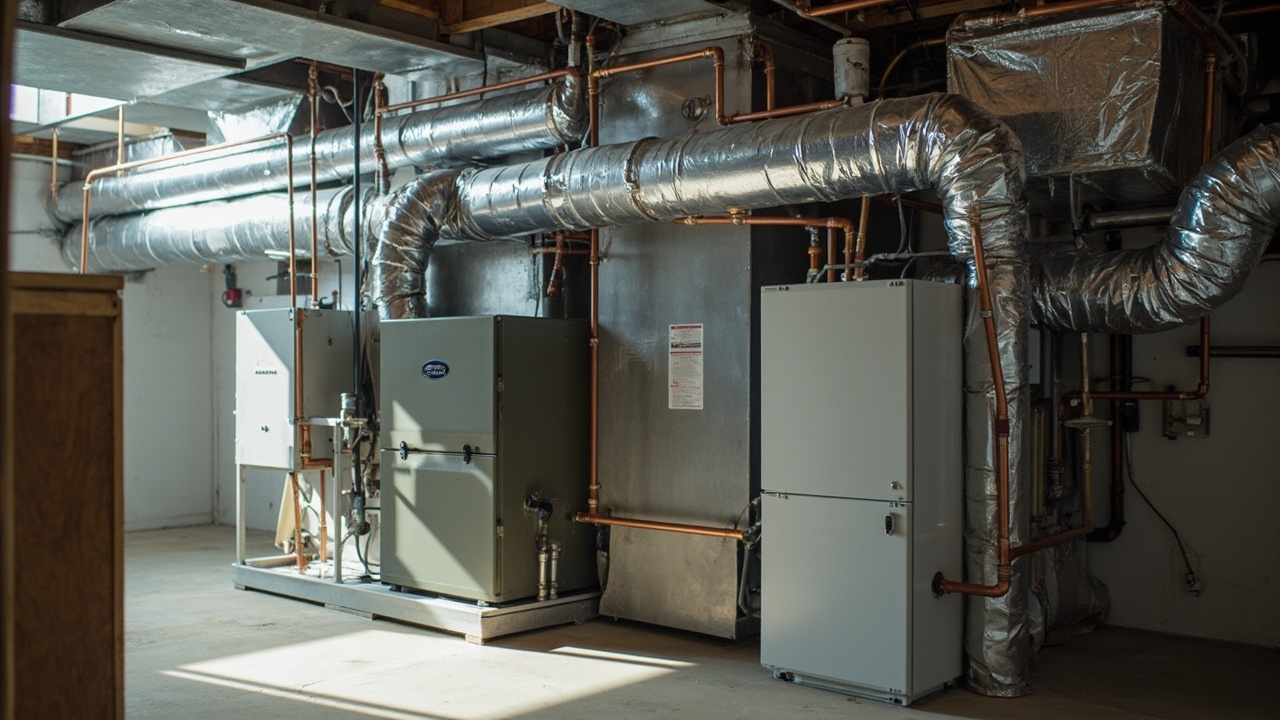
The visit starts before any equipment is discussed, with a relative humidity reading taken in the living space and a check of what the return air path can carry. That reading, paired with the delta T probes we place across the coil on return and supply air, tells us whether the discomfort is a humidity problem the cooling cycle cannot reach or an airflow problem masquerading as one. A drop that lands well above the normal range points at restricted airflow or a coil starting to freeze, and no humidifier or dehumidifier fixes that until the airflow issue is corrected first.
Once airflow is confirmed sound, the delta T reading and the humidity number together decide the fork. A drop under the expected range with high indoor humidity means the coil is not pulling enough moisture out of the air relative to the load, which argues for dehumidification tied into the return trunk rather than a bigger cooling system. A house that reads dry in winter with the furnace cycling normally argues the other direction, toward a bypass or fan powered humidifier at the plenum. Either way the reading decides the equipment category before a model number ever comes up.
Sizing within that category follows the same logic that separates single stage, two stage and variable capacity cooling systems, where the real comparison is runtime and moisture removal rather than a rated number on a spec sheet. A system that runs long at reduced capacity strips more humidity out of the air over the course of a day than one that satisfies the thermostat in short bursts, and a whole house dehumidifier is chosen and sized to work with whatever staging the existing cooling system already has, not against it.
The instruments we use to separate these cases are precise, but what they measure is straightforward. The delta T tells us how much temperature the air loses crossing the coil, and that number reflects whether air is moving through fast enough to pick up the cooling load. The humidity reading shows what percentage of moisture the air holds relative to saturation at that temperature. Together they reveal whether comfort depends on moving more air, removing more moisture, or both. That distinction matters because adding cooling capacity to a house that needs dehumidification wastes energy and leaves the occupants uncomfortable, while oversizing a dehumidifier to compensate for poor airflow shortens equipment life and raises utility bills unnecessarily. The reading drives every recommendation that follows.
See ac repair for how the related work is scoped and priced.
When we spec replacement equipment, ENERGY STAR's heating and cooling ratings are the baseline we work from.
Narrow this to two options before calling, then ask which one suits the house.
| Option | The numbers a buyer weighs | Best suited to |
|---|---|---|
| Single stage against two stage against variable capacity cooling | Compared on the SEER2 efficiency rating | Two story homes that never feel even |
| Heat pump against gas furnace | A heat pump is rated on HSPF2 and its output falls as the outdoor temperature drops | Climates where the winter low decides the choice |
| Ducted system against ductless mini split | Mini splits are rated per indoor head | Additions and rooms the ducts never reached |
How a humidifier or dehumidifier install runs
Assessment and sizing
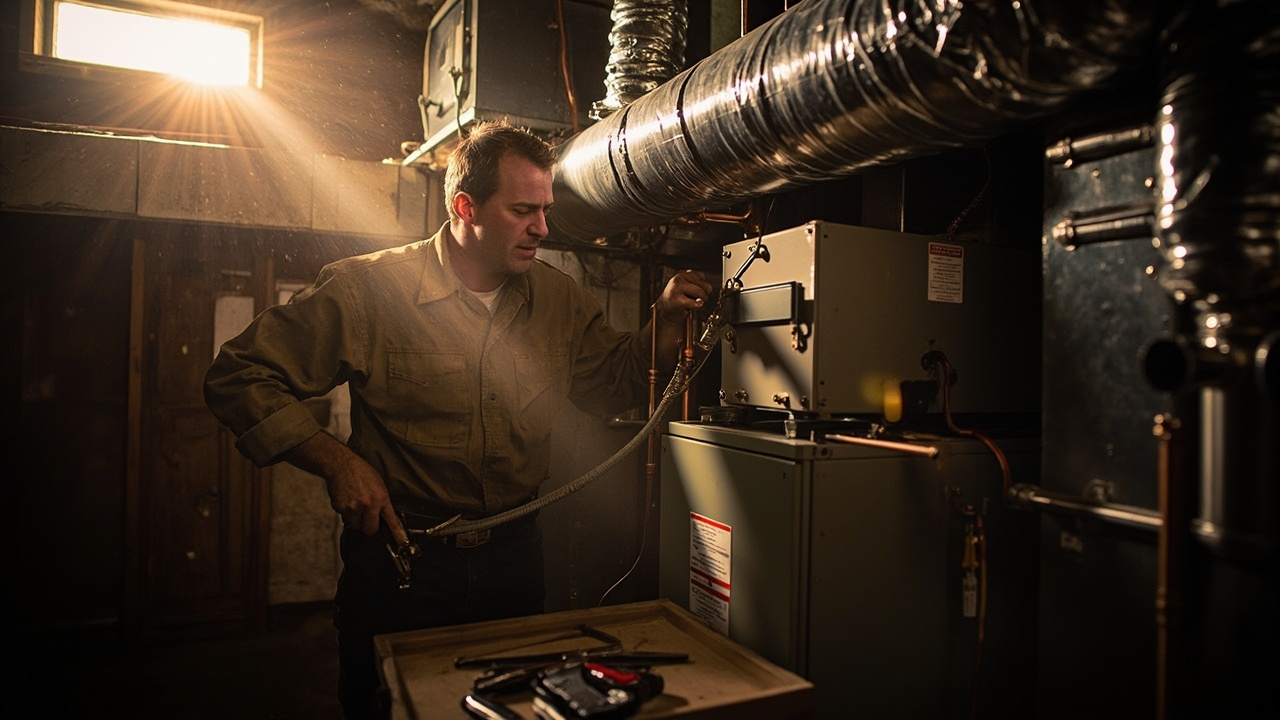
The visit starts with a relative humidity reading and an examination of the return air path and blower for existing static pressure. From there we run a manual J load calculation using the home's actual size, occupancy and construction rather than the old equipment as a guide, and that calculation sets the capacity target in pounds per hour for humidification or pints per day for dehumidification before any model is discussed. You receive the calculated capacity figures that justify the recommendation.
Integration and mounting
Once the scope is approved, we confirm the blower can carry the added static and that the return plenum geometry allows a bypass duct or an in-line dehumidifier without choking airflow. The unit is mounted at the plenum or in the return trunk, water supply or condensate drain lines are run and trapped correctly, and the humidity sensor is placed where it reads the living space rather than the duct. If the duct itself needs correction to carry the added load, we stop and show you before continuing.
Commissioning and verification
Before we leave, the delta T probes go back across the coil to confirm the added load has not pushed the system outside the 15 to 20 degree range that reading depends on. The humidity sensor is calibrated against a separate handheld reading and the setpoint is programmed to the level the assessment established. We walk through where the sensor and controls are and what the display should read, and you keep the sizing numbers from the assessment.
Why condensate routing gets overlooked on this equipment
A dehumidifier tied into the air handler produces a steady stream of condensate that has to go somewhere, and the routing decision matters more here than it does in a lot of places. Local practice runs that line either to grade outside the house or into a trapped plumbing connection, and the trap matters because an untrapped tie-in lets sewer gas pull back through the line into the air handler. A crew that does not route it correctly, or that lets it discharge right against the foundation, is adding water next to a slab that already sits on clay soil that swells and shrinks with moisture. That combination is what eventually produces the exact overflow and ceiling stain sequence described earlier, except now it is a routing problem instead of a maintenance one.
The other place unfamiliar work shows up is sizing against the wrong load. A crew used to installing this equipment somewhere with a shorter humid season tends to size for temperature and treat humidity removal as incidental, which leaves the unit undersized for the stretch when Gulf moisture pushes latent load well above what the cooling cycle alone is removing. Getting the load calculation and the drain routing right the first time is less about following a rule and more about knowing which of the two failure modes shows up first in this particular climate, and building the installation around that rather than around a generic spec sheet.
Proper condensate management also requires attention to slope and materials. The drain line must pitch continuously toward its exit point without sags or low spots that trap water and breed mold inside the line itself. If the line passes through an unconditioned space, insulation around it prevents the cool condensate from sweating the outside of the pipe and dripping onto framing or insulation below. When the line ties to a plumbing drain, the trap arm must be sized correctly and the connection must not back up into the equipment during high water events. These details separate an installation that runs for twenty years from one that generates service calls within the first season.
More detail on air duct cleaning is on its own page.
What the installation looks like from your side
When the visit happens
A call about humidity gets three questions before scheduling. What the air feels like, when it started, and what the return air setup looks like from the outside. That tells us whether this is a routine sizing visit or one that should move up because a condensate line is already slowing. You get a window rather than a vague day, and if the job ahead of yours runs long on a summer afternoon, we call before the window closes rather than after.
Keeping the install contained
Before the air handler panel comes off, the area below it gets covered, since condensate and drain work both mean water near the equipment. Duct and plenum cutting stays contained with drop cloths at the platform edge so insulation and debris do not spread into the attic walkway. Everything that comes out, old duct scrap or a failed condensate fitting, goes out with us. The platform gets wiped down and the panel goes back on before we call the job finished.
What changes the price
Controls move the number more than most homeowners expect. A humidifier or dehumidifier that ties into an existing single thermostat integrates faster than one going into a zoned or communicating system, where the new equipment has to talk to controls already installed. Duct access and condensate routing add or subtract from there. The written scope comes from the load calculation and the static pressure reading, and you see and approve that scope before anything is installed.
Who is doing the work
A technician sizing this equipment has run delta T readings and load calculations alongside a lead tech enough times to size a system without guessing at capacity from square footage. The lead signs off on reading a coil correctly and matching bypass duct geometry before someone works solo. Anything involving a communicating control system or an unusual duct layout gets a second set of eyes before the scope is written, since that is where a wrong assumption costs the most to fix later.
You Have Questions,
We Have Answers
Cost depends on capacity, water feed setup and controls. A bypass humidifier tied into an existing thermostat costs less to integrate than one wired into a zoned or communicating control system, and the water feed plumbing adds another variable once hard water treatment is considered.
Cost is set by capacity from the load calculation, ductwork access and condensate routing. A unit that ties cleanly into existing return duct and an already trapped drain line costs less to install than one needing new duct or a new condensate tie in routed away from the foundation.
Size comes from a manual J load calculation based on occupancy, construction era, duct condition and the measured relative humidity in the home. Two houses the same floor area can need different equipment because these variables change the capacity number.
Yes, if the blower and return duct can carry the added static the unit places on the system. Granite HVAC Waco confirms that with a delta T reading across the coil before sizing, and checks whether controls or zoning already in the house need to be integrated with it. Call (254) 221-8461 to get that checked before equipment is chosen.
Why Waco water and Waco humidity both change this installation
The city water utility supplies treated surface water that runs moderately hard, carrying calcium and magnesium that leave scale on anything that passes water through it, and some homes notice a chlorine taste from treatment on top of that. A humidifier that wets a pad or runs water through a valve is exactly that kind of equipment, and hard water shortens the interval before a pad clogs or a valve seat scales enough to stick open or shut. That changes which humidifier type gets specified and how the water feed is set up, and it is a factor a load calculation by itself does not account for, because a load calculation sizes capacity and says nothing about what the local water will do to the parts carrying it.
Cooling equipment in this area already runs long hours through a stretch of the year when Gulf moisture raises the latent load faster than the temperature load, which is the stretch where a dehumidifier earns its keep by cutting how often the compressor cycles just to chase humidity the thermostat cannot see. Commissioning is where that gets checked rather than assumed. The setpoint is verified against a handheld reading, not just the control board display, because a sensor reading a few points off either runs the unit longer than the load requires or lets humidity climb back into the range that feeds the same overflow and staining sequence described earlier in the visit. This verification step prevents short cycling that wastes energy and protects against the moisture conditions that drive mold growth in wall cavities and attic spaces.
HVAC Services in The Waco Area
Explore our service area and locate Granite HVAC Waco with ease. We're proudly local and serve the surrounding neighborhoods with fast response and honest pricing. Use the map to check our coverage area, or call us and we'll confirm in seconds.
Address:
Granite HVAC Waco, Waco, TX, 76701
Additional Services We Offer
Changing a humidifier pad or a one inch filter on schedule is a homeowner task, and pouring water down the condensate line to confirm it drains is worth doing between visits. The work stops at anything behind the air handler panel, at wiring a humidity sensor into the control board, and at cutting into supply or return duct. If the assessment turns up duct damage or a control system beyond what was scoped, we say so on the first visit rather than after installation starts.
Before you call, know whether the complaint is dampness or dryness, when it started, and whether it changes with the season. If you know the age of your furnace or air handler, have that ready, and check whether your thermostat already handles zoning. Knowing where the air handler or furnace closet is helps the assessment move faster once someone is on site.
Last reviewed September 2026 by Dale Whitfield, Service manager.